
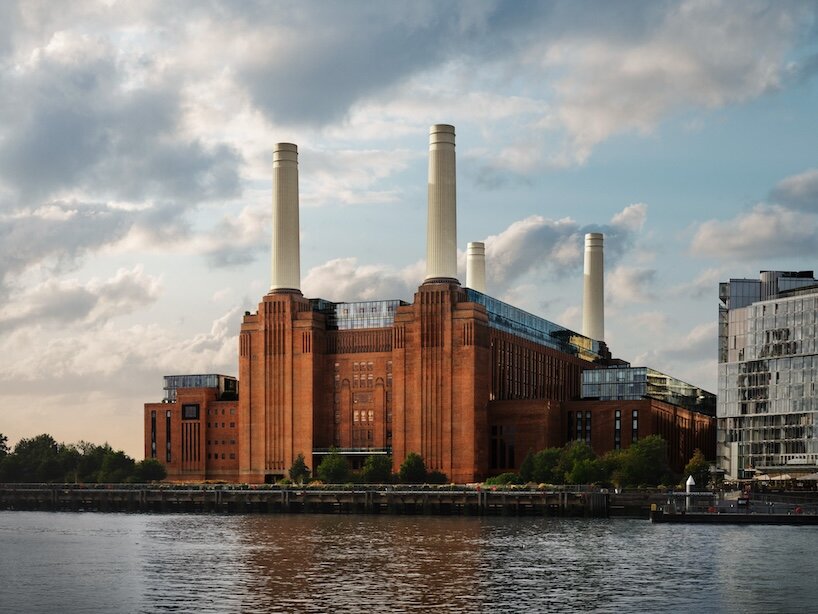
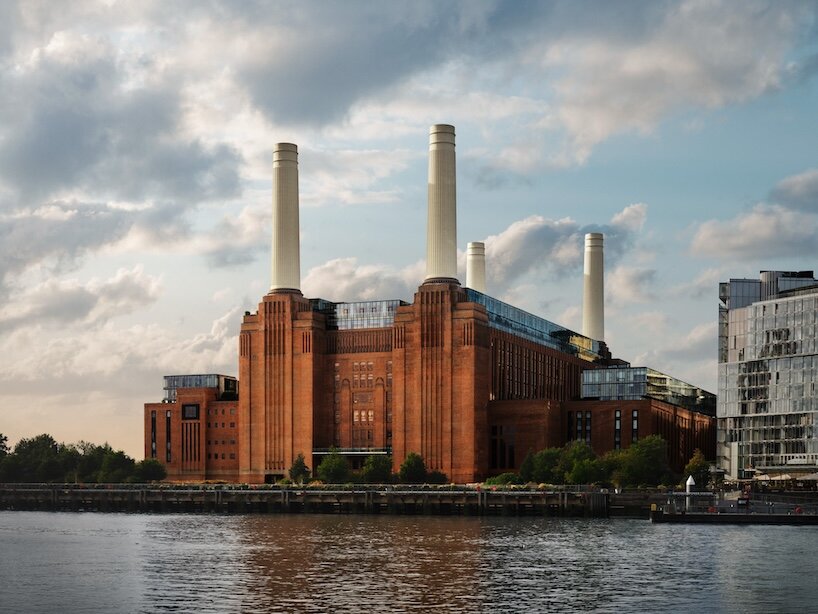
Apple has officially made a major physical investment in the heart of London’s music scene, opening a state-of-the-art live music venue, recording studio, and global broadcast facility inside the historic Battersea Power Station. Named Apple Music Hall, the 600-capacity venue sits along the River Thames, introducing a unique space where artists can perform an intimate live concert, record multitrack audio, mix in Spatial Audio, and stream globally without ever leaving the building.
The launch marks a significant physical expansion for Apple’s music ecosystem. While the company has long dominated digital music consumption through the iPod, iTunes, and subsequently Apple Music, the Battersea project gives that largely virtual footprint a permanent, highly specialized physical address. Conceived as a multi-functional hub where the concert experience seamlessly transitions into media production, Apple Music Hall is designed so that the show does not simply end when the house lights come back on. Instead, a single performance can instantly leave the building as a finished audio recording, a broadcast-ready mix, and a comprehensive multicamera film.
Industrial Heritage Meets Cutting-Edge Production
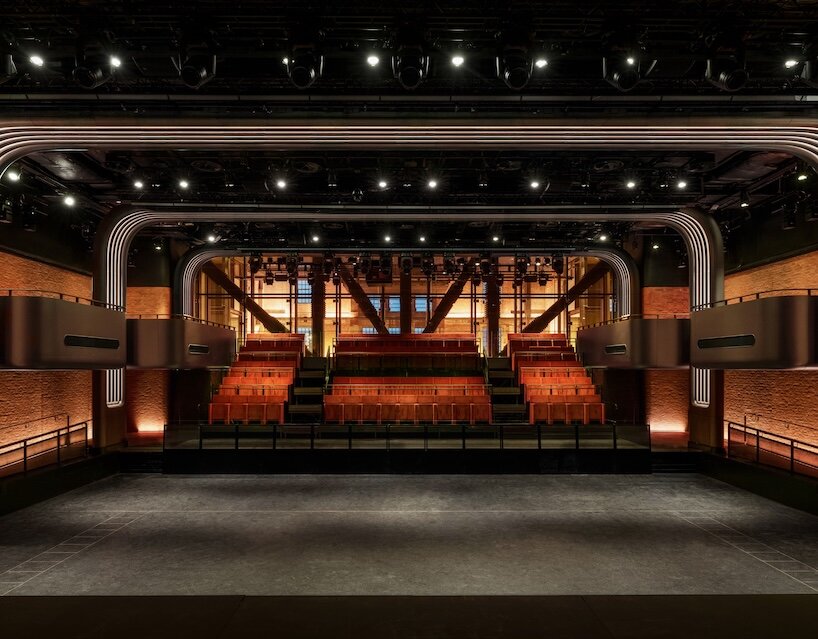
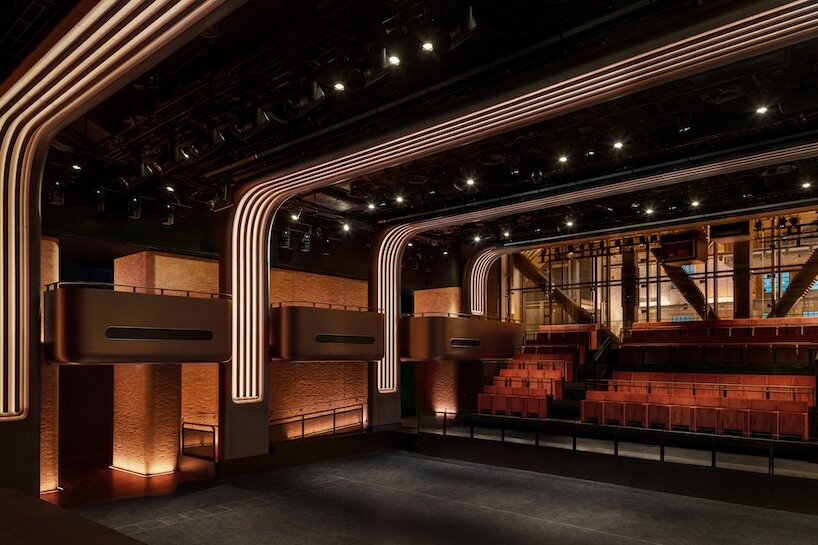
The architectural approach behind Apple Music Hall relies heavily on a dialogue between modern technology and industrial heritage. Rather than attempting to mask or compete with the monumental scale of Battersea Power Station, the interior design embraces the raw, historic language of the landmark building. Heritage brickwork, fluted structural arches, and bronze balconies have been integrated into the space, offering distinct visual nods to the restored power station’s historic character.
At the same time, a large glass wall opens the venue toward the interior concourse and the river beyond, blending the controlled environment of Apple’s production world with the rougher architectural shell of the former industrial giant. This juxtaposition ensures that traces of Battersea’s storied past remain an active, visible part of the visitor and performer experience, anchoring a thoroughly modern media facility within a globally recognized architectural icon.
48 Speakers Wrap Sound Around 600 Listeners
Inside the main auditorium, the venue maintains a deliberately intimate scale. The space centers around a 38-foot-wide stage that is mechanically and spatially flexible, capable of shifting between conventional front-facing concert configurations and more immersive, in-the-round setups that place the audience in closer proximity to the performers.
Acoustically, the room is anchored by a sophisticated 48-speaker spatial sound system designed to wrap immersive audio completely around the 600-member audience. According to Apple, this infrastructure is intended to merge the physical closeness and energy of a small club performance with the technical capabilities typically reserved for much larger, highly produced stadium or arena shows. This setup grants artists unprecedented control over how their music is staged, heard, and ultimately felt by the live audience.
However, the most intricate engineering of Apple Music Hall is hidden just behind the curtain. The facility houses two dedicated recording and mixing studios, allowing live performances to be captured as multitrack sessions and mixed in Spatial Audio either in real time as the concert unfolds or during post-production. Furthermore, the hall is heavily hardwired to support 16 or more professional broadcast cameras, which feed directly into a dedicated broadcast control room. The technical infrastructure is also designed to integrate modern consumer technology, allowing devices like iPhones to capture supplemental footage alongside traditional broadcast equipment. This means an artist can step onto the stage, perform for a room of 600 people, and simultaneously generate a polished live album, a spatial audio mix, and a multi-angle global broadcast stream with minimal friction.
From Live Show to Global Broadcast
The capabilities of the Battersea facility extend far beyond local performances. Concerts and events staged at Apple Music Hall are fully equipped to be livestreamed internationally across Apple’s vast digital platforms, effectively turning an intimate 600-capacity room into a global stage.
The opening of the music hall is also accompanied by the launch of new Apple Music Radio studios within the same London complex. These studios serve as the new permanent home for the streaming service’s London-based presenters and programs, allowing live radio broadcasts to emanate directly from the heart of the Battersea development. By bringing live performance, professional recording, video production, and radio broadcasting under one unified roof, Apple has eliminated the traditional fragmentation of the music production pipeline, treating these formerly separate stages as a continuous, cohesive process.
This venture deepens Apple’s decades-long relationship with the music industry. From the hardware revolutions of the early 2000s to the current era of lossless streaming and immersive spatial audio, the company has consistently shaped how consumers discover and listen to music. With the debut of Apple Music Hall at Battersea Power Station, that evolution takes a distinctly physical form. The architecture functions simultaneously as an intimate venue and a heavy-duty production apparatus, where exposed brick arches frame the audience out front while a network of hidden studios, advanced cameras, and mixing desks quietly prepares the performance for the rest of the world.