Amid continuous scientific efforts to document the planet’s rapidly shifting ecosystems, the delicate state of global biodiversity remains a pressing environmental concern. Earlier this year, an international team of scientists announced the thrilling discovery of an entirely new species of wild cat hidden within the rugged terrain of Bolivia. Concurrently, large-scale research initiatives such as the Ocean Census continue to scour marine environments, successfully documenting hundreds of new marine species annually. Yet, despite these remarkable scientific strides, environmental experts warn that species are likely disappearing from the Earth at a pace far faster than researchers can find, catalog, and understand them.
Gauging the true scale of the annual extinction crisis remains extraordinarily difficult when humanity is still so far from comprehending the full baseline of how many different types of organisms exist in the natural world in the first place. Nevertheless, scientists estimate that thousands of species may vanish every year. This devastating loss is heavily accelerated by an array of human-driven pressures, including extensive habitat loss, industrial pollution, and the mounting impacts of global climate change.
For the multidisciplinary artist known as Amok Island, the profound fragility of the Earth’s interconnected biodiversity serves as the central inspiration for vibrant, large-scale murals that transform urban and industrial landscapes. Born in Amsterdam and currently based in the coastal city of Fremantle, Western Australia, the artist uses his distinct aesthetic to bridge the gap between human environments and the vulnerable wildlife that shares the planet.
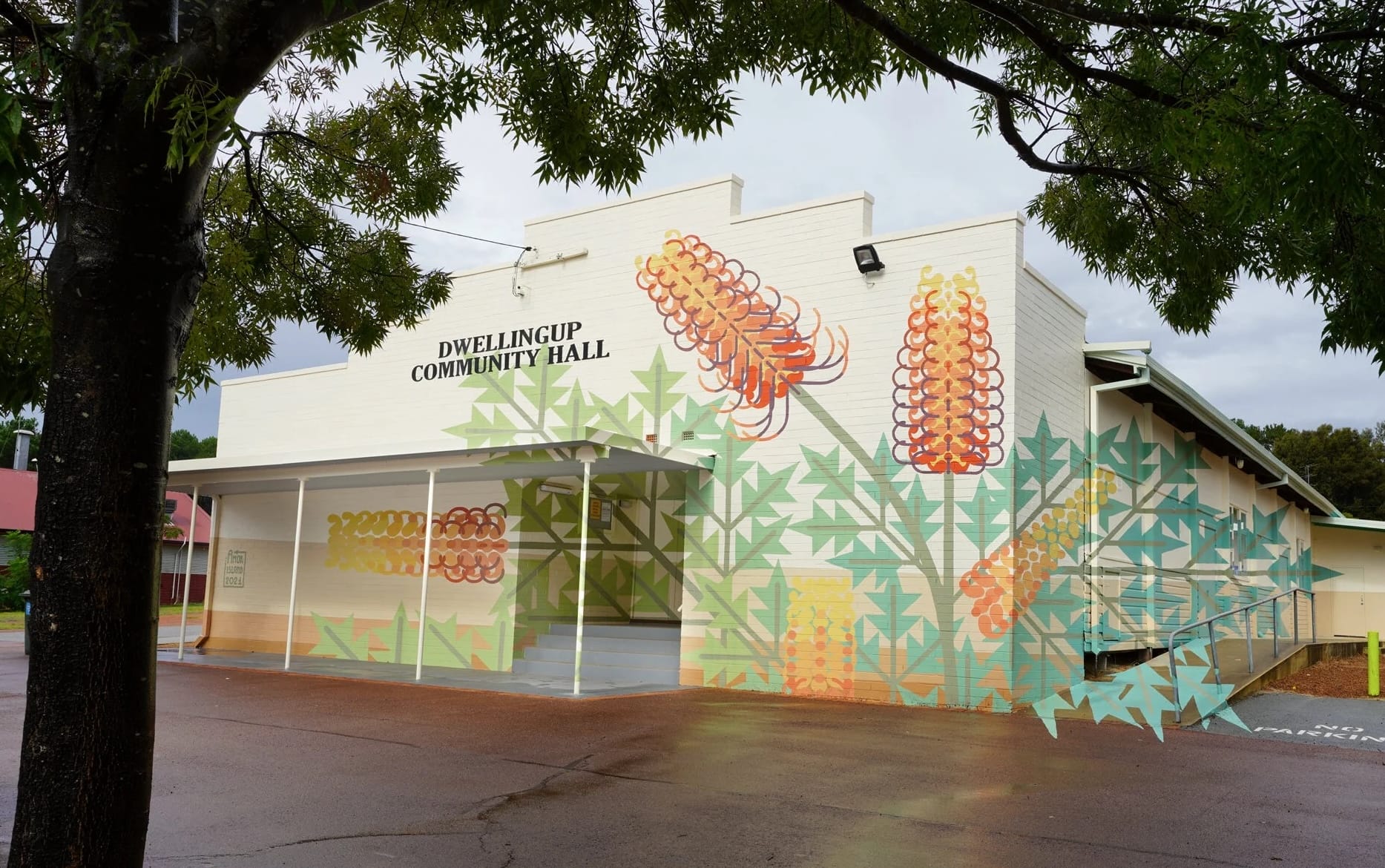
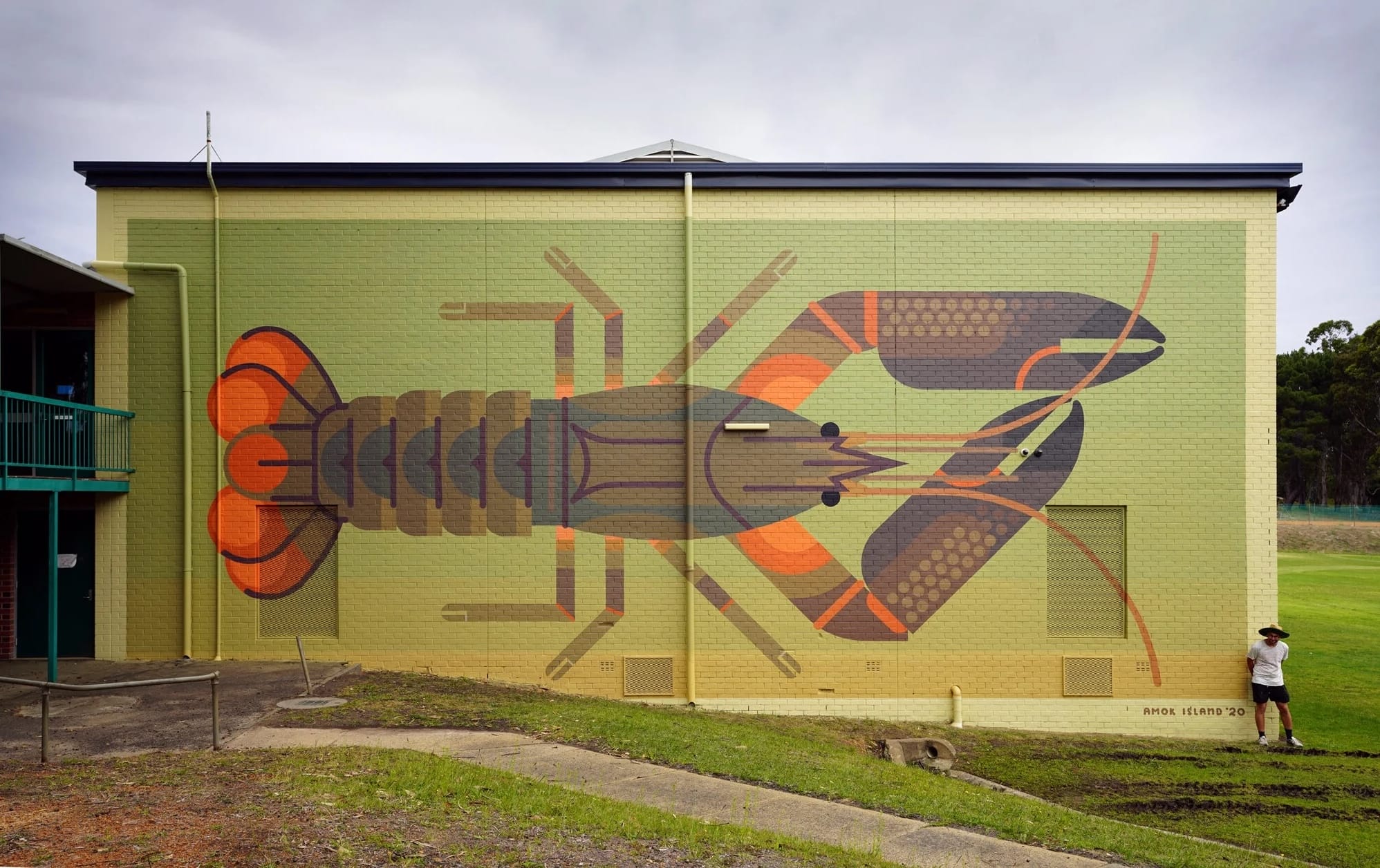
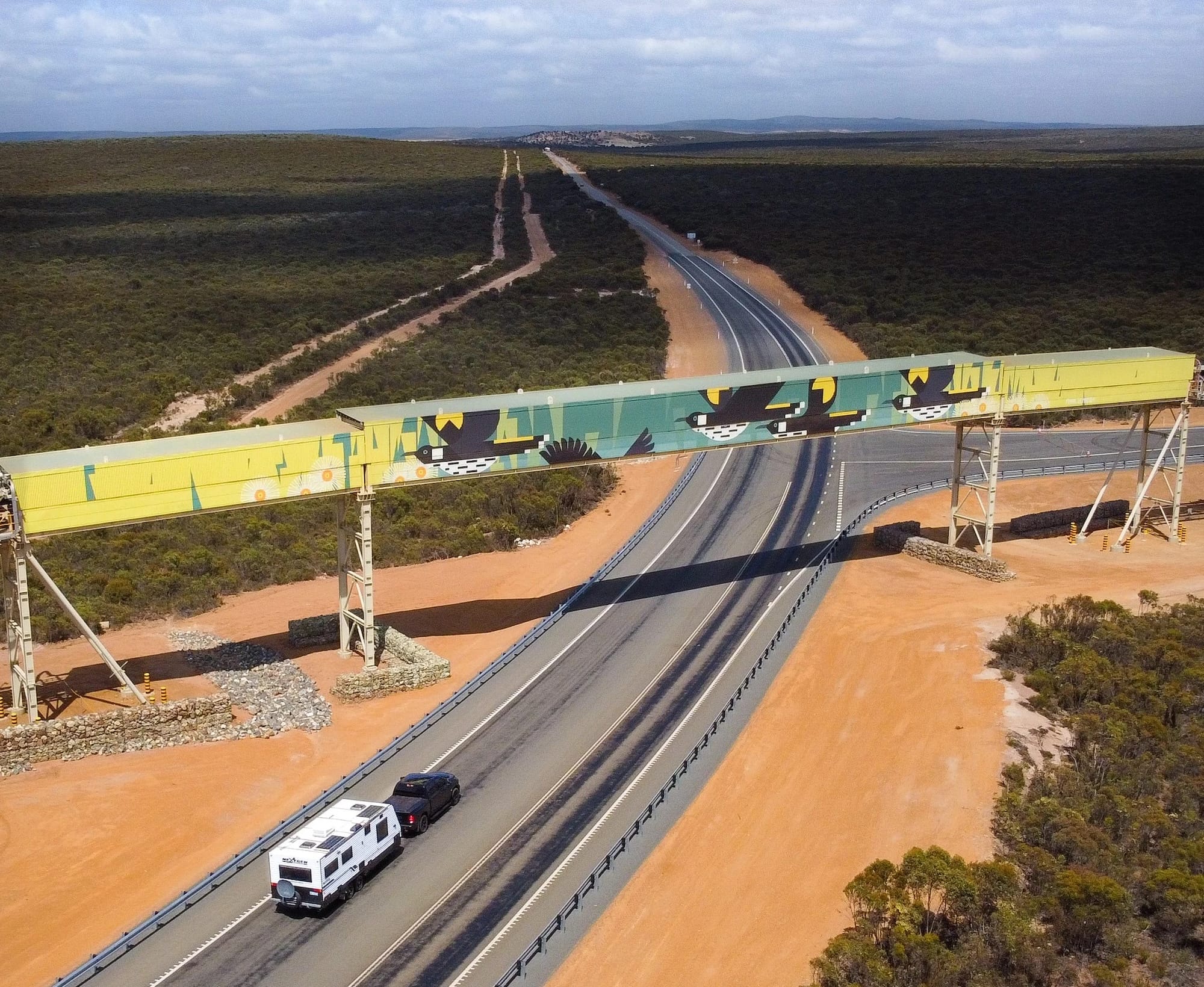
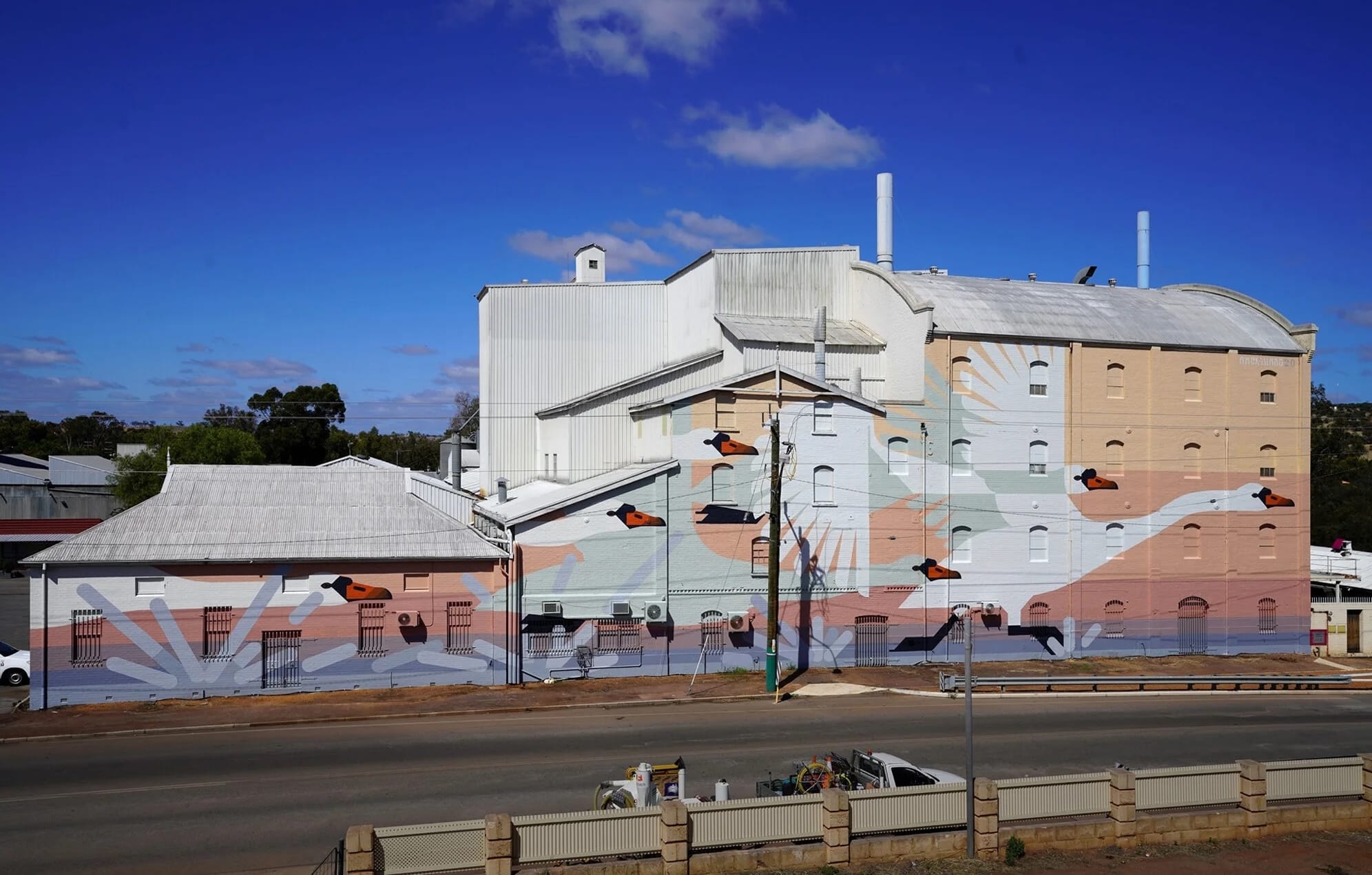
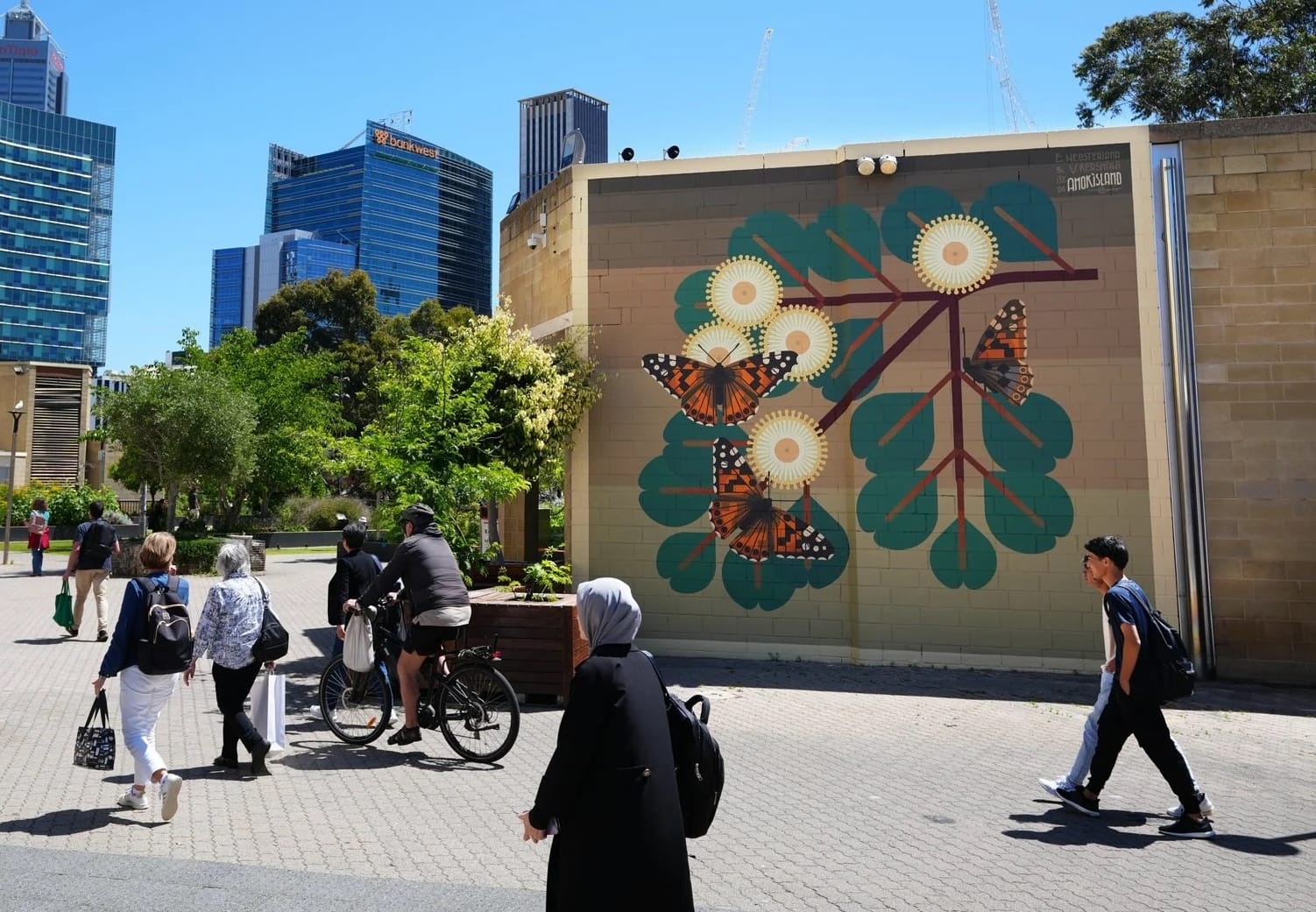
Across his adopted home state of Western Australia and various other international locations, Amok Island meticulously portrays a diverse array of mammals, crustaceans, native flora, and avian species. Each public artwork reflects specific creatures and botanical specimens historically or ecologically linked to those exact regions. Flocks of migrating birds swoop across the cold concrete of industrial infrastructure, brilliant wildflowers bloom dramatically across the facades of community buildings, and regional fauna such as roosters, butterflies, and regional cats vividly adorn walls nestled deep within bustling urban spaces.
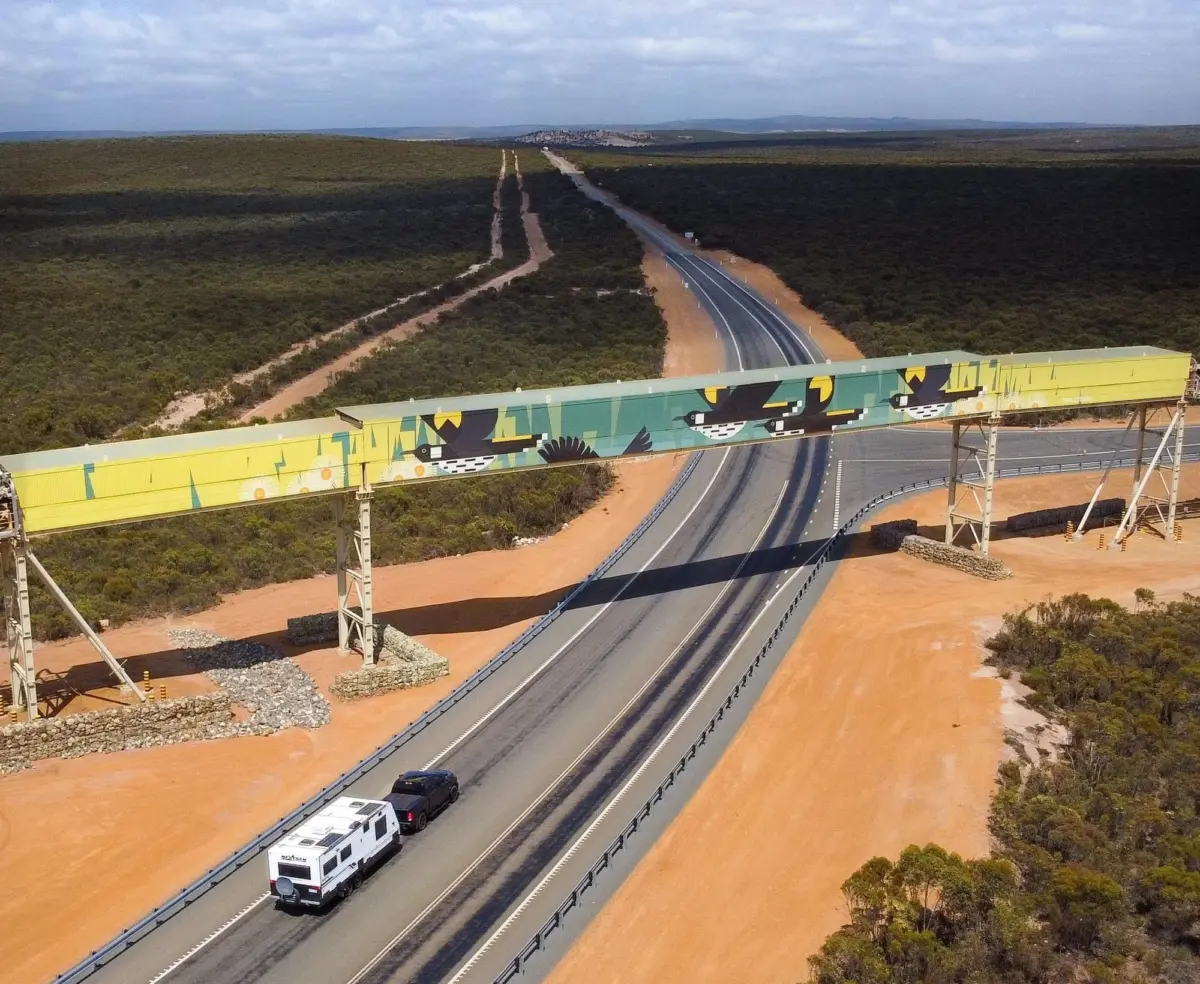
By showcasing the striking beauty of living things that everyday citizens can readily learn about, protect, and enjoy right in their own backyards, Amok Island’s large-scale works shine a much-needed spotlight on the enduring, critical importance of conservation. His portfolio features numerous prominent installations that capture this regional focus. Among them is "The Honey Eaters," painted in 2021 across an enclosed highway overpass in Ravensthorpe, Western Australia, which showcases vibrant geometric representations of local birds. In the same year, the community hall in Dwellingup, Western Australia, was transformed by "Grevillea bipinnatifida," a striking mural highlighting regional flora.
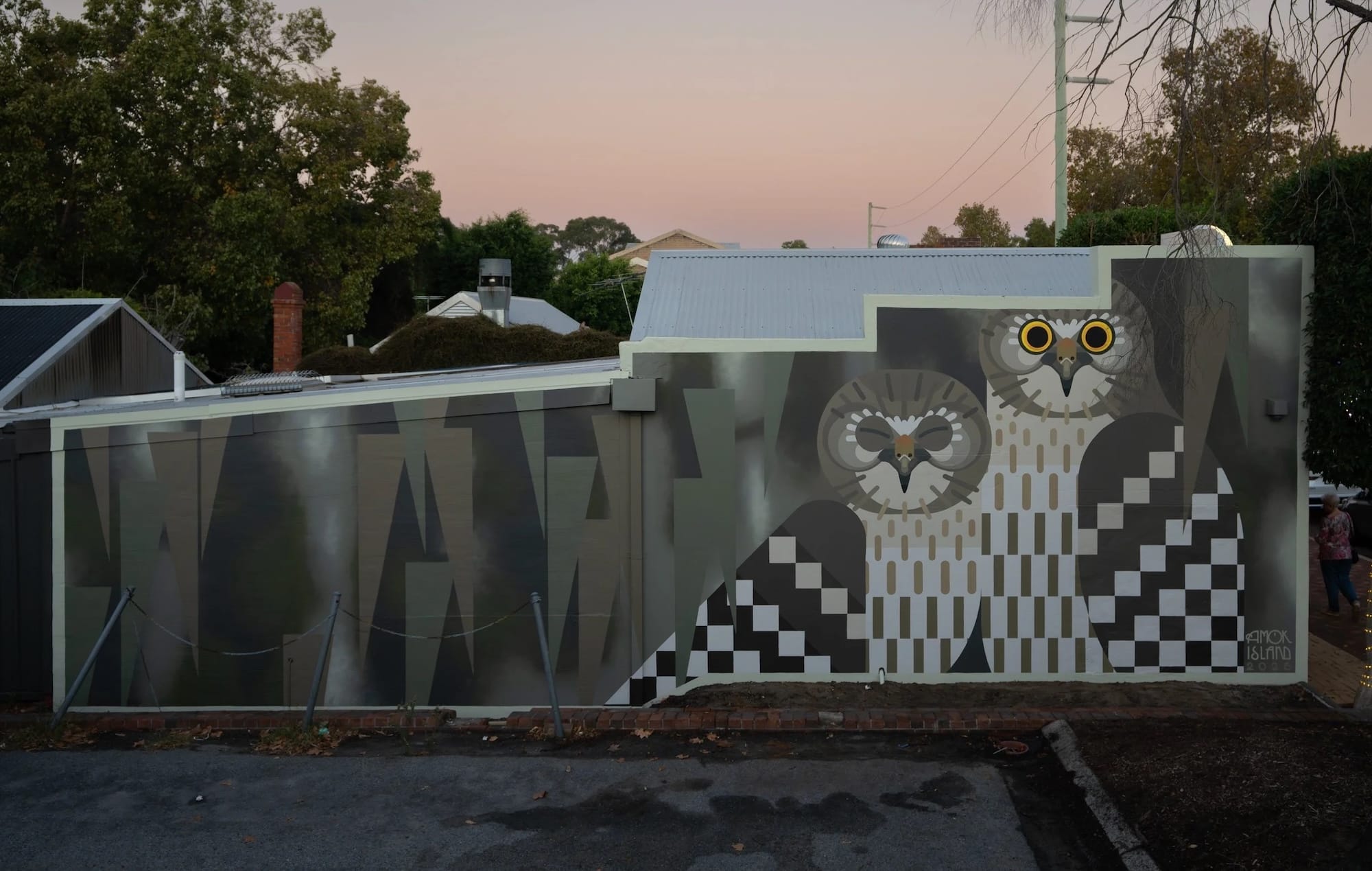
Other notable works include "The Last Swans," completed in 2020 on a large industrial building in Northam, Western Australia, and "V. kershawi on E. websteriana," a 2024 mural in Perth City celebrating native butterflies and plants. Amok Island has also used his art to engage with pressing ecological policy issues, such as his 2026 mural for the NMBW Festival in South Perth titled "The banning of Second-Generation Anticoagulant Rodenticides," which features a striking geometric portrait of owls to draw attention to the dangers of toxic pest control methods on predatory birds.
His commitment to local and global ecosystems extends even further, with works like "Seagulls and Chip," completed in 2024 in his home base of Fremantle, and international projects such as his 2026 "Leopard Cat" mural in Hong Kong. Through these vivid, highly structured public installations, Amok Island continues to foster a deeper community connection to the natural world, using the power of street art to advocate for the preservation of vulnerable species before they are lost to history.