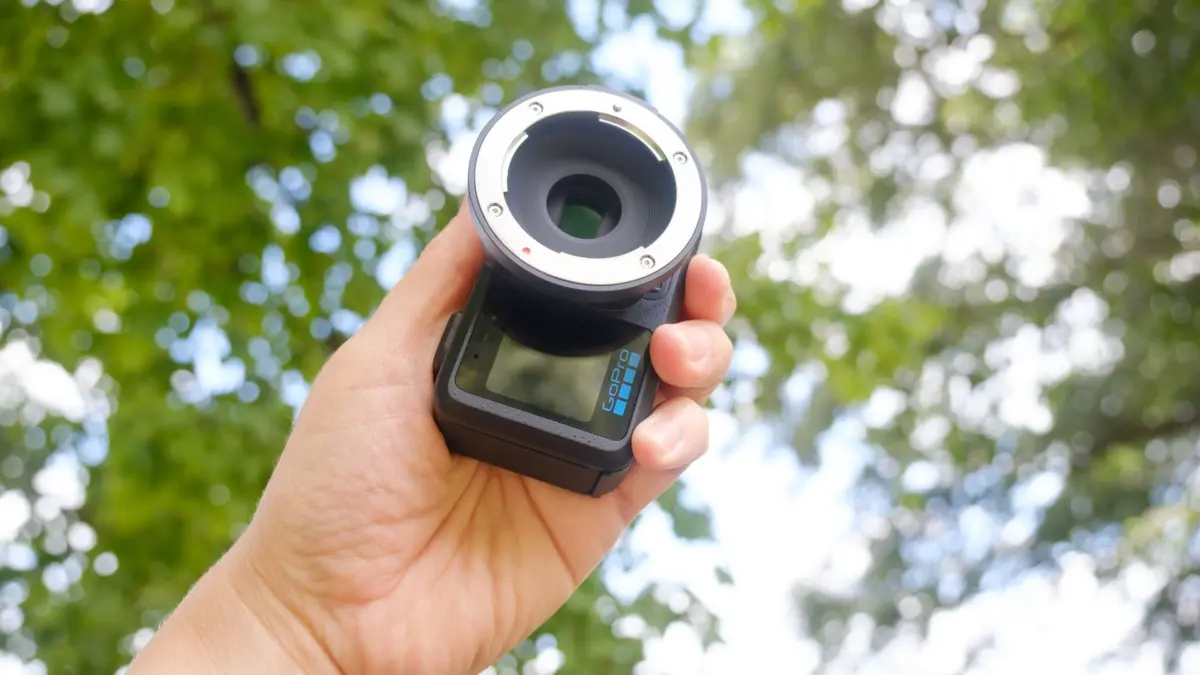
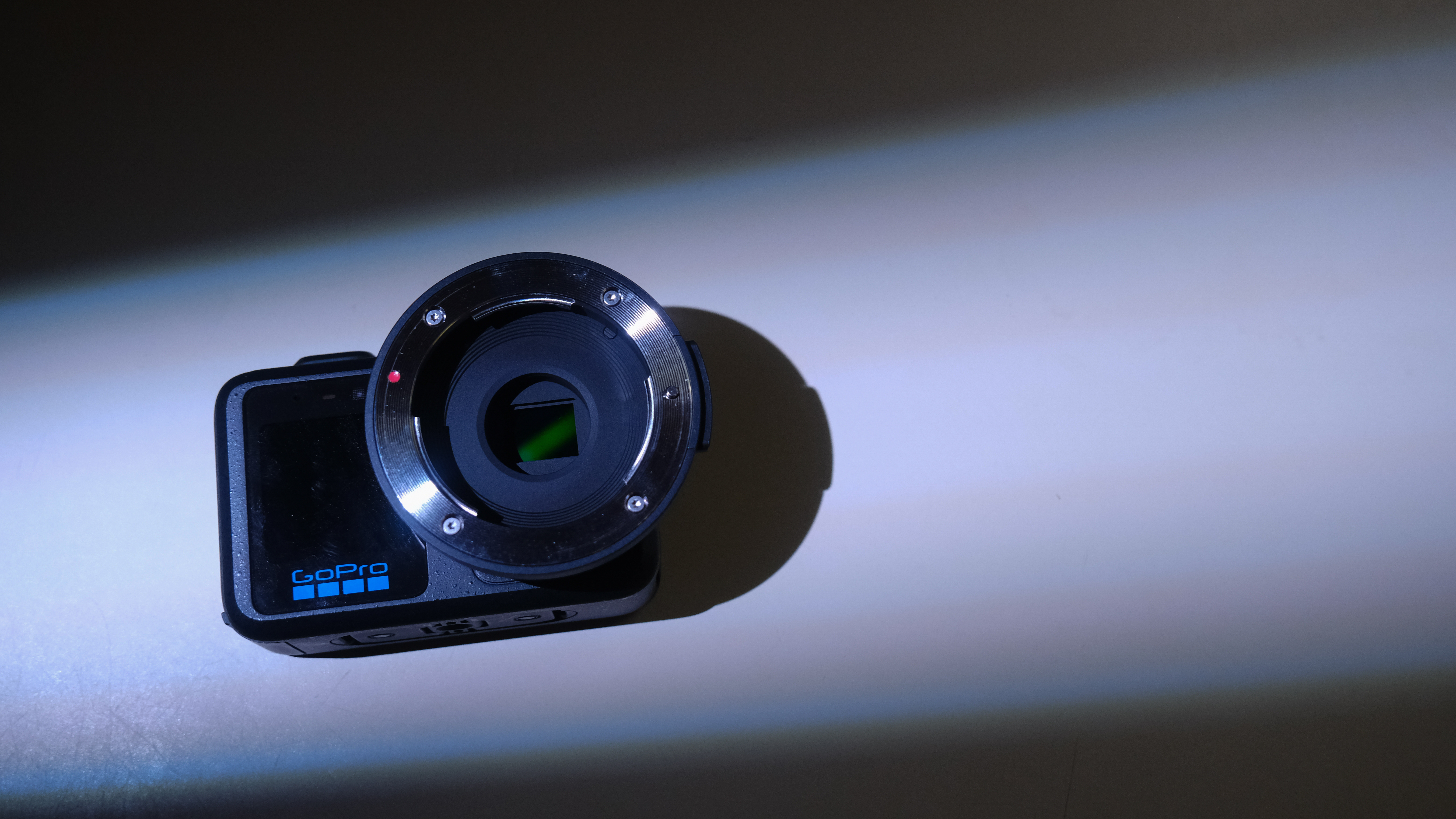
The GoPro Mission 1 Pro ILS occupies a peculiarly hard-to-categorize space in the modern imaging market. At first glance, the Interchangeable Lens System (ILS) bears the familiar, compact silhouette of a classic GoPro action camera. Yet, unlike its rugged, waterproof predecessors designed for aquatic sports and extreme weather, the ILS is entirely unsealed and not waterproof. Furthermore, while it is fundamentally a mirrorless camera, its specific combination of a one-inch sensor and a non-electronic mount separates it from practically every contemporary mirrorless model currently available on the market.
Despite its unconventional design choices, the philosophy behind the ILS traces its roots back to grassroots community modifications. Long before an official interchangeable-lens GoPro existed, daring tech enthusiasts and hackers would physically saw or cut the fixed lenses off older GoPro models to experiment with alternative optics. For years, the idea of swappable lenses was merely a persistent dream at GoPro, dating all the way back to the Hero4 era. Now, with the official arrival of the Mission 1 Pro ILS, that long-held concept has finally materialized as a commercial product, prompting a new wave of creators to look backward for inspiration. Specifically, a growing number of filmmakers and photographers are attempting something unusual for such a modern digital device: mounting and using vintage film lenses.
GoPro itself officially acknowledges this unorthodox workflow, listing lens adapters for older glass as a supported option within its official compatibility documentation. However, the appeal of pairing vintage lenses with the GoPro Mission 1 Pro ILS does not stem from what the camera includes, but rather from what it deliberately leaves out. The ILS chassis features a completely mechanical mount devoid of electronic contacts. As a direct consequence, modern autofocus lenses that rely on electronic communication or focus-by-wire technology are entirely incompatible and will not function at all. Instead, any lens attached to the ILS must either be a native Micro Four Thirds optic or attached via an adapter, while also being fully manual and equipped with a physical aperture ring.
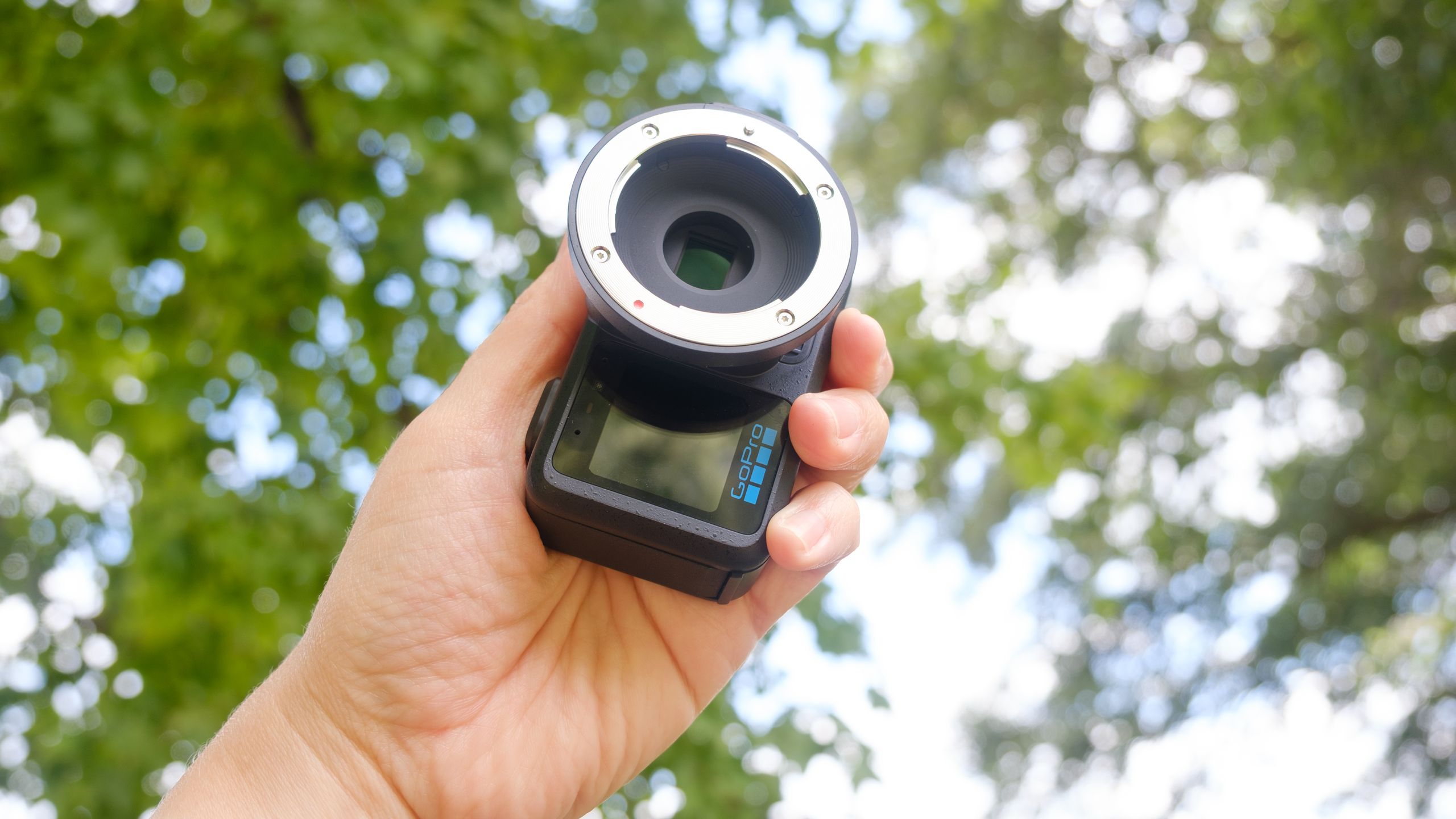
These stringent physical limitations drastically narrow down the selection of usable lenses for the Mission 1 Pro ILS. The hardware constraints mean the ILS functions strictly as a manual-focus-only camera. Combined with the open nature of the mechanical lens mount, these factors permanently forfeit the rugged weather-sealing and waterproof durability that consumers have traditionally associated with the GoPro brand.
Yet, for creators experimenting with vintage glass originally manufactured for vintage film cameras, these limitations suddenly become surprisingly irrelevant. Previous experiments adapting old film lenses to modern digital mirrorless cameras have consistently demonstrated a distinct aesthetic advantage, yielding an organic, film-like character that goes far beyond what can be achieved with digital color grading presets alone. Despite this appealing visual signature, many photographers hesitate to adopt such setups for everyday shooting because managing purely manual focus and unsealed mechanical adapters in the field can be cumbersome, especially given that weather-sealing was virtually nonexistent during the golden era of classic film photography.
Because the Mission 1 Pro ILS is already a manual-focus-only device by design, adapting classic film lenses suddenly aligns seamlessly with the camera’s operational nature. This synergy makes a compelling case for utilizing the ILS as a budget-friendly platform for capturing high-resolution 8K video footage with unique optical character. For pure still photography, however, most creators still find better-suited alternatives in dedicated retro-styled mirrorless bodies, such as the OM System Pen or the Fujifilm X-T30 III.
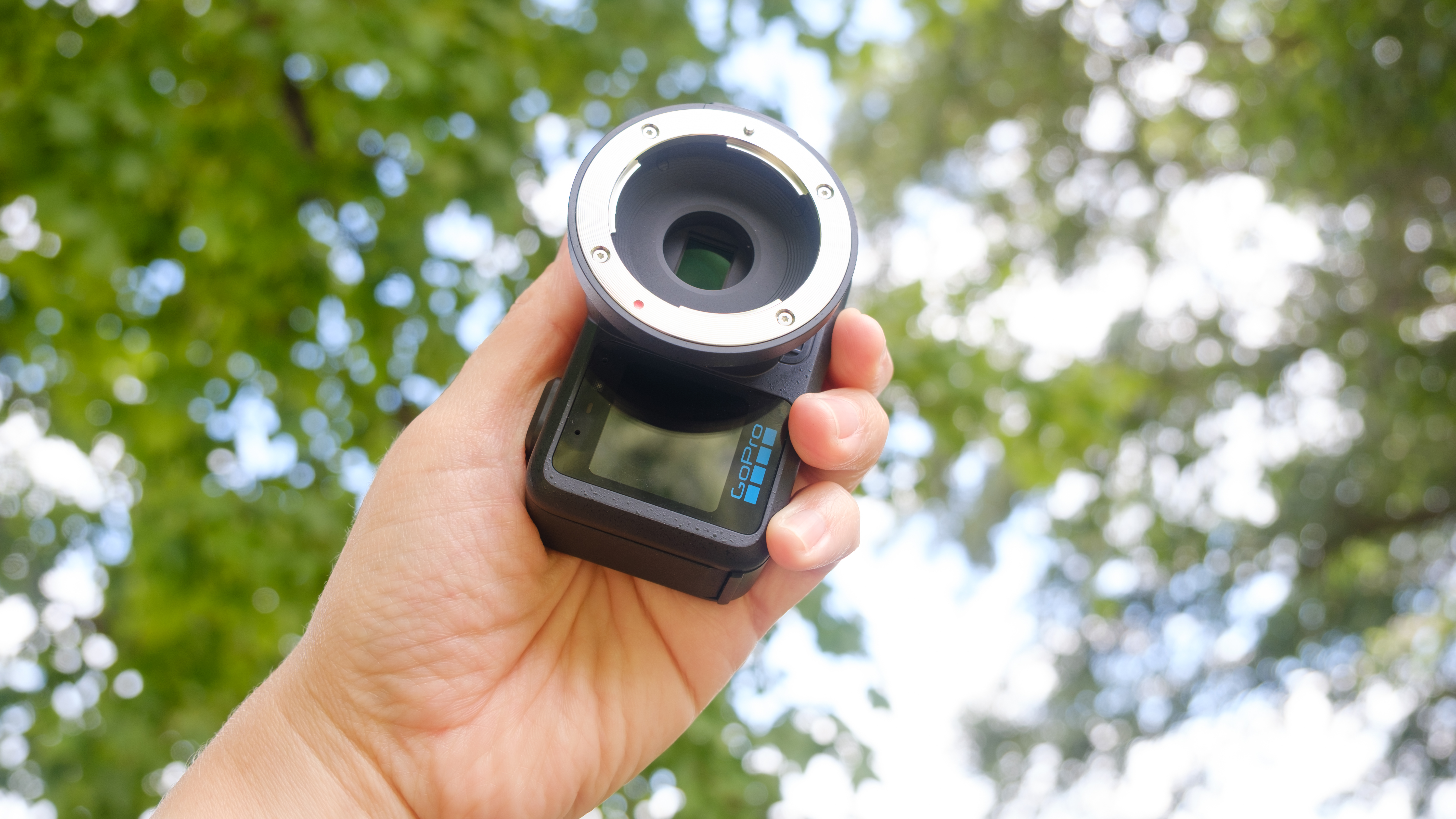
Deploying vintage glass on the ILS does introduce one distinct physical caveat regarding weight and camera stability. Because the ILS has been engineered as the smallest mirrorless camera system to date, it requires external support when paired with any lens weighing more than 250 grams. Many classic vintage lenses feature heavy all-metal barrel constructions rather than lightweight modern plastics, adding considerable heft to the front of the camera. Fortunately, the absence of bulky autofocus motors in older manual lenses helps keep overall weight down in certain categories. Filmmakers can relatively easily source wider prime lenses that fall safely beneath the weight limit, provided they carefully calculate the combined mass of the lens and the necessary mechanical adapter.
Manufacturers are already taking note of this emerging workflow. Fotodiox, the brand responsible for producing the majority of GoPro-recommended adapters for the ILS, recently showcased real-world footage captured by adapting an older M42 screw-mount lens to a Micro Four Thirds configuration. The resulting footage demonstrates promising potential for independent creators and filmmakers who prioritize organic, film-like optical rendering over clinical digital sharpness.
Operating the Mission 1 Pro ILS with adapted glass also demands careful attention to the camera’s internal software settings. The electronic stabilization system requires the user to manually select the appropriate lens profile within the camera menu system. Field testing reveals that overlooking this crucial setup step severely compromises the performance of GoPro’s signature HyperSmooth stabilization, resulting in suboptimal video results. Consequently, optimal performance with vintage glass generally requires matching the lens characteristics to one of GoPro’s officially recommended profiles, or alternatively mounting the entire setup onto a dedicated gimbal rig or tripod.
Integrating vintage lenses into modern digital workflows allows creators to harness classic optical aesthetics without abandoning the convenience of digital capture. Since shooting with vintage gear inherently involves manual operation and a lack of environmental sealing, these traits fit comfortably within the operational parameters of the GoPro Mission 1 Pro ILS. While the camera remains a specialized niche product tailored primarily for independent filmmakers seeking an ultra-compact, stabilized, and budget-conscious 8K recording tool, the revival of classic film optics provides an unexpected new avenue for a truly unconventional device.