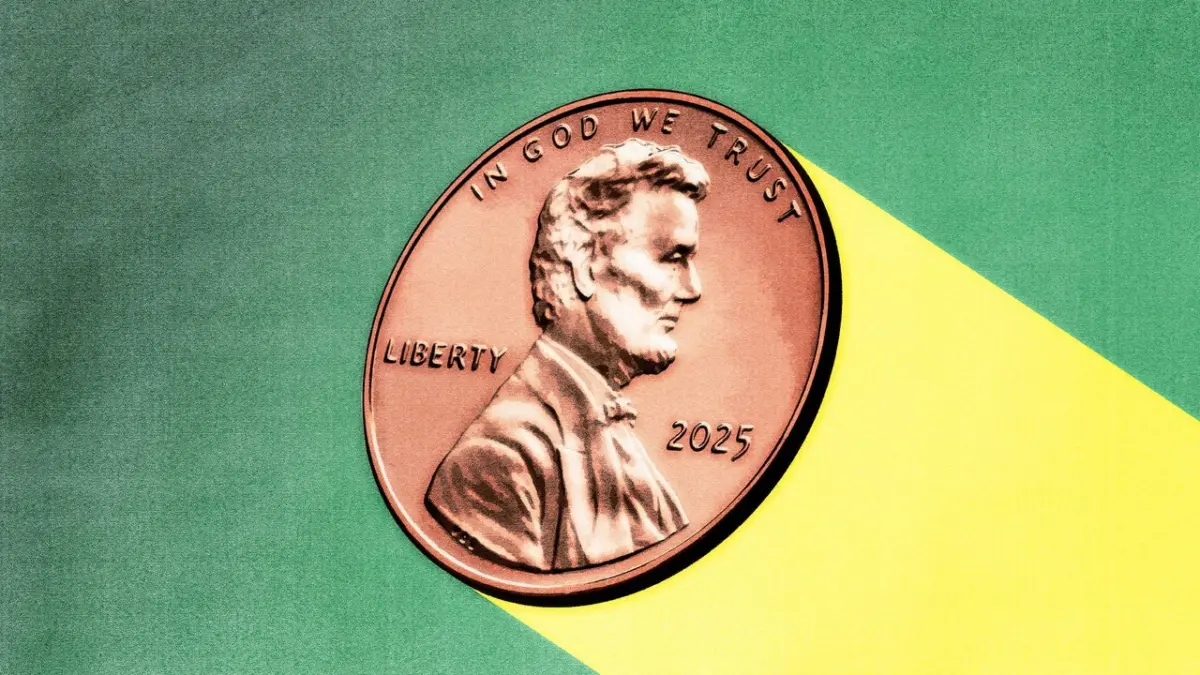
On September 28, the United States Senate voted to pass the Common Cents Act by unanimous consent, sending the legislation directly to President Donald Trump’s desk for final approval. The bipartisan bill marks a definitive legislative step toward eliminating the familiar copper-colored coin from everyday commerce while establishing clear frameworks for how cash transactions will be handled in a post-penny economy.
The legislation formally directs the Treasury secretary to cease the production of pennies for everyday circulation and outlines precise rules for price rounding to assist both consumers and financial institutions. Under the new guidelines, in any cash transaction where exact change cannot be provided, parties must round down to the nearest nickel if the final price ends in 1, 2, 6, or 7 cents. Conversely, transactions must round up to the nearest nickel if the final price ends in 3, 4, 8, or 9 cents.
While the bill puts an end to the active production of everyday currency, it explicitly states that any pennies produced before the Common Cents Act becomes law will retain their status as legal tender. Aside from these existing coins remaining in circulation, the legislation prohibits the U.S. Mint from manufacturing any more standard pennies, with one notable exception. Tucked deep within the text of the legislation is a specific clause indicating that the Treasury secretary “may continue to produce and issue one-cent coins for sale as numismatic items,” effectively transforming the humble currency into collectible merchandise.
The U.S. Mint did not immediately return a request for comment regarding whether any commemorative or numismatic pennies are currently in development or when they might become available to the public. The Trump administration effectively halted the active production of the currency last year, citing mounting economic inefficiencies. Operating a minting program for a coin that costs nearly 4 cents to produce while carrying a face value of only 1 cent proved financially unsustainable, leading officials to pull the plug on general circulation. However, thanks to the newly introduced provision embedded within the bill, the penny will not vanish entirely from the American landscape, finding a second life within the specialized hobby of coin collecting.
To understand the mechanics of this exception, it helps to look at the broader framework of how the federal government handles specialized currency. In addition to the legal tender the U.S. Mint produces for everyday commerce—such as paper dollar bills and the popular American Women Quarters program—it routinely creates and distributes commemorative coins and medals in strictly limited quantities. While commemorative medals do not hold monetary value, commemorative coins are technically recognized as legal tender, even though they are overwhelmingly acquired by collectors rather than spent at local grocery stores or convenience shops. These special issues are typically sold with an added financial surcharge, which directly generates funds for a wide variety of public causes, historical memorials, cultural museums, and national initiatives.
The tradition of issuing commemorative coinage in the United States has a long and storied history. The very first commemorative coin in American history was the 1892 Columbian Exposition half-dollar, which featured a portrait of Christopher Columbus on the obverse side and an artistic depiction of his ship, the Santa Maria, on the reverse. The modern era of the federal government’s official commemorative coin program officially kicked off nearly a century later, in 1982. According to the U.S. Mint, the modern program has successfully raised more than $500 million over the decades. These vital funds have directly supported high-profile national projects, including the painstaking restoration of George Washington’s historic home at Mount Vernon, the preservation and maintenance of the Vietnam War Memorial in Washington, D.C., and the financial sponsorship of various American Olympic athletic programs.
By integrating this numismatic exception into the Common Cents Act, lawmakers have ensured that while the penny will no longer sit in the cupholders of cars or clutter the bottoms of piggy banks as everyday money, its iconic design and historical legacy can still be preserved. As the bill awaits President Trump’s signature to officially sunset the coin that has served as a staple of American financial life for generations, collectors and numismatists can look forward to a time when the penny transitions from a ubiquitous pocket change nuisance into a sought-after piece of American history.