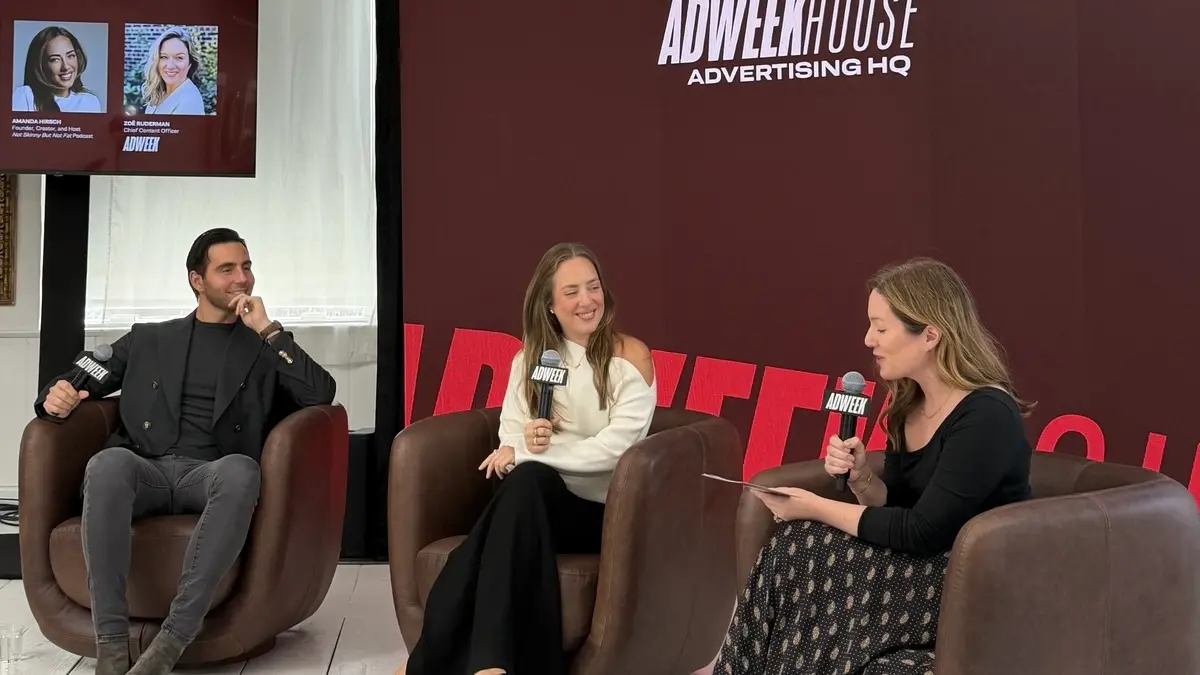
For podcast host Amanda Hirsch, the very best brand partnerships begin long before a formal deal is ever signed, negotiated, or put on paper.
Hirsch, the popular personality behind the hit podcast Not Skinny But Not Fat, cares so deeply about authenticity that she will willingly accept a lower fee from a brand she already uses and loves in her everyday life. Speaking candidly to ADWEEK chief content officer Zoe Ruderman during a recent session at ADWEEK’s Advertising HQ event, Hirsch shed light on the rigorous, deeply personal evaluation process she uses to navigate the crowded and often lucrative world of podcast sponsorships.
In an industry where creators are frequently tempted to monetize every available second of audio, Hirsch runs every single potential partner through a strict set of personal filters. She evaluates whether she is an authentic, organic fan of the company, whether she has personally tested and tried the product herself, and—most importantly—whether her dedicated audience would find the offering genuinely useful in their day-to-day lives. Turning down a lucrative deal is never a painful experience for her, she explained, because she firmly operates under the belief that another, more aligned opportunity will inevitably follow down the road.
"I’m thinking about my audience, like, ‘Wait, they would love this,’" Hirsch told the audience at Advertising HQ. "’This would be so helpful for them.’"
This uncompromising approach to listener value and creative integrity fits hand-in-glove with the overarching business model at Dear Media, the prominent podcast network and entertainment studio. Dear Media currently boasts a robust roster of approximately 100 shows and maintains a specialized sales team of roughly 40 people dedicated to matching brands with the right voices. According to Mark Mullett, Dear Media’s president of global entertainment, the company intentionally steers clear of automated programmatic advertising. Instead, the network relies heavily on organic, host-read advertisements that individual talents can directly shape, mold, and adapt in collaboration with the brand itself.
In fact, Mullett pointed out during the discussion, the single biggest mistake that brands continue to make in the modern audio landscape is handing a rigid, pre-written script to a talent and blindly expecting them to read it word-for-word on mic. Another common and damaging misconception among advertisers, he added, is the outdated assumption that independent creators and podcasters will simply take any financial offer thrown their way just for a quick paycheck.
"Let creators create," Mullett urged the brands and marketers in the room. "If they said yes to working with a brand, let them cook, let them do their thing. It’s going to be better for you."
This creator-first philosophy and dedication to native integration appears to be paying massive dividends in a highly competitive digital media market. According to reporting from The New York Times, Dear Media was on track last year to generate between $50 million and $100 million in total revenue, a staggering trajectory for a company that previously raised around $12 million in external investment.
The rapid evolution of digital video has also significantly widened the creative scope of what these modern brand partnerships look like across the media landscape. Audio is no longer confined strictly to the speakers; today’s collaborations span everything from subtle, highly contextual product placement on video sets to immersive in-real-life (IRL) events and dedicated video footage seamlessly spliced into regular podcast episodes.
As an example of this broader, multi-dimensional storytelling approach, Mullett highlighted Dear Media’s recent collaboration with Weight Watchers. The innovative partnership went far beyond a standard 30-second ad spot, encompassing a dedicated show hosted by a company employee who candidly documented her own personal GLP-1 weight loss journey. Rather than getting bogged down in dense medical science or clinical data, the show leans heavily into the psychological, emotional, and intensely personal side of the experience, making it deeply relatable to listeners.
While corporate buzzwords like “brand entertainment” can sometimes sound a little tired or snooze-worthy to modern consumers, Mullett emphasized that the underlying concept remains profoundly sound when executed with genuine creative freedom.
"It’s really just great entertainment—brought to you by Weight Watchers," he explained.
For creators like Hirsch, navigating the business side of podcasting means staying focused on community connection rather than getting bogged down in day-to-day analytics. Hirsch noted that she largely avoids obsessing over download numbers and performance metrics, choosing instead to check the numbers only when quarterly reports finally arrive. For her, the true metric of an episode’s success cannot be found on a spreadsheet; rather, she considers an episode a triumph when her listeners walk away deeply loving a guest they had never even heard of before tuning into the show.
And while her career continues to hit new milestones, Hirsch still holds onto the ultimate aspiration for her audio career. After years of organically talking about the brand and championing their products to her followers without any formal backing, her ultimate dream partner remains the footwear giant Ugg.