The launch of the PlayStation 5 Pro two years ago presented a challenging dilemma for both existing console owners and prospective buyers. With a premium price tag of $900, the high-end console represented a financial leap that many players simply could not justify. For the vast majority of consumers, parting with such a significant sum so soon after the initial hardware generation—or spending that much on a dedicated gaming machine at all—was out of the question. Yet, despite the financial pragmatism of sticking with the base hardware, it was difficult for standard PS5 owners not to feel a sense of envy toward the advanced capabilities of the Pro, particularly PlayStation Spectral Super Resolution (PSSR), Sony’s proprietary, AI-powered upscaling technology.
PSSR revolutionized the visual landscape of console gaming by taking lower-resolution source images and intelligently upscaling them to match the clarity and sharpness of a native 4K display. The technology breathed new life into older titles, sharpening muddy textures and rendering fine details with incredible precision. But as impressive as the technology was, it forced players to ask a difficult question: was that extra visual clarity truly worth a $300 premium over the cost of the standard console?
Fortunately, standard PS5 owners now have a compelling reason to let go of that envy. In a surprising move that re-establishes the base hardware as one of the best game consoles on the market, Sony has announced that AI-powered upscaling is officially coming to the standard PlayStation 5. While the base machine will not be receiving the exact same PSSR technology found in the Pro, Sony has engineered a brand-new tier of AI upscaling specifically optimized for the older hardware, known as QSSR, or Quick Spectral Super Resolution.
To kick off this new era of base-console optimization, Sony has already rolled out QSSR support via targeted patches for two of its most anticipated and visually demanding titles: Insomniac Games’ Marvel’s Wolverine and Sucker Punch Productions’ Ghost of Yotei. These initial implementations serve as a direct proof of concept, demonstrating how machine learning can elevate the visual quality of standard hardware without requiring players to purchase expensive new silicon.
How is PS5 AI upscaling possible on the standard console?
When the PS5 Pro was first introduced, many industry experts assumed that AI-driven upscaling would remain an exclusive luxury of the premium model. This assumption was rooted in the sheer computational demands of machine learning. On the PlayStation Blog, Daniel Craig, Sony Interactive Entertainment’s principal engineer of graphics R&D, shed light on the technical hurdles that prevented the original console from running the Pro’s upscaling suite.

According to Craig, the heavy-duty computational approach of PSSR—which meticulously analyzes game images on a pixel-by-pixel basis and uses deep neural networks to reconstruct them with heightened detail and temporal stability—was simply too demanding to run on the standard PS5’s aging system architecture. Attempting to run PSSR on the base console would have consumed far too many system resources, resulting in severe performance bottlenecks and unplayable frame rates.
Overcoming these hardware limitations required a complete rethinking of how machine learning could be applied to older silicon. Craig explained that QSSR was made possible through two distinct engineering innovations: the development of a "streamlined neural network architecture" and the creation of a highly customized, "hand-tuned implementation that maximizes performance on PS5."
By stripping away the computationally heavy redundancies of the original PSSR network and tailoring the remaining algorithms to exploit the specific strengths of the standard PS5’s GPU, Sony’s R&D team managed to fit a powerful machine learning model into a much smaller performance budget. When working in tandem, these two innovations deliver notable improvements to both image detail and image stability, effectively closing the visual gap between the two console tiers.
It is also important to note that Sony’s approach to AI upscaling differs fundamentally from other prominent technologies in the industry, most notably Nvidia’s DLSS 5. Nvidia’s latest upscaling iteration has recently generated significant controversy and concern among gamers due to its aggressive use of generative AI. Critics have pointed out that DLSS 5 can go as far as altering the actual assets of a game, artificially changing lighting sources, modifying textures, and even subtly shifting the physical appearances of characters to achieve higher performance.
Sony’s PSSR and QSSR, by contrast, avoid these controversial generative practices. Instead of rewriting or hallucinating new visual assets, Sony’s technologies are strictly reconstructive. They focus on sharpening and stabilizing the existing visual data provided by the game engine, ensuring that the developer’s original artistic vision, character designs, and environmental lighting remain completely intact, only rendered with far greater clarity.
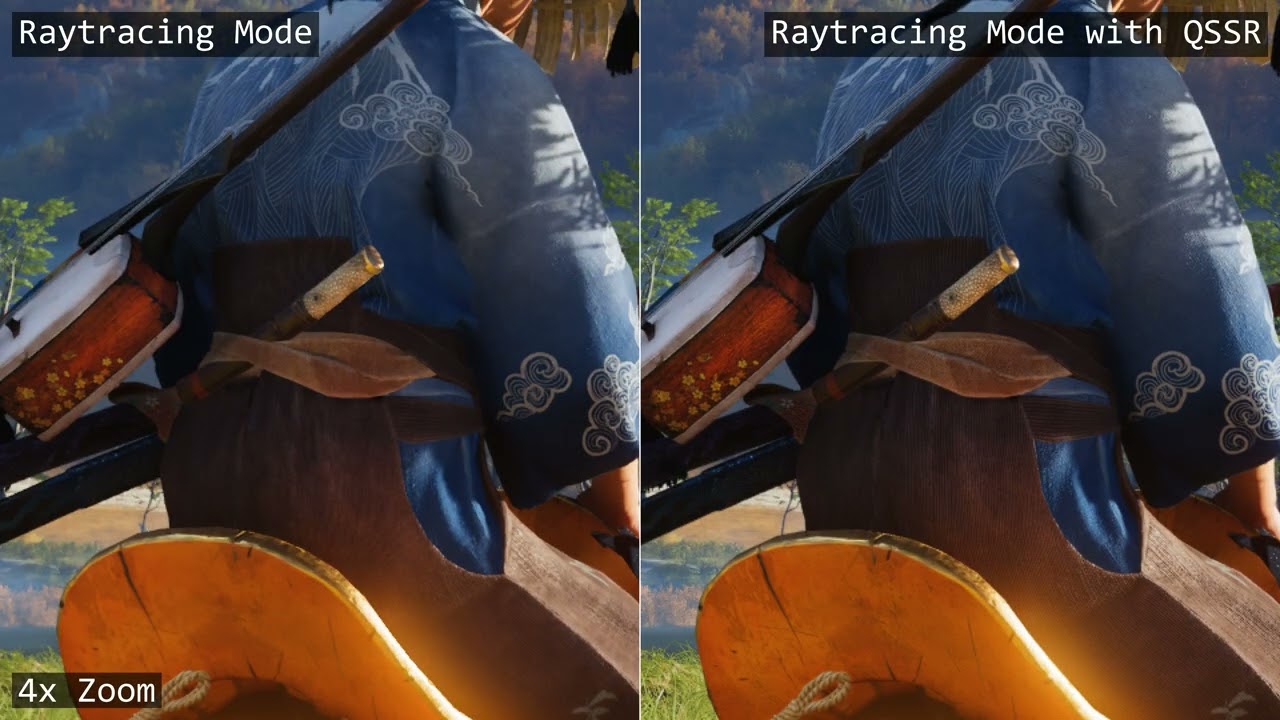
The practical benefits of this technology are already earning praise from the developers who are putting it to use. Mike Fitzgerald, the head of technology at Insomniac Games, shared his perspective on how QSSR has enhanced their development pipeline for Marvel’s Wolverine. According to Fitzgerald, the inclusion of the technology has yielded immediate, tangible improvements in how their game worlds are presented on screen.
"QSSR adds more pixel-level clarity and stability to our environments," Fitzgerald stated, noting that the technology is highly effective at "bringing out extra detail amidst the busy streets of Madripoor, the dense alleyways of Shinjuku, and many other areas across Logan’s epic journey." For players, this means that highly complex, high-frequency details—such as neon signs, distant foliage, and wet pavement—will no longer suffer from the distracting shimmering or blurriness that often plagues sub-4K resolutions on standard consoles.
While the gaming community is understandably excited about the debut of QSSR, several questions remain regarding its long-term implementation. It is still unclear how quickly other third-party developers will adopt the tool, and to what extent Sony will encourage studios to apply QSSR retroactively to the PS5’s massive back catalog of existing games. If widely adopted, QSSR could potentially revitalize dozens of older, resolution-compromised titles, allowing them to run with unprecedented clarity on standard hardware. For now, however, base PS5 owners have plenty of reason to be optimistic about the future of their current setups.
The announcement also serves as a welcome piece of consumer goodwill at a time when hardware manufacturers are facing increased scrutiny. Many players are still frustrated with Sony’s recent design choices, particularly the company’s decision to phase out physical disc drives on newer hardware revisions—a move that physical media collectors are unlikely to forgive anytime soon.
Nevertheless, the release of QSSR represents a rare and commendable move in the modern console landscape. It is highly unusual for a manufacturer to deliver a major, free architectural upgrade to a standard console nearly six years after its initial launch, especially when a much more expensive, premium successor is actively sitting on store shelves. By continuing to support and elevate the base PlayStation 5, Sony has ensured that millions of players can continue to enjoy high-quality, modern gaming experiences without being left behind by the rapid march of technology.