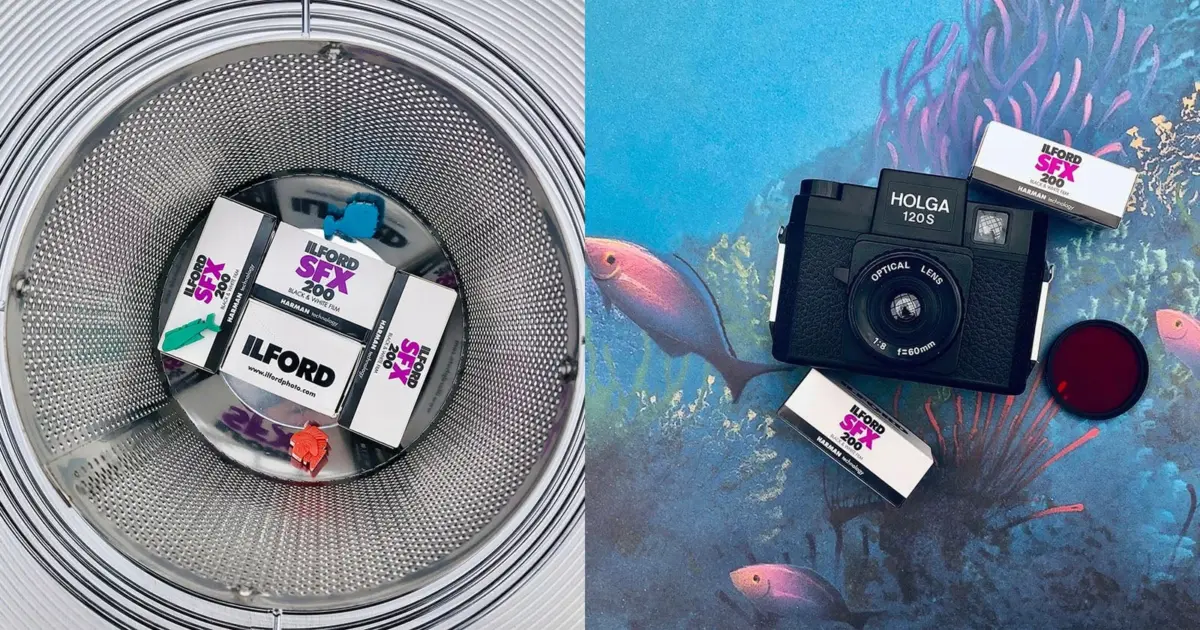
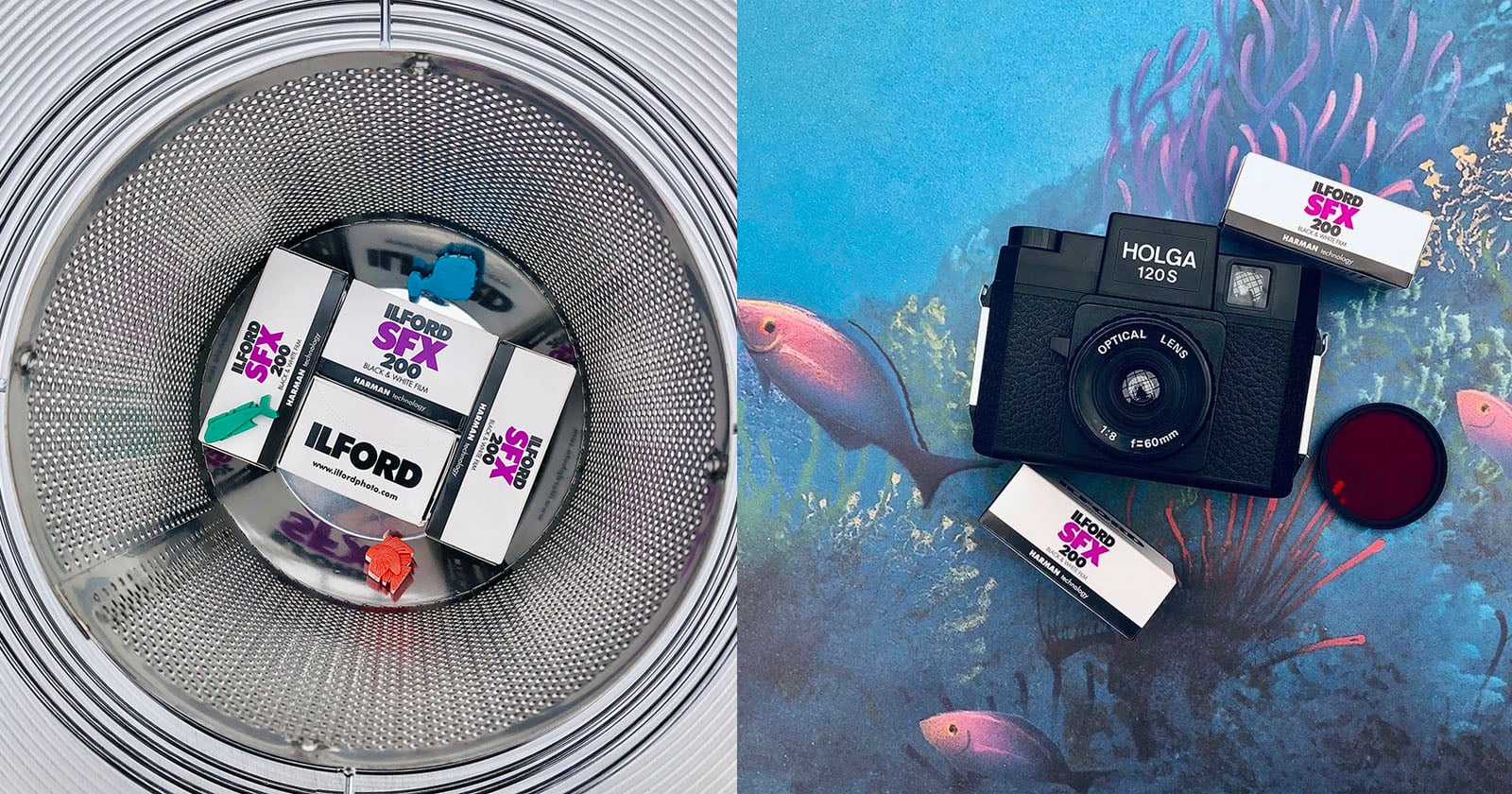
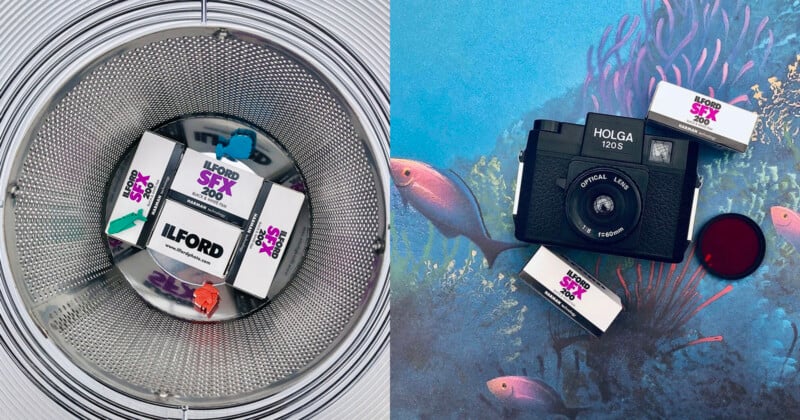
In the diverse and ever-evolving landscape of analog photography, certain combinations have achieved legendary status among enthusiasts. Staff members at Blue Moon Camera and Machine in Portland, Oregon, have long joked that pairing a Holga plastic camera with a heavy red filter and a roll of Ilford SFX is akin to shooting fish in a barrel—a setup where missing a compelling shot is virtually impossible. While that description leans slightly into hyperbole, it captures the undeniable reliability with which this unique film delivers striking, atmospheric results.
Ilford SFX is an ISO 200 black-and-white film distinguished by being both panchromatic and sensitive to the infrared spectrum of light. Photographers can shoot SFX just like any traditional black-and-white emulsion and achieve standard, dependable results. However, introducing a Red 25 or a dedicated infrared filter into the workflow is where the film truly transforms, unlocking a range of creative possibilities that elevate ordinary scenes into dramatic visual statements.
Having spent decades in Ilford’s product catalog, SFX has occasionally been viewed as a niche offering. Its history even includes a brief discontinuation in the early 2000s during a period of financial restructuring for the company. When Ilford successfully navigated those operational hurdles and emerged on the other side, SFX was triumphantly revived. Because it was brought back from the brink, it has affectionately earned the title of a "zombie film," making it a fitting topic of discussion around the Halloween holiday. Furthermore, its availability in both 35mm and 120 medium format configurations makes it a versatile, multi-format stock that appeals heavily to analog shooters working across different camera systems.
The core appeal of Ilford SFX lies in its superpanchromatic nature. While standard black-and-white films record visible light up to the edge of the red spectrum, SFX extends its sensitivity further. When paired with a heavy red filter, the filter blocks a significant portion of visible light, allowing the film’s near-infrared sensitivity to dominate the exposure. In landscape photography, this translates into deep, moody, nearly black skies that loom ominously over a scene, contrasted sharply against foliage that reflects high levels of infrared light. In portraiture, the film yields a surreal aesthetic characterized by glowing, luminous skin tones and dark, piercing eyes. Whether applied to expansive nature vistas or intimate human subjects, SFX offers an inherently playful and experimental medium for photographers seeking to break away from conventional rendering.
To master the nuances of SFX, understanding filtration is essential, and the Red 25 filter remains the most popular starting point. Accessible and relatively inexpensive compared to specialized scientific filters, a Red 25 requires an exposure compensation of approximately two and a half stops. Importantly, it allows enough visible light to pass through that photographers can still comfortably compose, focus, and meter directly through the viewfinder. For those working with SFX for the first time, industry veterans universally recommend beginning with a Red 25. As an added bonus, this specific filter proves useful across all standard panchromatic black-and-white films by enhancing contrast and tonal separation in everyday shooting scenarios.
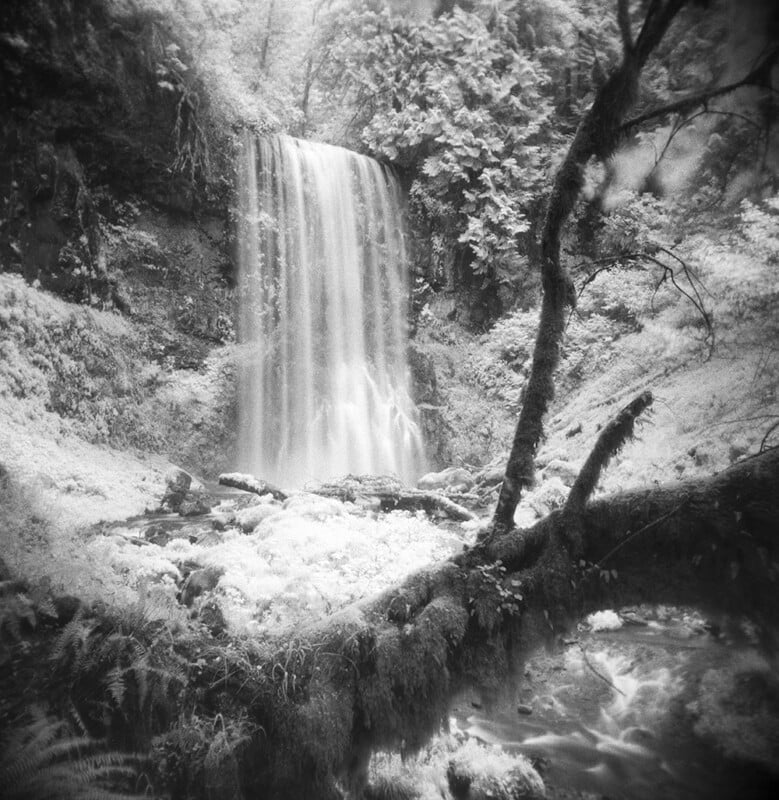
More advanced practitioners sometimes look toward a Red 29 filter, which offers a slightly deeper red filtration than the Red 25. Requiring roughly an additional half-stop of exposure compensation, the Red 29 pushes the infrared look a step further into dramatic territory. While the visual differences between the two are relatively subtle, photographers who stumble upon a Red 29 will find it a worthy tool, though hunting one down is not strictly necessary if a Red 25 is readily available.
Technically speaking, SFX is classified as a "near-infrared" film. This designation means its sensitivity covers the near-infrared spectrum, stretching from approximately 750 nanometers out to about 1,400 nanometers, bridging the gap just beyond the human-visible spectrum that terminates around 700 to 750 nanometers. It is worth noting that all consumer infrared films currently available on the market fall into this near-infrared category; even the legendary and now-defunct Kodak HIE infrared film only maintained sensitivity out to 900 nanometers. Despite this technical accuracy, the term "near-infrared" occasionally leads to misconceptions among photographers who mistakenly interpret it to mean "not quite infrared."
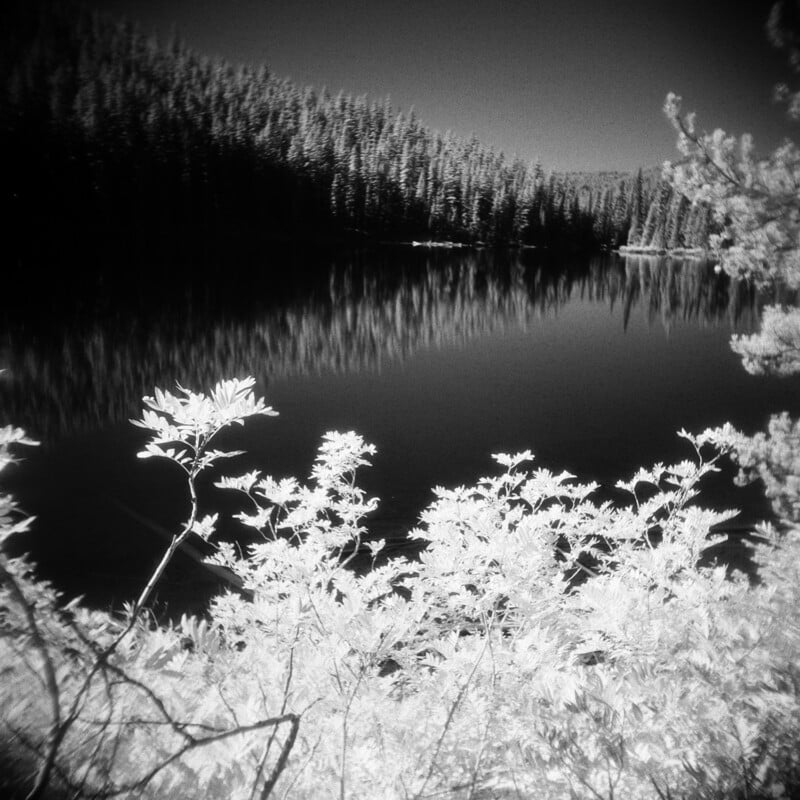
On the contrary, when paired with the correct optical filter, SFX is entirely capable of producing remarkable, true infrared imagery. Selecting the appropriate wavelength cutoff is the key to success. A favored choice among experienced infrared shooters is the R72 filter, which blocks out nearly all light below 700 nanometers. By effectively eliminating visible light exposure, the R72 forces SFX to operate almost entirely within the infrared spectrum.
Working with an R72 filter, however, introduces distinct operational challenges regarding exposure, composition, and focusing. Because the filter is opaque to visible light, it essentially blinds standard in-camera light meters, rendering through-the-lens metering unreliable. The standard workaround involves taking an unmitigated meter reading directly from the scene, or utilizing a handheld light meter or smartphone metering app, and then manually calculating the necessary filter factor adjustments. Many photographers who rely on R72 filters routinely bracket their exposures at plus six and plus eight stops, finding that the six-stop overexposure typically yields optimal density. Because infrared light behaves unpredictably depending on atmospheric conditions, having that extra bracketed safety margin acts as a reliable insurance policy.

Composing and focusing require equal care, as looking through an R72 filter reveals virtually nothing. Photographers typically mount their camera on a sturdy tripod, lock in their composition and initial focus before attaching the filter, and then screw the filter onto the lens immediately before tripping the shutter. While focusing is straightforward when working at medium to smaller apertures, shooting wide open at maximum apertures like f/2 or f/2.8 demands caution. Infrared light focuses at a slightly different plane than visible light. To compensate, photographers often need to adjust their focus slightly closer than the visual indicator suggests, a mechanical reality acknowledged by traditional lens manufacturers who frequently etched small red infrared index marks directly onto manual focusing barrels.
Beyond its infrared capabilities, Ilford SFX possesses distinct physical and aesthetic traits that define its character. Chief among these is its pronounced grain structure. SFX is exceptionally grainy—noticeably rougher than standard ISO 400 black-and-white stocks, and grainier than hypothetical high-speed ISO 800 counterparts. Whether this heavy grain is viewed as an artistic asset or a drawback depends entirely on individual taste. For lovers of gritty, tactile analog textures, the grain is a compelling reason to embrace the film; for those who prioritize smooth tonal transitions and fine detail, approaching SFX requires a degree of caution.

Even without filtration, Ilford SFX delivers robust, punchy contrast straight out of the box. While red and infrared filters push that contrast to dramatic extremes, the unassisted film naturally favors a bold, graphic presentation over a subtle tonal whisper. It is a medium designed to make a definitive statement.
Ultimately, the enduring appeal of Ilford SFX rests on its ability to render the familiar world in an unfamiliar, captivating light. Transforming ordinary landscapes into eerie, dreamlike environments and giving subjects an otherworldly glow, SFX offers a deeply rewarding experience. For photographers who have yet to test its limits, rolling a few frames through a vintage camera reveals a strange and beautiful perspective that makes the exploration well worth the effort.
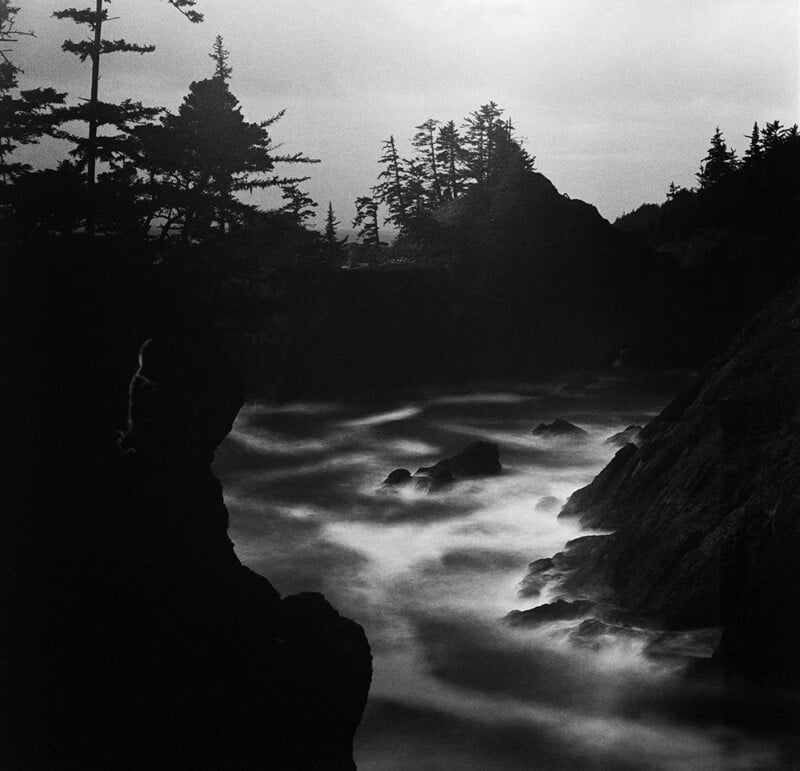
Ilford SFX is available in both 35mm and 120 formats for enthusiasts looking to explore near-infrared photography.