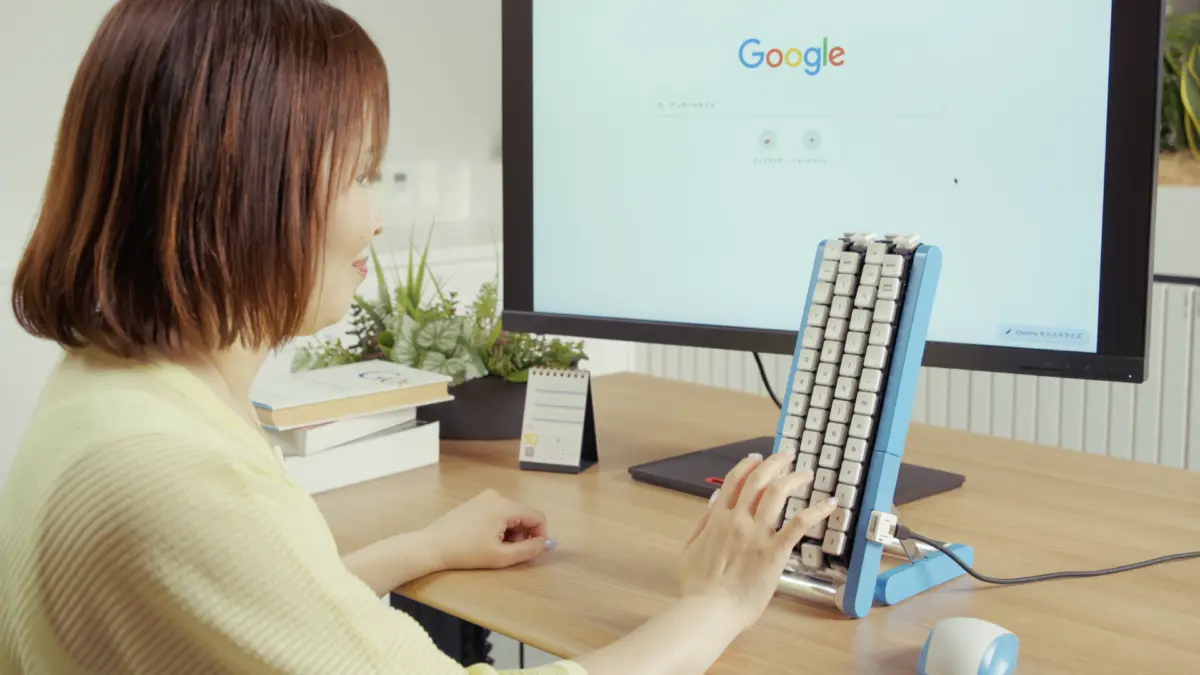
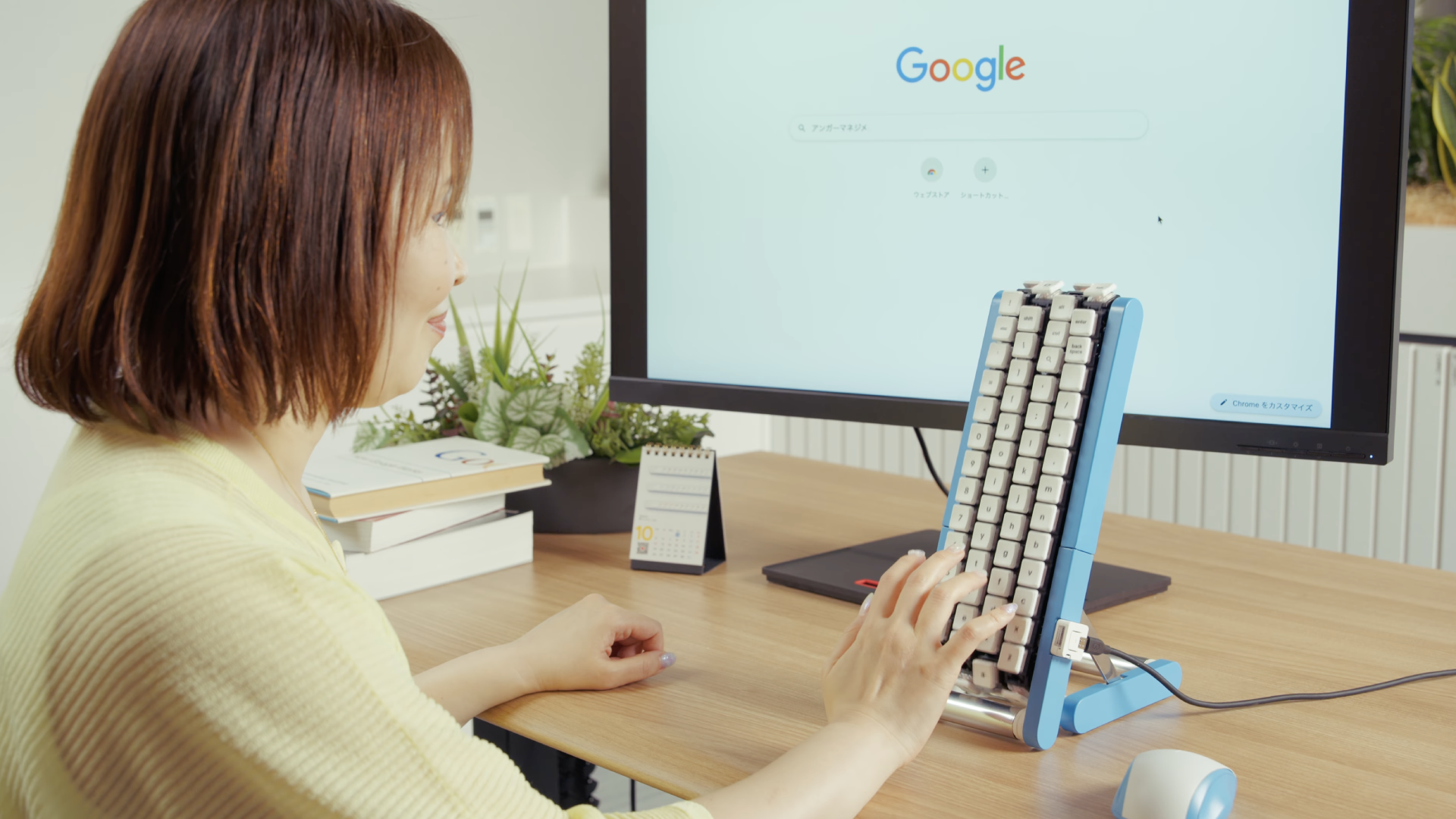
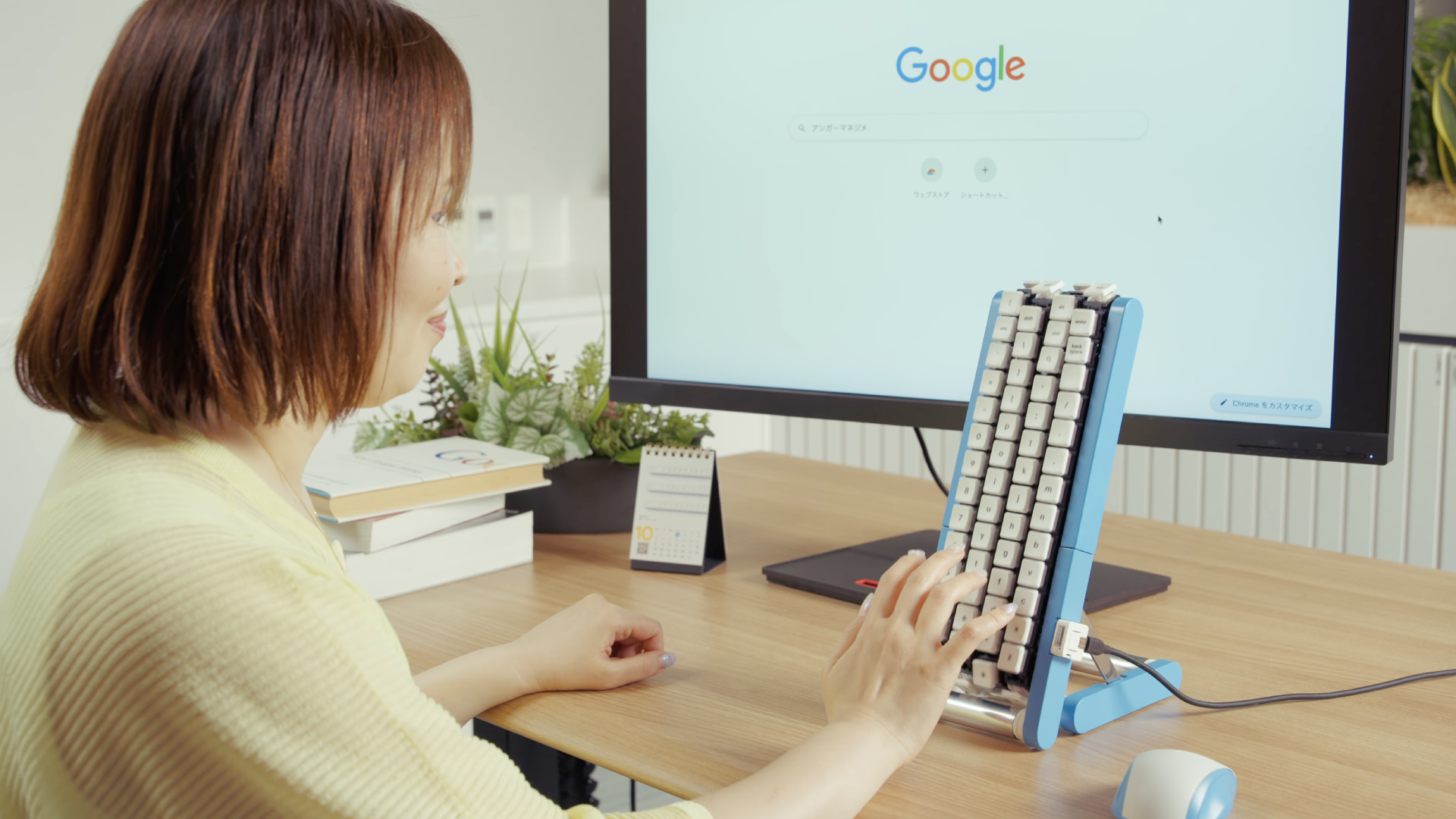
Revealed through a promotional video posted to YouTube, the Gboard Conveyor Belt Version reimagines the classic desktop input device by taking inspiration from industrial manufacturing lines. Rather than featuring a static grid of keys that a user must actively reach across with their fingers, this unconventional concept relies on four columns of vertically stacked keys that continuously rotate on a mechanized belt. The foundational premise of the device is simple yet absurd: instead of forcing the user’s hand to travel across a traditional QWERTY layout, the typist simply rests their hand in one spot and waits patiently for the desired character to arrive at their fingertips.
As the official product video cheekily points out, just as factory conveyor belts radically accelerated industrial manufacturing and production output over the past century, the Google Japan engineering team wondered if they could streamline everyday typing in the exact same mechanical way. According to the team behind the project, this novel key advancement allows users to fluidly convey their ideas. With individual keys streaming continuously beneath the fingertips, the device aims to usher in a whole new era of what Google playfully describes as "touch-and-go typing," where the user simply touches the key as it goes by.
While seasoned tech observers might initially mistake the announcement for an elaborate April Fools’ joke or a lighthearted satire on modern ergonomic design, Google Japan has a rich, well-documented history of developing genuinely tangible, albeit entirely impractical, physical keyboard prototypes. Over the past few years, the division has consistently delighted the tech community with a string of similarly bizarre hardware concepts. These past experiments include a famously circular rotary keyboard that forced users to dial in characters like an old-fashioned telephone, and an absurdly long, single-file stick keyboard that spanned an entire room and required multiple people to operate effectively. Yet, despite the stiff competition from its own past inventions, the conveyor-belt keyboard might just stand as the most delightfully chaotic design yet.
Despite the obvious impracticality of trying to compose a professional email or engage in fast-paced gaming while characters scroll past like luggage on an airport baggage claim, Google Japan is not treating the concept as a one-off joke. The development team has already outlined plans for future iterations and functional upgrades to the conveyor-belt design. Among the proposed improvements are multiple colorway options to match modern desk aesthetics, alongside a specialized high-speed operating mode that the team claims is ideally suited for developing advanced hand-eye coordination.
Additionally, the engineers are reportedly working on swap-in cardboard keycaps designed specifically to accommodate daily nail care routines, addressing a very niche ergonomic concern that standard mechanical keyboards completely ignore. Perhaps the most amusing planned feature, however, is an upcoming voice guide mode. In this mode, the keyboard will vocally read out the passing keys aloud as they stream past the user’s fingers, creating an auditory landscape of constantly scrolling letters to ensure total typing accuracy. As the Google Japan team concluded in their presentation, the conveyor-belt system is ultimately designed as a keyboard for the era to come.
For longtime observers of the tech industry, these playful hardware experiments offer a distinct sense of nostalgia. They serve as a gentle reminder of the idiosyncratic culture that tech giants like Google once embraced more freely before evolving into massive, highly corporate enterprises focused primarily on profit margins and algorithmic optimization. While the main corporate entity has largely transitioned into a more rigid, efficiency-driven machine, the engineers at Google Japan continue to preserve a sense of humor and creative freedom, ensuring that the tech world occasionally receives a product designed purely for the joy of engineering absurdity.