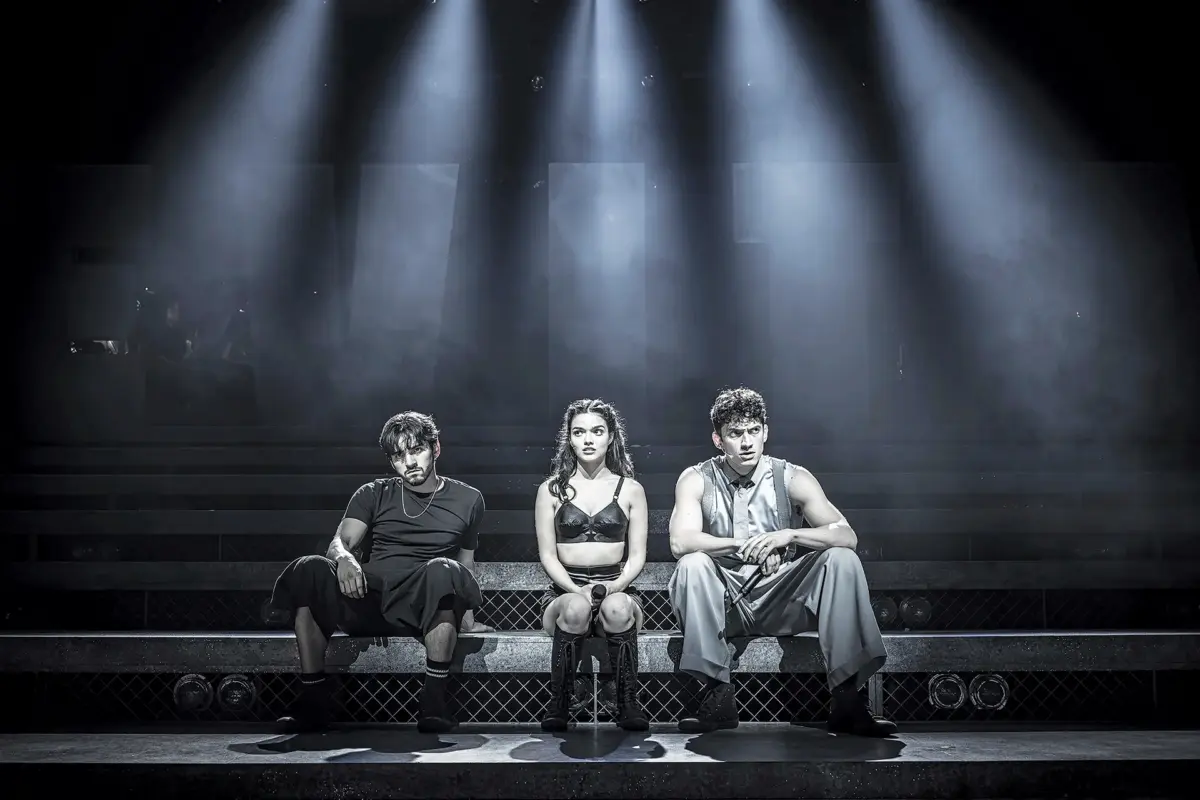
Rachel Zegler initially harbored a healthy dose of skepticism when director Jamie Lloyd pitched his radical vision for their West End revival of Andrew Lloyd Webber’s iconic musical, “Evita.” In Lloyd’s modern-day reimagining, Argentine first lady Eva Perón is portrayed as a contemporary pop superstar—complete with Coachella-inspired energy and Dua Lipa-esque styling. The production’s most ambitious staging choice involved the show’s signature emotional ballad, “Don’t Cry for Me, Argentina.” Lloyd wanted Zegler to perform the number live from a balcony facing the street outside the London Palladium, while theatergoers inside watched the performance broadcast on screens.
"I just remember thinking, ‘Well, it will be unbelievably embarrassing if nobody comes,’" Zegler recalls with a laugh. "It would be amazing if we could have paid extras, like a film set."
As it turned out, her concerns were entirely unfounded. “Evita” quickly became the hottest and most sought-after ticket of the summer in London. Every single night, hundreds of theater enthusiasts and curious onlookers gathered outside the Palladium entirely for free, craning their necks to watch Zegler belt out the powerful ballad to the masses below. Although Lloyd’s bold staging choices sparked plenty of debate among traditionalists, the balcony sequence was far more than a mere publicity gimmick. The musical itself chronicles the remarkable rags-to-riches life of Eva Perón, and the street-facing scene powerfully symbolized her enduring solidarity with the working-class public.
Following its triumphant run in London, “Evita” is now preparing to make its highly anticipated transfer to Broadway in the spring, taking over the Winter Garden Theatre. Naturally, theater fans are already clamoring to figure out how Lloyd intends to adapt the iconic balcony sequence to fit the chaotic landscape of New York City’s Times Square. However, Zegler is keeping her lips sealed, refusing to give away any surprises before opening night.
"It’s a different city, and we’re at the heart of a completely different amount of foot traffic and actual traffic," she notes. "We are working tirelessly to bring something special for that moment."
The upcoming Broadway run marks a triumphant homecoming for the 25-year-old New Jersey native. Zegler was famously plucked from relative obscurity as a high school student to lead Steven Spielberg’s acclaimed 2021 film adaptation of “West Side Story.” She quickly parlayed that breakout success into a string of major leading roles across film—including “The Hunger Games: The Ballad of Songbirds & Snakes” and Disney’s live-action “Snow White”—as well as prominent theater stages, such as her role in the Broadway revival of “Romeo + Juliet.”
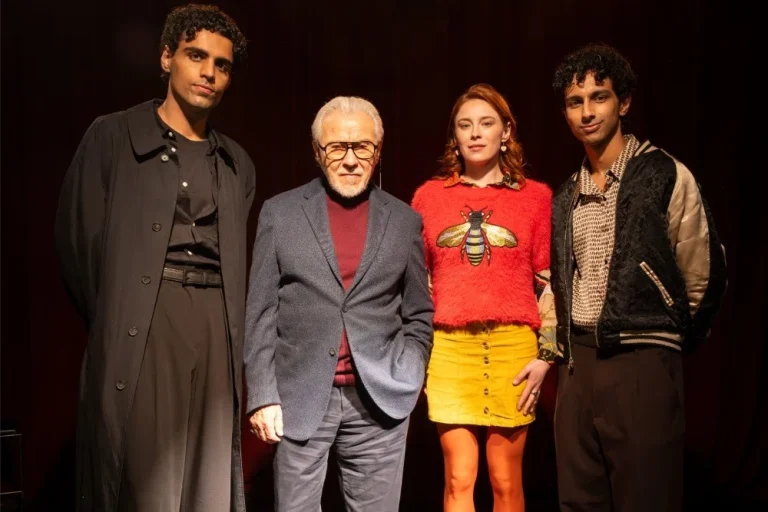
Joining Zegler to recapture the electric atmosphere of “Evita” on Broadway are her talented West End co-stars, Diego Andres Rodriguez and James Olivas. Rodriguez, 25, who portrays the everyman narrator Che, is returning to the New York stage following his standout turn in Lloyd’s equally popular revival of “Sunset Boulevard.” Meanwhile, 29-year-old Olivas is making his official Broadway debut stepping into the role of President Juan Perón.
While a long roster of theater luminaries and global superstars—ranging from Elaine Paige, Patti LuPone, and Mandy Patinkin to Madonna and Antonio Banderas in the 1996 film adaptation—have brought “Evita” to life over the decades, this new production holds a distinct historical significance. As Zegler, Rodriguez, and Olivas emphasize, Lloyd’s production is entirely unique because its three lead performers are all Latino, a profound responsibility none of them take lightly.
"It’s too hard to comprehend what this moment will be," Rodriguez reflects. "लेकिन [But] we’re all going to enter with ganas—desire—to spread the message of why we, as Latinos, should be onstage all the time."
Months ahead of rehearsals kicking off for the Broadway transfer, the trio gathered via Zoom to reflect on the immense success of their West End run and discuss society’s enduring, complex fascination with celebrity politicians.
What were your first impressions of each other?
Rachel Zegler: As soon as Diego had been cast as Che, I went to see him in “Sunset Blvd.” I was immediately taken with him. I didn’t get to meet James until our first day in London. My first impression was, "He is so tall. I don’t know what I’m going to do eight times a week, having to kiss this really tall man and hurt my neck." And then I immediately fell in love with him, just like everybody else on that job.
Diego Andres Rodriguez: I remember being 17 and watching “West Side Story” in the theaters. I was like, "This is exactly what I want to do." It’s such a full-circle moment to take the stage with Rachel. And I finally met James in London. I was like, "I think he’s one of those California guys." Then he was like, "Bro, I’m from Texas." I was like, "Bro, I’m from Texas." We were living in the same building and were on the train every day for rehearsals, and so we had a lot of time to get to know each other. He found a brother in me.
James Olivas: Like Diego said, we immediately connected as Tejanos. It’s crazy that one of us made it; the fact that two of us made it was even wilder.
What did you learn about doing the show in London that you’ll take with you to New York?
Zegler: It requires an insane amount of stamina. Diego and I don’t leave the stage. London was amazing to understand how to pace ourselves. Theater is a sport, more vigorous than most, in the sense that most athletes aren’t playing eight games a week. We’re doing eight shows. It’s tough on the body. It’s tough on the voice. It requires an intense amount of rest. Knowing when to shut up is really the most important thing.
What was it like to have masses of people show up for the balcony sequence?
Zegler: It took one tech rehearsal for people to start paying attention. I was doing it with just a piano—we were testing the speakers and cameras. The next day, they were showing up in hordes.

Why did it become such a moment?
Zegler: It was a conversation about accessibility in theater. People were able to witness something for free on Argyll Street every night. You could hear a pin drop in that square. It was unbelievable. Something I’ll never forget is the sheer amount of people on the last night. There were more people outside than inside the theater. I couldn’t see the end of the crowd.
Andrew Lloyd Webber had expressed a safety concern about staging the sequence on Broadway because of gun violence in the U.S. Was that a worry?
Zegler: We were very fortunate with the London Palladium to have essentially a half street that was rarely used for cars and trucks. It won’t be the same in New York.
Will the essence of it, Eva performing to the people, be preserved?
Zegler: At the core of “Evita” is that Eva Perón was for the people, and so there is always going to be an intention of incorporating a connection between Eva and her public.
Did you study any prior “Evita” performances as inspiration for your characters?
Olivas: I had to distance myself from what Peróns came before me because I can’t be a 50-year-old man doing this role; no one’s going to buy it. I took threads of what came before, but I had to surrender to the idea that it has to be so uniquely myself.
Zegler: Jamie and I had a conversation after my initial audition for the role. We talked about doing this like a Coachella set. This performance is very much like Beyoncé at Coachella and costumes inspired by Dua Lipa. We end up accentuating how we hold politicians and celebrities to similar standards in the current day and age. Eva Perón was a perfect example of a celebrity politician and how that never really changed.
Why are audiences so drawn to the intersection of celebrity and politics?
Zegler: We live in a society where everything is so immediately accessible. We know everybody’s thoughts and feelings about everything, and therefore the line between celebrity and politician is blurred. It permeates every conversation that most socially conscious people are having these days.
Rodriguez: The show is incredibly political, this new take on it. We have this responsibility to show up as Latinos who are meeting this show at a political point. It is political for us three to be up there.
What does it mean for the three of you to transfer with the show to Broadway?
Zegler: I was born and raised in New Jersey. I moved to New York when I was 17, and I’ve spent every waking minute of my life obsessed with Broadway. Anytime I get to come back to New York theater is a huge honor, and it’s not something that I take lightly. It’s really important for young people like us to see Latin bodies onstage, experiencing joy and success. I really hope that it inspires another generation of Latin performers.
Rodriguez: It shows a turning of the tides.
Olivas: There is such a prevailing narrative in this industry and this country of what the Latino community is, who we are and the content of our character. It’s amazing to show a positive representation of our community and show that we come in all shapes and sizes and have so much to offer.
This is such a high-energy show. How do you recover after a performance?
Zegler: I become like a ravenous pubescent teenage boy. I would stage door for a while and then I would order food so it would meet me at home. I would walk the dog, eat food, take a shower and then steam my throat while watching “Gilmore Girls” or “How I Met Your Mother.” I would go to bed around 2 a.m. when my adrenaline would finally dissipate.
Rodriguez: I took so many showers. I take, like, four a day anyway.