Meta is reportedly gearing up to shake up the wearable tech and extended reality landscape with a forthcoming virtual reality device that aims to achieve a delicate balance that has thus far eluded the industry. Rather than positioning itself as the absolute most powerful, feature-laden, or technologically radical headset on the market, Meta’s upcoming VR glasses are designed to hit a sweet spot involving comfort, capability, and—crucially—affordability.
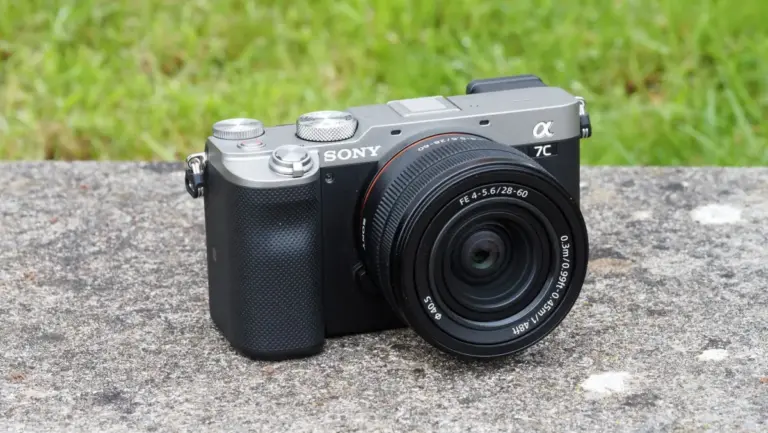
The company has already carved out a dominant, albeit occasionally controversial, space in the wearable camera market. Through popular iterations like the Ray-Ban Meta Gen 3 camera glasses, Meta has successfully captured consumer interest. These devices function essentially as stylish sunglasses equipped with a discrete built-in camera and a voice-powered artificial intelligence assistant. Retailing around the $300 mark, they have proven that consumers are willing to adopt smart eyewear if the form factor remains familiar and the price point is approachable.

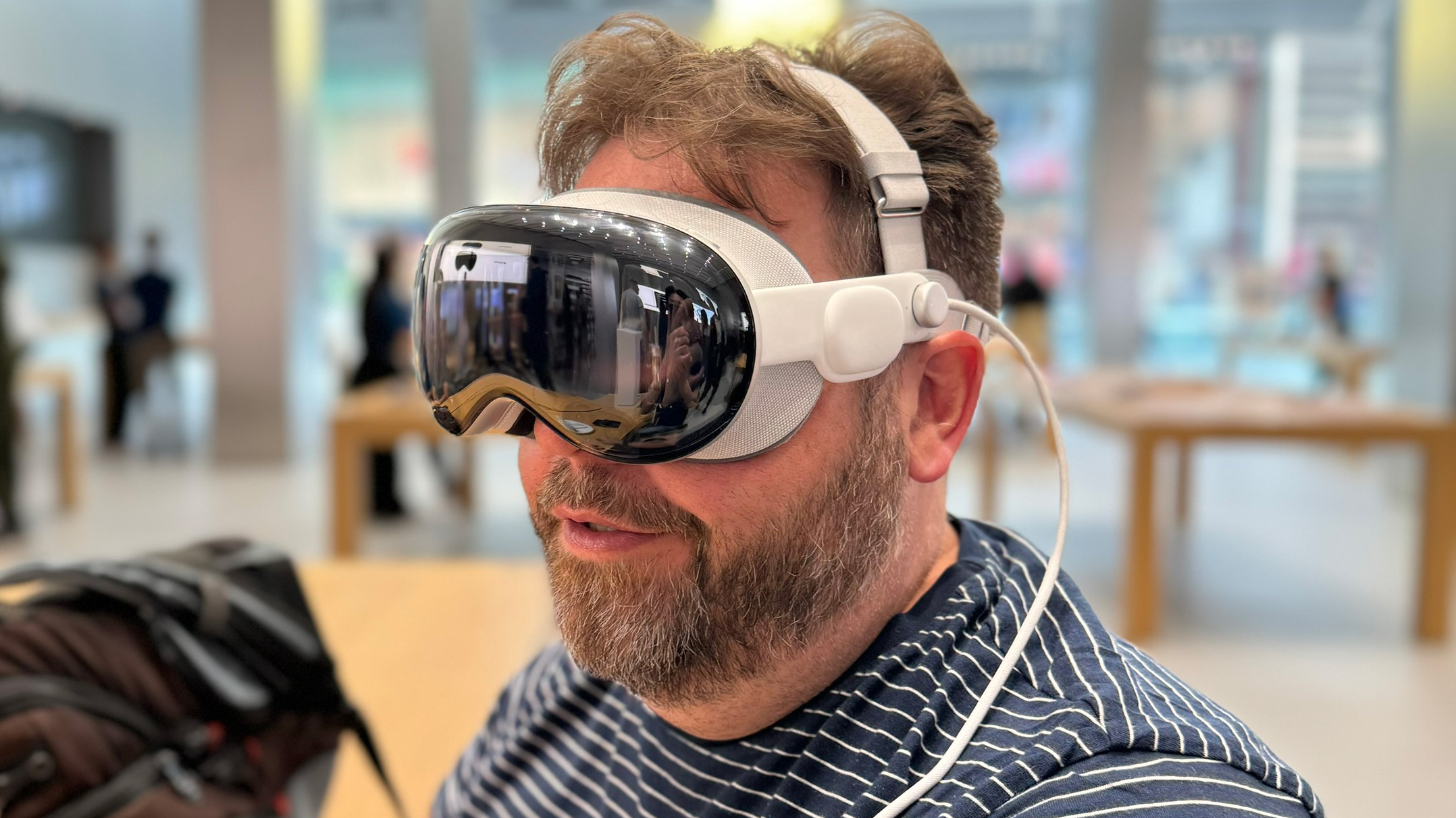
At the other end of the spectrum, Apple entered the spatial computing market with the Apple Vision Pro. A carefully tested, refined, and technically incomparable piece of engineering, the Vision Pro certainly impressed industry observers and early testers with its high-resolution pass-through and sophisticated interface. However, the device suffered from two major stumbling blocks that prevented mainstream adoption: it carried a hefty price tag well north of $3,000, and its bulky, ski-goggle aesthetic made it an impractical choice for everyday consumer wear.
Compounding these design challenges, momentum for ultra-premium spatial headsets has shown signs of slowing. Market analysts and industry reports have noted that Apple subsequently reduced manufacturing orders for the Vision Pro, while consumer enthusiasm has faced headwinds due to the sheer cost and physical footprint of high-end headsets. For consumers caught in the middle—those who want more than basic camera glasses like the Ray-Ban Gen 3, but find devices like the Vision Pro too expensive, heavy, and socially intrusive—a gap in the market has emerged. Meta’s upcoming VR hardware appears to be aggressively pitching itself as the definitive solution to that exact dilemma.
The strategy builds upon technologies Meta has already explored. The company previously developed variants such as the Meta Ray-Ban Display, which integrated an internal display capable of projecting information directly into the wearer’s field of view. Users could interact with this projected interface using a specialized wristband, an approach that extended standard smart glass capabilities far beyond simple photo-capturing and audio playback. While not aiming to directly challenge the deep enterprise and spatial processing power of a Vision Pro, such innovations easily outstripped older historical milestones like the original Google Glass, laying the groundwork for a more immersive operating system.
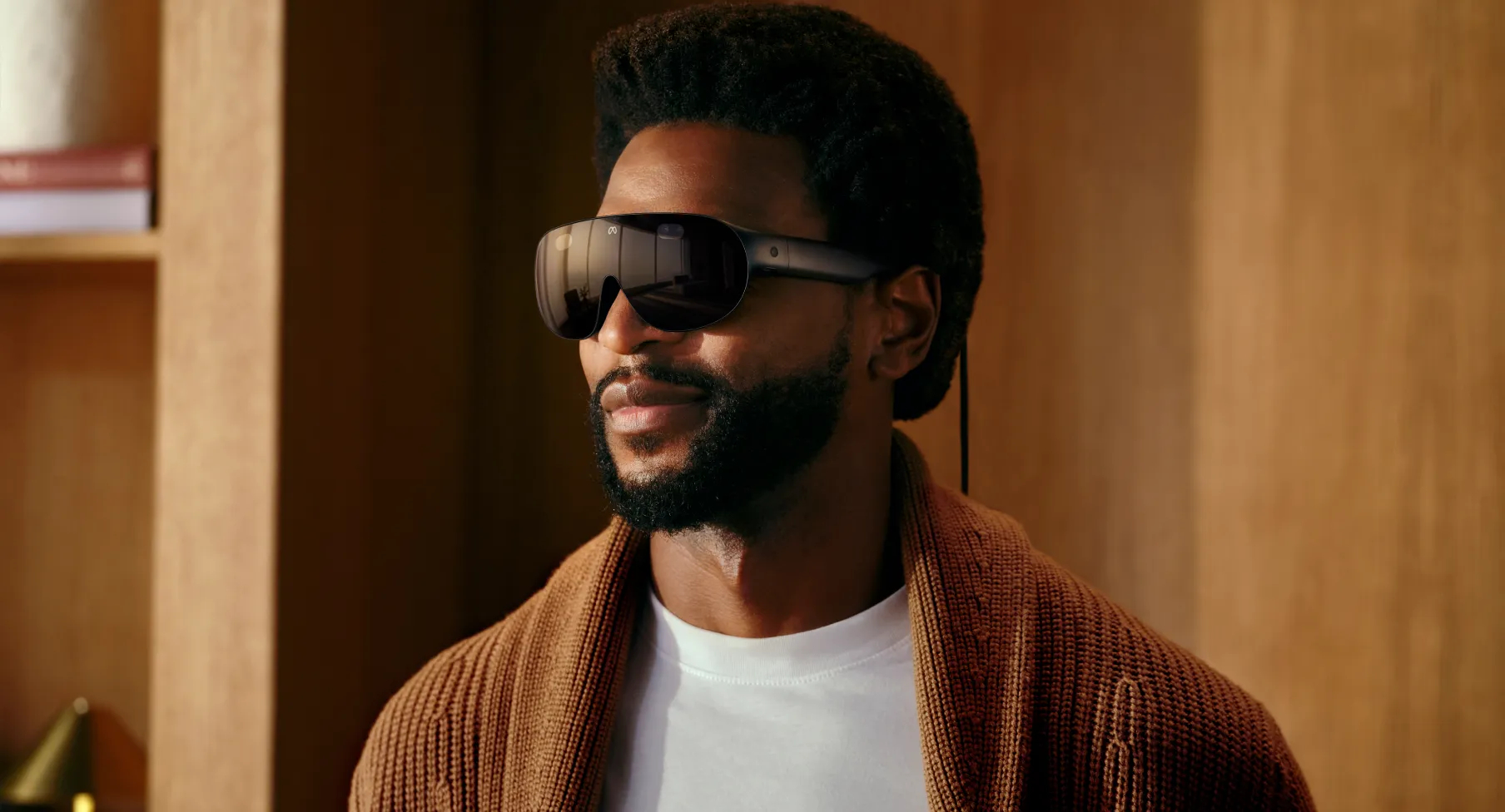
Having established a functional on-screen operating system ecosystem, a growing consumer market for smart eyewear, and prominent lifestyle brand partnerships, Meta found itself well-positioned to develop a dedicated virtual reality glasses concept.
Unlike lightweight audio-and-camera frames, these upcoming Meta VR glasses lean significantly closer to a traditional headset design by obscuring the user’s eyes with an opaque, goggle-like cover. Equipped with exterior cameras, the system generates a virtual world projected directly onto the user’s view. Much like Apple’s approach, everything perceived by the wearer is the result of digital computation and video pass-through rather than a purely transparent optical lens. While pass-through technology inevitably introduces the slight visual limitations and minor processing delays characteristic of digital camera sensors, the technological upshot is a versatile display system capable of projecting multiple virtual windows or transforming a user’s surroundings into a giant private cinema.
Much like Apple’s spatial computer or the first-person view goggles long utilized by drone enthusiasts, Meta’s new hardware design relies on an external cable and power puck configuration to handle energy storage and computing demands. This architecture helps keep the headset itself remarkably lightweight, weighing in at a mere 100 grams. Because traditional VR devices typically require heavy headstraps to support their bulk, keeping the physical weight down to a level comparable to traditional glasses represents a significant engineering achievement for a fully realized virtual reality display system.
This hardware direction arrives as a slightly unexpected pivot from a company that only months earlier scaled back some of its Meta Quest gaming hardware initiatives. Industry watchers presume that contraction was part of a broader strategic reallocation, as Meta funneled resources into expanding its portfolio toward more versatile, everyday-capable hardware platforms.
Significantly, the upcoming Meta VR glasses abandon the physical wristband previously relied upon by earlier experimental display prototypes. Instead, the company has reportedly mastered advanced hand-tracking algorithms capable of detecting subtle pinch controls directly—a hands-free interaction method mirrored by competitors like Apple, Samsung, and Snap with its SPECS line. Furthermore, for users seeking productivity on the go, Meta’s system incorporates environmental awareness software designed to detect flat horizontal surfaces, such as a coffee shop table, and project a virtual keyboard directly onto the physical space for immediate typing utility.
While official technical specifications remain unconfirmed and the hardware is not expected to hit the market until the spring of 2027, Meta has disclosed one critical piece of information that has immediately dominated industry discussions: a targeted price tag of $1,299, translating to just under £1,000.

Given the soaring costs associated with advanced silicon chips, the premium pricing of rival devices like the Apple Vision Pro, and the recent competitive moves made by companies entering the smart eyewear space, Meta’s pricing strategy represents a bold financial commitment. By undercutting heavy spatial computing competitors while offering significantly more immersive visual capability than basic camera frames, Meta may well be positioning itself to capture and define the next major wave of the consumer smart eyewear market.