Through vivid collages layering fragments of paper, fiber, and discarded print media, contemporary artist Clotilde Jiménez echoes a complex mélange of personal experiences, global histories, and deep-seated familial truths. Based in Mexico City, the artist was born in Honolulu to a Puerto Rican mother and an African-American father. His formative years unfolded across Philadelphia, followed by university education in Cleveland and London. This nomadic upbringing, combined with a rich multicultural heritage, provides a foundational framework for his artistic practice. Jiménez’s works routinely draw vital references from the distinct cultural, social, and political contexts of each locale he has called home, weaving a tapestry of identity that is as geographically diverse as it is emotionally resonant.
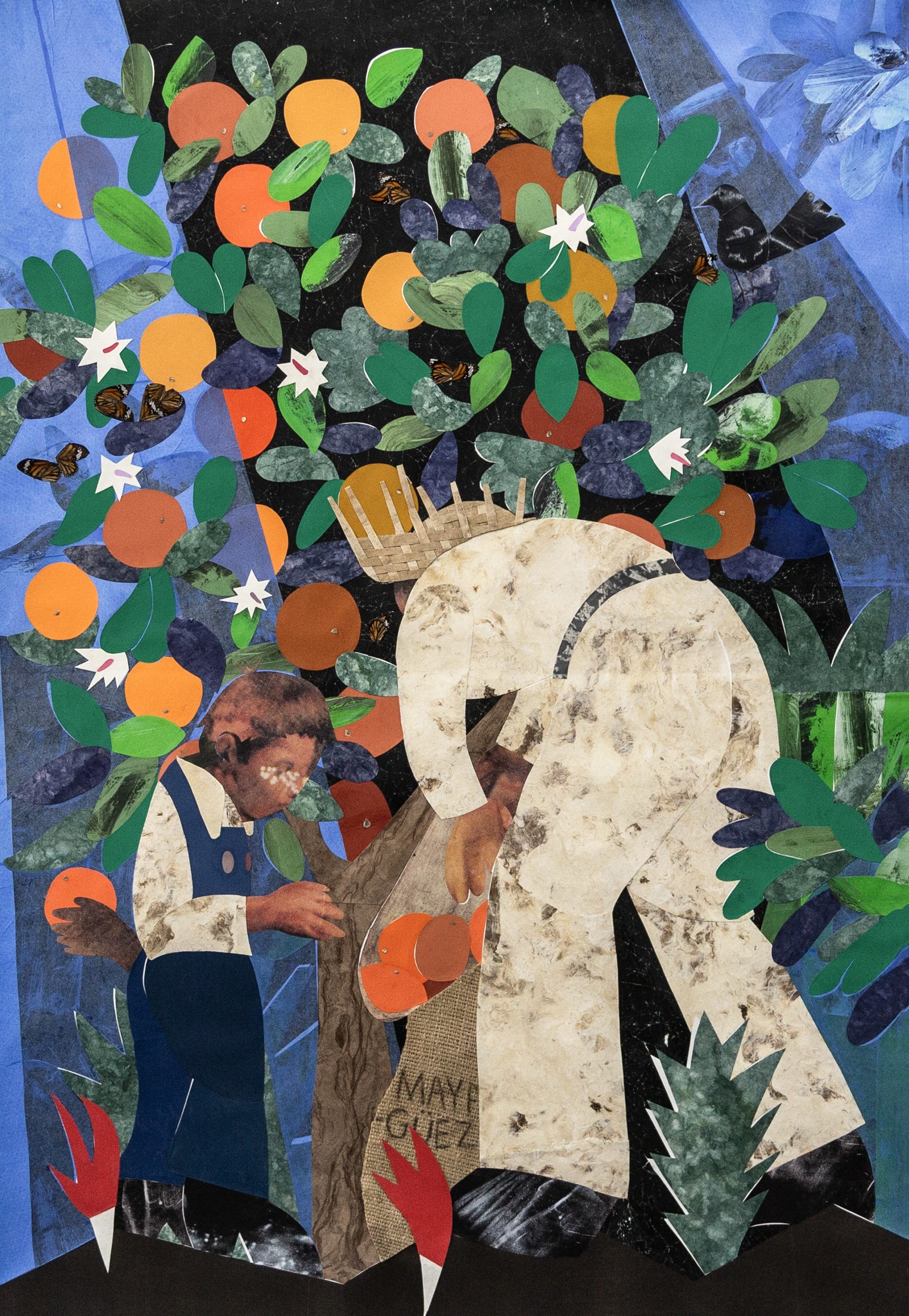
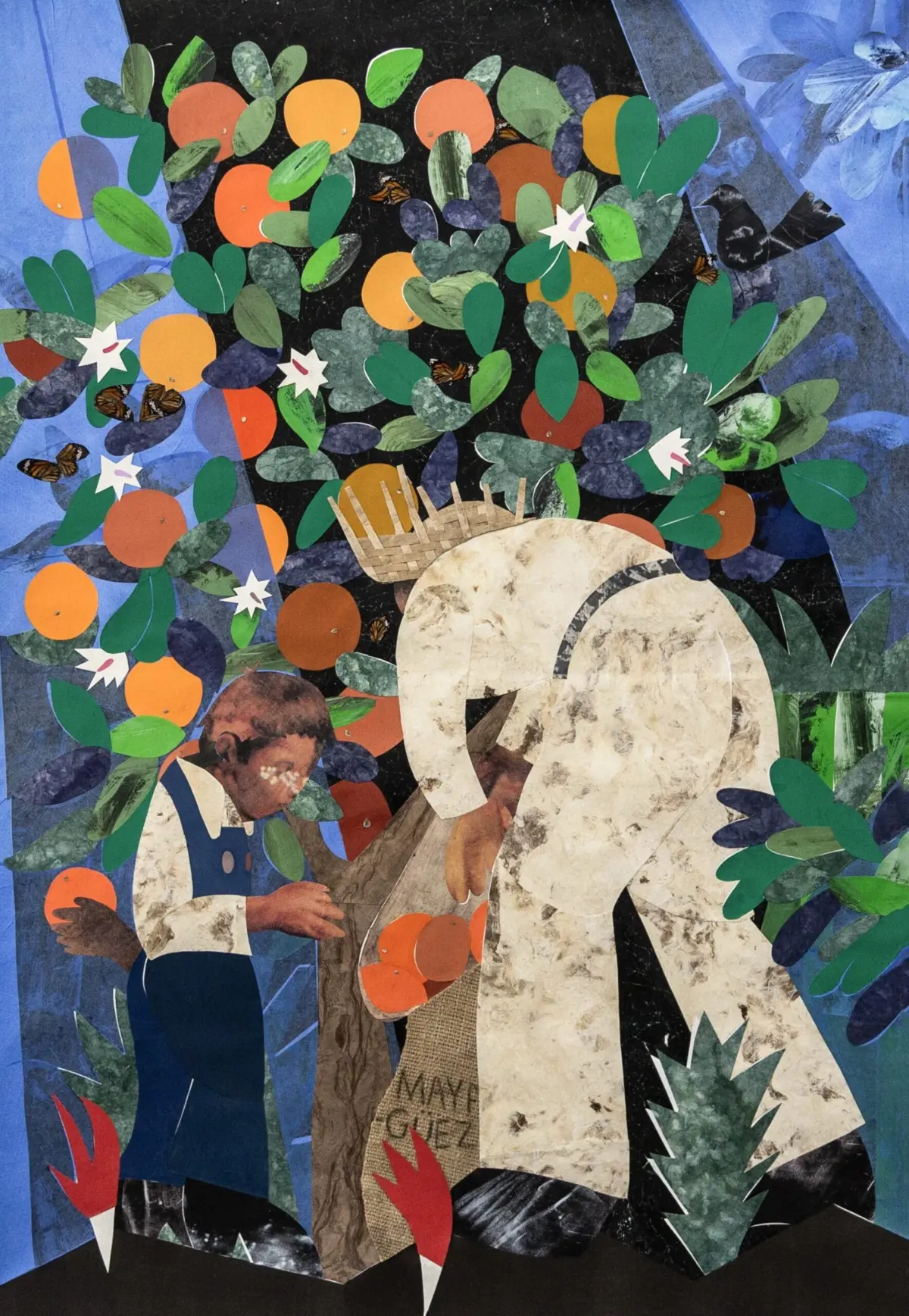
Working with a tactile palette of magazine clippings, Mexican craft paper, textiles, and other pliable materials, Jiménez fashions dense, layered portraits of his family alongside archetypal depictions of Blackness and masculinity. His creative process transforms flat surfaces into rich, multidimensional narratives. Fragments of rough burlap and thin woven strips add tangible texture, for instance, to “China de Mayagüez,” a vibrant autobiographical piece that portrays a young Jiménez alongside a family member named Juan. Rendered as a jíbaro—a traditional Puerto Rican countryman—Juan evokes the enduring subsistence farming traditions of the island. Together, the pair are depicted picking oranges from laden branches, while delicate monarch butterflies flutter among the sun-drenched fruits, creating a serene yet culturally potent tableau.
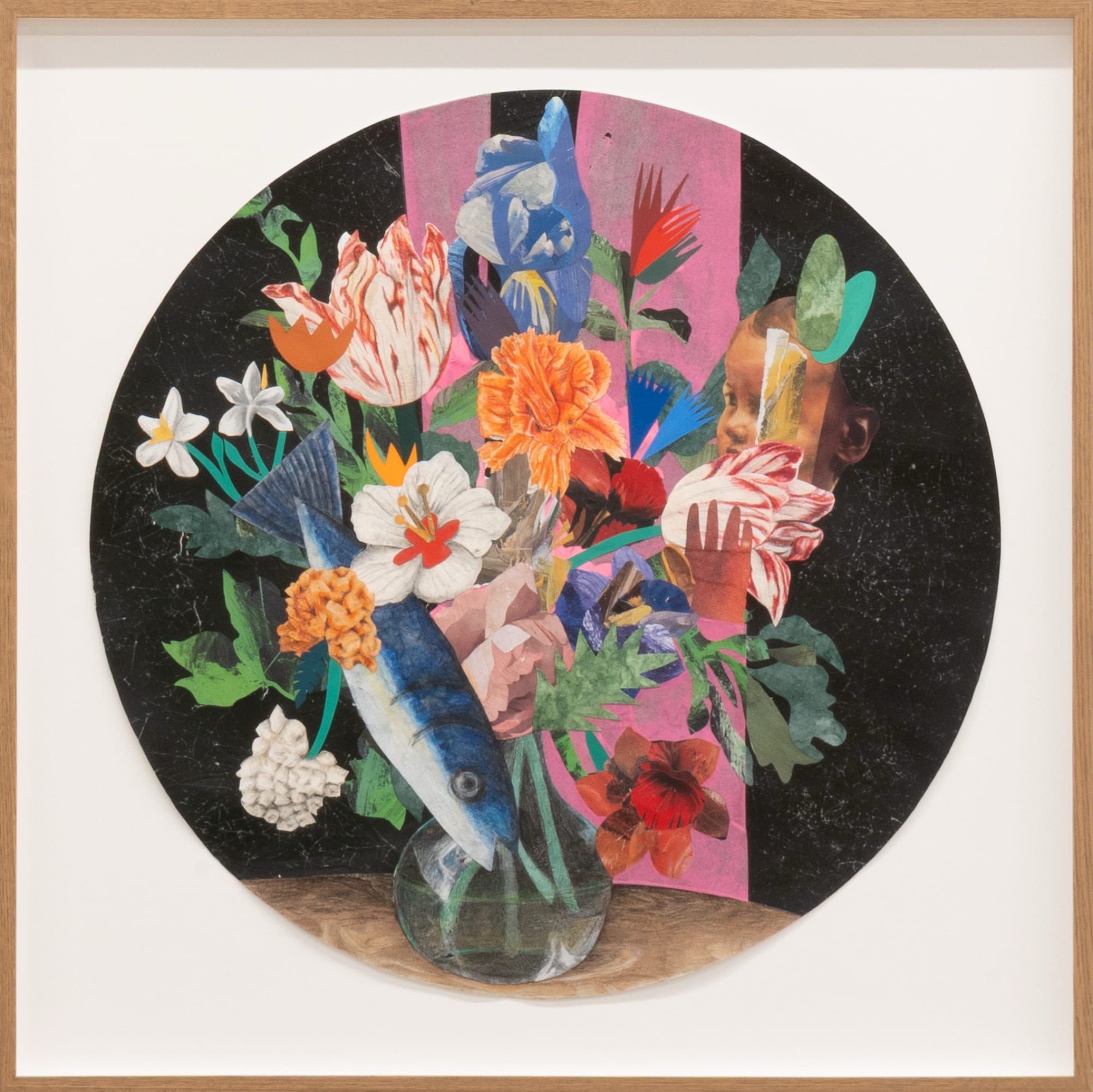
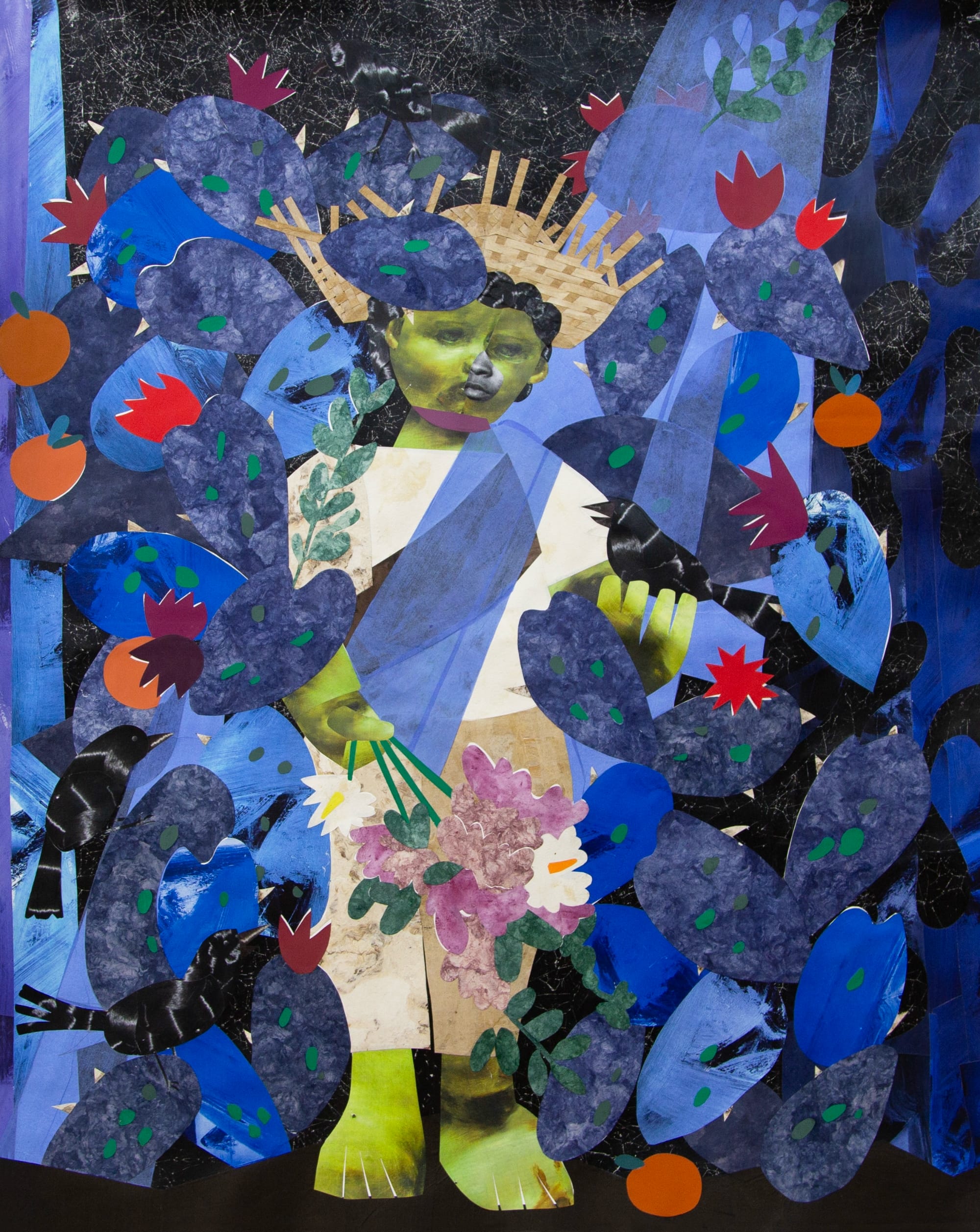
The distinct woven hat worn by the jíbaro also reappears in “The Nightcall,” where it crowns a woman enveloped in the deep, brooding blue light of night. In this compelling composition, black birds with iridescent, shiny plumage and blooming cacti flank the central figure, while a delicate bouquet hangs limply from her hand. These floral elements are not isolated motifs; fresh, vibrant blooms also feature prominently in the artist’s ongoing Flower Portal series. These striking circular works draw deliberate inspiration from Dutch Golden Age still-life paintings, translating historical European aesthetics into a contemporary diasporic vernacular. Within these portals, unexpected elements like fish, human faces, and dramatic beams of light augment the lush bouquets, serving as poignant artistic references to both the fleeting nature of mortal life and the quiet, enduring value of humble joys.
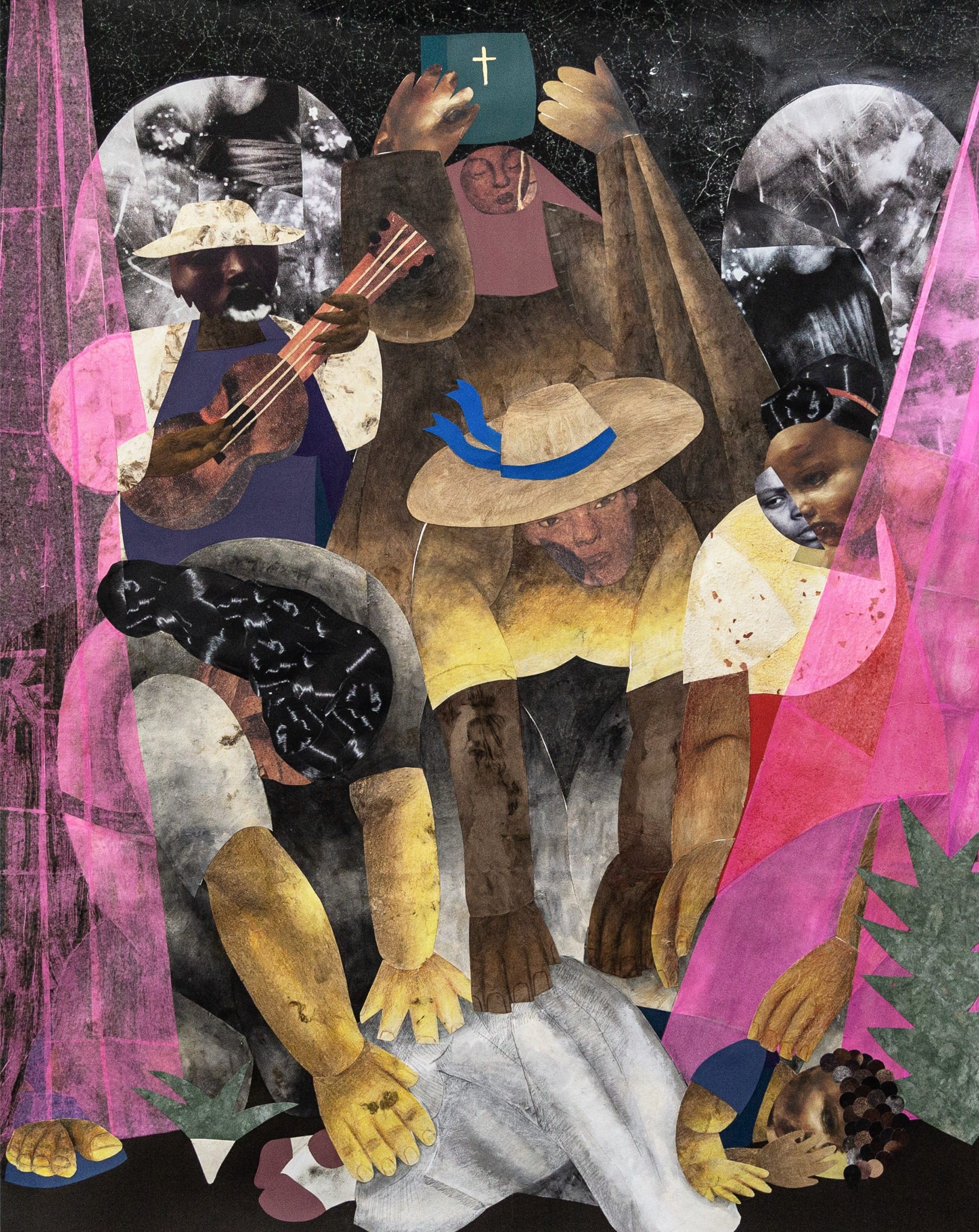
For this deeply introspective body of work, Jiménez dives headfirst into the silences and the unspoken tensions that often characterize family dynamics, particularly focusing on the weighty secrets that children are rarely, if ever, privy to. In a recent conversation discussing the conceptual roots of his current output, the artist describes these pieces as visualizations of a monumental “revelation.” This late-in-life discovery ultimately shed profound light on a hidden history of abuse and familial realignment within his own household.
Reflecting on this pivotal moment, Jiménez explains the emotional genesis of the exhibition: “My grandmother, when I was an adult, randomly was like I need to tell you something, and she told me that my grandfather was not my real grandfather. It is actually his brother, the one who kind of looked out for you and raised you. Everything made sense. I’m not making excuses for abuse, but I’m seeing it a little bit more objectively now, why certain things were said, why certain things were done, why certain things were ignored. So the show is really about silence and how that forms us from a young age.”
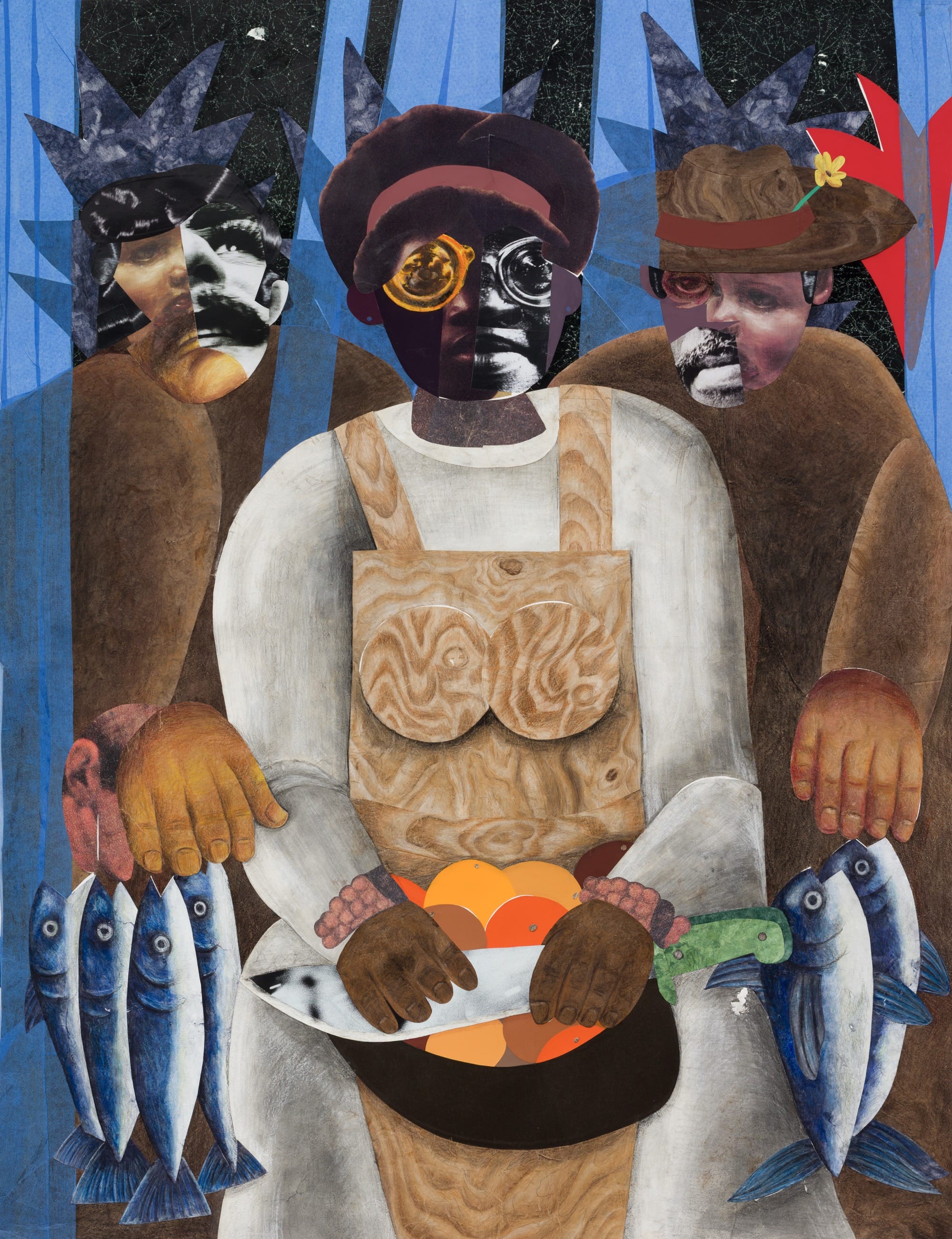
The intricate collages that capture these heavy psychological explorations form the core of his solo exhibition, Éramos silencios, which translates from Spanish to English as “we were silent.” The critically acclaimed exhibition is currently on view through October 31 at Marianne Ibrahim’s prominent gallery space in Chicago. Through these evocative works, Jiménez manages to transform personal trauma and domestic secrecy into a broader meditation on how unspoken histories shape the human psyche from childhood onward, offering viewers a window into a deeply personal yet universally understood landscape of memory and reconciliation.