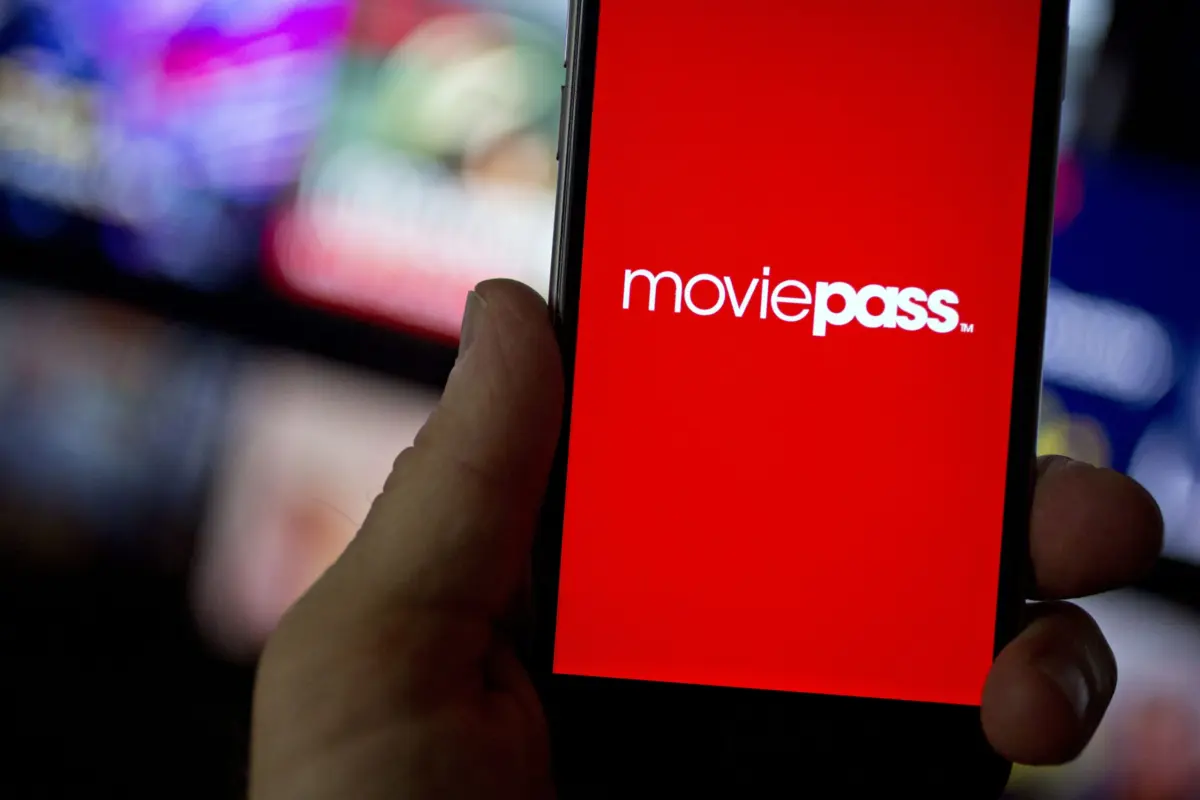
MoviePass, the once-notorious subscription service that famously burned through millions of dollars before undergoing a dramatic restructuring, is exploring a potential company sale and has held preliminary acquisition talks with several interested buyers, including a number of major streaming companies, according to a person familiar with the sale process.
The discussions have been quietly underway for roughly six weeks and have already reached the executive level across various prospective media giants. However, according to the source, no formal bids have been put on the table yet as companies evaluate the feasibility and strategic value of the proposition.
- At the absolute center of the pitch being presented to prospective buyers is a hypothetical, yet fully developed, product concept
-
a "movie theater tier" sold directly as an add-on to a pre-existing streaming subscription, seamlessly facilitated by MoviePass technology and infrastructure. Under this proposed model, detailed in an internal sales deck titled "The Ultimate Movie Bundle" that was obtained and reviewed by industry publications, subscribers would pay an additional $10 a month. In return, members would receive one movie ticket a month, strategically steered toward the streaming service’s own theatrical film releases.
These high-level talks come at a time when traditional theatrical attendance is steadily recovering, particularly among Gen Z moviegoers who continue to embrace the communal cinematic experience. Furthermore, the discussions unfold as major media companies increasingly race to build direct, long-term relationships with their audiences, seeking innovative ways to bridge the gap between home viewing and out-of-home entertainment.
Film-adjacent consumer brands have concurrently emerged as exceptionally hot properties within the modern media landscape. This surging valuation trend is clearly evidenced by The New York Times’ recent high-profile $330 million bid for Letterboxd, a valuation representing more than 20 times the platform’s projected 2026 earnings.
Today, MoviePass operates on a much leaner, sustainable scale. The company currently boasts roughly 50,000 paying subscribers, generates close to $10 million in annual recurring revenue, and operates profitably, according to the source familiar with the process. While no hard target price has been formally established for a transaction, a company valuation based on revenue rather than traditional earnings could potentially trade at a multiple of between eight to ten times revenue.
A successful sale would mark yet another fascinating twist for a brand universally remembered for its chaotic cash-burning era. Under the stewardship of its former majority owner, Helios and Matheson, MoviePass disrupted the entire entertainment industry in 2017 and 2018 by offering near-unlimited daily theater visits for a flat fee of $9.95 a month. While the aggressive pricing strategy successfully amassed millions of subscribers almost overnight, the unsustainable business model ultimately collapsed, forcing the company to file for bankruptcy protection in early 2020.
Resilience arrived when cofounder Stacy Spikes successfully bought the company back out of distress in 2021 and orchestrated a careful relaunch in 2022, trading the reckless unlimited model for capped, carefully structured tiered plans. MoviePass itself has chosen not to provide an official on-the-record comment regarding the ongoing acquisition discussions.
Despite its turbulent history, the MoviePass brand still carries outsize recognition among consumers. However, acquiring everyday customers at scale as an independent, standalone company has proven structurally difficult without continuously raising outside capital—a commercial reality that ultimately prompted current leadership to explore a formal sales process, according to the source.
The Bundle Math
The internal sales deck strategically positions MoviePass as the missing structural piece of a modern streaming service’s subscription ecosystem. According to the document, every major media streamer currently owns the home screen, but MoviePass completes the overall entertainment picture by bringing the physical theater directly into the same unified subscription—effectively creating a single bundle that covers both the film watched at home and the film experienced in the cinema.
Under the operational model outlined in the pitch, in any given month where the corporate buyer has a brand-new film playing in theaters, the subscriber’s monthly ticket would be actively steered toward that specific movie, though it could still be redeemed at any participating theater nationwide. In months where the studio-streamer does not have a theatrical release, the monthly ticket would function universally for any film playing at any theater.
A studio-owned streamer operating this model would effectively pay full price for each ticket redeemed. However, because the company also acts as the film’s distributor, it would recoup roughly half of that retail ticket price through its standard share of the box office revenue. Consequently, each redemption of the corporate buyer’s own theatrical film would carry an effective net cost of roughly $5 to the company, according to the internal document.
Assuming full utilization, an individual subscriber would pay $120 per year into the system, and the streaming platform would generate approximately $60 in net profit. Factoring in historical operating data known as "breakage"—specifically drawing from MoviePass’s own operating history where roughly 30% of allocated tickets go completely unused in a given period—each active member would theoretically produce around $78 a year in net profit for the platform.
If a streaming platform managed to convert 1 million members into this bundle, the model would produce between $60 million and $78 million in total profit per year. Scaled up to an ambitious 20 million members, the financial yield would skyrocket to between $1.2 billion and nearly $1.6 billion annually, according to the projections laid out in the sales deck.
Naturally, financial analysts note that these impressive figures rest on several highly favorable assumptions. The optimized $5 cost calculation applies exclusively when subscribers choose to view the corporate buyer’s own proprietary films. In alternative months, the streaming buyer would be forced to cover a full-price ticket for a rival studio’s film without enjoying the benefit of recouping a distribution rental share.
Furthermore, the breakage rate utilized in the projections is derived strictly from MoviePass’s current, specialized subscriber base. A bundle marketed directly to tens of millions of mainstream streaming subscribers could easily experience significantly fewer unused tickets, altering the projected margins.
Critically, the baseline $10 subscription price is currently serving merely as a financial stand-in. The final consumer price point, alongside the precise number of theater visits it covers, remains fully flexible and subject to negotiation, according to the source familiar with the discussions.
The Pitch to Streamers
The core strategic appeal of the product is naturally strongest for vertically integrated media conglomerates that own both a major Hollywood film studio and a corresponding direct-to-consumer streaming service.
Such a buyer could aggressively promote its upcoming theatrical releases directly to its existing home-viewing streaming subscribers, providing them with a compelling financial incentive to venture out to local theaters to see those specific titles. In return, the studio would capture invaluable, first-party data detailing precisely which movies their customers are watching, alongside exact insights into when and where those cinematic experiences take place.
While traditional streaming companies have shown the strongest early interest in the proposal, other types of prospective corporate buyers—including data-focused enterprises—are also said to be in the mix.
A significant competitive moat for MoviePass lies in a valuable portfolio of proprietary patents held by the company. This intellectual property includes a key patent that allows members to seamlessly pay for tickets at any standard movie theater that accepts Mastercard, eliminating the complex requirement of building a direct technical integration with every individual national theater chain.
The strength of these patents was previously tested in 2018 when MoviePass formally sued its rival service Sinemia for patent infringement, a legal battle that ultimately contributed to Sinemia shutting down its entire United States operational footprint the following year. Beyond an outright acquisition, the underlying technical infrastructure could alternatively serve as an independent revenue-generating asset, potentially licensed out to other competing studio-streamers at a rate of $1 per member per month, according to the sales documents.
Despite the intriguing financial projections and strategic alignment, any corporate transaction remains far from certain. Finalizing a deal would ultimately require formal sign-off from numerous high-level decision-makers within massive media conglomerates that have not yet determined their definitive path forward, according to the source.