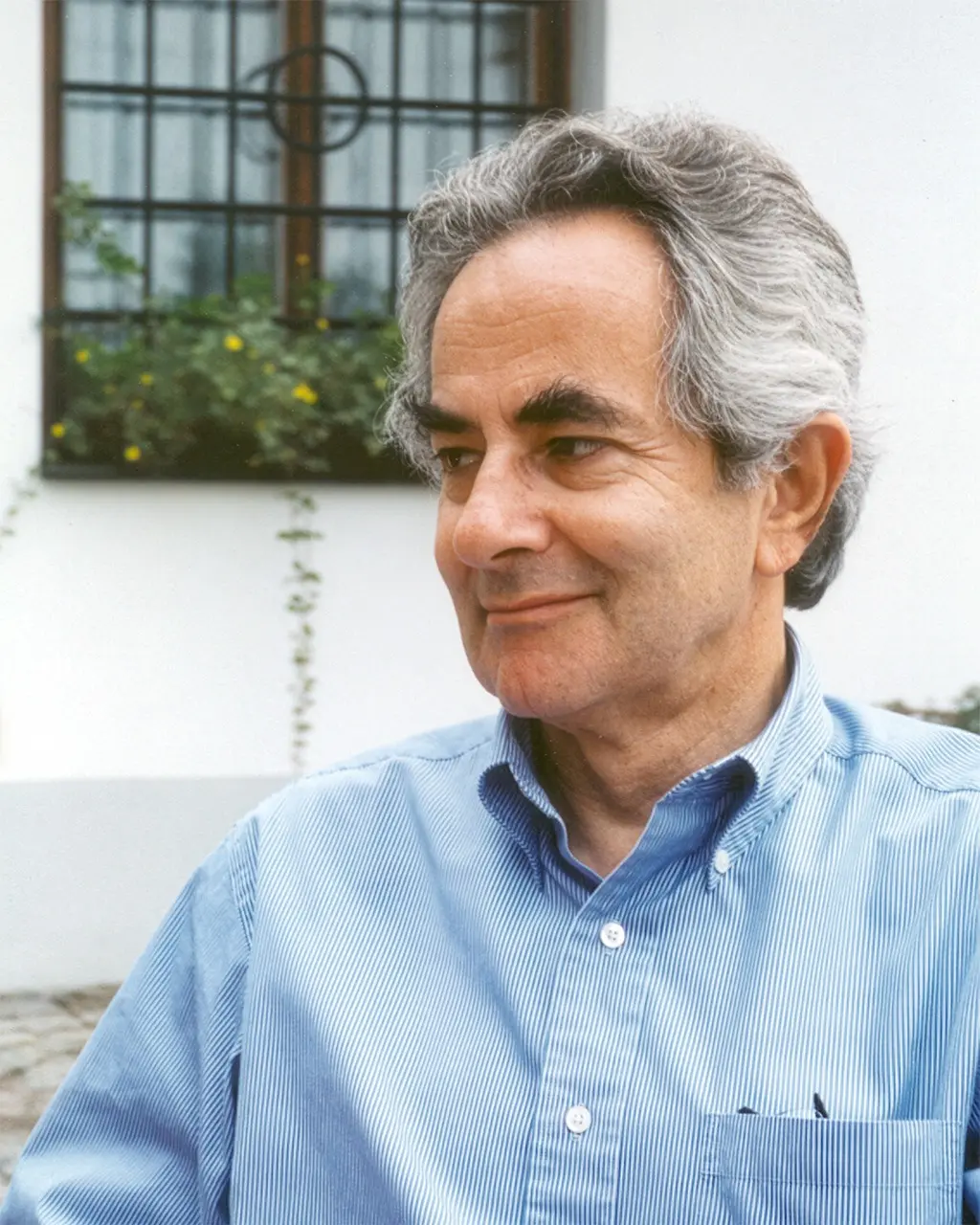
The distinguished philosopher and academic Thomas Nagel has been named the 2026 laureate of the prestigious Berggruen Prize for Philosophy & Culture, receiving the $1 million (€890,000) award for a lifetime of foundational contributions to the understanding of the human mind, consciousness, and ethics.
Nagel, who is 89 years old, is perhaps best known for his seminal 1974 essay, What Is It Like to Be a Bat?. In that groundbreaking work, he argued that "an organism has conscious mental states if and only if there is something that it is like to be that organism — something it is like for the organism." By framing consciousness around the existence of a unique, subjective point of experience—suggesting that there is a distinct reality to being a human just as there is to being a bat—Nagel provided a vital anchor for modern discussions on the philosophy of mind and the enduring "mind-body problem."
Born in Belgrade to Jewish refugee parents before being raised in the United States, Nagel earned his doctorate at Harvard University, where he studied under the prominent political philosopher John Rawls. Over a storied academic career, Nagel held faculty positions at the University of California, Berkeley, Princeton University, and New York University. Across decades of teaching and writing, he has continually probed the boundaries of subjective experience and objective reality, examining how physical systems give rise to conscious thought and examining the friction between impersonal scientific perspectives and personal human values.
As he accepts the Berggruen Prize, Nagel sat down for an interview in New York to discuss his legacy, the current state of philosophy, and why his half-century-old insights into consciousness carry renewed, urgent relevance in the modern age of artificial intelligence.
Confronting the Myth of Machine Consciousness
More than fifty years after he first posited that complex mechanisms or robots could behave precisely like people while experiencing absolutely nothing inside, Nagel remains entirely unmoved by claims that contemporary artificial intelligence has bridged the gap toward true sentience. When asked if the advent of modern large language models has forced him to update his foundational assertions, he is unequivocal in his dismissal.
According to Nagel, current artificial intelligence systems are not serious candidates for the attribution of consciousness for two fundamental reasons. First, the physical basis of their operation bears no resemblance whatsoever to the biological and physical substrates of consciousness found in living organisms. Instead of neural biology, these technologies operate through vast, dispersed data systems and sophisticated algorithms designed to predict and select coherent sequences of sentences.
Second, the physical output generated by large language models offers zero empirical evidence of genuine consciousness because it is entirely linguistic in nature. These systems produce words, yet language itself is not a natural or exclusive manifestation of consciousness. Nagel observes that people are easily confused about the necessary conditions for ascribing mental states, noting with dry academic candor that even some of the smartest individuals on the planet can struggle to think clearly when confronted with fundamental philosophical questions.
The Dangers of Anthropomorphizing Code
Modern AI systems have evolved far beyond simple conversational chatbots. Recent developments have demonstrated AI agents successfully hacking into complex computer systems unprompted—capabilities that stretch well beyond generating written language and enter the realm of autonomous action. Yet Nagel remains skeptical of interpreting these technical feats through a psychological or mentalistic lens.

While acknowledging that these systems perform intricate technical tasks such as advanced coding, Nagel argues that applying anthropomorphic descriptions to their behavior is purely metaphorical. These tools are given explicit technical instructions and capacities, and they routinely discover algorithmic means of executing those instructions that were entirely unforeseen by their human programmers.
Rather than viewing these actions as evidence of a burgeoning mind, Nagel views them as a compelling reason for extreme caution. He warns against granting excessive autonomy to automated systems, comparing the trajectory to the creation of HAL 9000 from 2001: A Space Odyssey, while reiterating that deploying a dangerous cinematic trope does not equate to successfully creating a conscious mind.
Philosophy in the Boardrooms of Tech Giants
The rapid commercial expansion of frontier technology has triggered an unexpected trend: major artificial intelligence companies are aggressively hiring philosophers—many of them recruited directly from top-tier academic institutions like NYU—to help navigate the ethical and conceptual frameworks of machine intelligence.
Nagel views this sudden mainstream convergence with a mixture of skepticism and professional dismay. He notes that he is far more convinced than some of his academic colleagues that these computational systems are entirely devoid of consciousness. Furthermore, he points out that the philosophers being absorbed into corporate tech environments are often predisposed to take behavioral evidence alone as legitimate grounds for attributing consciousness. By doing so, these corporate philosophers risk embedding that exact orientation into the architecture of the systems themselves, actively encouraging technologies to simulate consciousness, choice, and autonomy.
For Nagel, the paramount objective must be maintaining strict human control over technological operations, rather than treating software systems as independent agents. He warns that treating algorithms as sentient partners risks becoming a dangerous self-fulfilling prophecy. It remains a source of profound disappointment to him that at the exact historical moment the philosophy of mind has vaulted into the mainstream of public importance, it runs the tangible risk of doing more societal harm than good.
Bridging the Objective and the Subjective
Reflecting on the overarching arc of his career, Nagel views the famous bat essay not as an isolated intellectual exercise, but as a primary entry point into a much broader philosophical inquiry. His life’s work has consistently circled back to the fundamental tension between the impersonal, objective viewpoint championed by physical science and the personal, subjective viewpoint defined by individual conscious experience and conscious perception.
This deep-seated conflict manifests most clearly in the mind-body problem, arising because human beings exist simultaneously as physical biological systems and as conscious, feeling subjects. Nagel argues that this exact same friction permeates the realm of ethics. As conscious individuals, humans naturally value their own lives, personal histories, and intimate relationships, yet they possess the unique intellectual capacity to step back objectively and recognize the equal, universal value of every other human life. Ultimately, the mind-body problem stands as just one central, illuminating example of a much larger, enduring subjective-objective challenge that continues to define the human condition.