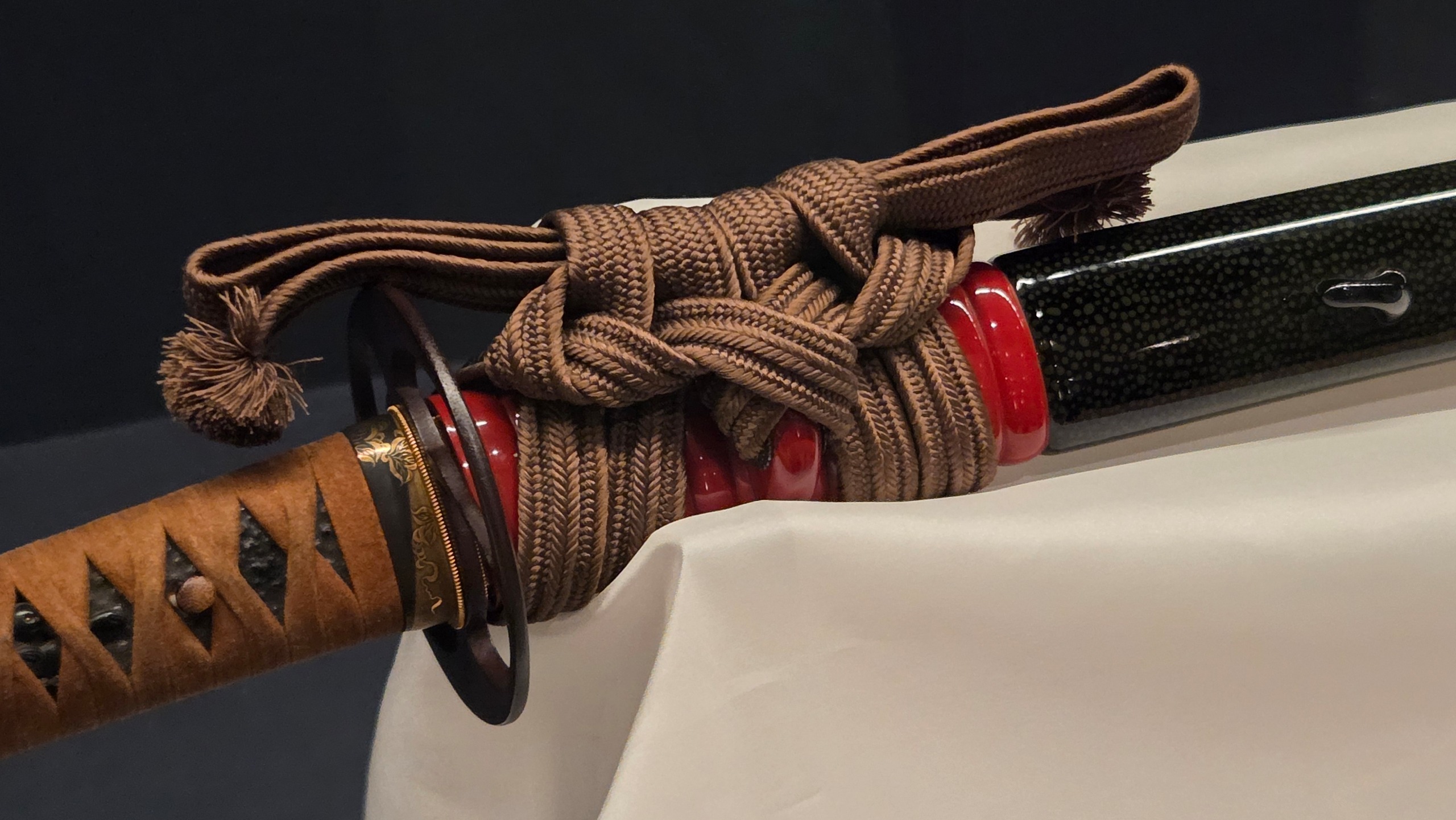
Walk along the banks of the Sumida River in Tokyo, and you will eventually find the Japanese Sword Museum. Behind thick glass panels, the institution enshrines a remarkable collection of blades spanning hundreds of years of master craftsmanship. Authoritative volumes detailing the evolution of the longer uchigatana and the shorter wakizashi—some penned by the very donors who gifted the artifacts—celebrate the historical swordsmiths who hammered them out of raw steel. Yet, if you flip through the pages of these scholarly texts, there is a strong probability you will not spot the name Muramasa, despite his lethal creations playing a pivotal and prominent role in some of Japan’s most famous historical battles.
Centuries of surrounding folklore, superstition, and mythology building up around the persistent idea that his swords were somehow cursed will tend to relegate a master smith to the shadows of history.
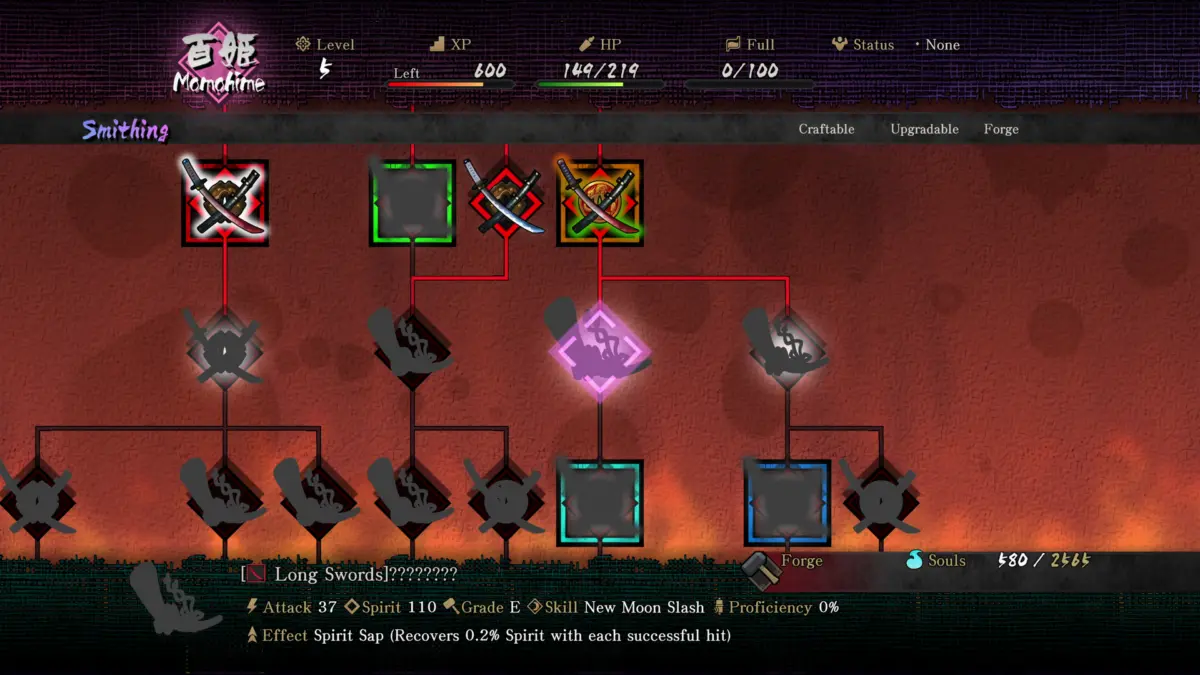
Vanillaware’s newly unveiled Muramasa: Revenant Blades, however, is not afraid to lean directly into that dark legacy. The 2D action game is so deeply enamored with swords that it features a staggering 108 of them, ingeniously transforming the old superstition—that Muramasa’s blades supposedly hungered to taste blood the moment they were unsheathed—into a simple yet intensely captivating gameplay mechanic. Each weapon in the game comes equipped with a unique skill, but that skill can only be shared and equipped onto another sword after the original weapon has had its fill of battlefield bloodshed.

"There’s definitely this reputation that the swords of Muramasa are cursed, but what that means is they have power," explains director Wataru Nakanishi. "In this game, Muramasa is an important character and will create these very powerful swords, but in turn [the protagonists] must collect souls for him, so they have this cooperative relationship based around this dark situation."
In a fascinating sense, Revenant Blades is lifting a curse of its own. Seventeen years after the title was first released on the Nintendo Wii as Muramasa: The Demon Blade, this upcoming port marks the first time a game from the celebrated developer Vanillaware has ever made the jump to PC. The Japanese studio famously followed up its initial cult classic with increasingly nuanced and mechanically dense masterpieces, such as 2019’s critically acclaimed sci-fi epic 13 Sentinels: Aegis Rim and the sprawling 2024 tactical RPG Unicorn Overlord. But spending time with Muramasa on PC instantly clarifies why the studio laid its foundations here. Back in 2009, a hack-and-slash adventure featuring art so lavish and painterly seemed entirely novel, and that timeless aesthetic quality holds up just as strongly today.
The game’s distinctive visual presentation possesses a striking, painterly quality that feels effortless, though Nakanishi notes that achieving this feat was anything but simple. "It was a lot of work, and it was very difficult," Nakanishi says with a laugh. "We had some of the assets, but not others. For those, we had to pull them from the game, and then artists individually by hand had to touch them up and recreate them to make something appropriate for the HD release. But you know, through that arduous hand-drawn process, we were able to create this warm and colorful art that we think people will be happy to see."

Beyond its visual polish, Revenant Blades proves to be a far more complex experience than the straightforward arcade brawler some veterans might remember. The overarching skill system designed for all 108 blades is entirely new, allowing players to equip three ground-based abilities and three aerial abilities across a trio of active swords that can be seamlessly cycled through at any given moment. This setup introduces a dizzying array of special maneuvers to keep track of, even if executing them remains as accessible as tapping a button combined with a directional input.
On higher difficulty settings, enemies now swarm the screen in daunting numbers, boasting increased health pools to compensate for the player’s vastly expanded offensive arsenal. Players quickly learn that adopting a passive or overly defensive playstyle is a recipe for disaster. Blocking a barrage of incoming attacks steadily wears down the durability of the active sword until it dramatically snaps, leaving the protagonist completely vulnerable to a swift and punishing death. Survival instead demands fluid, uninterrupted strings of combat combos, swiftly flitting between different swords to prevent them from breaking while chaining a launcher skill into a rapid series of spinning slashes capable of clearing out an entire gang of ninja at once.
Of course, the hazards in the game extend far beyond human adversaries. Venturing too close to certain environmental set pieces, such as walking unsuspectingly underneath a waterfall while underleveled for a specific sector of the game’s open, freely explorable map, can lead to sudden and humiliating defeat at the hands of unexpected foes. A family of poison-spitting toads encountered off the beaten path, for instance, can easily prove far more terrifying and dangerous than traditional enemies wielding shurikens and explosive bombs.
In the original Wii release, enemy levels scaled dynamically alongside the player’s progression, but Vanillaware deliberately chose to scrap that system for Revenant Blades. Enemies across different regions now possess fixed, static levels. While this means players can comfortably steamroll through lower-level zones they have already mastered, choosing the wrong path early on can lead them straight into high-level encounters that force them to frantically scamper away unless they have mastered the combat mechanics.
Reflecting on the limitations of the original title, Nakanishi points out that players could previously only utilize a single skill that was permanently locked to the specific katana they held in their hand at any given moment. This restriction meant players naturally gravitated toward the most powerful late-game blades. "It kind of limited the scope of the gameplay," he observes. By allowing players to equip skills independently of specific weapons in Revenant Blades, "players have access to so many more skills and playstyles."
The expanded tactical possibilities change the rhythm of combat entirely. "Using the skills Celestial Slash and Flame Barrage, you can knock people into the air with fire, then jump up and use the aerial skill to knock them back to the ground. That kind of combination wasn’t really something you could do with the more limited skill system," Nakanishi explains.

In addition to the possessed princess Momohime, whose campaign forms the basis of the initial hour-long preview demo, Revenant Blades packs in a wide range of playable characters that were first introduced in subsequent console re-releases, such as the 2013 PlayStation Vita version. Each character features distinct mechanics and individual narrative arcs, transforming the title into a deceptively robust package. The revamped skill system feels precisely like the missing key the project needed to unlock its absolute maximum potential. It naturally positions itself as a premier title for portable hardware like the Steam Deck OLED, where its vibrant, saturated backgrounds threaten to pull the player’s eyes away from the relentless action for the mere three seconds it takes to end up dead.
If Muramasa: Revenant Blades achieves the commercial success on PC that its meticulous remastering effort deserves, it just might manage to dispel the lingering myth that PC ports are viewed as taboo within the halls of Vanillaware, much like the legendary swordsmith’s cursed weapons became shunned over the centuries. Naturally, the question remains whether more classic titles from the developer’s catalog could follow in its wake.
"We currently don’t have any specific plans of that nature, but we would love to see Muramasa be successful enough that people start to ask about that kind of thing," Nakanishi concludes.