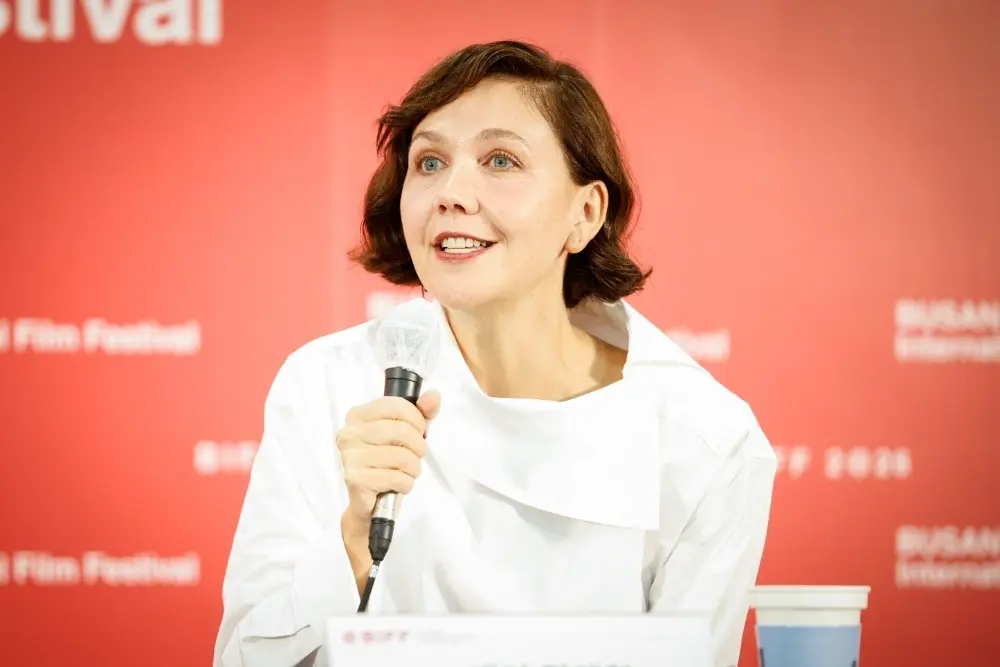
Addressing an attentive audience at a press conference during the Busan International Film Festival on Wednesday, acclaimed filmmaker and actress Maggie Gyllenhaal offered a candid assessment of what separates visionary directors from those who struggle behind the camera. Drawing on her extensive experience working with various filmmakers as an actress before transitioning to writing and directing her own projects, Gyllenhaal argued that the most successful and talented directors fundamentally understand the immense value of drawing upon the collective intellect and creativity of the people surrounding them on set.
Rather than viewing collaboration as a threat to their own authority, confident directors actively invite input from their teams, according to the filmmaker. In contrast, Gyllenhaal noted that insecurity breeds closed-mindedness and poor leadership in the industry. "It was the people who were very scared—or just not very smart, who tried to squash other people’s voices," Gyllenhaal remarked during the press session.
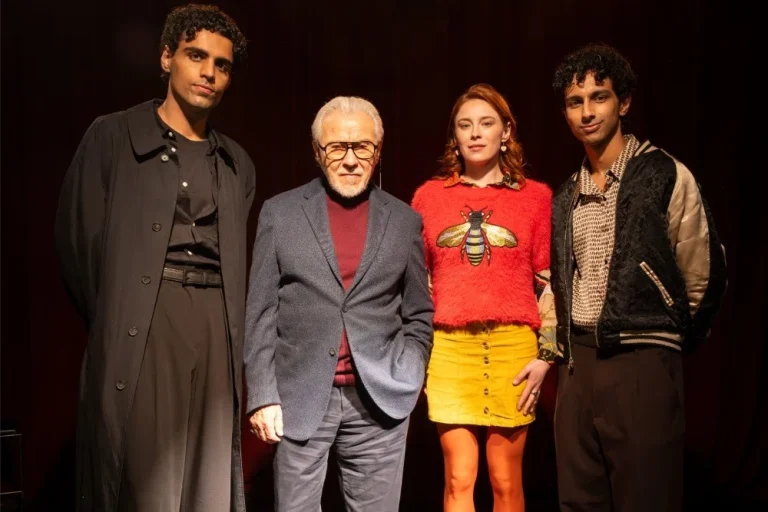
The discussion highlighted her distinct philosophy on leadership and artistic creation, which has guided her transition from a celebrated acting career into a flourishing chapter as a writer, director, and producer. Gyllenhaal is currently attending the prominent South Korean festival to present her latest project, "Flesh Impact," a short film she wrote and directed. The ambitious piece features legendary actress Ellen Burstyn portraying Marilyn Monroe at the age of 100, alongside Dakota Johnson, who depicts the iconic Hollywood star during her vibrant youth.
When Gyllenhaal made her acclaimed feature-length directorial debut with "The Lost Daughter," an adaptation of Elena Ferrante’s novel that earned her widespread critical praise and Academy Award nominations, her primary concern as a first-time feature director was ensuring an environment of absolute creative freedom. She wanted everyone on set—spanning from the lead actors and the cinematographer to the production designer and the gaffer—to feel fully empowered to contribute their ideas and expertise to the cinematic vision.
Elaborating on this collaborative ethos during the Busan conference, Gyllenhaal addressed the inherent hierarchy of filmmaking while emphasizing why oppressive leadership styles are counterproductive. "The truth is—it is ultimately up to me as the director. I have the power, so there’s no reason to squash anyone else’s voice," she explained. "I mean, it’s just so obvious that the movie that I will make that includes all the minds of the people on my crew, at least as things I can draw from, is going to be exponentially better than the movie I can make trying to recreate something I imagined all alone by myself in my room."
The origin story of "Flesh Impact" reflects an unexpected creative challenge that ultimately sparked a bold artistic choice. The project began as a commercial and artistic commission from Genesis, the luxury car brand that has maintained a longstanding sponsorship relationship with the Busan International Film Festival. The corporate entity approached Gyllenhaal to create a short film marking what would have marked Marilyn Monroe’s 100th birthday in June. Gyllenhaal admitted that prior to the offer, she primarily understood the legendary performer through her established cultural image as a screen icon. Consequently, she requested a week to deliberate and determine whether she genuinely had anything meaningful to say about Monroe’s legacy. She spent those seven days immersed in reading literature about the star and rewatching her classic motion pictures.
The resulting concept deviated significantly from conventional biographical tributes. "I don’t think that when Genesis came to me and asked for a film about Marilyn Monroe to celebrate what would have been her 100th birthday that they imagined she would actually be 100 years old in the movie," Gyllenhaal recalled with a touch of amusement. "I thought, ‘Okay, I have this idea. They’re never going to go for it.’"
To her surprise, Genesis approved the daring pitch without hesitation. Energized by the green light, Gyllenhaal completed the screenplay within a single weekend. Alongside Burstyn and Johnson, the short film also stars Peter Sarsgaard and Sepideh Moafi. "Flesh Impact" earned its world premiere out of competition at the prestigious Venice Film Festival. Reflecting on the project’s dual nature, Gyllenhaal emphasized that while the film serves as an exploration of Monroe’s enduring mythos, it is equally a tribute to its leading women. "It is also 100% a celebration and an honoring of Ellen Burstyn and her incredible career, and Dakota Johnson and her incredible career," she stated.
Gyllenhaal’s journey behind the camera represents a deliberate evolution in her professional life. She noted that moving from acting to producing, and eventually stepping into writing and directing, felt entirely natural as her career progressed. During her youth, the landscape of the entertainment industry featured very few prominent women directors, making acting the most direct and accessible outlet for a young woman who deeply loved cinema and harbored a passion for storytelling.
"It felt satisfying and exciting for a long time, and then I think I hit the edge of what I was able to do as an actress," she reflected. Her formal entry into screenwriting and directing commenced approximately eight years ago with "The Lost Daughter," and she has consistently experienced a deeper sense of ease, comfort, and profound creative inspiration working behind the camera ever since.
A passion for cinema is deeply embedded in Gyllenhaal’s familial background. Her father, Stephen Gyllenhaal, established a career as a film director, while her mother, Naomi Foner, built a respected career as a screenwriter. Growing up in this creatively charged household, going to the movies together almost every Friday night was a staple family tradition.
The family’s artistic pursuits continue into the next generation and beyond. Gyllenhaal highlighted her mother’s unique milestone in the industry, noting, "My mom directed her first film as a grandmother. I think she might be the only person to have directed her first film as a grandmother." Gyllenhaal also praised her mother’s ongoing creative partnership, describing her as "probably the best note-giver that I have." Meanwhile, her brother, actor Jake Gyllenhaal—who recently appeared in "The Bride"—remains a close confidant and creative sounding board, with Gyllenhaal characterizing their differing artistic tastes as a mutual gift.
Looking toward the future, Gyllenhaal revealed that she has already commenced writing two nascent projects, describing herself as being "in that very exciting place where I’m kind of like, ‘What is this going to ultimately be about, you know?’" Industry developments underscore her active schedule; Variety reported in June that she is slated to direct and produce an upcoming feature adaptation of Rachel Kushner’s acclaimed novel "Creation Lake" for Warner Bros., the studio that previously backed her work on "The Bride."
As she continues to navigate her career as a multifaceted filmmaker, Gyllenhaal also remains mindful of the broader industry landscape concerning gender representation in cinema. Addressing the subject of women filmmakers during the Busan press conference, she pointed back to her outspoken remarks delivered earlier at the Venice Film Festival. There, serving as the president of the competition jury, she drew attention to systemic imbalances within the global festival circuit after noting that only a single woman filmmaker had a movie selected for the main competition.