In her playful, anthropomorphized sculptures, British-Singaporean artist Hannah Lim bridges centuries of design history, classical literature, and personal identity. Based in London, Lim has spent several years deeply researching and engaging with the 17th- and 18th-century design phenomenon known as Chinoiserie. During this historical period, European decorative artists and manufacturers heavily mimicked Chinese and broader Asian artistic motifs, often appropriating a diverse array of regional aesthetics to satisfy a voracious and exoticizing Western consumer market. Rather than dismissing this complex history, Lim seeks to intervene within it thoughtfully.
“In my own work, I attempt to reclaim and re-imagine this practice in a more conscientious way,” Lim explains in an artist statement. “My sculptures often draw inspiration from specific cultural styles or processes.” By channeling her British-Singaporean heritage alongside rigorous art-historical investigation, the artist transforms the historical imbalances of Chinoiserie into a vibrant, contemporary dialogue about cross-cultural exchange, authorship, and decorative art.
The Evolution of the Snuff Bottle
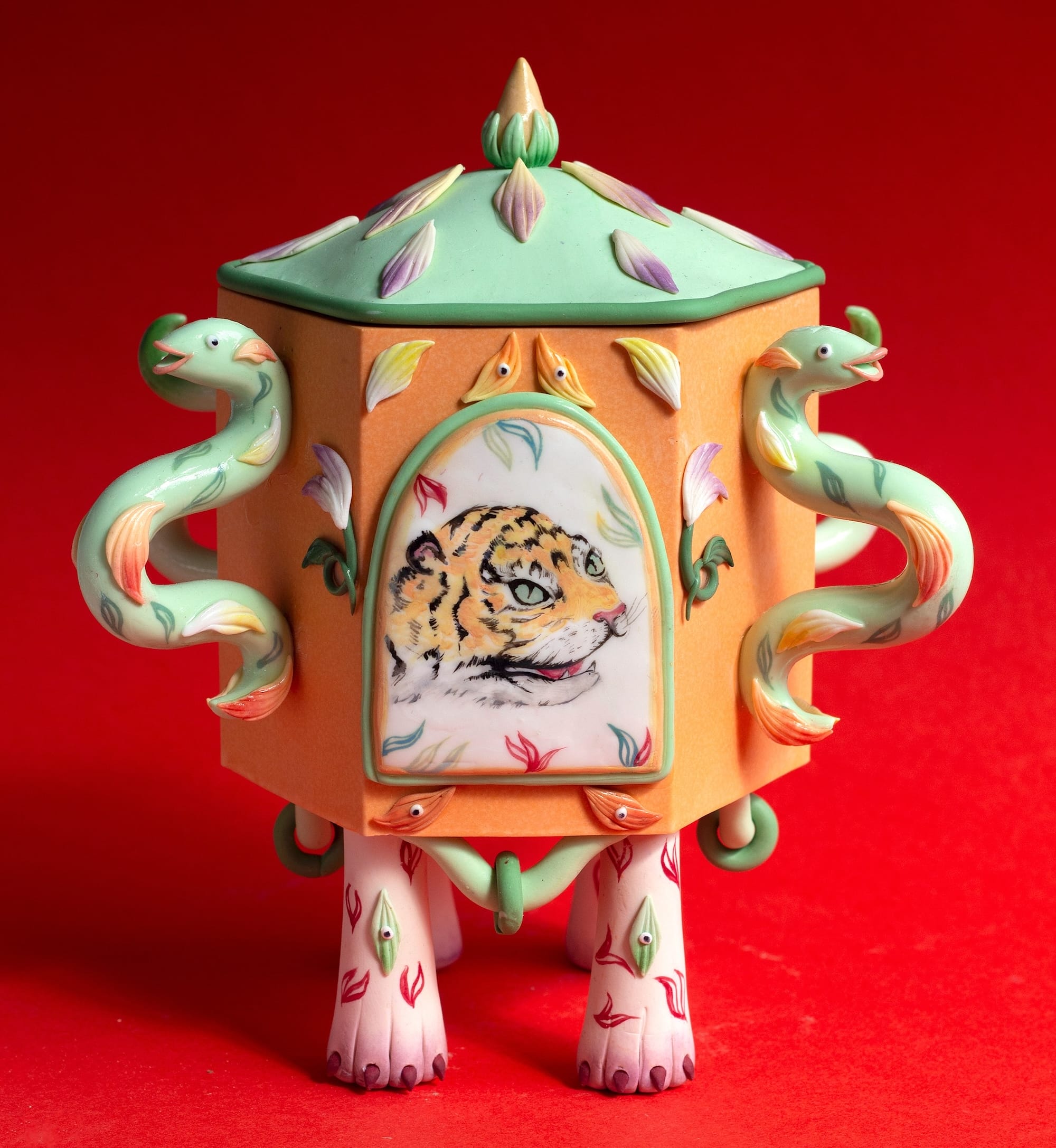
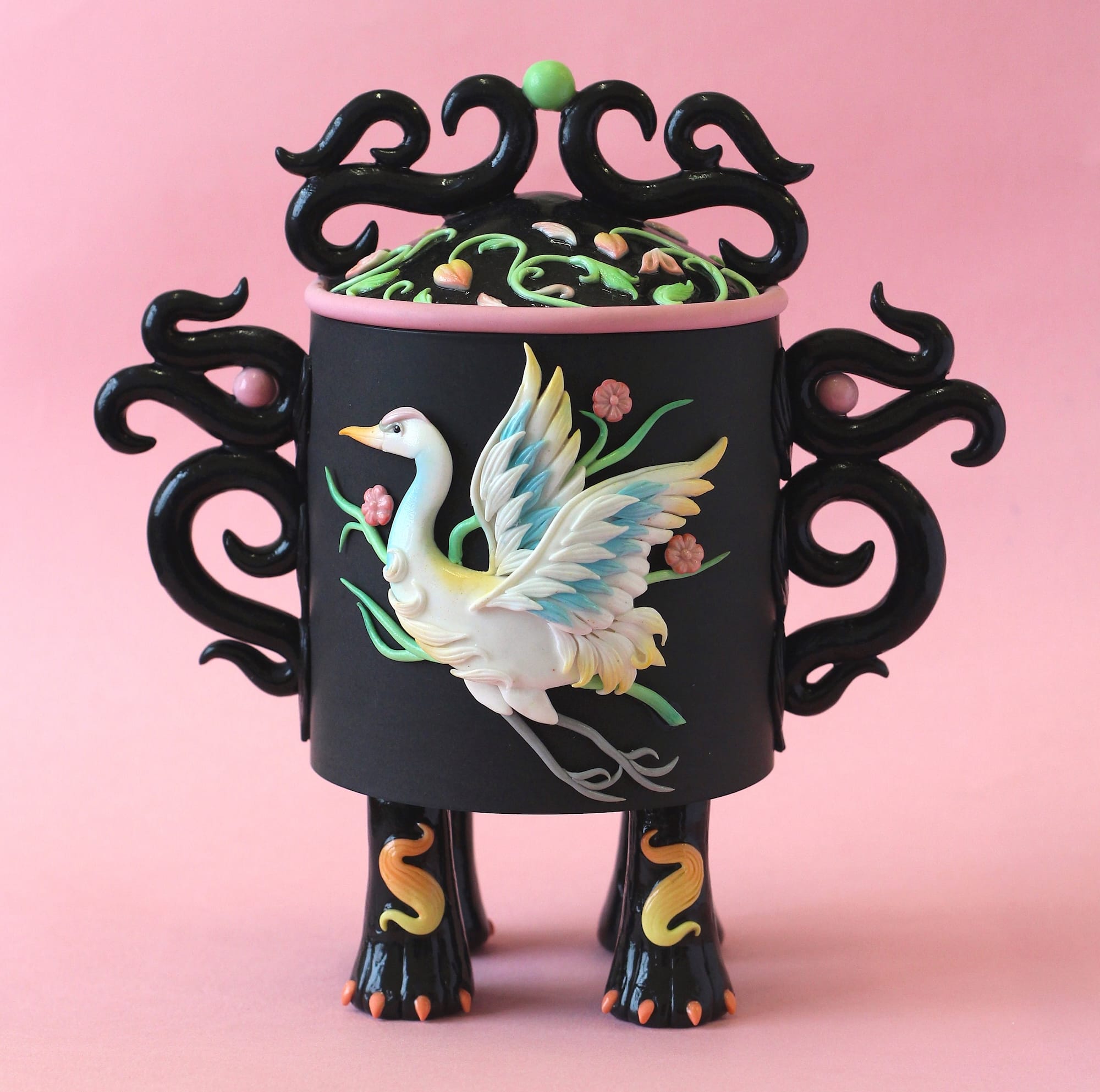
Among the most compelling manifestations of this research are Lim’s oversized reinterpretations of traditional snuff bottles. The historical consumer trend of snuff bottles emerged in China during the 17th century following the introduction of tobacco from the Americas. Snuff—a powdered, scented tobacco preparation—was traditionally scooped using a tiny spoon attached to the bottle’s lid and inhaled directly into the nose. Much like in Europe, where luxury accessories became markers of elevated social standing, the consumption of snuff in China sparked a widespread craze among the affluent elite, prompting artisans to create intricately carved containers from jade, porcelain, glass, and ivory.
When Lim first observed historical snuff bottles in museum collections across the United Kingdom, she found herself utterly captivated by their astonishingly ornate designs, material variety, and minute craftsmanship. Initially, she began experimenting in her studio with sculpting similar decorative motifs at a miniature scale. However, her fascination soon pushed her to dramatically scale up the objects, shifting the viewer’s physical relationship to the form entirely.
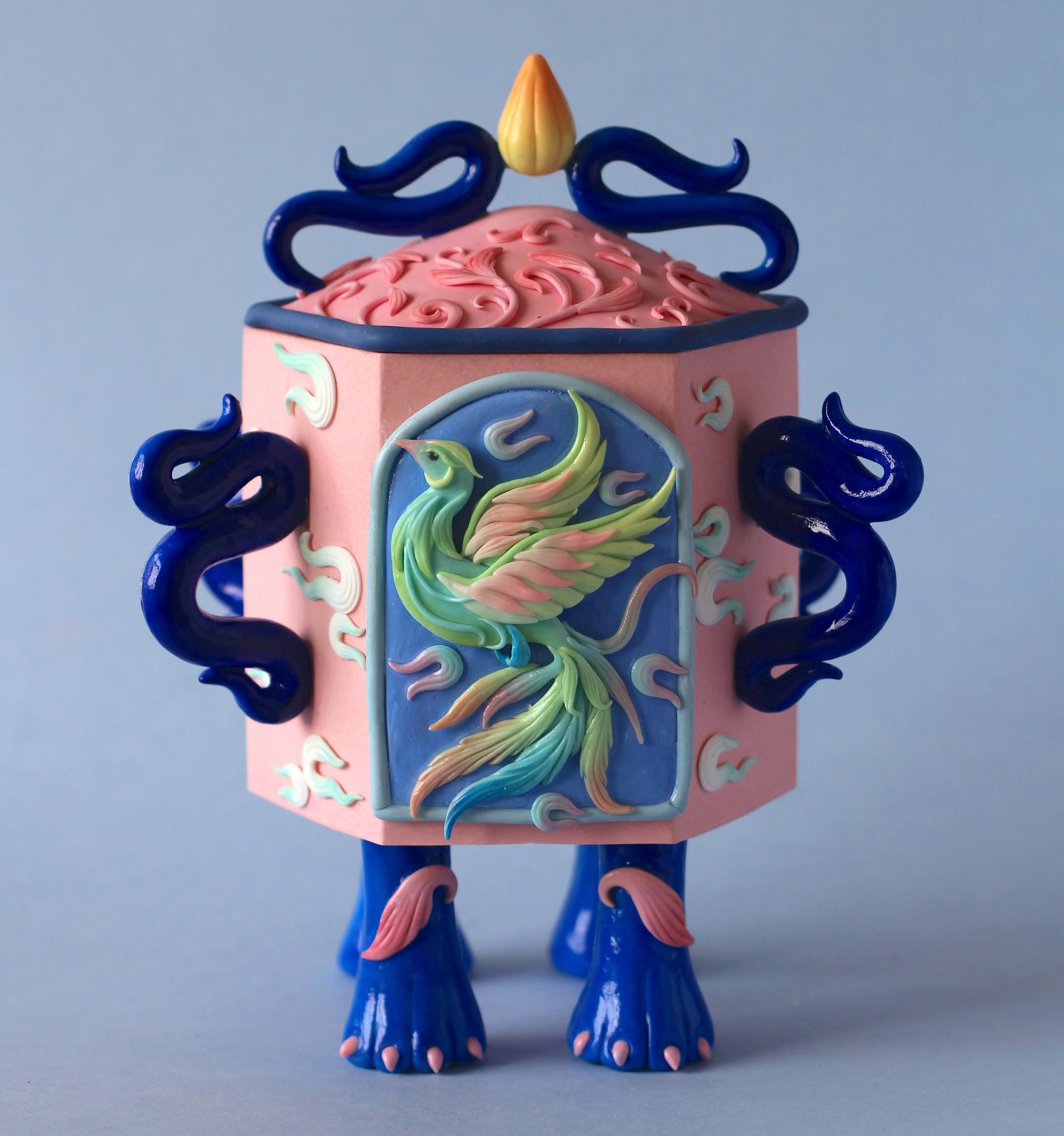
Traditional snuff bottles were deliberately diminutive and jewel-like, typically measuring only a couple of inches in diameter so they could be easily tucked away, handled discreetly, or carried portably. In contrast, Lim’s contemporary sculptures often span several inches in height, demanding to be cradled with both hands. This deliberate monumental shift alters the intimacy of the object, transforming a private pocket accessory into a substantial sculptural presence.
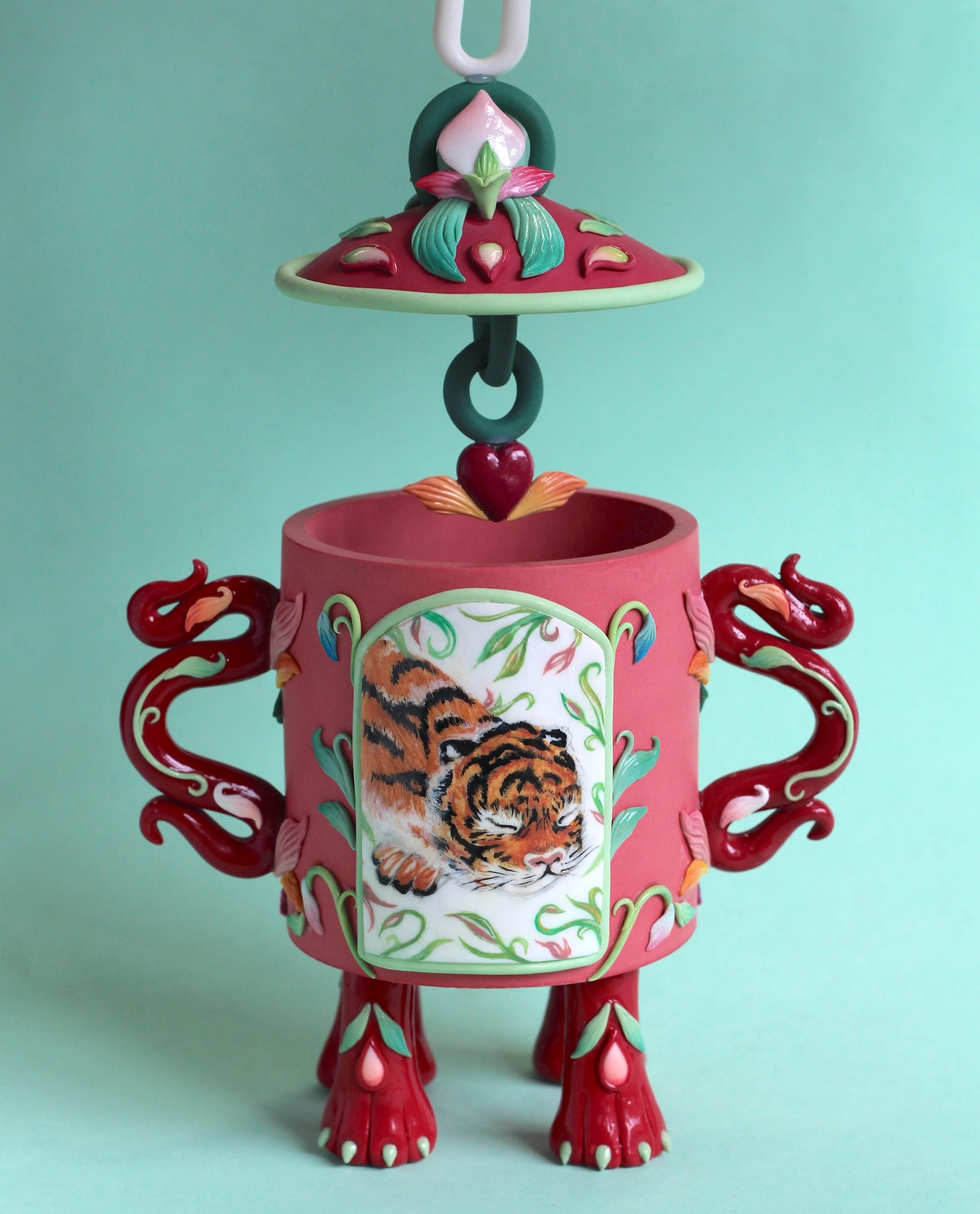
“Initially, my own snuff bottle works were designed in a way to highlight certain personal aspects of my heritage. Over time, they’ve come to reflect different points in my research,” Lim tells Colossal. Maintaining a subtle nod to historical function, she notes that “each of my own snuff bottles also has a hanging charm hidden within its lid. The hanging charm references the tiny spoon attached to the lid of traditional snuff bottles.”
Materiality and Mythological Inspiration
To construct these tactile, brightly colored sculptures, Lim utilizes a meticulous fabrication process, combining polymer clay with Jesmonite—a versatile composite casting material made by blending a mineral powder with a liquid acrylic polymer. This foundation provides structural durability while allowing for sharp relief details and smooth, organic curves. Once the foundational form is cast and sculpted, she applies layers of chalk, acrylic paint, and a high-gloss finish, resulting in a luminous sheen. Each piece is further animated by small, hand-painted or relief-carved portraits of real and imaginary animals, bridging the gap between decorative arts and character-driven storytelling.
Lim’s thematic inspiration frequently draws from ancient mythological texts, most notably The Classic of Mountains and Seas (Shanhaijing), a foundational Chinese classic comprising a largely fantastical geographical and mythological account of more than 550 mountains and 300 waterways. Filled with accounts of strange beasts, hybrid creatures, and mystical lands, the text has provided fertile ground for the artist’s imaginative output. “I’ve been attempting to interpret the text through my work, using the enchanting alchemic descriptions of these creatures as inspiration for my most recent series of sculptures and paintings,” she notes.
Expanding Boundaries into Furniture and Framing
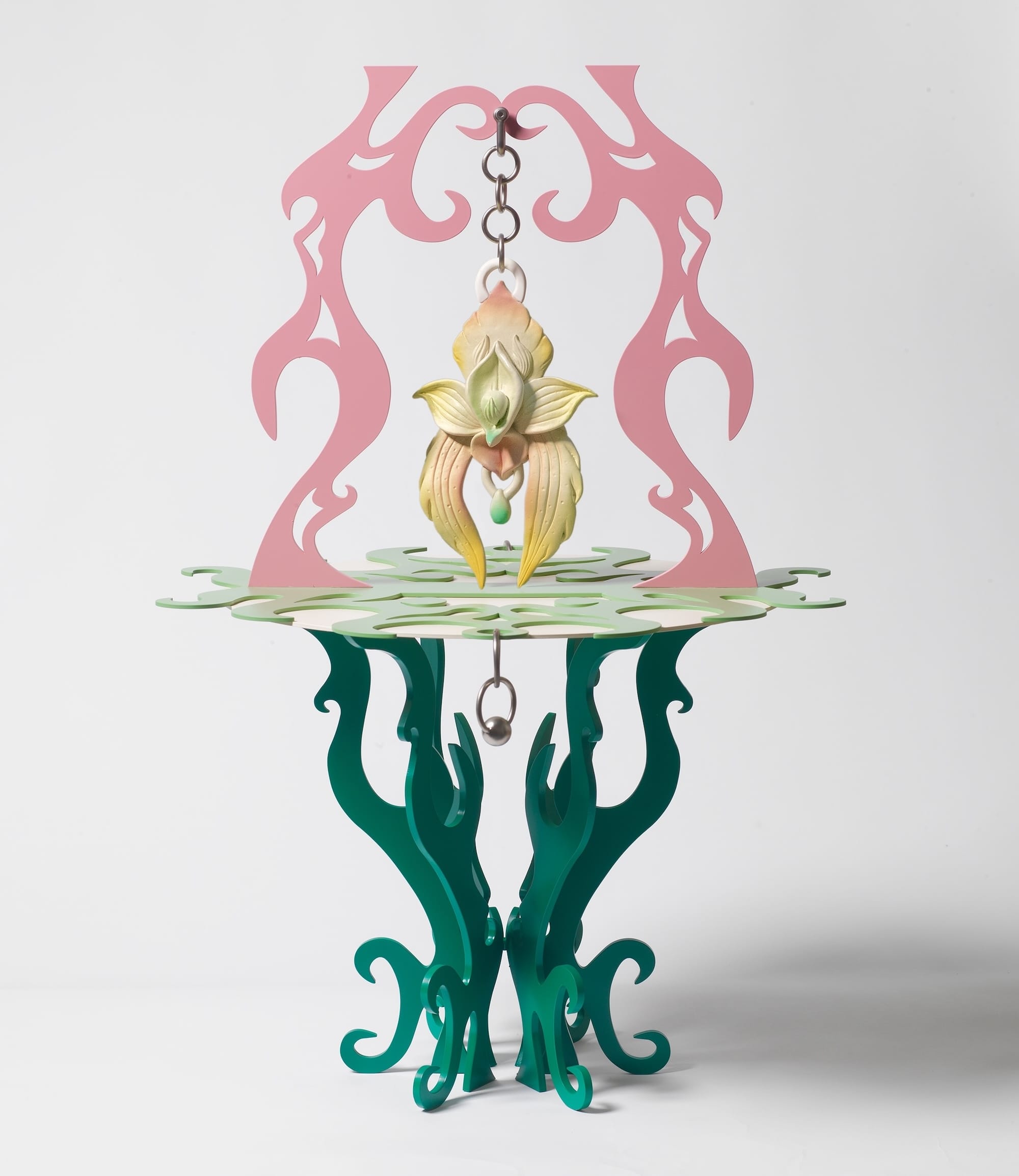
As her practice evolves, Lim continues to push the boundaries of scale and material experimentation, increasingly incorporating metalwork and laser-cut elements into her repertoire. Recent works, such as the colorful and intricately carved sculpture titled “Orchid Table,” demonstrate her expanding scope beyond standalone objects, integrating functional furniture-like structures complete with delicate botanical elements suspended from chains.
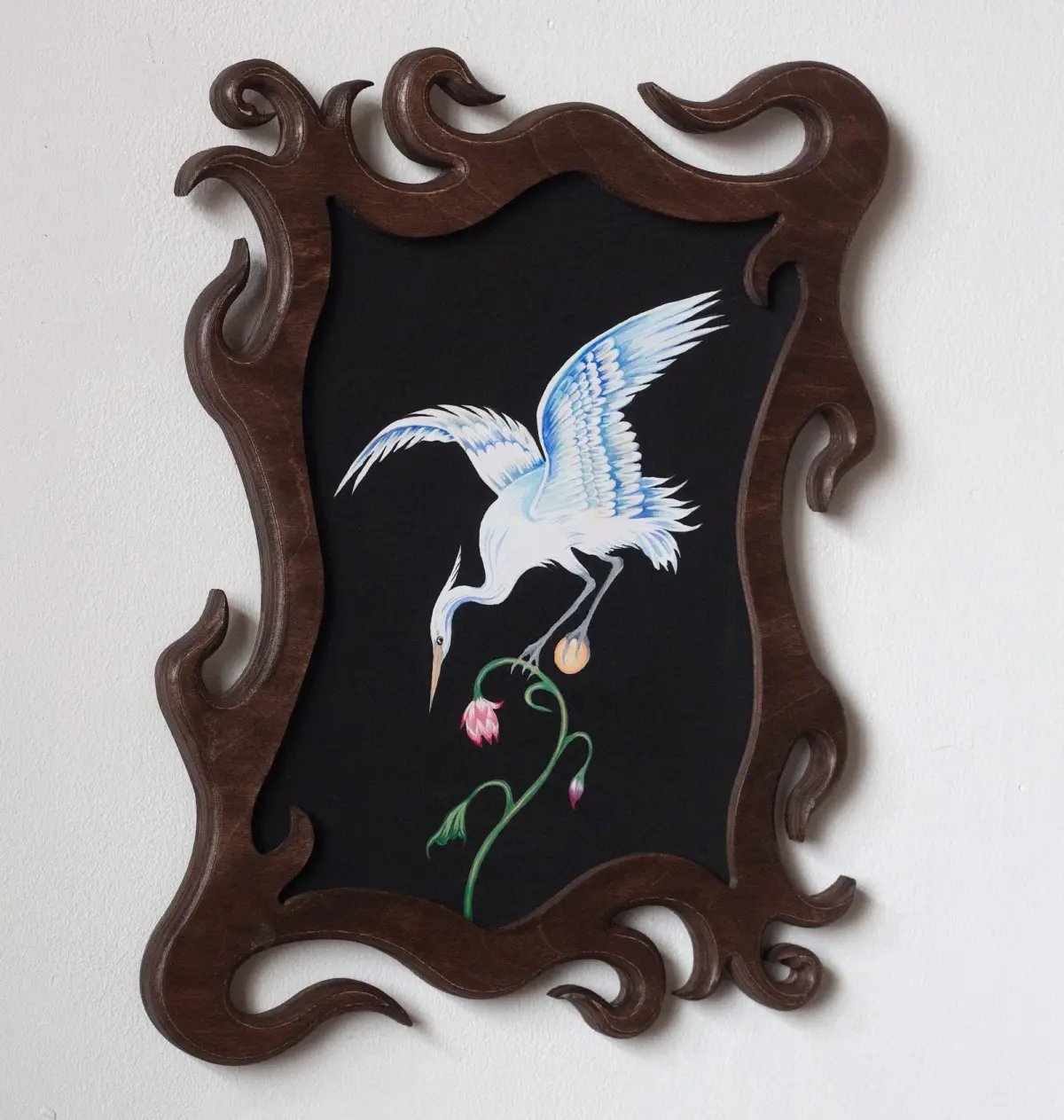
Furthermore, Lim has begun crafting bespoke frames that function as conceptual and physical extensions of her paintings. Rather than acting as mere boundaries for the canvas, these swirling, carved wooden frames—often finished in rich monochromatic or saturated hues—incorporate recurring motifs that spill over from the pictorial plane into three-dimensional space, blurring the distinction between painting and sculpture.
Current Exhibitions and Public Projects
Audiences across the United Kingdom and Europe have multiple opportunities to experience Lim’s work firsthand. Her solo exhibition, titled Reimaginings, runs through November 14 at the Museum of East Asian Art in Bath, offering a comprehensive look at her ceramic-inspired sculptures and paintings. Additionally, some of her latest works are slated for exhibition with the Cynthia Corbett Gallery in Paris, introducing her cross-cultural aesthetic to international collectors.
Looking ahead, Lim is also preparing to unveil a major new public artwork in Paddington, London, later this year, marking an exciting transition into large-scale public sculpture. Art enthusiasts and followers can keep up with her latest studio experiments, exhibition announcements, and ongoing projects by visiting her official website or following her updates on Instagram.