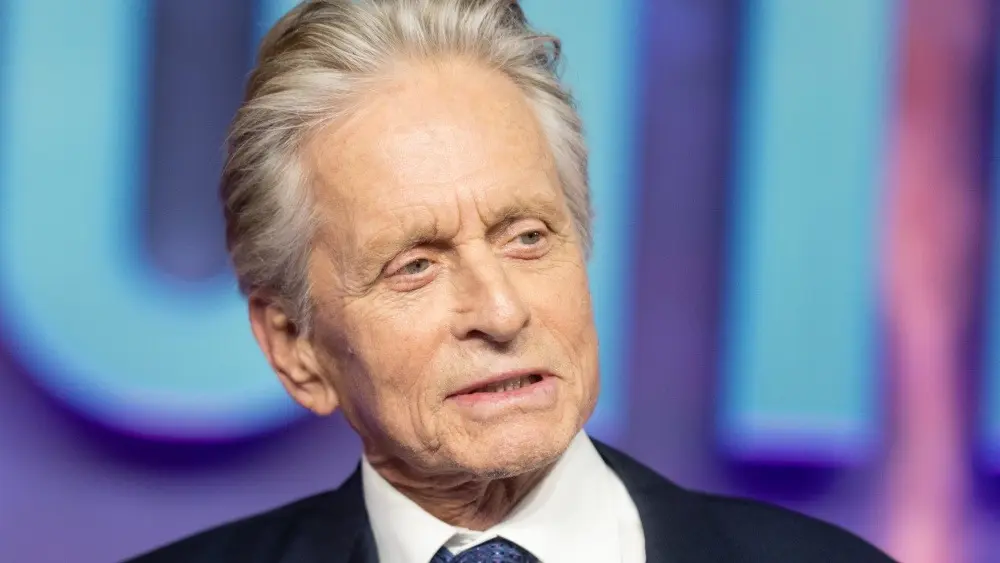
Hollywood veteran Michael Douglas is stepping directly into the cultural conversation surrounding industry lineage, making it abundantly clear that the popular label "nepo baby" is one he finds deeply frustrating.
The Academy Award-winning actor and producer, whose own Hollywood roots run deep as the son of the late silver screen legend Kirk Douglas, addressed the pervasive term during a recent appearance on the hit podcast “SmartLess,” hosted by actors Sean Hayes, Jason Bateman, and Will Arnett. As the conversation turned toward his decades-spanning career, his enduring success, and the broader perceptions of Hollywood royalty, Douglas did not mince words regarding how the current cultural discourse characterizes actors with famous parents.
"Well, first of all, you know, Hollywood royalty. I mean… this ‘nepo’ thing really pisses me off," Douglas told the podcast hosts, cutting straight to the core of his frustration.
Elaborating on his perspective, Douglas defended the natural human inclination of parents to help their children establish themselves professionally, pointing out that the entertainment industry is hardly unique in this regard. He argued that the intense public focus on nepotism in Hollywood is disproportionate compared to other fields where family businesses or multi-generational career paths are viewed as standard practice.
"I don’t know a career where a father or mother don’t try to help their son or daughter get into their business and this and that," Douglas said. He went on to question why the entertainment world has been singled out for such intense scrutiny, noting that the label has gained traction primarily "because of the well-known aspect of it."
Beyond his commentary on the ongoing industry debate about privilege and access, Douglas shifted the conversation toward the practical realities of the profession, offering valuable insight for aspiring performers. When asked about the best advice he could pass along to those trying to break into acting, Douglas emphasized that success often boils down to recognizing and securing "good material."
Unlike practitioners of other artistic disciplines, actors face a unique set of structural challenges when it comes to showcasing their talents independently, Douglas explained to the hosts.
"The problem we all have is we don’t play an instrument, or we don’t paint, or we don’t write," Douglas said, highlighting the collaborative and interpretive nature of acting. "We’re standing there. But a good piece of material, man, a good piece of material helps things along well."
The discussion on "SmartLess" arrives at a time of continued reflection on the legacies of Hollywood’s foundational icons. Michael Douglas’s father, Kirk Douglas, remains one of the most celebrated figures in cinematic history. The senior Douglas passed away in 2020 at the remarkable age of 103, leaving behind an indelible body of work that defined generations of filmmaking.
Kirk Douglas starred in an extraordinary lineup of classic films that helped shape the Golden Age of Hollywood and beyond, including "Spartacus," "Seven Days in May," "20,000 Leagues Under the Sea," "Champion," "The Bad and the Beautiful," "Lust for Life," "Paths of Glory," and "Lonely Are the Brave." Throughout his legendary career, Kirk Douglas earned three Academy Award nominations for his powerful lead performances and was ultimately honored with an Academy Honorary Award in 1996 in recognition of his towering contributions to the motion picture arts.
Following in his father’s formidable footsteps, Michael Douglas carved out a remarkably successful and multifaceted career of his own, establishing himself as both a powerhouse leading man and a shrewd producer. He is widely recognized by audiences around the world for his memorable starring turns in iconic thrillers and dramas such as "Fatal Attraction" and the acclaimed television film "Behind the Candelabra," among numerous other box office hits and critically praised projects.
Michael Douglas’s own contributions to cinema have been recognized by the Academy on multiple occasions. He has won two competitive Oscars—demonstrating his versatility on both sides of the camera. He took home the Academy Award for best actor in a leading role in 1988 for his unforgettable portrayal of the ruthless corporate raider Gordon Gekko in Oliver Stone’s "Wall Street," a role that cemented his status as a defining cultural figure of the 1980s. A decade earlier, he proved his acumen behind the scenes by winning the Oscar for best picture in 1976 as a co-producer of Milos Forman’s timeless masterpiece "One Flew Over the Cuckoo’s Nest."
The candid remarks on the "SmartLess" podcast precede the upcoming release of Michael Douglas’s forthcoming memoir, "One Helluva Ride," which is scheduled to hit bookstores on Tuesday.