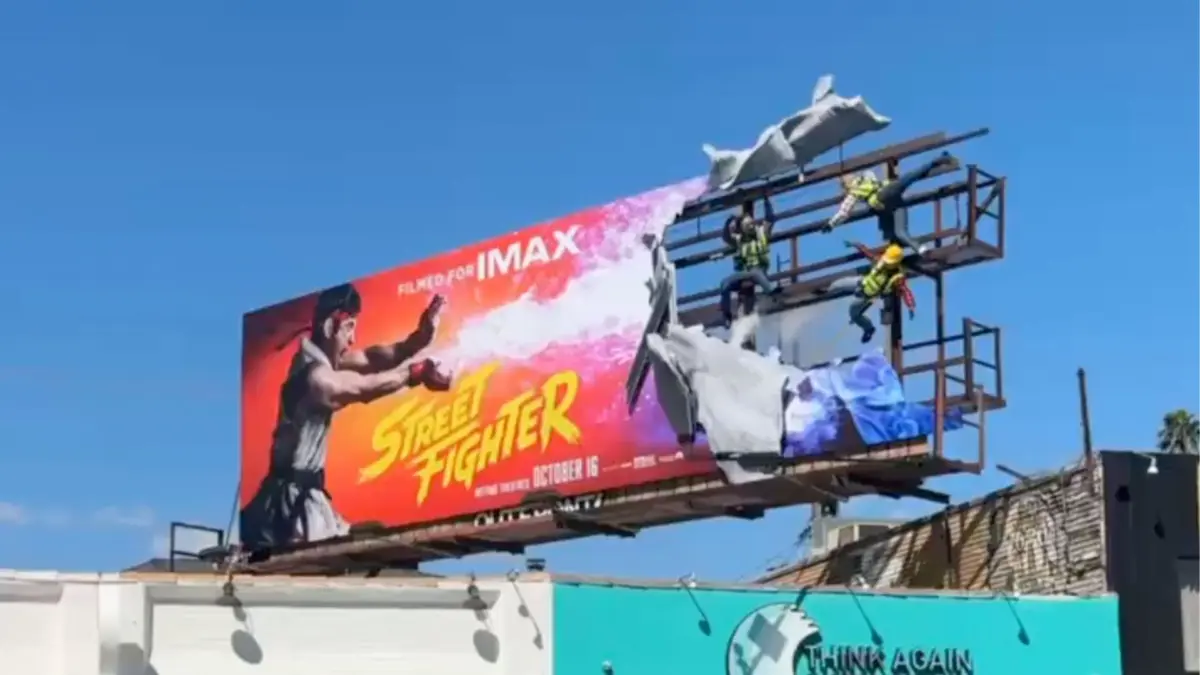
Equal parts ingenious and wonderfully theatrical, this latest marketing installation breaks the traditional conventions of out-of-home advertising. Rather than simply presenting a static promotional image within a rectangular frame, the design team chose to destroy the frame entirely. The result is a prime example of how modern billboard advertising has evolved to meet the demands of a highly distracted public, offering a delightful treat for long-time fans of the video game franchise and an eye-catching marvel for everyday commuters navigating the busy streets of Southern California.
Looming high above the Los Angeles pavement, the dramatic billboard showcases Ryu mid-action, capturing the precise moment he unleashes his legendary "hadouken" energy blast. The sheer kinetic force of the attack has seemingly shattered the very medium meant to contain it. The billboard features intricate, highly detailed torn paper effects that mimic real structural damage, giving the impression that the massive vinyl poster has been ripped to shreds by the fictional energy wave. Adding to the lifelike chaos of the scene are three-dimensional figures of construction workers clinging desperately to the exposed, warped framework of the sign, appearing as though they were caught completely off guard by the sudden martial arts onslaught and are now hanging on for dear life.
The sheer realism of the installation quickly sparked a wave of amusement and awe across social media, where photos of the billboard—initially captured and shared by user @JoeWehnert on X (formerly Twitter)—went viral. Many online observers admitted to being briefly fooled by the lifelike execution of the design. One social media user commented that they genuinely thought the dangling construction workers were real people in danger at first glance. Others leaned into the playful nature of the campaign, with one user joking about who would be held financially responsible for the simulated property damage, while another fan eagerly expressed their appreciation for the creative direction, calling for more campaigns of this caliber in the future.
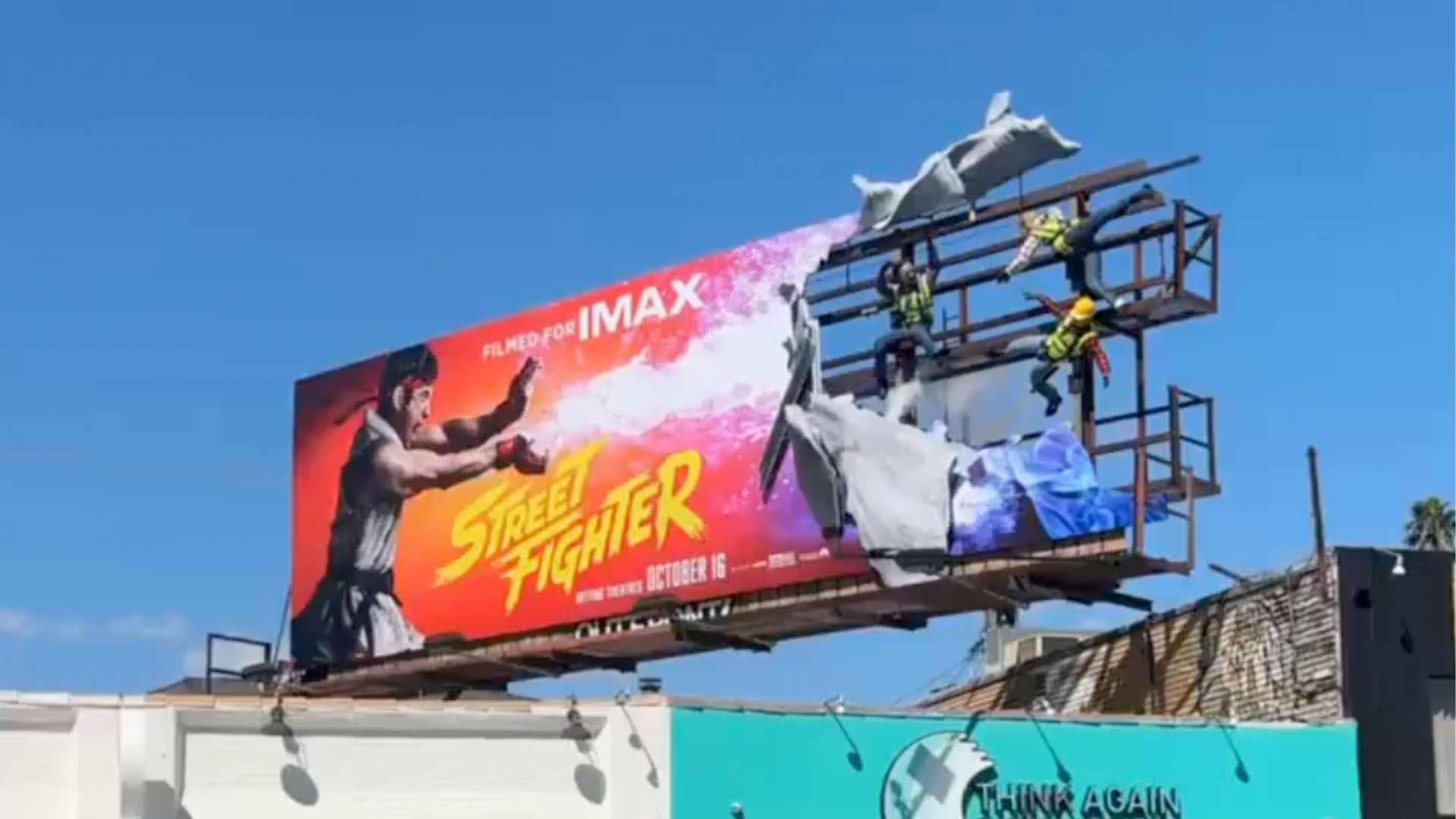
The choice of Ryu and his signature hadouken move is a deliberate nod to the rich cultural legacy of the Street Fighter franchise, which has stood as a cornerstone of the video game industry since Capcom first introduced the series to arcades in the late 1980s. The hadouken—a concentrated fireball thrown from the hands of the practitioner—is perhaps the most recognizable special move in gaming history. By utilizing this specific visual element to "destroy" the physical advertisement, the campaign instantly taps into decades of collective nostalgia, ensuring that the message resonates deeply with multiple generations of gamers who grew up inputting the classic directional commands on arcade cabinets and home consoles.
This ambitious marketing push comes ahead of the new Street Fighter movie, which is currently slated for release in 2026. While the film’s premiere is still on the horizon, the early deployment of such a high-concept, high-visibility campaign indicates that the studio is committed to making a massive cultural impact. Historically, bringing beloved video game properties to the silver screen has been a challenging endeavor, but the modern era of entertainment has seen a significant shift, with cinematic adaptations of gaming franchises achieving unprecedented critical and commercial success. By launching an experiential campaign of this scale so early in the promotional cycle, the creators are signaling their dedication to capturing the raw energy, style, and larger-than-life personality of the source material.
The viral success of the Los Angeles billboard highlights a much broader trend within the advertising industry, which has seen immersive and experiential out-of-home (OOH) campaigns grow exponentially in popularity over the last few years. In an era where digital advertisements dominate personal screens and consumers are constantly bombarded with programmatic online banners, traditional static billboards are no longer sufficient to capture the public’s fleeting attention. To combat screen fatigue and ad-blocking software, the physical world of outdoor advertising has been forced to step up its game, transforming mundane urban spaces into interactive theaters of brand storytelling.
This transition toward tactile, boundary-pushing advertisements has resulted in some of the most memorable creative campaigns of the decade. Industry experts have pointed to other recent triumphs in experiential design, such as the wildly popular Dreamies cat food campaign, which featured mischievous, larger-than-life cats seemingly breaking through urban architecture to steal their favorite treats. Similarly, the marketing campaign for Final Destination: Bloodlines utilized a terrifyingly realistic simulated destruction format, creating the illusion of a horrific structural disaster on a public billboard to perfectly mirror the suspense and danger of the horror franchise.
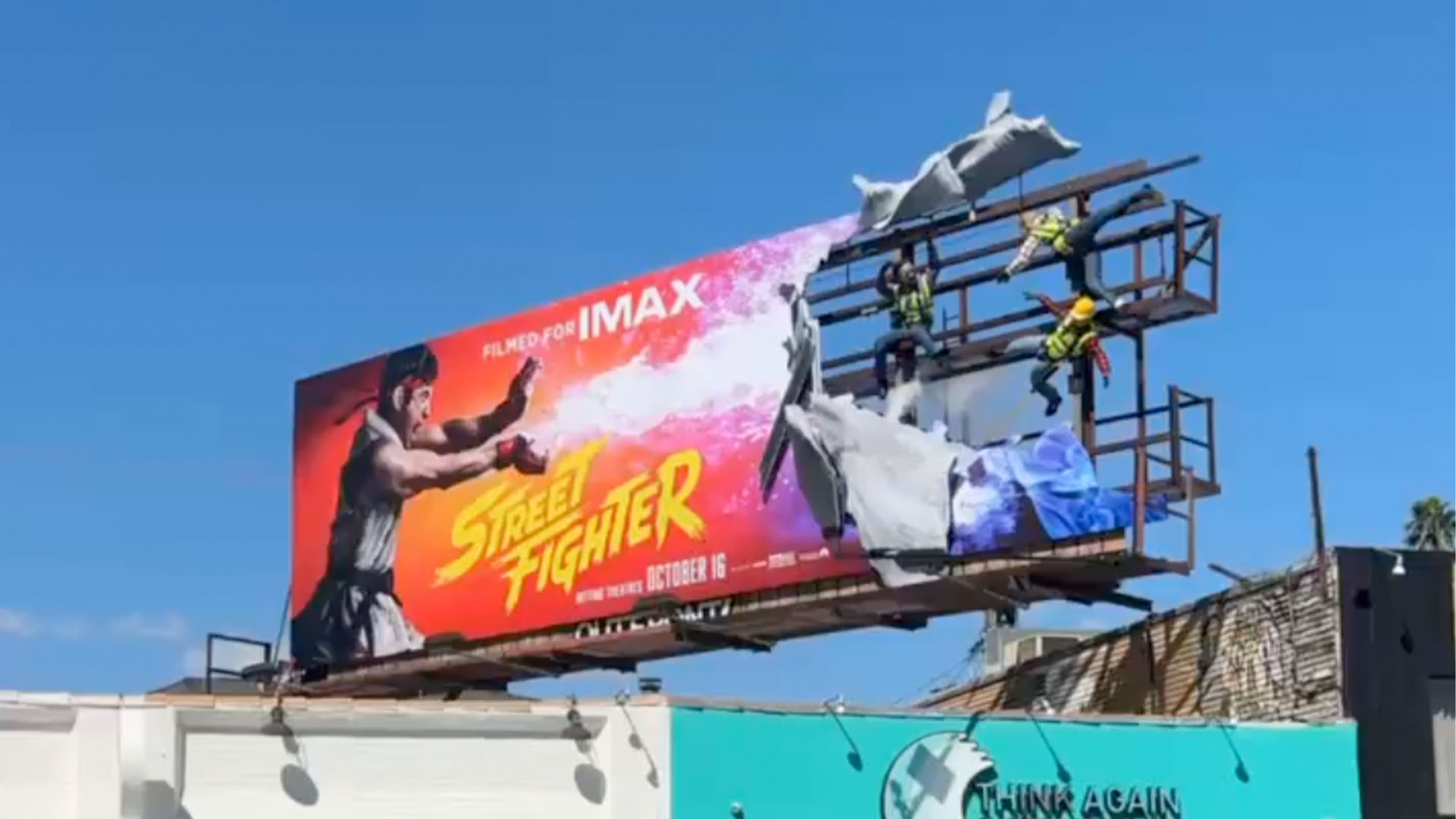
The design philosophy behind these "broken frame" billboards relies heavily on the psychological concept of the "double-take." When a commuter spots a billboard that appears to be actively collapsing, tearing apart, or harboring real people in physical distress, the brain is momentarily forced to break away from its routine autopilot mode. This split-second of genuine confusion and curiosity ensures that the viewer fully engages with the advertisement, processing the brand message far more deeply than they would have if they had simply glanced at a standard, two-dimensional poster. Once the viewer realizes the visual trick, the initial surprise gives way to amusement, creating a positive emotional association with the brand.
Furthermore, physical installations of this nature serve as powerful engines for digital engagement. In the modern media landscape, a successful physical billboard is rarely confined to the geographical location where it is built. Instead, the most creative installations are designed from the ground up to be photographed, filmed, and shared across platforms like TikTok, Instagram, and X. A single well-executed physical stunt in a major metropolitan hub like Los Angeles can generate millions of organic digital impressions worldwide, effectively turning local commuters into active brand ambassadors who willingly distribute the campaign to a global audience.
Los Angeles, as the entertainment capital of the world, represents the ultimate testing ground for these high-concept campaigns. Commuters traveling through the city are accustomed to seeing massive, multi-million-dollar advertisements for the latest blockbusters and television series on a daily basis. In such a highly saturated environment, standing out requires a level of creative audacity that goes beyond standard graphic design. By physically manipulating the billboard structure to simulate the real-world impact of a video game attack, the team behind the Street Fighter campaign has managed to cut through the noise of the city’s crowded visual landscape, setting a new benchmark for what entertainment marketing can achieve in the lead-up to 2026.