Toronto’s Financial District is defined by a distinct dual personality. On weekdays, the neighborhood’s streets are a whirlwind of fast-paced professionals moving purposefully through the concrete canyons in business-casual attire. By the time the weekend arrives, however, the commercial core exhales, shifting into a much slower, more contemplative rhythm that allows residents and visitors alike to experience the urban landscape in an entirely different light.
Bridging these two contrasting worlds is Shinji, a sophisticated new Japanese steakhouse located at 333 Bay Street. Conceived to navigate the energetic pulse of the working week and the restorative calm of the weekend, the restaurant successfully marries a lively, highly social dining atmosphere with a tranquil, sanctuary-like environment defined by a striking wash of blue hues.
The establishment is the latest culinary venture from Harlo Entertainment, the hospitality group recognized for bringing local favorites such as Linny’s and Sunny’s Chinese to the Toronto dining scene. With Shinji, the group aims to deliver an authentic hospitality experience rooted in meticulous craftsmanship, high-quality international imports, and a deep appreciation for Japanese culinary and design traditions. From custom tableware to staff uniforms sourced directly from Japan, every element of the restaurant has been curated to foster an atmosphere of genuine care and shared connection.

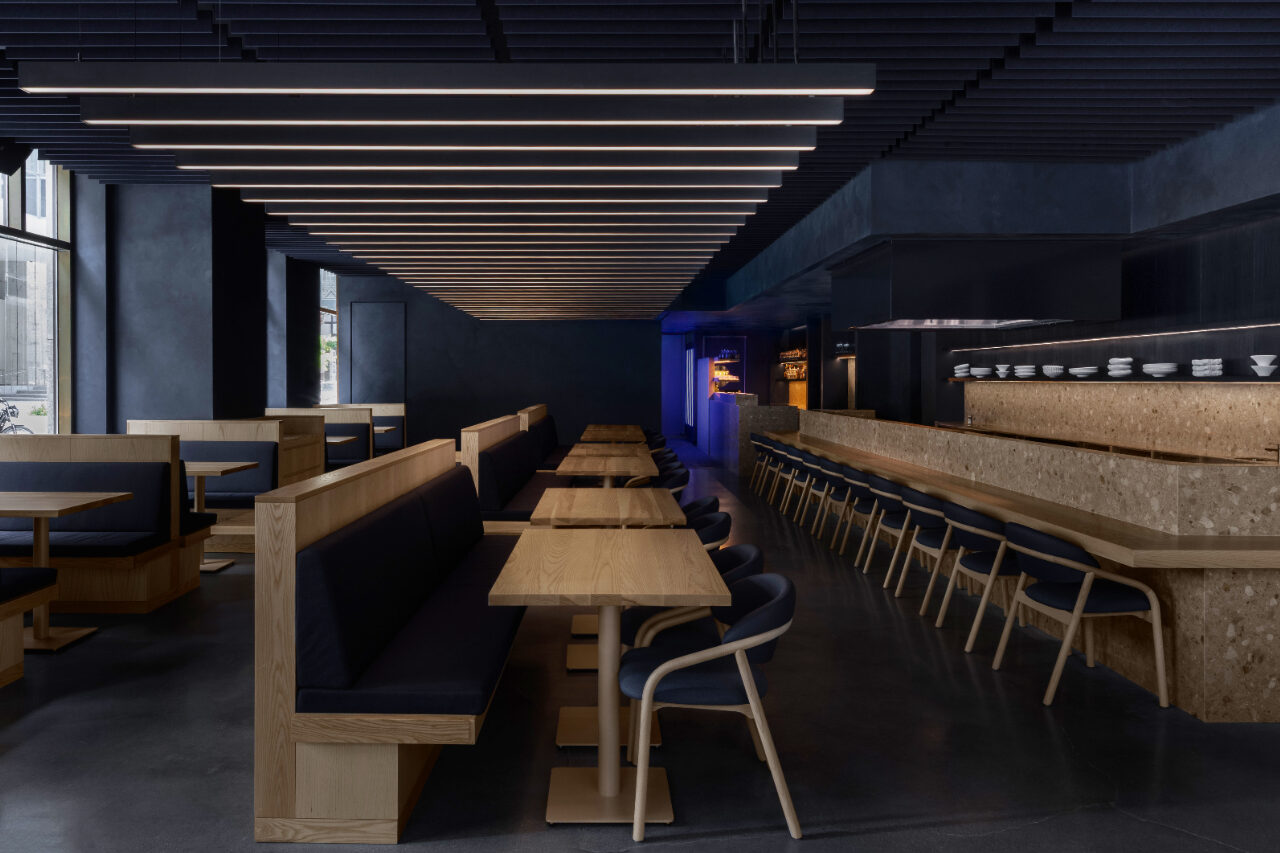
Behind the physical space is Odami, an acclaimed Toronto-based architecture and design firm known for its thoughtful, material-driven approach. Tasked with shaping the interior of Shinji, the designers embraced a rich and immersive palette, bathing the restaurant in deep blues and accenting the ceilings with mesmerizing linear lighting pendants that stretch gracefully across the room. Despite the bold color choices and dramatic lighting, the interiors maintain a remarkable sense of restraint, remaining firmly grounded in authentic materials and subtle Japanese design touches.
The conceptual foundation for the interior design stems from an unexpected source: Japan’s rich denim industry. Rather than relying on literal translations, Odami used this humble yet elevated textile as a guiding conceptual lens for the entire project. Denim occupies a unique cultural space, functioning simultaneously as a luxury fashion staple and a rugged workwear basic that straddles the divide between high-brow and low-brow design. Furthermore, denim is celebrated for the rich patina it develops over time, growing softer and more character-driven with wear and age. Guided by this philosophy, Odami approached the design of Shinji with a steadfast emphasis on craftsmanship, longevity, and the enveloping, deep indigo hues associated with aged denim.

This design journey begins the moment guests arrive at the restaurant. Patrons enter via a gentle, welcoming ramp bordered by blue-stained wood and sophisticated acoustic paneling. This thoughtful threshold offers visitors their first tantalizing glimpse into the central dining room, where chefs can be seen working in full view, establishing an immediate connection between the guests and the culinary team.
Inside the main dining room, the walls are drenched in a moody dark blue limewash that absorbs the ambient light and creates an intimate enclosure. Overhead, blue acoustic baffles continue the color story while ensuring the dining room remains comfortable and acoustically balanced. Upholstery in matching shades of deep indigo covers both the plush banquettes and the locally sourced ash wood seating. Pale stone surfaces and warm, directional lighting provide a sophisticated counterpoint to the pervasive blue tones, resulting in a space that feels deeply tactile, layered, and subtly elegant.

The culinary vision running parallel to this design narrative is led by executive chef and partner Jia Zou, alongside his dedicated team. To ensure absolute authenticity and precision, Zou and his culinary staff traveled extensively through Japan, visiting local producers, markets, and dining institutions ranging from casual neighborhood spots to some of the country’s most celebrated establishments. Their travels took them to regions such as Himeji and Kobe, where they engaged directly with producers to gain a deeper understanding of Kobe beef and other top-tier regional ingredients.
Reflecting on the formative research trips, Zou emphasizes that the core inspiration extended far beyond the food on the plate. What resonated most deeply with the team was the profound level of care infused into every aspect of the dining culture. According to Zou, sourcing great ingredients, executing proper technique, and practicing genuine hospitality became the foundational benchmark for everything the team wanted to achieve with Shinji.

This dedication to quality is vividly expressed on the restaurant’s menu, which balances traditional techniques with seasonal ingredients. Diners can experience exceptional offerings such as melt-in-the-mouth A5 striploin, delicate matcha soba salad, and the restaurant’s signature Shinji Surf and Turf, all designed to showcase the meticulous standards established during the team’s research expeditions in Japan.
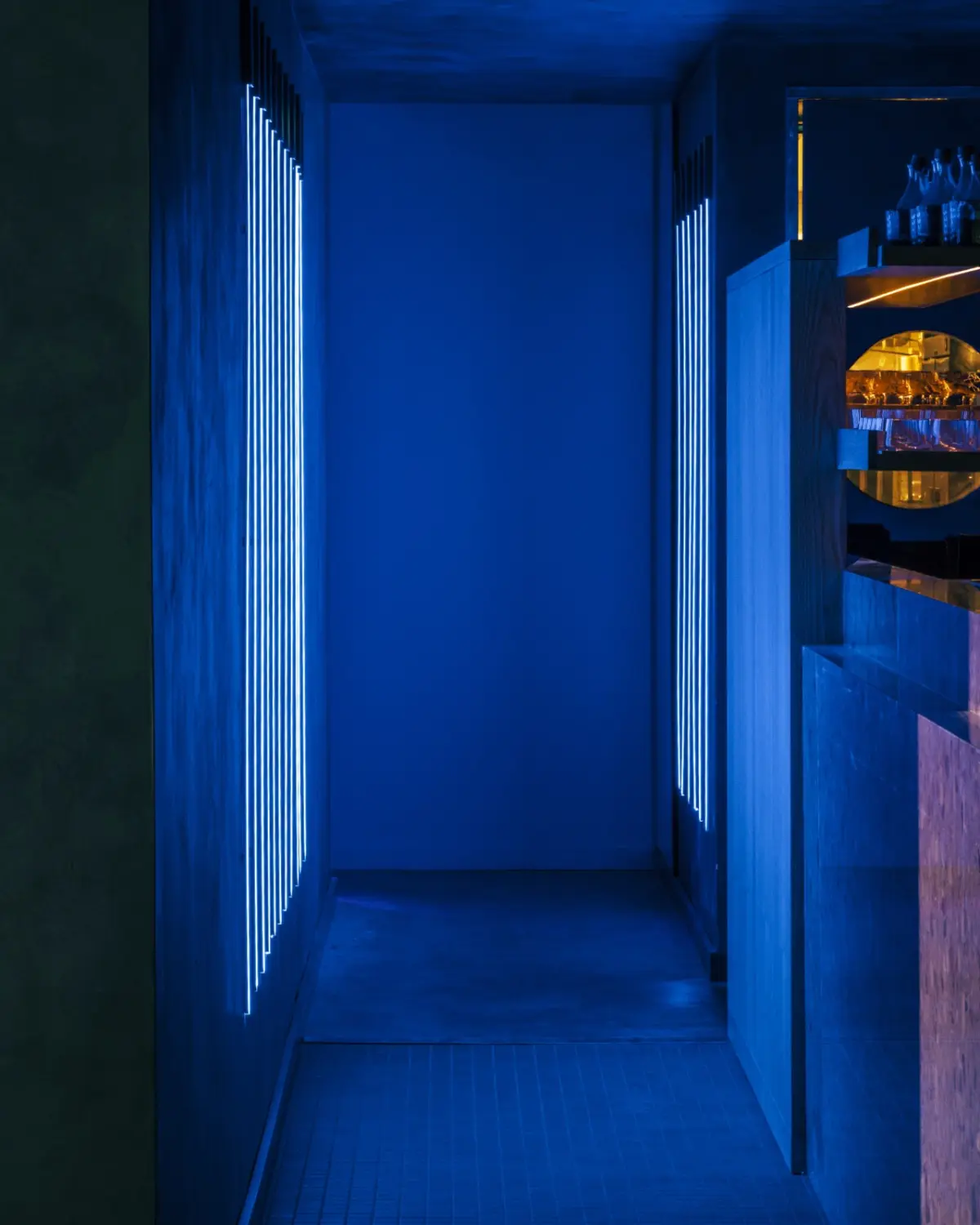
The architecture of the experience continues to unfold in surprising ways as guests move through the space. Perhaps the most unexpected and memorable architectural moment occurs during the journey to the restroom. Walking down the moody hallway, the inky blue walls gradually brighten into a more vivid, saturated shade of color. The journey culminates in a magenta-tinted restroom space directly inspired by the neon-drenched atmosphere of karaoke bars and Japanese nightlife. True to the ethos of the entire restaurant, this dramatic shift in lighting and color avoids feeling like a cheap spectacle, instead serving as a considered, respectful nod to the vibrant culture that inspired the project.

Through the combined efforts of Harlo Entertainment, Odami, and Chef Jia Zou, Shinji establishes a fresh paradigm for dining in Toronto’s Financial District. By intertwining the tactile endurance of denim-inspired design with the uncompromising hospitality and culinary artistry of Japan, the restaurant offers an urban sanctuary where fast-paced professionals and weekend diners alike can pause, connect, and savor a deeply considered experience.