Wrinkles happen to the best of us—all of us, actually, if we have the privilege of aging. At 46, many individuals find themselves in full defense mode against the natural progression of time. While widely known techniques for keeping aging skin luminous, soft, and smooth are often found in a medical office, many skincare enthusiasts naturally lean toward topical treatments first. This brings up an enduring question for anyone building a routine: Do the best wrinkle creams actually work?
To find out, experts who know the industry inside and out—including board-certified dermatologists, plastic surgeons, and medical aestheticians—offer a realistic look at what modern skincare formulations can achieve.
"The effectiveness of wrinkle creams largely depends on their active ingredients," says Shereene Idriss, MD, a board-certified dermatologist known for her straight-talking skincare advice. "No cream is ever going to replace Botox and fillers, but wrinkle creams with the right active ingredients can help with the appearance of wrinkles over time."
The good news is that topicals are becoming increasingly sophisticated. According to Robert Schwarcz, MD, a double-board-certified oculofacial plastic surgeon, the landscape has shifted significantly over the years. "I used to tell patients that wrinkle creams offered only modest benefits," he notes. "And while that’s still true for deep lines and significant skin laxity, today’s formulations are more sophisticated. We’re seeing better delivery systems, more stable active ingredients, and formulas that combine retinoids, peptides, antioxidants, growth factors, and barrier-supporting ingredients that can help improve skin quality."
This emphasis on improving overall skin quality—rather than relying on strict wrinkle repair alone—reflects a broader evolution in the skincare industry. The rise of K-beauty philosophies, for instance, has heavily influenced Western markets.
"A number of my patients either ask me about or use K-beauty products as part of their skincare routine," says May Hall, DO, a double-board-certified dermatologist. "K-beauty really homes in on skin-barrier health and skin hydration as well as long-term preservation and skin support. As such, patients are seeking thoughtful, intentional skincare products with hybrid formulations designed to build skin resilience and boost collagen, but also protect the skin barrier."
Hall points out that creams containing barrier-supporting ingredients like hyaluronic acid, ceramides, and squalane work exceptionally well to lock in hydration and prevent transepidermal water loss, a process that can make fine lines and wrinkles look far more pronounced. Still, for those whose skin can tolerate active ingredients, medical professionals remain firmly loyal to the hallowed gold standard of anti-aging skincare: retinoids.
The rationale is simple and scientifically backed. "Vitamin-A derivatives, whether retinoid, retinol, or tretinoin, remain the mainstay of anti-aging because they accelerate cell turnover and increase collagen production," says Carey Campbell, MD, a board-certified plastic surgeon. "This is second only to SPF in my book, and every woman serious about anti-aging needs one in her routine."
Even if a patient’s anti-aging routine eventually includes in-office medical procedures, a quality wrinkle cream should still serve as a foundational mainstay. As Campbell observes, some individuals never establish a consistent skincare routine until surgery acts as a catalyst. However, the patients who were already dedicated to skincare, underwent a surgical resurfacing procedure alongside a facelift, and stayed committed to their topical routine afterward are the ones who genuinely look like they have aged in reverse.
This synergy between at-home care and professional treatments inspires many beauty editors and consumers to test a wide array of formulations, prioritizing products backed by dermatologists. Whether someone ultimately decides to put their skincare journey in professional hands or stick strictly to a vanity filled with targeted creams, understanding the science behind these products is essential.
Understanding the Science of Skin Aging
To truly understand how topical treatments function, experts emphasize the importance of recognizing what causes aging in the first place. Specialists explain that there are two distinct types of wrinkles: static and dynamic. Static wrinkles are those that remain visible even when the face is entirely at rest, while dynamic wrinkles appear during facial movement, such as the smile lines that form around the eyes during a wide grin. Over time, the natural loss of collagen and elastin compounds these effects. Genetics play a notable role, alongside lifestyle factors such as UV exposure, smoking, diet, and daily skincare habits.
While nothing can completely prevent wrinkles, active ingredients can significantly slow their development. Prevention ideally begins in a person’s mid-20s, when collagen production naturally starts to taper off. Dermatologists frequently recommend introducing a gentle retinol, a targeted antioxidant serum, or a vitamin C product during this decade to build healthy long-term habits.
When incorporating these items into a daily regimen, application order matters. The general rule of thumb for daytime care is to apply anti-aging creams after cleansing and lightweight serums, but always before facial sunscreen. At night, anti-aging creams typically serve as the final step following treatment serums and before heavier moisturizers, if extra hydration is required.
The Best Wrinkle Creams Tested by Experts
As skincare enthusiasts explore the vast market of anti-aging treatments, several standout products consistently earn praise from dermatologists and editors alike across various categories.
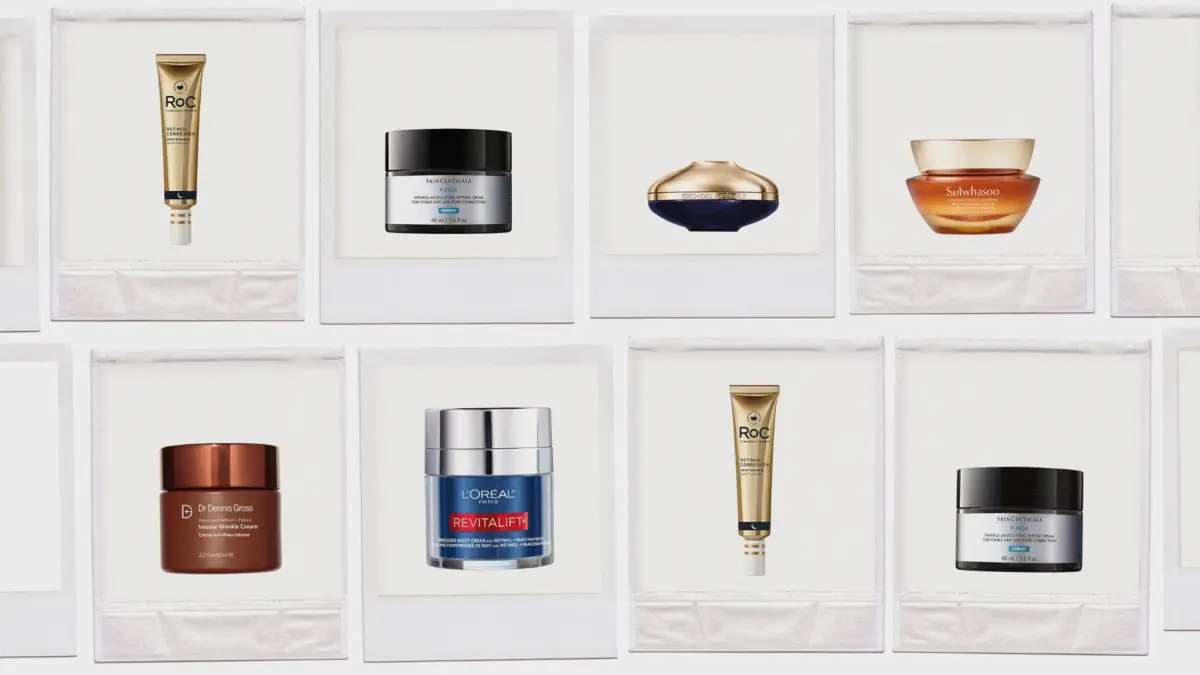
For those seeking an accessible option, drugstore favorites like the L’Oréal Paris Revitalift Pressed Night Cream ($26–$40) and the RoC Retinol Correxion Deep Wrinkle Night Cream ($22–$30) offer reliable retinol-powered performance designed to target fine lines and improve skin texture without requiring a luxury investment.
For advanced peptide integration, the SkinCeuticals P-Tiox Wrinkle-Modulating Peptide Cream ($150) stands out as a premier choice for refining overall skin quality. Meanwhile, K-beauty innovation is powerfully represented by the Sulwhasoo Concentrated Ginseng Rejuvenating Cream ($160), which utilizes targeted botanical support to enhance resilience and firmness.
Individuals with reactive complexions often look for specialized options such as the Dr. Dennis Gross Advanced Retinol + Ferulic Intense Wrinkle Cream ($77), which is formulated to deliver potent actives while remaining gentle on sensitive skin. For targeted care around the delicate eye area, products like the Celimax The Vita A Retinal Shot Tightening Booster ($18–$24) offer specialized retinol-driven tightening benefits.
For comprehensive daytime protection, formulas like the Elemis Pro-Collagen Marine Cream SPF 30 ($150) combine anti-aging hydration with essential ultraviolet defense. At the ultra-luxurious end of the spectrum, high-tech offerings like the Guerlain Orchidée Impériale The Longevity Cream ($550) and the Dolce & Gabbana Ever-Youth Gold Peptides Face Cream ($136) cater to those seeking advanced, sensory-rich luxury formulations. Finally, reliable nighttime staples like the Olay Retinol24 + Peptide Night Face Moisturizer ($36) continue to provide accessible, hydrating overnight rejuvenation.
Navigating the Future of Your Skincare Routine
Ultimately, choosing an anti-aging cream should depend on individual skin type and personal goals rather than flashy marketing claims. Dermatologists emphasize looking for proven actives—such as retinol, peptides, antioxidants, and daily SPF—while avoiding heavy fragrances or drying alcohols that can trigger unnecessary irritation.
While topical products excel at improving surface texture, hydration, and brightness, in-office procedures such as neuromodulators, laser resurfacing, and microneedling penetrate deeper to produce more dramatic, rapid results. However, consistent daily use of well-formulated creams remains the best method for preserving and extending those professional results over time. By pairing a thoughtful at-home topical regimen with diligent daily sun protection, individuals can effectively support their skin through every stage of the aging process.