When historians and documentary enthusiasts conjure up mental images of Britain during the 1930s, certain tropes immediately come to mind. Popular media and retrospective accounts frequently frame the decade through a lens of economic hardship, pointing to bitter hunger marches, sprawling unemployment queues, and the gathering, ominous shadow of war casting itself across the European continent.
While these monumental socio-economic and political crises undeniably shaped the era and left an indelible mark on the national consciousness, a forthcoming publication demonstrates that there was a vibrant, multifaceted world existing far away from the dole queues. A comprehensive new photography book seeks to recalibrate how contemporary audiences view the period, revealing a society rich in daily routines, surprising innovations, and regional character.
Historian Steven Brindle and writer Maureen Hill have curated hundreds of striking photographs, the vast majority of which have never before been published, for a sweeping hardback volume titled Britain in the 1930s. Sourced primarily from the extensive archives of Associated Newspapers—publisher of the Daily Mail—alongside contributions from Getty Images’ prestigious Hulton and Keystone collections, the book spans an impressive 616 pages. The images are meticulously arranged by county, taking readers on a visual journey from the rugged coasts of Cornwall to the windswept expanse of Orkney.
To frame this vast visual repository, Brindle drew inspiration from English Journey of 1934, a celebrated work by the renowned 20th-century novelist, playwright, and broadcaster J.B. Priestley. In his original commentary, Priestley famously identified three distinct versions of England coexisting at the time: the old country defined by ancient cathedrals and sleepy rural villages; the heavy industrial England forged by Victorian enterprise; and a burgeoning, American-influenced landscape characterized by arterial bypass roads, glowing cinemas, and modern dance halls.
What immediately strikes the viewer upon flipping through the pages is how remarkably untouched much of the British countryside remained by the encroaching modernity of the 20th century. As Brindle observes in the book’s introduction, it is extraordinary how little visual evidence exists to suggest a changing century in rural locales, noting that one can easily gaze across photographs featuring barely a single structure erected after 1900, and very few built after 1800.
Beyond the sociological insights, the book serves as an extraordinary treasure trove for photography enthusiasts. Many of the included frames were captured by jobbing newspaper photographers whose individual names have unfortunately been lost to history. Yet, time and again, these anonymous professionals demonstrated an exceptional eye for composition, capturing fleeting moments of humanity, labor, and leisure with remarkable artistic flair.
Liverpool’s ‘Dust-Bins’
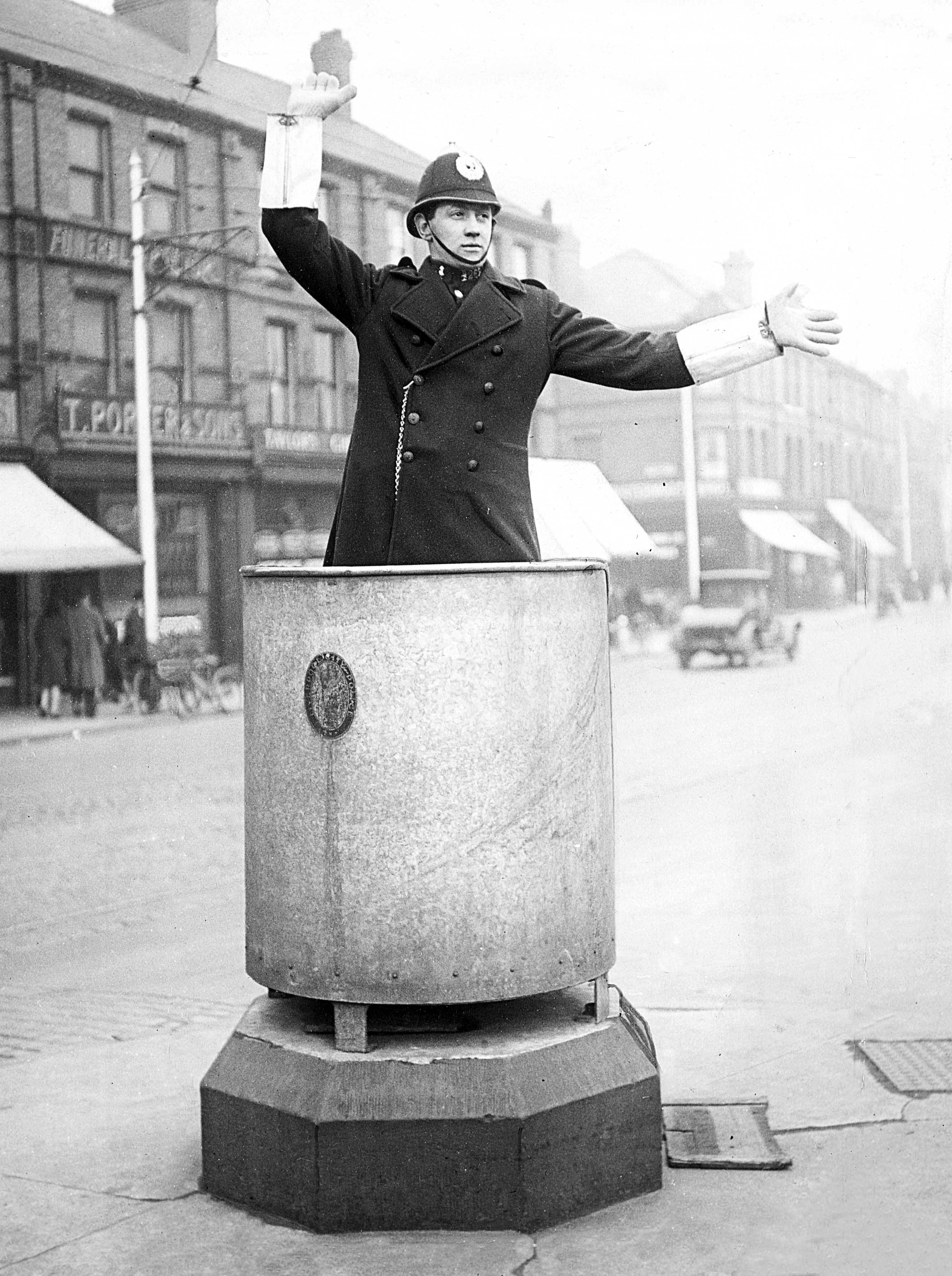
Among the fascinating urban artifacts highlighted in the collection are the unique traffic-control measures introduced in northern England during the early years of the decade. In 1930, the Liverpool Police force sought a practical solution to protect its point-duty officers from the relentless battering of coastal winds, driving rain, and muddy street conditions. The resulting innovation came directly from a motorist’s suggestion submitted to a local newspaper, prompting the police department to construct enclosed metal protection boxes for officers stationed at busy intersections.
Affectionately and somewhat humorously christened "the dust-bins" by the local force, these large metal drums were placed on plinths in the middle of bustling streets. An officer would stand inside, fully sheltered from the elements, while utilizing stark white sleeves to ensure their traffic hand signals remained clearly visible to passing motorists. The resulting archival photographs frame these constables with striking precision, contrasting the industrial utilitarianism of the metal booths against the historic shopfronts and early automobiles of the Liverpool streetscape.
Boxing Day at the Ritz
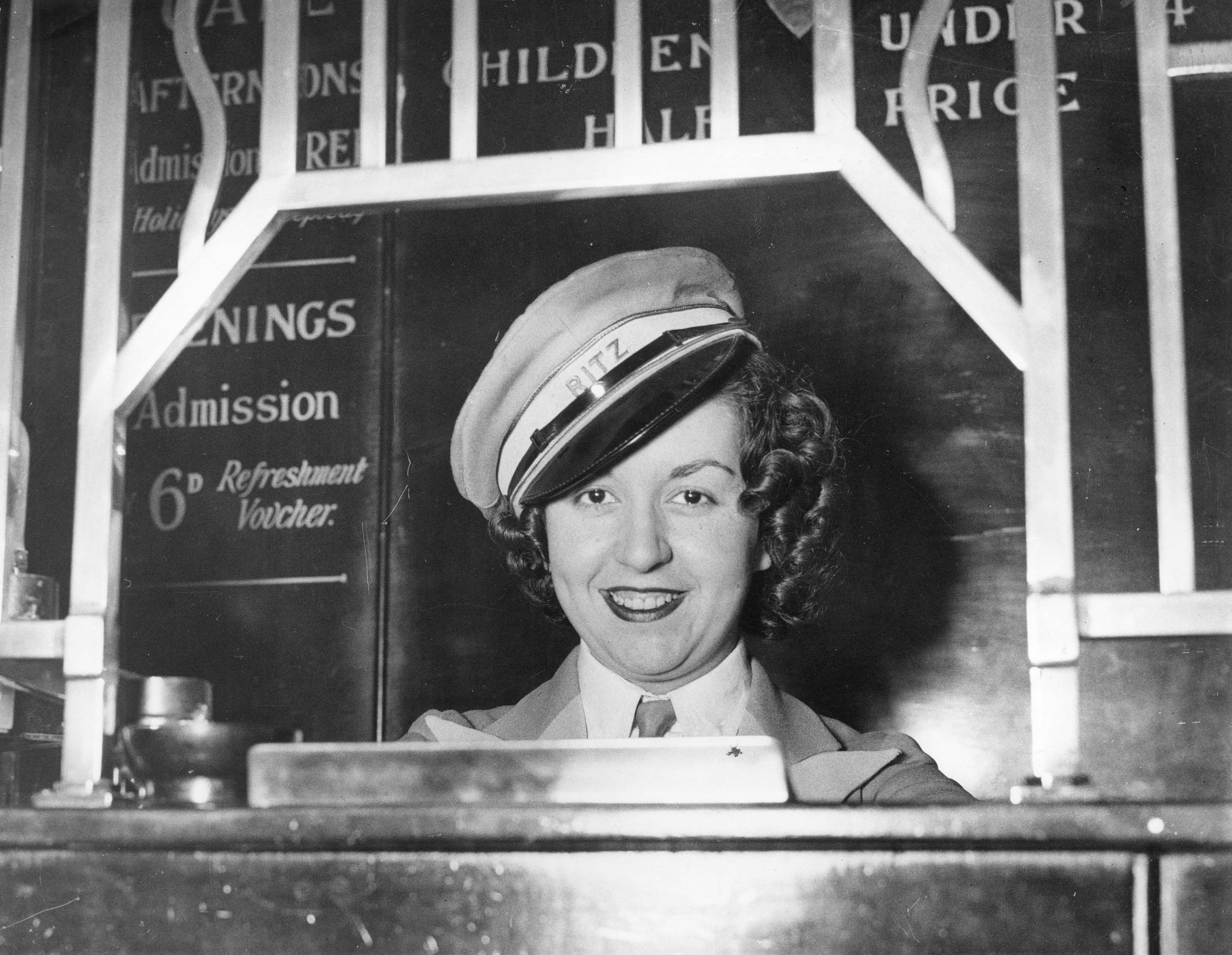
Capturing the burgeoning entertainment culture that J.B. Priestley categorized as the "new England," another standout photograph transports viewers to Manchester on Boxing Day in 1938. Inside the bustling Ritz Dancing Hall, a cashier flashes a warm smile from behind the ticket pay desk, framed by promotional signage advertising half-price admission rates for children and a sixpence (6d) refreshment voucher included with evening entry.
Venues like the Ritz represented a significant shift in British social habits, offering working and middle-class citizens an affordable escape into a glittering world of modern leisure, recorded for posterity by sharp-eyed press photographers.
A Crossing for the Schoolchildren
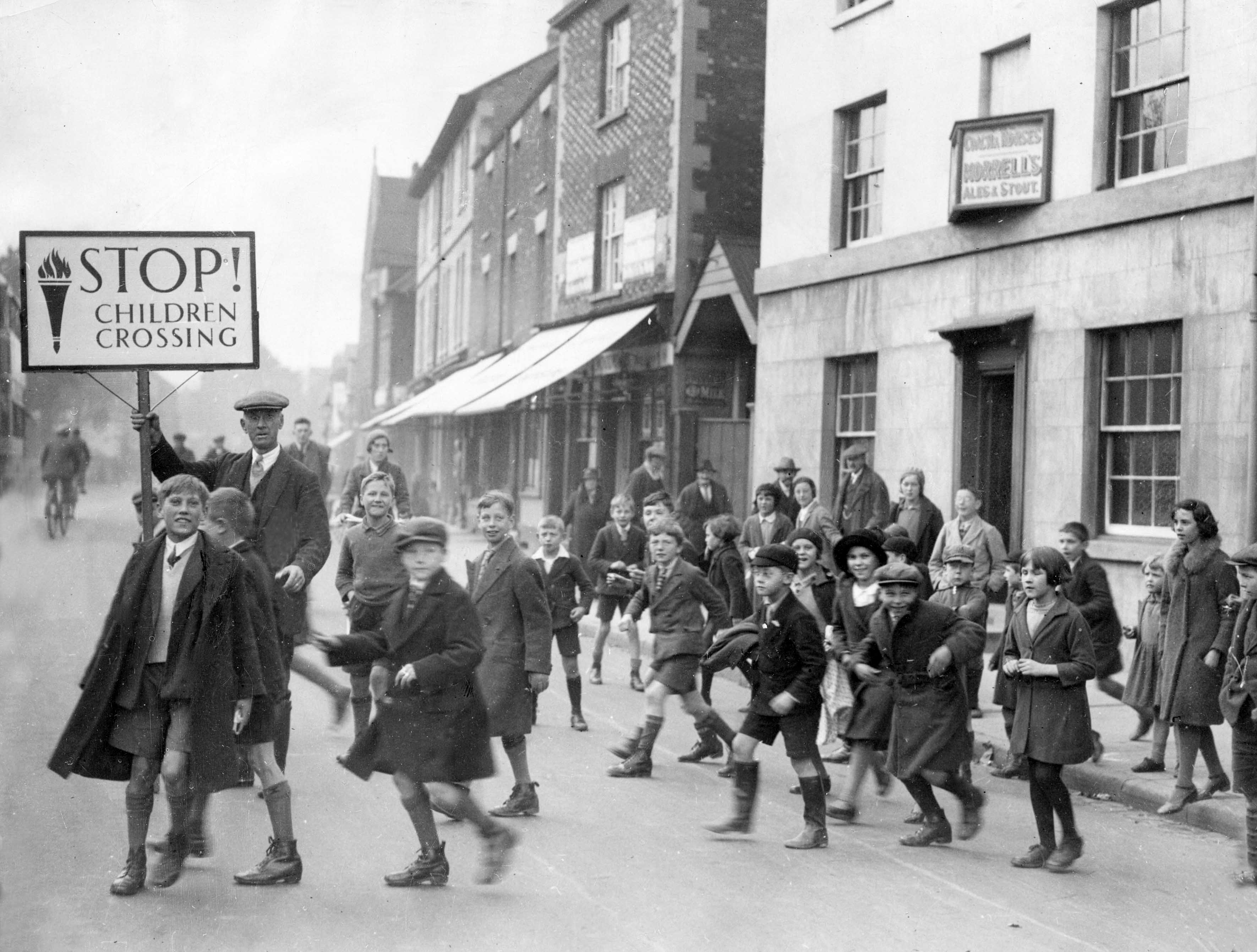
As urban traffic increased during the interwar period, navigating city streets became an increasingly hazardous daily ritual for the youngest members of society. In Oxford, a proactive measure was introduced in 1932 to protect children traversing dangerous thoroughfares on their way to education.
Photographs from the period document an early forerunner to the modern "lollipop man"—a local figure holding an official "Safety-First" sign to halt oncoming traffic while a crowd of children in heavy wool coats and caps dash or walk across the asphalt. These images also provide a technical window into the era’s photographic limitations, with visible motion blur serving as a stark reminder of the relatively slow shutter speeds newspaper photographers had to master while working in available natural light.
Sweet Success at Bournville
Industrial prowess and corporate paternalism intersect vividly in images captured at the famous Cadbury chocolate factory in Bournville, Warwickshire. Founded by the Quaker brothers George and William Cadbury, the site was conceived not just as a manufacturing facility, but as a pioneering model village designed to provide a wholesome, supportive environment for its workforce.
By the 1930s, the Bournville complex had expanded to become the largest cocoa processor within the British Empire, employing approximately 10,000 people. Archival photographs immortalize everyday moments on the factory grounds, such as female workers in crisp white overalls proudly carrying towering stacks of finished chocolate boxes out into the yard, symbolizing both industrial productivity and the specific social ethos of interwar corporate culture.
Sheep Come to Winsford
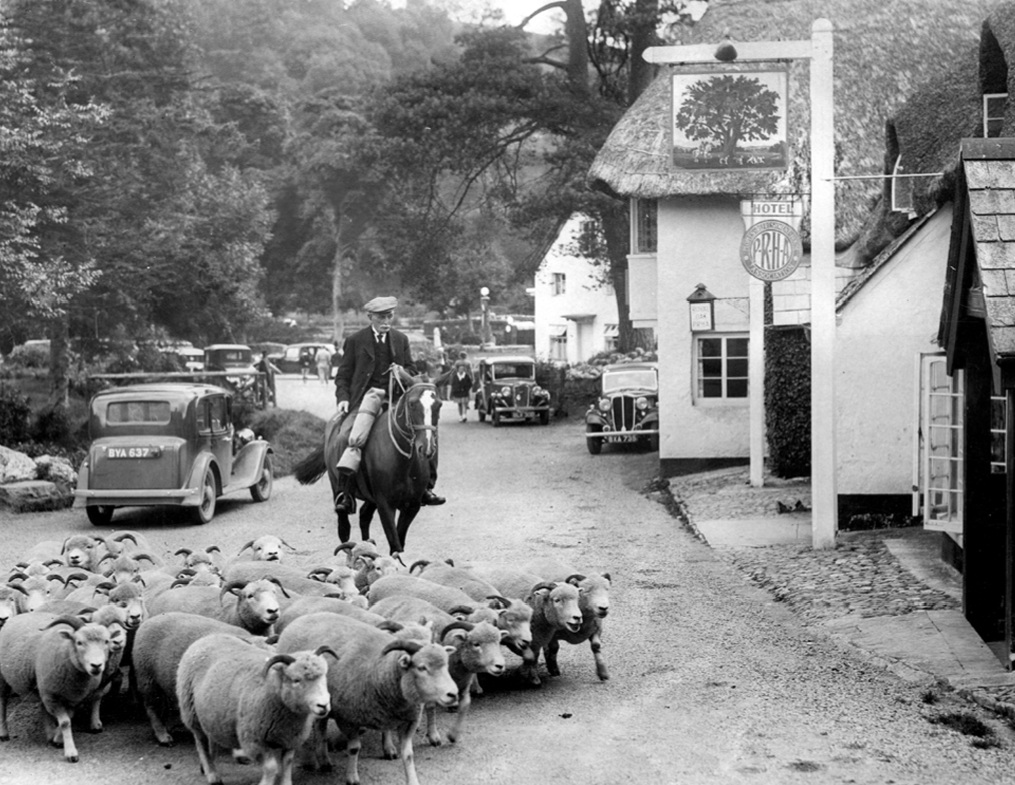
Rural traditions persisted stubbornly alongside the accelerating pace of mechanization, as illustrated by a 1937 photograph from the Somerset village of Winsford. Captured during the annual Exmoor Horn Sheep Breeders Society Show and Sale, the image depicts a drover on horseback guiding a sprawling flock of horned sheep straight through the heart of the village street.
Passing quietly by a row of parked motorcars and a historic thatched inn, the scene encapsulates a fascinating transitional era in British rural history—a moment in time where traditional pastoral methods and modern vehicular transport were forced to share the exact same physical space.
The Queen Mary at Clydebank
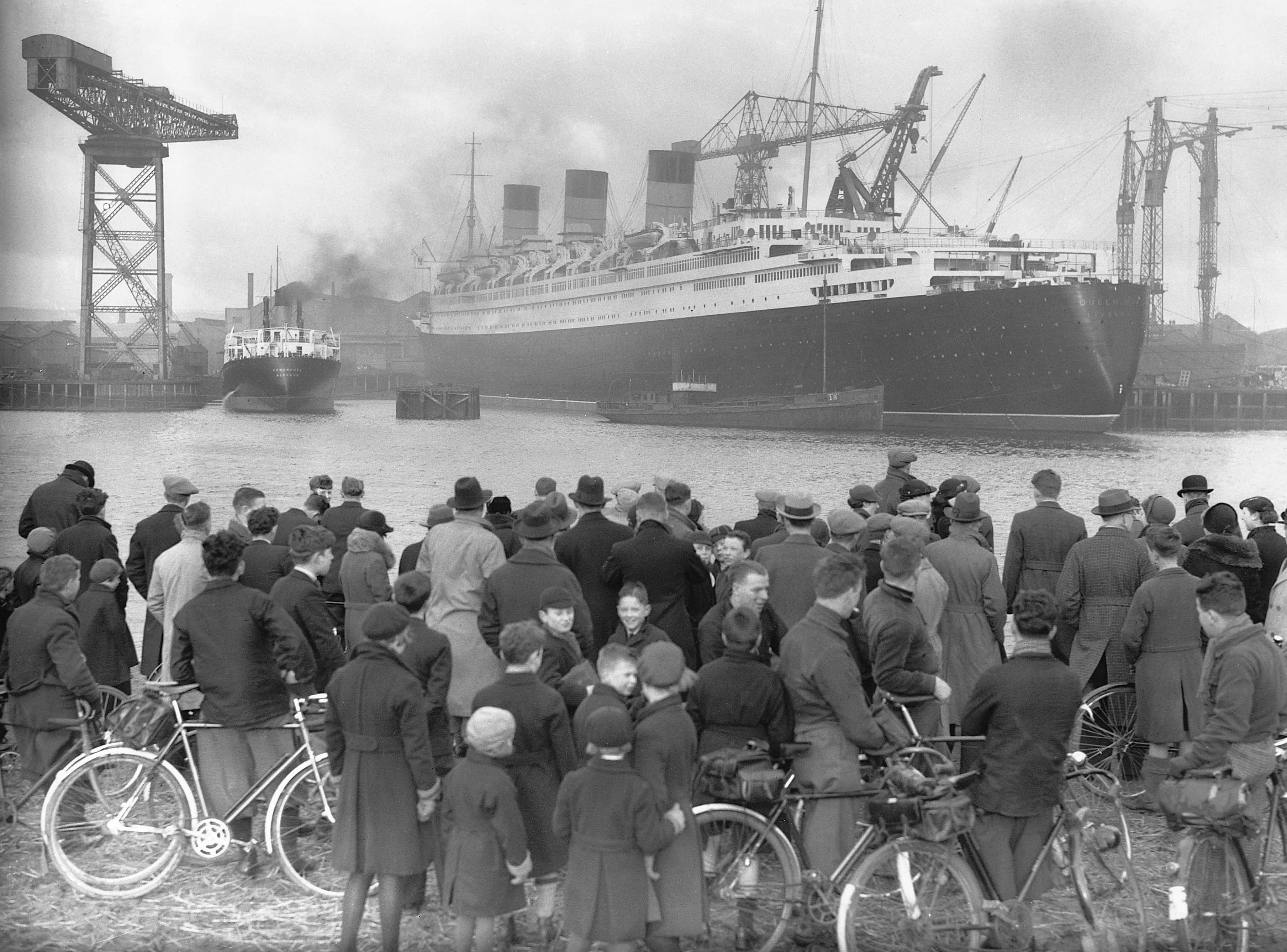
On a much grander industrial scale, the shipbuilding prowess of the British Empire reached a literal peak on the River Clyde. Crowds of local men and boys, many arriving on bicycles, gathered regularly along the Clydeside riverbanks to gaze in awe at the monumental scale of the new ocean liner, the Queen Mary, during its construction phase.

Following its completion at Clydebank, the magnificent vessel would embark on its historic maiden voyage from Southampton to New York in May 1936. Archival photographs capturing the ship under construction, flanked by towering gantry cranes and smoke-belching tugboats, offer a vivid testament to the heavy manufacturing might that still anchored the regional economy of western Scotland during a turbulent economic decade.
Geese on the Move
Further emphasizing the timeless rhythm of the British countryside, another picturesque rural scene documents a flock of four pristine white geese being driven down a quiet lane in the Yorkshire village of Carlton, near Helmsley. Guided patiently by an elderly man leaning on a walking stick and a young boy wearing heavy Wellington boots, the procession moves past traditional stone cottages with a parish church tower rising in the background.
Despite the calendar reading well into the 20th century, the complete absence of motor vehicles and the enduring architecture render the scene virtually indistinguishable from rural life a century prior.
The Harrow Tuck Shop
Stepping into the world of elite British education, a 1933 photograph captures the beginning of the school term at Harrow School. A dense crowd of adolescent boys, uniformly attired in traditional straw boater hats, throngs around the school tuck shop counter, which groans under the weight of stacked Toblerone chocolate bars and assorted confectionery boxes.
While rival institutions like Eton famously retained top hats as part of their formal uniform requirements, Harrovians firmly maintained their boaters. One young student stares directly down the camera lens, caught mid-mouthful in a candid moment that bridges the gap between elite privilege and universal boyhood behavior.
High Above the Hops
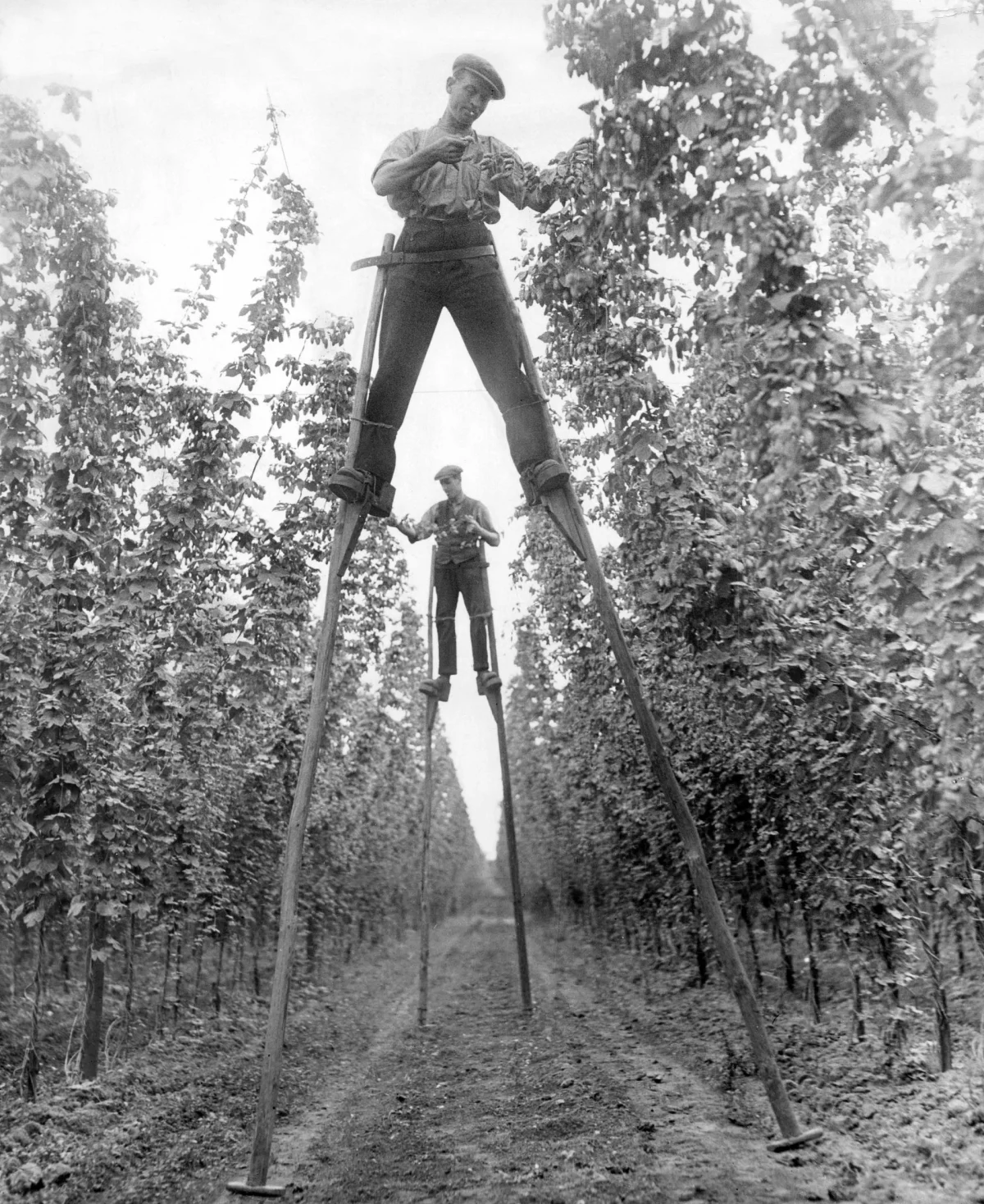
The agricultural rhythms of the Southeast are similarly preserved in striking detail, exemplified by a 1937 photograph taken within the lush hop gardens of Kent. Every autumn, thousands of seasonal workers, many traveling down from London for a combined working holiday, would descend upon the county to harvest the vines essential for the British brewing industry.
The photograph captures men balancing precariously on exceptionally tall wooden stilts to inspect the upper reaches of the hop vines, checking meticulously to determine whether the crop has reached optimal maturity for harvesting. Composed from a low angle, the shot brilliantly frames a second stilt-walker directly between the legs of the first, while the receding parallel lines of the hop rows draw the viewer’s eye toward a vanishing point on the horizon.
Britain in the 1930s by Steven Brindle and Maureen Hill is published in hardback by Atlantic Publishing, priced at £50.