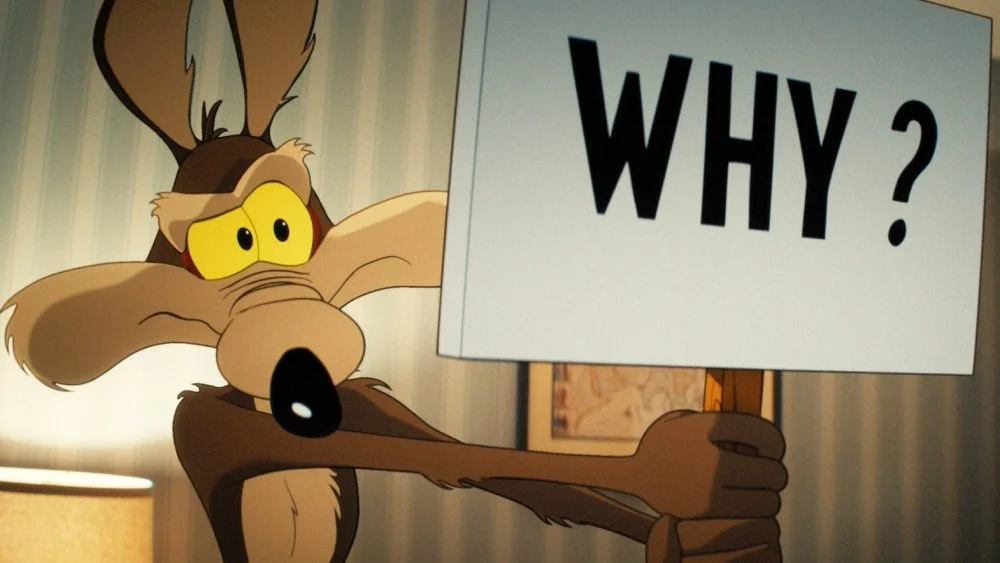
Three years after the live-action and animation hybrid "Coyote vs. Acme" was famously shelved by Warner Bros. as a tax write-off and subsequently rescued by independent distributor Ketchup Entertainment, the Looney Tunes comedy has transformed into a major box office success story. Surpassing the $100 million mark globally, the film’s triumph has reignited a fierce debate across the entertainment industry: Was Warner Bros. Discovery chief David Zaslav entirely wrong to axe the project, deeming it financially unworthy of a theatrical release?
According to industry analysts, the answer to that question largely depends on whose accounting books you happen to be looking at. "Coyote vs. Acme" has undeniably proven to be a massive win for Ketchup Entertainment, the indie distributor that stepped in to acquire the rights. Ketchup reportedly paid $50 million for distribution rights, successfully offsetting a significant portion of that cost by pre-selling foreign territories before the film even hit theaters.
However, those same box-office grosses might not have been greeted with the same level of corporate celebration back at Warner Bros., considering the picture cost an estimated $70 million to produce. In the traditional economics of the film industry, theater owners typically retain about half of all ticket sales. Warner Bros. originally chose to dump the movie—which stars Will Forte and John Cena, and was produced by DC Studios co-chief James Gunn—in exchange for a $30 million tax write-down.
Industry observers note that there is a compelling argument to be made on both sides. On one hand, Warner Bros. undoubtedly possessed the corporate muscle and financial resources to put significantly more marketing dollars behind the release, a move that likely would have elevated global ticket sales even higher. On the other hand, a compelling counter-argument suggests that a substantial portion of the moviegoers who turned out to theaters rallied behind "Coyote vs. Acme" specifically out of a desire to prove the studio wrong and to champion a finished piece of art that had been buried by corporate ledger entries.
This phenomenon becomes even clearer when compared to another recent Ketchup-distributed Looney Tunes adventure. In 2024, after Warner Bros. Discovery quietly decided to offload "The Day the Earth Blew Up: A Looney Tunes Movie" as well, Ketchup stepped up to release it. While "Coyote vs. Acme" became a crossover hit, "The Day the Earth Blew Up"—whose target audience skewed much younger—grossed a more modest $15.4 million globally, highlighting the distinct advantage of the Wile E. Coyote property’s broader demographic appeal.
"It’s easy to opine on a decision after we’ve seen the effects," says Shawn Robbins, founder of Box Office Theory and director of movie analytics at Fandango. "The movie did well partly because of rallying from fans. But it turned out to be a good movie."
Buoyed by strong critical reviews and overwhelmingly positive word-of-mouth momentum, "Coyote vs. Acme" launched in late August to a strong $15.9 million domestic opening weekend. Since then, ticket sales have steadily climbed to $59.8 million domestically alongside another $45 million overseas. This performance underscores the enduring value of family-friendly, PG-rated films anchored by strong brand familiarity.
Theater owners have frequently complained in recent years about a persistent shortage of new movies aimed squarely at families. Furthermore, while original animated features have undeniably struggled to find their footing in the post-COVID theatrical landscape, remakes, spinoffs, and sequels belonging to known franchises—such as "Sonic the Hedgehog" and "PAW Patrol"—have consistently proven to be reliable, modest box office draws.
The runaway success of "Coyote vs. Acme" looks especially glaring when viewed against Warner Bros.’ broader, more challenging box-office performance. The studio has recently siphoned off a string of underperforming theatrical releases, including Tom Cruise’s dark comedy "Digger," Maggie Gyllenhaal’s punk rock-infused feature "The Bride!", and DC’s "Supergirl."
"There was legacy value in that IP, and the box office grosses of ‘Coyote vs. Acme’ reflect it," says analyst David A. Gross of FranchiseRe. "All-audience films are extremely valuable and among the biggest earners at the box office. And there would have been upside with stronger marketing."
Moreover, studio sources indicate that the wall-to-wall negative press generated by Zaslav’s decision to shelve a completely finished movie—one that reportedly scored very well during test screenings—simply wasn’t worth the public relations headache. The controversial move did little to endear the former television executive to the creative community in Hollywood. Relations had already been strained following his predecessor Jason Kilar’s ill-fated 2021 decision to release the studio’s entire annual film slate simultaneously in theaters and on HBO Max, a strategy that isolated many prominent filmmakers and actors.
Although several internal employees within Warner Bros. pushed back vigorously against the decision to bury the film, sources add that Zaslav ultimately deferred the final call to the corporate accounting department.
At the time of its shelving, "Coyote vs. Acme" stood as the third major casualty of Zaslav’s aggressive, post-pandemic cost-cutting initiatives. In 2022, he shocked the entertainment industry by shelving the $90 million DC-centric superhero film "Batgirl" and the family-friendly animated project "Scoob! Holiday Haunt" strictly for tax purposes. All three of these films had originally been greenlit by Kilar, the studio’s former chief who departed earlier that same year.
When Zaslav succeeded Kilar, he publicly stated that he was shifting the studio’s strategic priorities back to traditional theatrical releases, expressing his belief at the time that "Coyote vs. Acme" did not fit neatly within the new creative direction of the company. However, box-office watchers have continually questioned whether Zaslav fully understood the inherent financial and cultural value of the broader Warner Bros. catalog. After all, "Coyote vs. Acme," "Batgirl," and the "Scoob!" sequel all hailed from widely recognized, historically lucrative brands. There is a fundamental reason why major studios invest so heavily in recognizable franchises in the first place—they are specifically designed to generate the kind of steady, reliable profits that help justify taking risks on other original creative swings.
"We see so many remakes and sequels because they make money," Robbins notes. "The fact that ‘Coyote vs. Acme’ was based on IP plays into the curiosity behind Warner Bros. [getting rid of it]."