Capturing an Oilbird in flight inside its dimly lit subterranean habitat is a formidable test of both patience and technical prowess. For wildlife photographer Faber Mosquera Álvarez, securing such an elusive shot meant pushing his gear to the absolute limit and enduring physical injury in the rugged wilderness of Colombia.
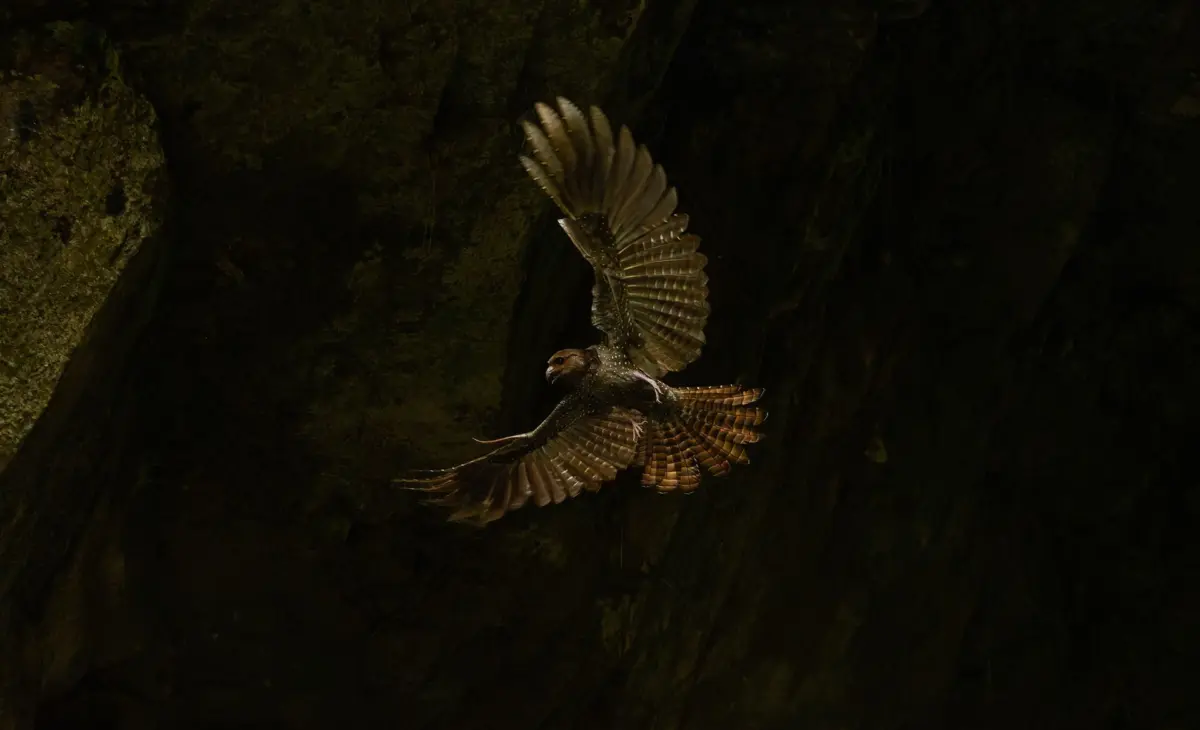
That high-stakes effort has now paid off in a major way. The striking image, which cost the photographer nerves, intense concentration, and physical pain, has officially been announced as the category winner for Birds in Landscapes in Colombia at the prestigious Audubon Photography Awards.
The achievement highlights not only the dedication required in contemporary wildlife photography, but also the lengths to which professionals will go to document species that remain largely hidden from human eyes. Operating in dark, enclosed spaces without the aid of artificial flash requires an intimate understanding of camera mechanics, environmental awareness, and a willingness to embrace calculated risks.
Navigating the Sanctuary of Shadows
The winning photograph was captured inside the cavernous depths of the Cañón de los Guácharos in Quindío, Colombia. The location is a vital sanctuary for the Oilbird (Steatornis caripensis), a unique, nocturnal avian species known for its specialized echolocation and reliance on deep caves for roosting and nesting during daylight hours. Because these birds spend their lives wrapped in perpetual darkness, photographing them outside of a controlled scientific setting is exceptionally rare.
Recognizing the fleeting nature of the opportunity, Álvarez understood that timing and positioning would make or break the shot. Knowing that the lighting conditions inside the cavern would be exceptionally critical, he made the tactical decision to break away from his group of fellow travelers. To secure an optimal vantage point, he navigated a dangerous crossing over a rushing, ice-cold river, carefully positioning himself to find the perfect angle without disturbing the delicate ecosystem of the cave.
"I knew the lighting conditions in the cavern would be critical, so I went ahead of the group I was with, crossing a rushing river to find the perfect angle without disturbing the area," Álvarez explained in an interview with Audubon magazine.
Working in an environment with virtually zero ambient light requires specialized settings. To compensate for the oppressive darkness, Álvarez increased the light sensitivity of his APS-C digital SLR camera. He paired a high ISO setting with a fast shutter speed of 1/1250 of a second, combined with an aperture of f/5, ensuring that the split-second movements of the birds would be completely frozen rather than dissolved into motion blur.
The gamble soon paid off. As his traveling companions finally caught up to his location near the mouth of the interior chamber, the cavern suddenly came alive. Disturbed by the collective presence and movement, the roosting colony reacted in an explosion of fluttering wings, slicing through the heavy air of the cave. In that chaotic window, Álvarez fired his shutter, securing the historic frame on his Nikon D500 paired with a Sigma 150-600mm f/5-6.3 DG OS HSM lens at an ISO of 8000.
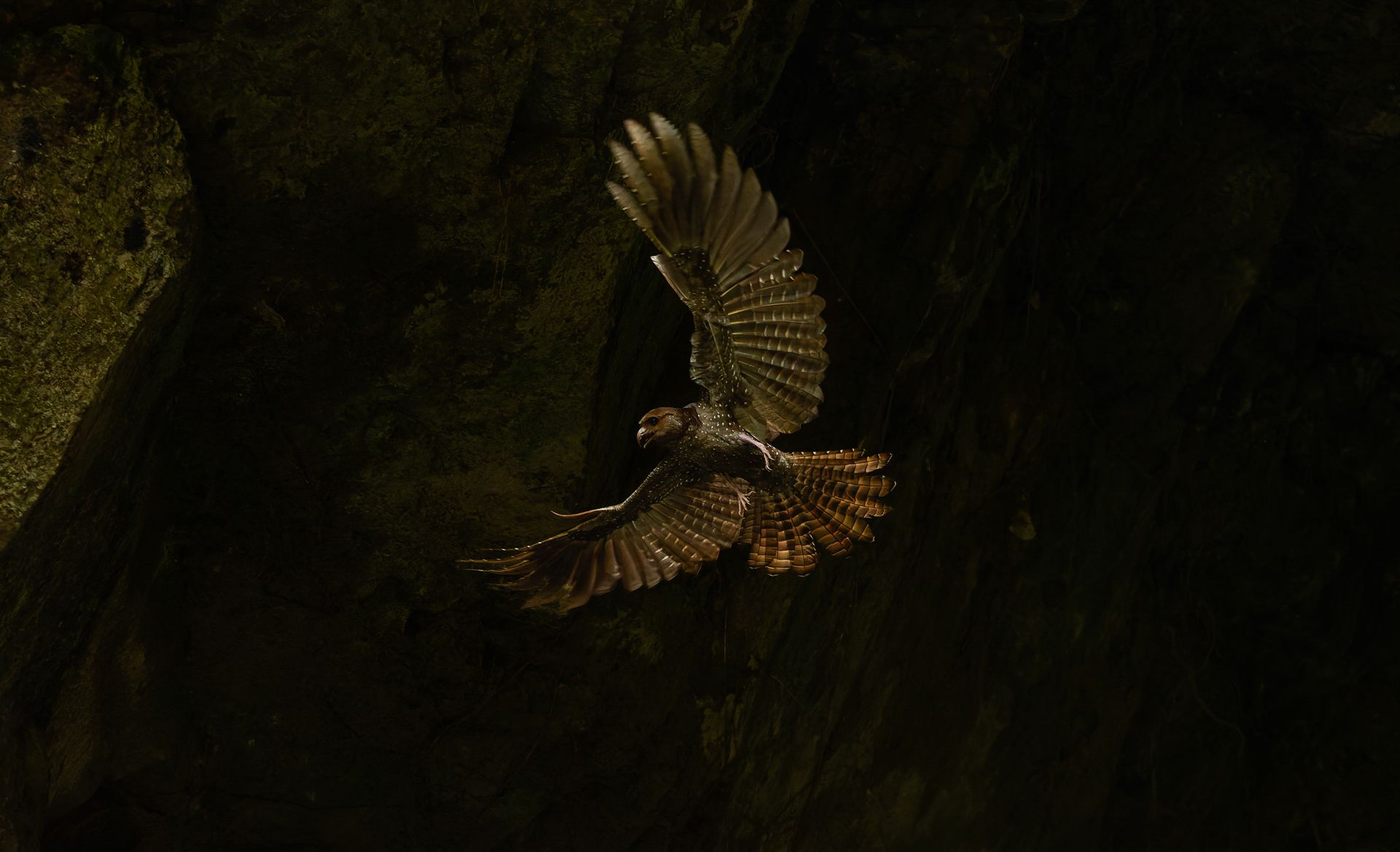
The victory, however, did not come without physical consequences. The rugged terrain surrounding the subterranean habitat exacted a toll during the exit strategy.
"As my companions caught up with me, the cave came alive in an explosion of fluttering wings. I had a nasty fall on the river rocks on my return trip, but my knee pain vanished when I saw this image," Álvarez recounted.
Winner: Birds in Landscapes, Colombia
The technical mastery behind the image earned high praise from the judging panel of the Audubon Photography Awards. Sebastian Herzog, one of the competition’s expert judges, offered high acclaim for the difficult execution required to pull off the shot.
"Taking sharp, captivating photos of birds in flight requires a lot of experience and skill, but capturing a primarily nocturnal bird inside a cave without using a flash is on another level!" Herzog noted.
"This photo stands out for its technically complex execution, which freezes the Oilbird in mid-flight and allows us to discern all the details of its plumage, despite lighting conditions far from ideal. It offers us a rare glimpse into the dark home of this enigmatic species."
The competition itself serves as a vital platform within the international conservation and photography communities. The Audubon Photography Awards celebrate talented photographers from across the Americas who utilize their creative and technical skills to spotlight the natural beauty, ecological challenges, and pressing threats facing birds across Chile, Colombia, Canada, and the United States.
By bringing attention to species like the Oilbird—which relies heavily on undisturbed forest habitats for foraging and specialized cave ecosystems for breeding—award-winning imagery helps foster public appreciation and support for regional conservation efforts.