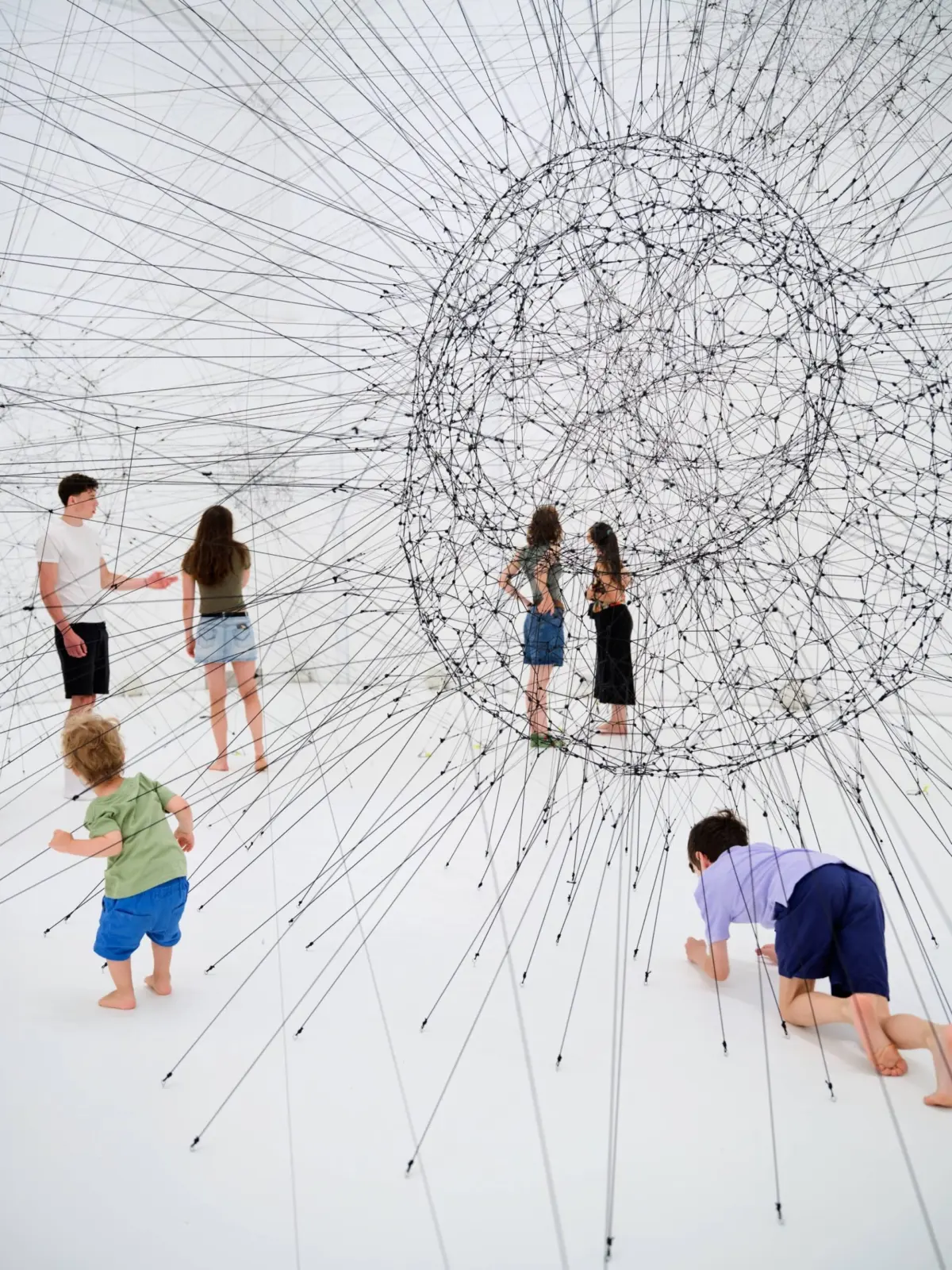
How might we visualize the inextricable web of space, time, and matter, enormous concepts that are so systemic they can almost become abstract? Rendering these connections in a tangible, accessible, and even participatory manner continues to ground the multidisciplinary practice of Tomás Saraceno. Born in Argentina and based in Berlin, the visionary artist plays with scale and spectacle to draw our attention to the life-giving ecosystems in which we are all bound, seamlessly merging art, architecture, and science into alluring, thought-provoking works.
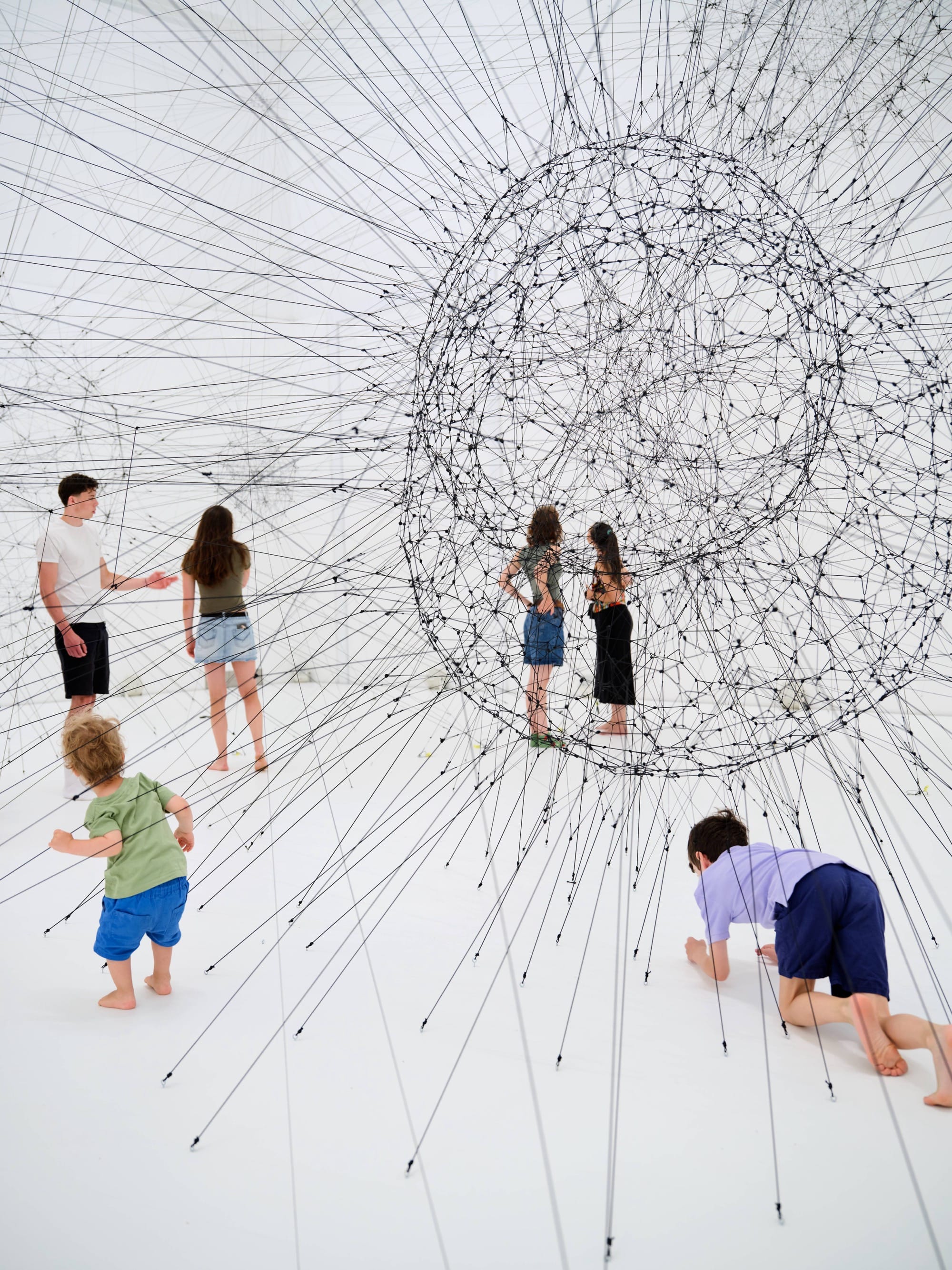
At the prestigious Haus der Kunst in Munich, Saraceno’s ecological and collaborative projects take center stage for a sweeping, major presentation titled Ancestral Futures. Spanning more than two decades of groundbreaking artistic research and community engagement, the solo exhibition emerges from the central premise that the knowledge we have gained in the past is critical to understanding and creating our shared tomorrow. Through immersive installations, participatory environments, and deep indigenous collaborations, the exhibition invites visitors to reconsider their place within the global and planetary ecosystem.
Frequently referred to in the contemporary art world as its favorite arachnophile, Saraceno frequently returns to the spider and its web as both a metaphor for and a direct example of the complex networks that undergird all life. Within the galleries of the Haus der Kunst, interactive installations invite visitors to crawl through sprawling, tension-based structures that mimic these natural architectures. Meanwhile, the artist’s ongoing, decade-long Webs of At-tent(s)ion series welcomes several species of spiders directly into the museum environment, where they are provided spaces to spin their intricate, sticky structures inside specially designed boxes. Continually returning to the motif of the web serves as a clear, poetic reminder that humanity is inextricably connected to one another and that nature’s processes are fundamentally cyclical rather than linear.
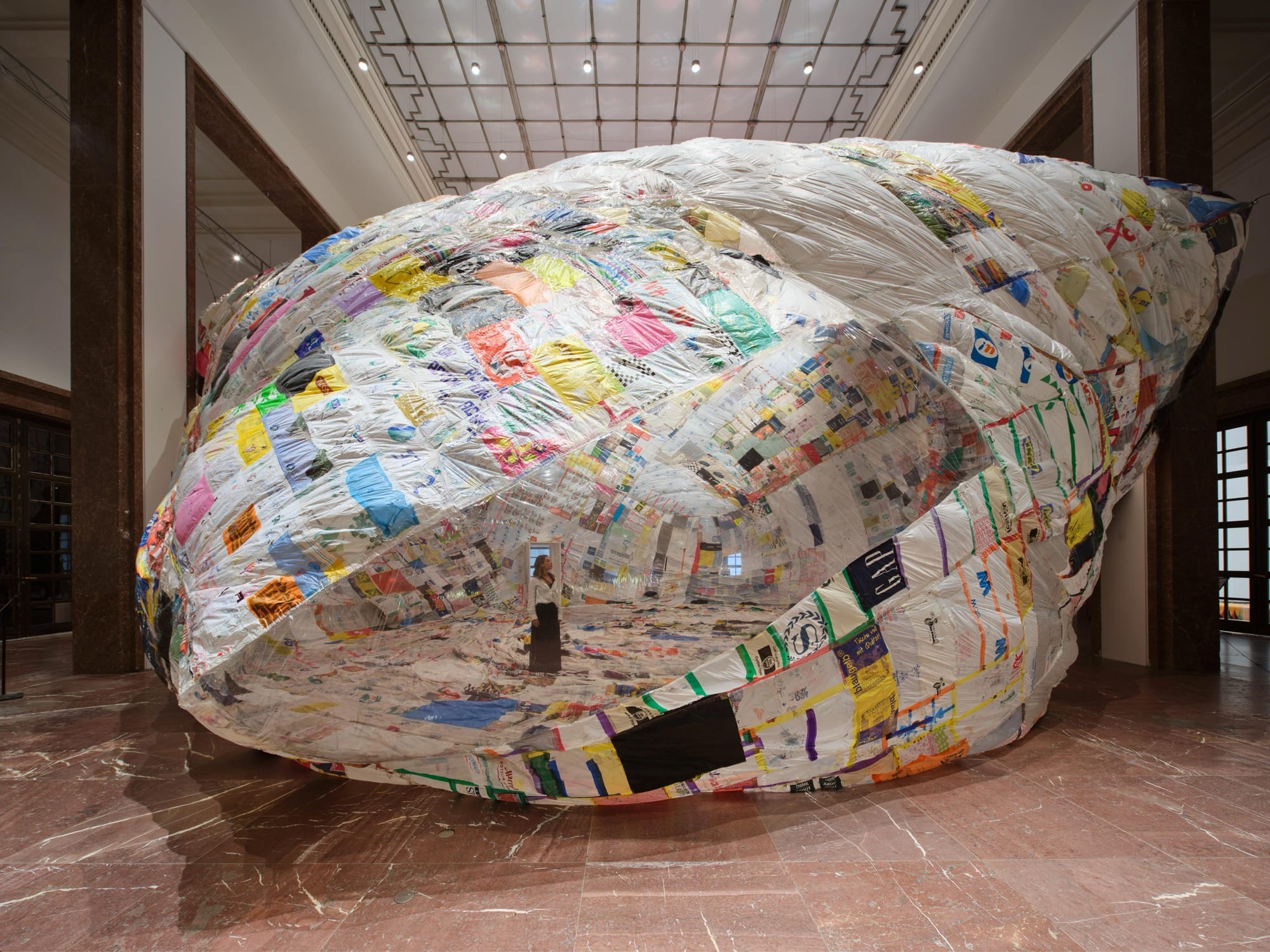
Saraceno also adapts his longstanding fascination with solar-powered air balloons for the museum context. An immersive cavern made entirely of crowd-sourced plastic bags inflates gradually with the help of willing visitors who ride stationary bicycles to power the project. Other museum-goers can wander freely inside the inflated structure, where they become enveloped by a colorful, chaotic patchwork of corporate brands, discarded materials, and the physical remnants of humanity’s pervasive culture of disposability and consumerism. This dynamic work highlights the tension between human innovation, energy consumption, and the material waste we leave behind in the atmosphere and on the land.

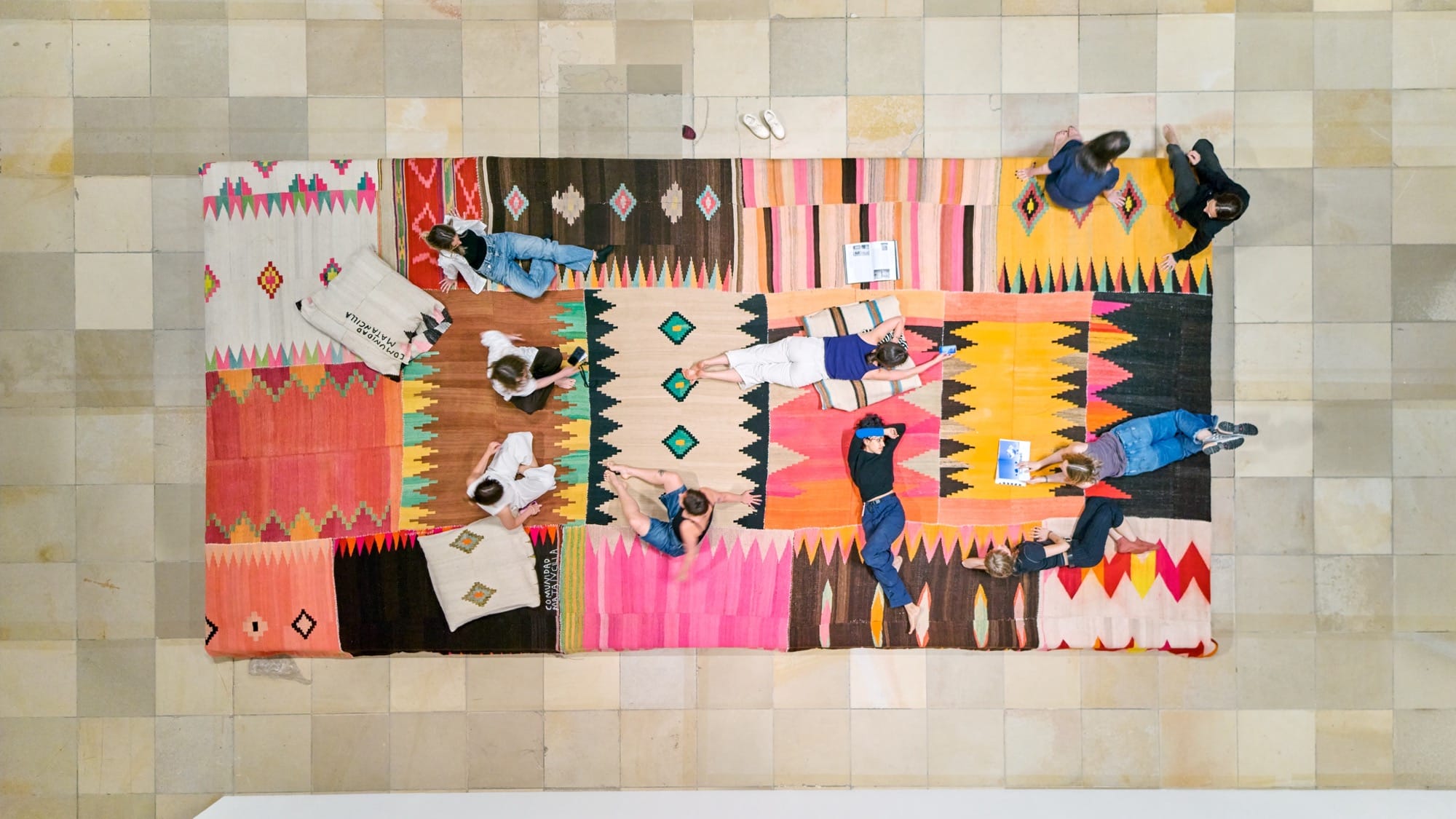
Perhaps the most culturally and politically resonant works in the entire exhibition are those created as part of Saraceno’s ongoing collaboration with the Indigenous communities of the Red Atacama, located in the high-altitude basin of Salinas Grandes in northwestern Argentina. In a powerful gesture of solidarity and cultural exchange, eleven traditional weavers loaned their handmade blankets, which are presented together as a vibrant, soft, and communal space for lounging at the show’s opening and throughout its run. Complete immersion into the stark, breathtaking landscape of Salinas Grandes follows closely behind, with galleries filled with authentic elements of the terrain, including sand, water, salt, and other geological markers.
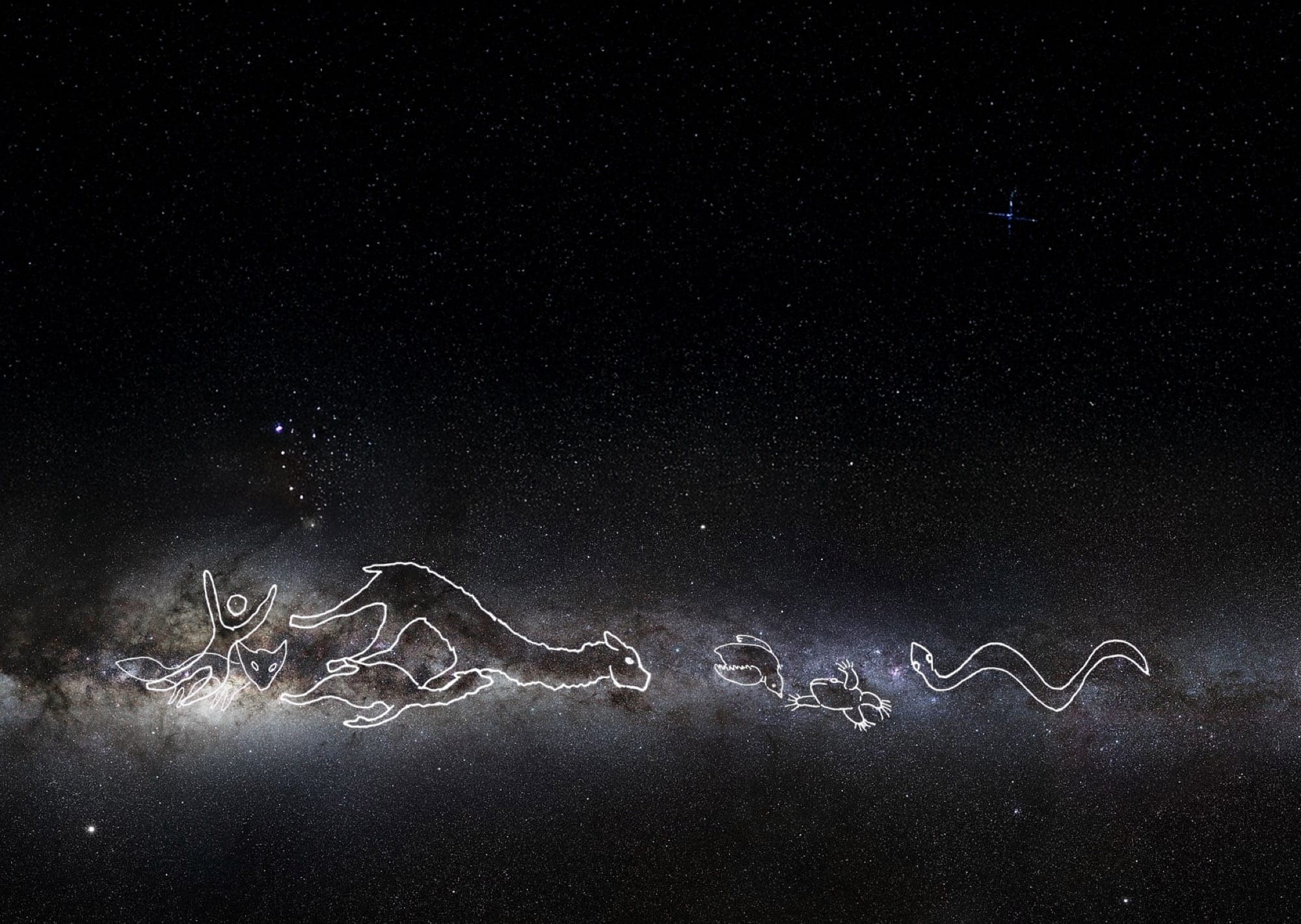
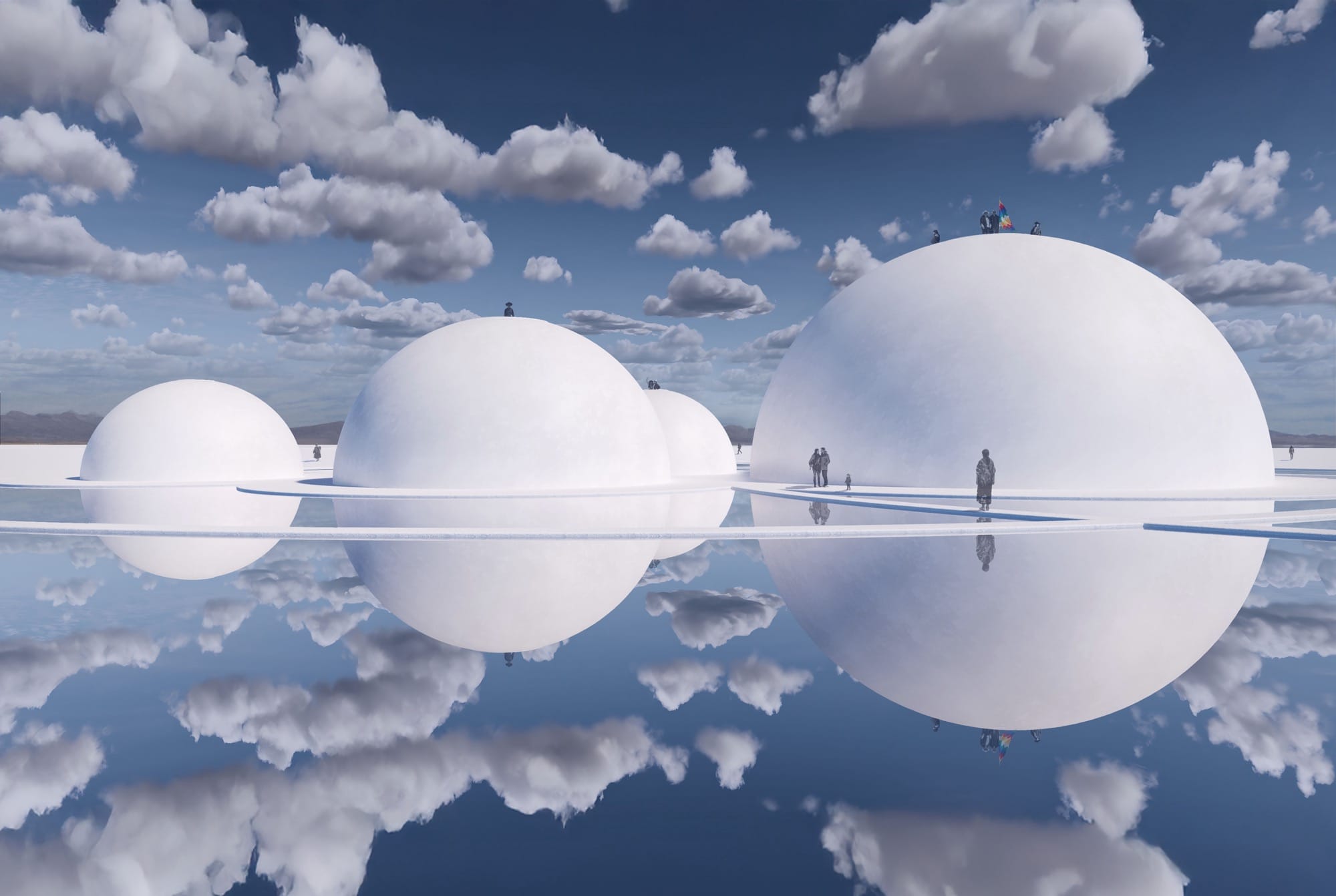
Several prominent works in the exhibition directly reference The Sanctuary of Water, a multi-pronged, long-term project that Saraceno and the people of Salinas Grandes are undertaking together. According to the museum, this powerful collaboration emerges directly in solidarity with the communities’ ongoing resistance to industrial lithium mining in one of the world’s largest lithium-rich desert regions. Their collective struggle highlights the continuing, heavy legacy of colonial exploitation in South America: while wealthy international corporations profit immensely from resources such as lithium—which has become an essential component for modern technologies, including electric cars and personal electronics—the devastating environmental and social costs are disproportionately borne by the local Indigenous communities who have inhabited and cared for the land for generations.
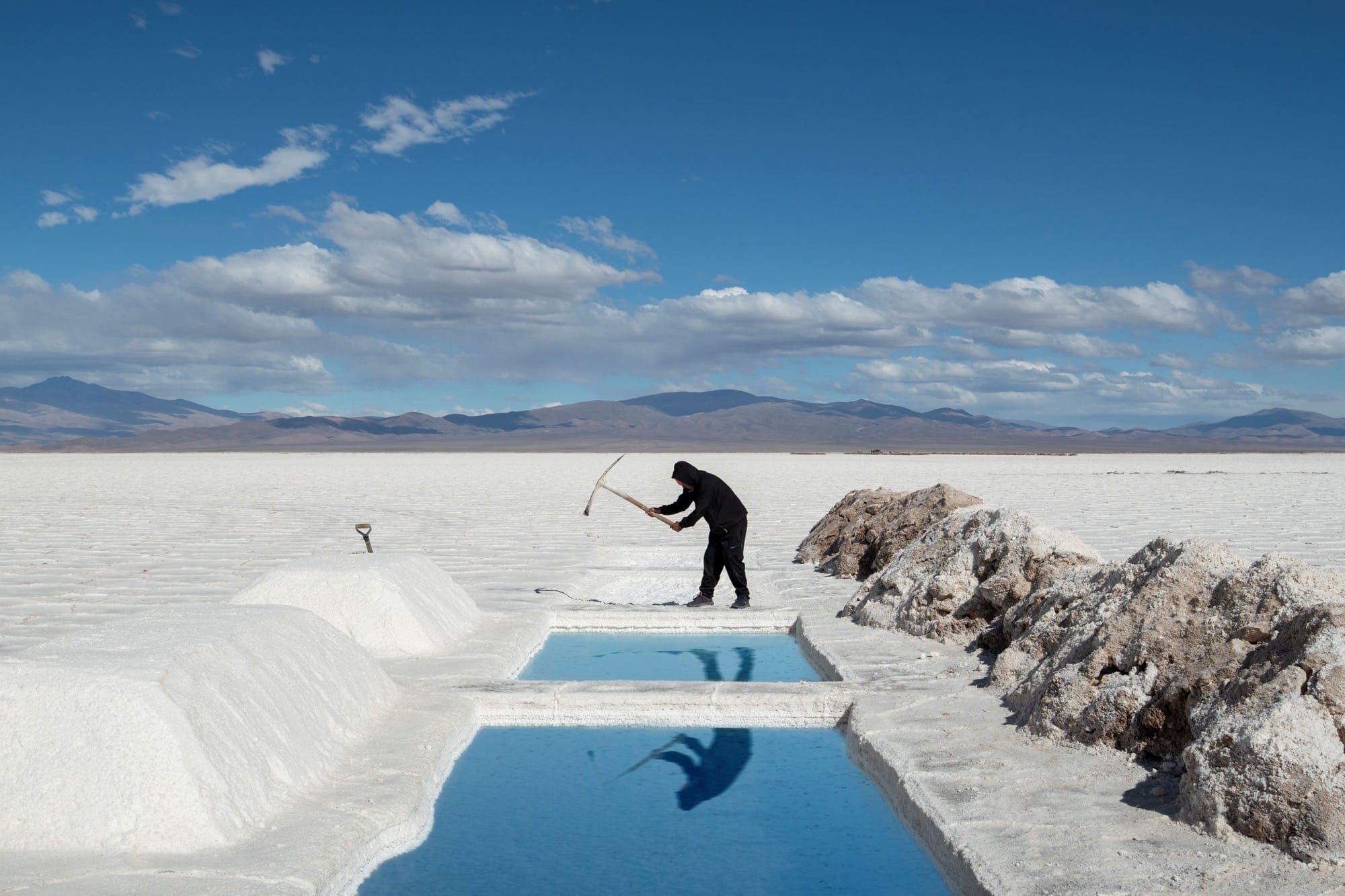
As a permanent land work, The Sanctuary of Water is organized primarily around a large, mirror-like reflective pond that captures the vast sky above, skewing the traditional boundaries between land and the open air. As articulated on the collaborative project’s official website, "In our worldview, Pacha names the inseparable weave of space, time, and matter. It is one living body, sustained by the water that flows through them all." This holistic philosophy challenges Western separations between nature and culture, urging viewers to recognize the vital hydrological and ecological systems that sustain life across the globe.
For art enthusiasts, environmentalists, and curious visitors currently in Munich, Ancestral Futures remains on view at the Haus der Kunst through February 7. Those unable to experience the exhibition in person can still explore more of the artist’s profound collaboration with the communities of Salinas Grandes by visiting the project’s dedicated website, which documents their ongoing resistance, cultural preservation efforts, and shared vision for a more equitable ecological future.