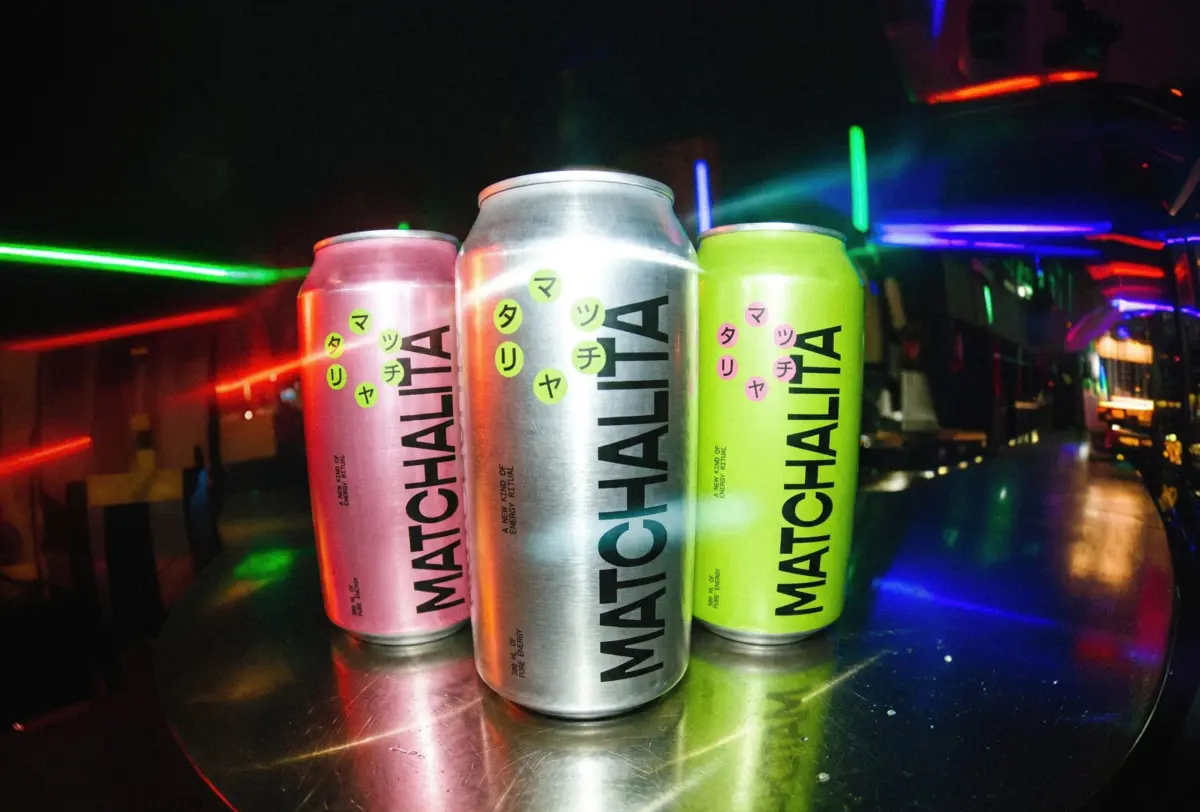
Matcha has centuries of history in Japan, where powdered green tea became central to the tea ceremony by the sixteenth century, a practice shaped by precise ritual, quiet contemplation, and deep-rooted cultural tradition. For generations, the visual and physical experience of matcha has been defined by earthy aesthetics, natural palettes, traditional ceramic tea bowls, and a strict adherence to heritage. However, creative studio ImaginaryFriend has taken that sense of order somewhere completely unexpected for Matchalita, upending centuries of visual convention by pairing a tightly stacked black wordmark and Japanese lettering with flashes of almost electric chartreuse, pink, and silver.
The newly unveiled visual identity for Matchalita marks a dramatic departure from the subdued tones typically associated with specialty green tea brands. Instead of leaning on traditional imagery of tea leaves, bamboo whisks, and rustic earthenware, the packaging introduces a dynamic waveform graphic that twists through cans and sachets like a visual beat. This striking design choice serves as a direct bridge, connecting founder Carlita’s background in DJ culture and nightlife directly to the mindful ritual of preparing and enjoying tea.
The result is a collection of packaging that feels entirely divorced from the quiet shelves of a traditional tea house. The acid green tin, in particular, stands out as a playful and disruptive object, looking far closer to something pulled from an underground record shop, a vintage crate of vinyl, or a contemporary fashion boutique than a conventional tea package. By subverting expectations, the design challenges consumers to rethink how a wellness product can look, feel, and exist within contemporary urban environments.
This cross-pollination of influences allows the packaging to successfully blur the boundaries between food, fashion, and culture. Rather than treating matcha as a delicate artifact preserved in amber, the branding gives the beverage a much louder, more confident place in modern creative life. It recontextualizes an ancient practice for a generation of consumers who navigate fluidly between wellness routines, nightlife, art, and design.
Ultimately, the collaboration between Matchalita and ImaginaryFriend demonstrates that honoring tradition does not require strict replication. By injecting the vibrant, pulsating energy of music and counterculture into the physical design of the product, the brand has managed to represent centuries-old ritual with an entirely new sense of freedom.