Good ideas rarely wait for the convenience of an immaculate desk, a sharpened pen, and a completely blank page. For industrial designers, concept artists, and creative professionals, inspiration often strikes in transit, during casual conversations, or in the fleeting seconds before a thought dissolves entirely into the background noise of a busy workday. By the time a creator locates a stray piece of paper or opens a digital application, the exact nuance of a shape, the proportion of a handle, or the angle of a curve can be permanently lost.
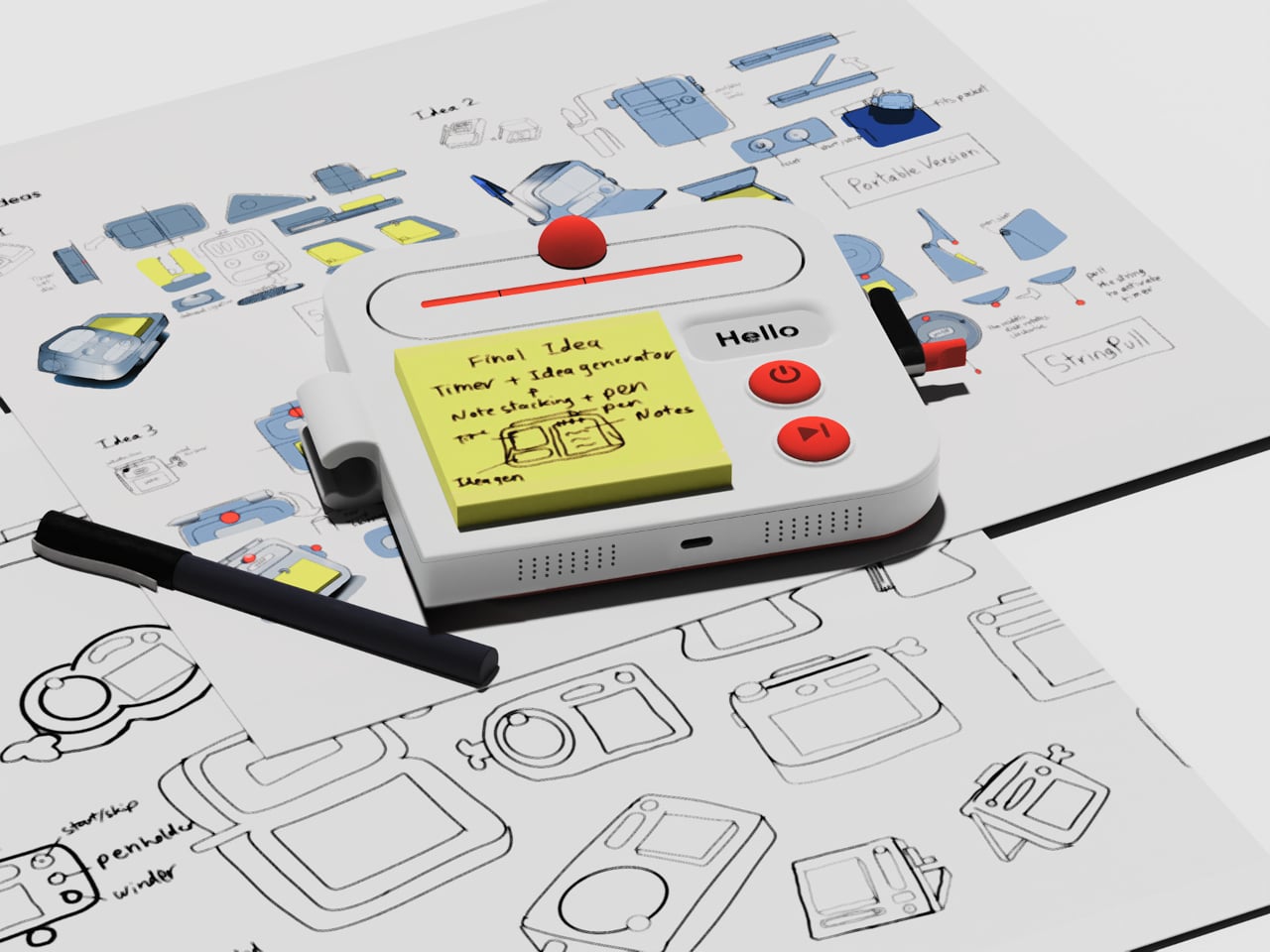
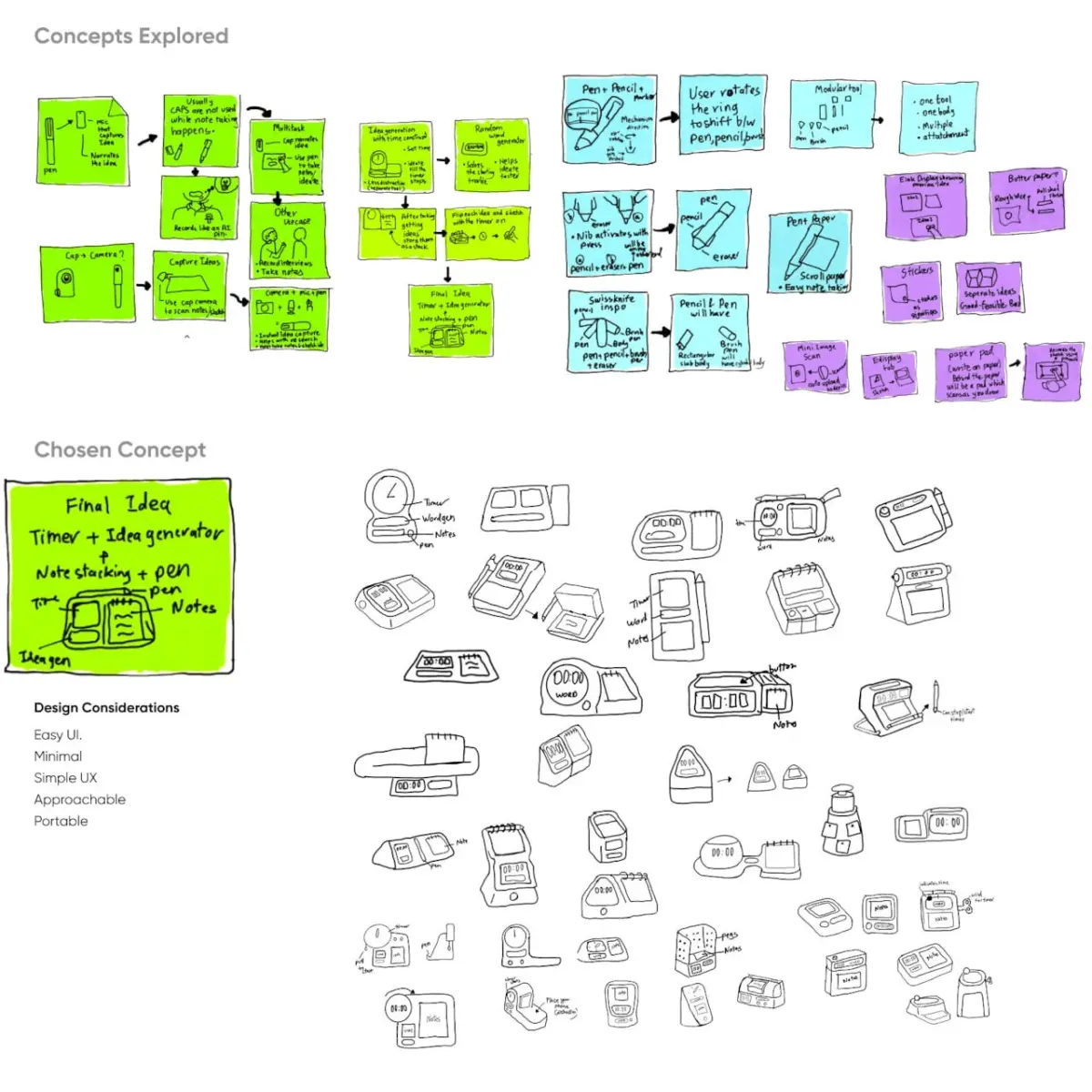
Addressing this universal frustration in the design world, industrial designer Aditya Rajiv has introduced "Ideo," a pocket-sized physical concept engineered specifically to capture fleeting design thoughts before they manage to slip away. Rather than attempting to replace a comprehensive sketchbook or relying on complex digital software to finish a creator’s thinking process, Ideo focuses exclusively on friction reduction. It keeps the fundamental tools required to begin the ideation process within arm’s reach, housing a sticky-note pad, a mechanical crank-set timer, and a random-word prompt generator into a single, cohesive, and tactile device.
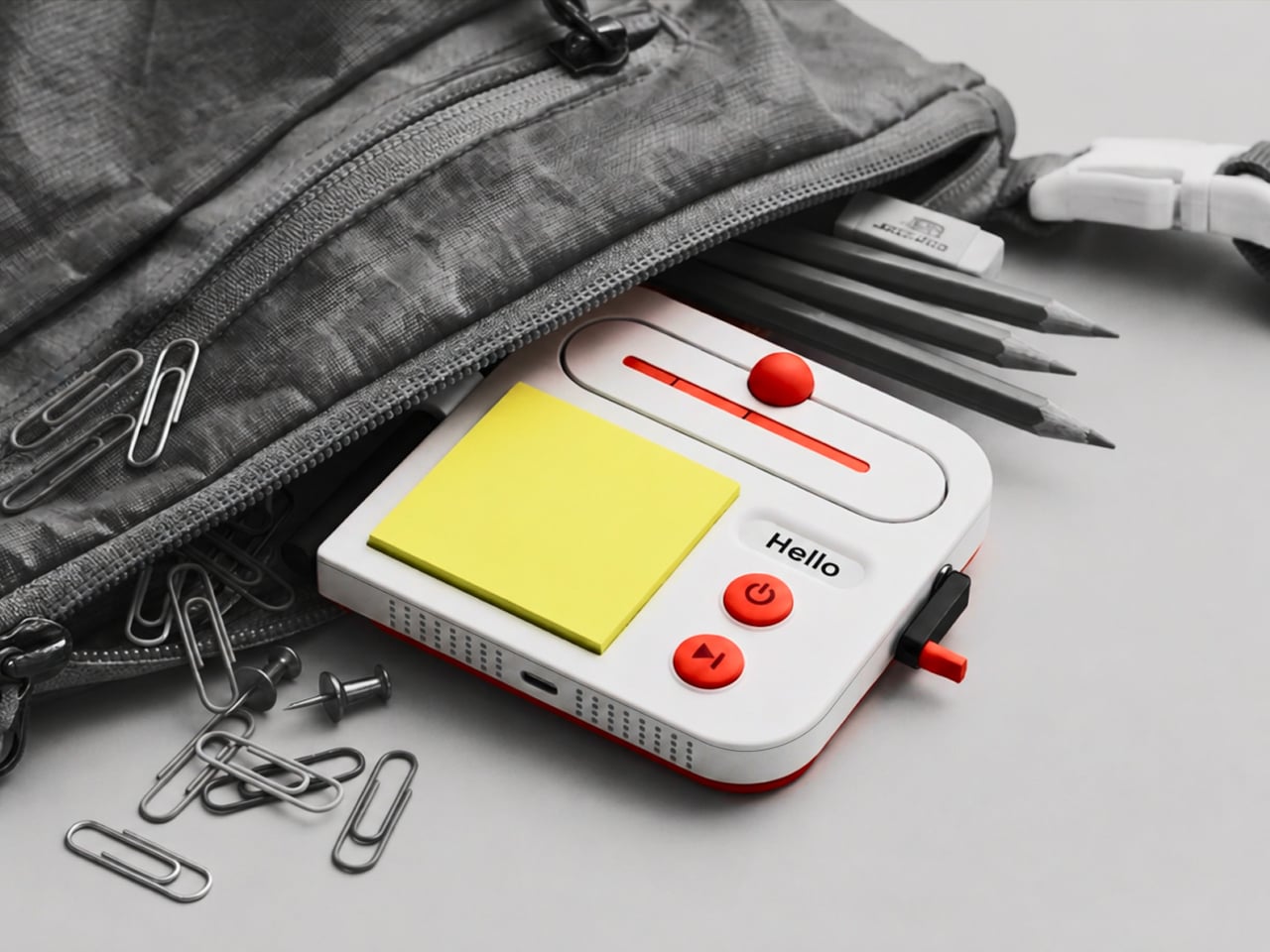
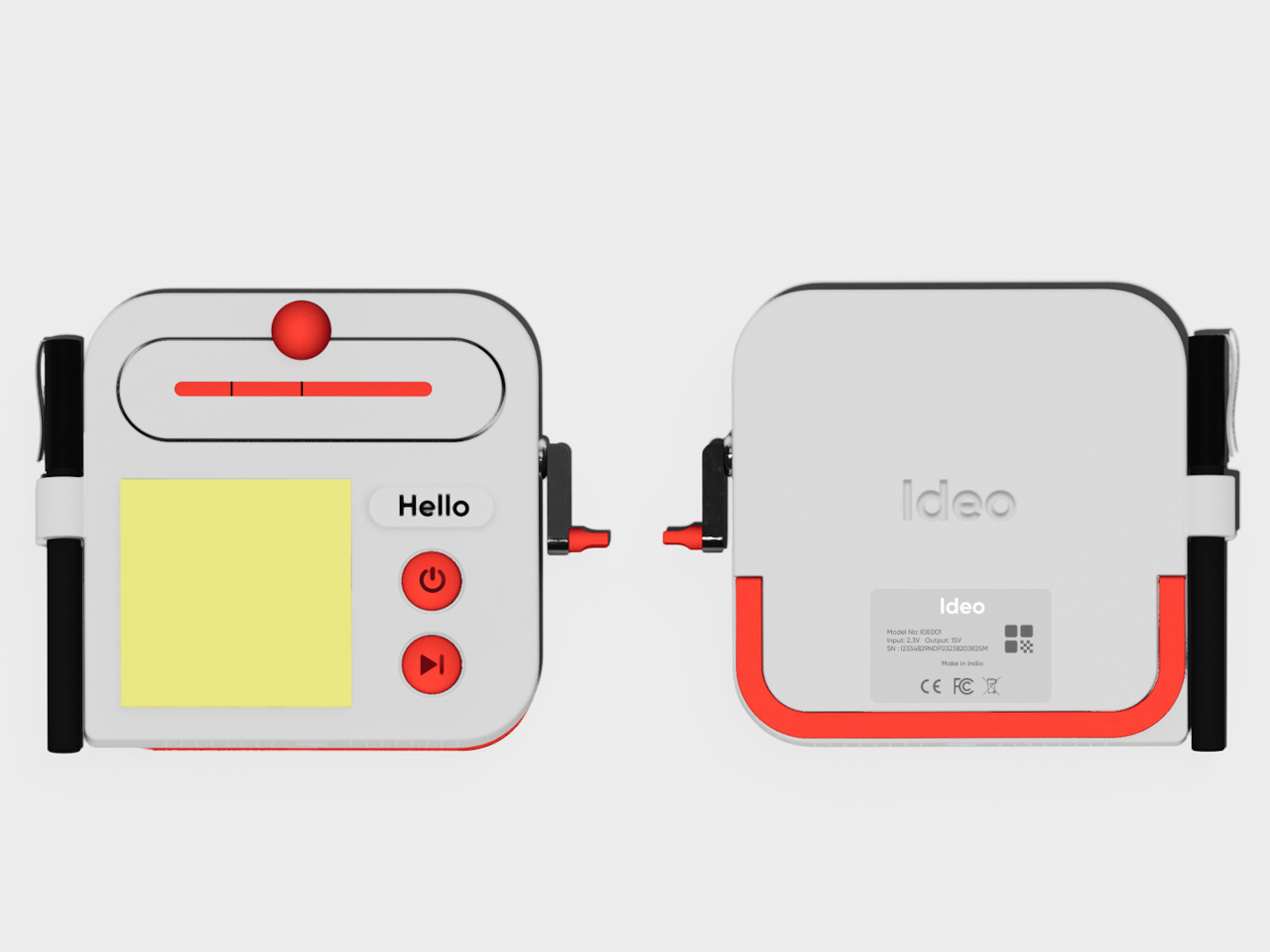
The physical architecture of the concept is designed around immediacy and accessibility. A standard writing pen securely clips to one side of the device’s smoothly rounded polymer body, while a dedicated stack of vibrant yellow sticky notes takes up a commanding position across the front face. This arrangement ensures that whenever an insight materializes, the user can instantly peel off a note and jot down a sudden geometric contour, a critical measurement, or an open-ended question without breaking their cognitive flow.
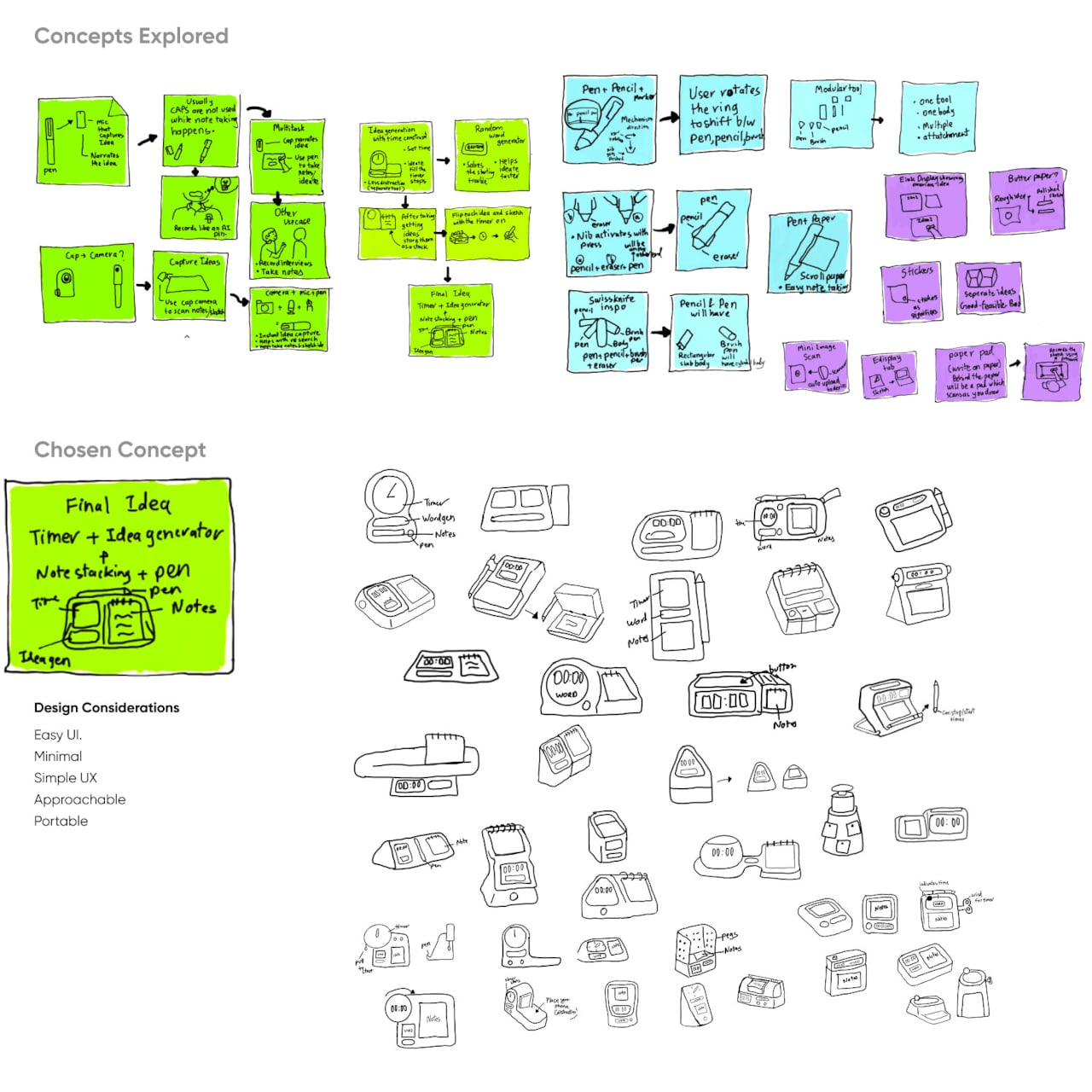
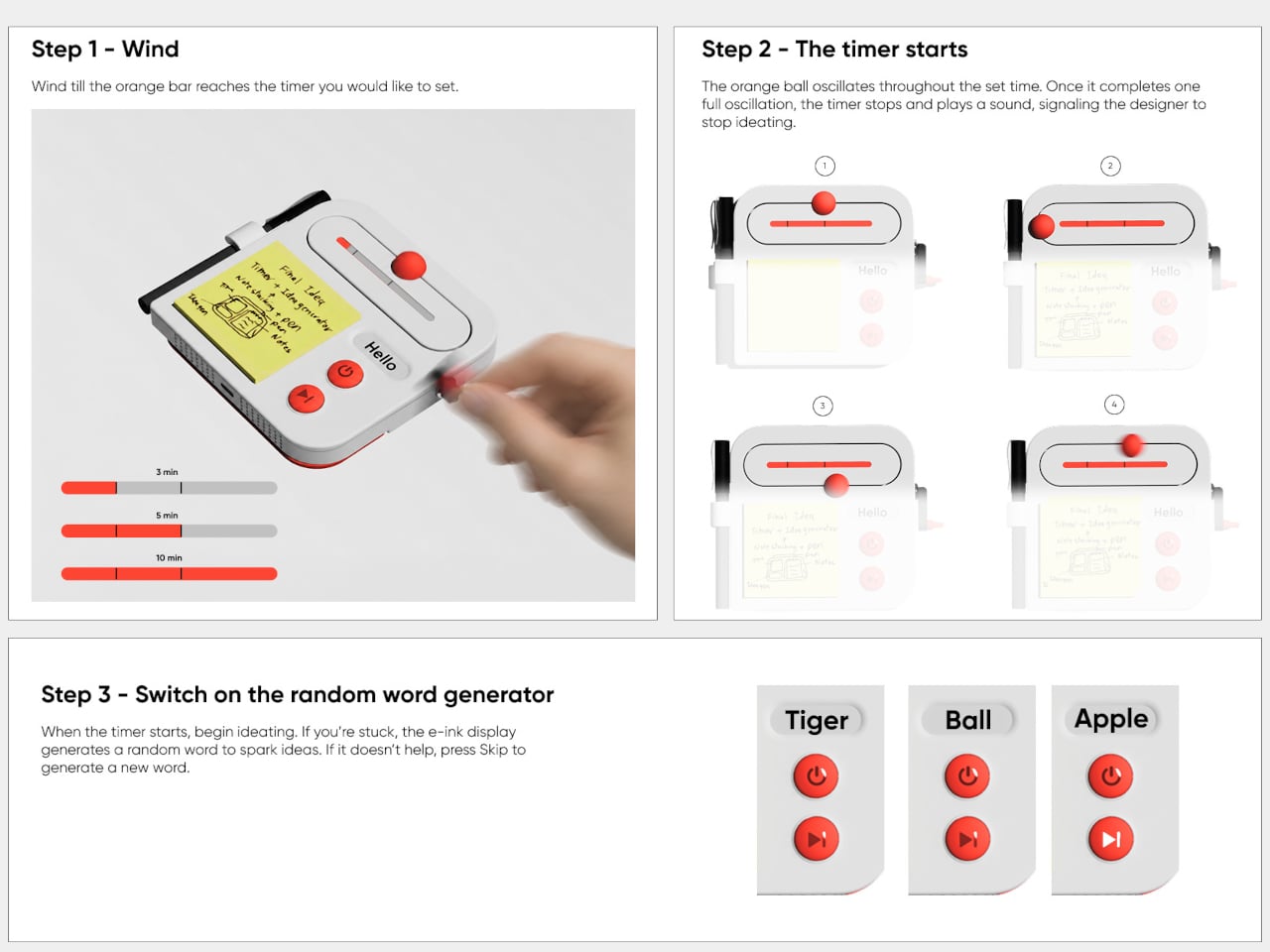
What elevates Ideo beyond a conventional stationery holder or a standard pocket notebook, however, is its integration of time management and creative stimulation tools. Embedded into the side of the device is a manual crank mechanism coupled with an orange-bar duration indicator. By turning the physical crank, a user can dial in a specific timeframe for a rapid sketching session. As time elapses, a bright marker ball moves steadily along an integrated track, providing a clear visual representation of the passing minutes. Once the predetermined cycle finishes, the device is conceptualized to emit a subtle sound signal, establishing a distinct, time-boxed boundary that gives short sketching sprints a visible beginning and end.
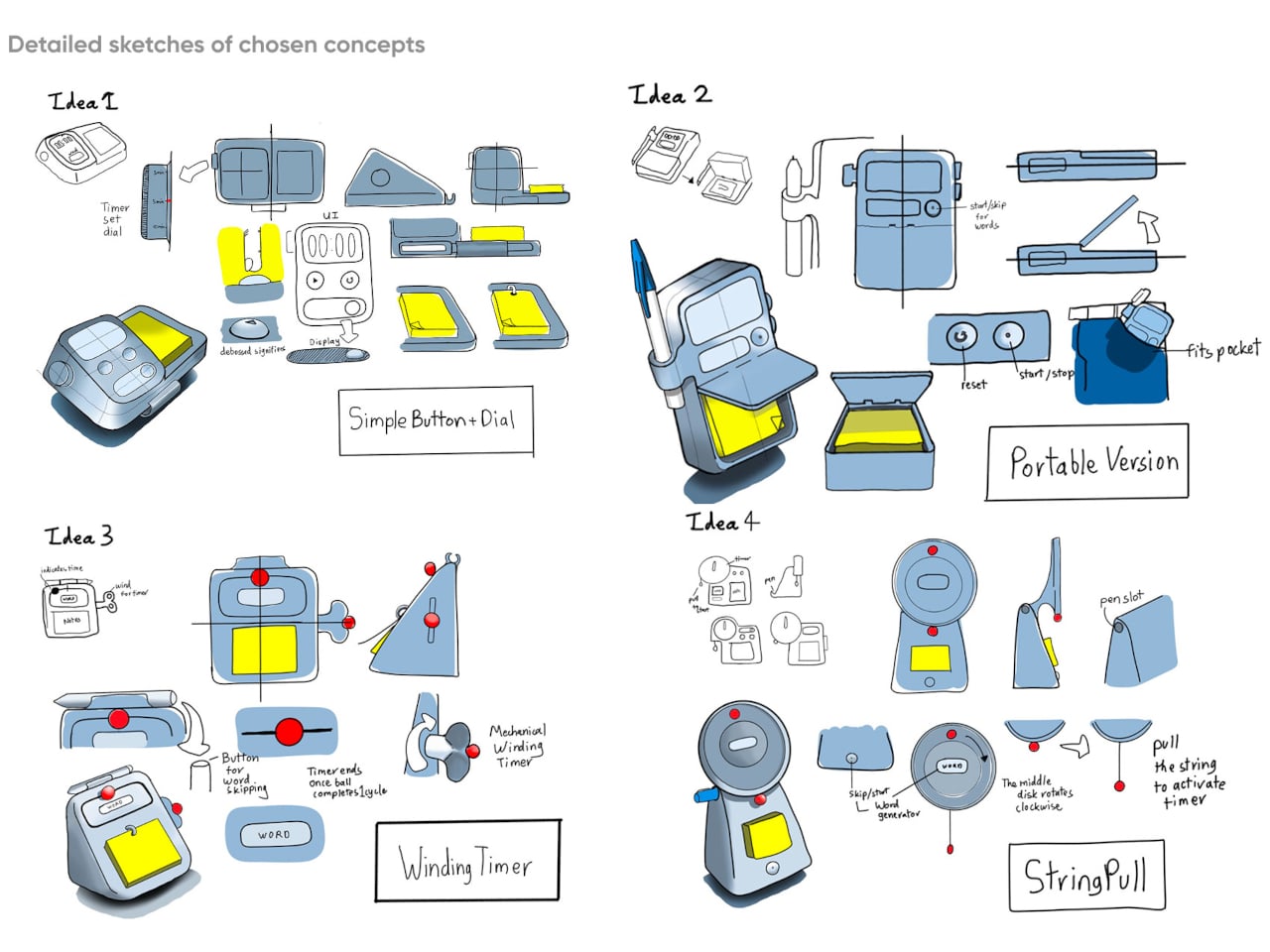
This time-boxing feature directly addresses a common hurdle in collaborative or fast-paced design environments. During a dynamic workshop session, a designer might only have a few fleeting minutes to conceptualize a novel handle or a structural detail before the group’s focus shifts to an entirely new direction. The physical crank-set timer keeps that deadline immediately obvious without requiring the user to look away at a smartphone screen or a digital wall clock. Meanwhile, the freshly jotted note remains firmly attached to the device until the creator is ready to peel it off and place it alongside other iterations on a wall or desk.
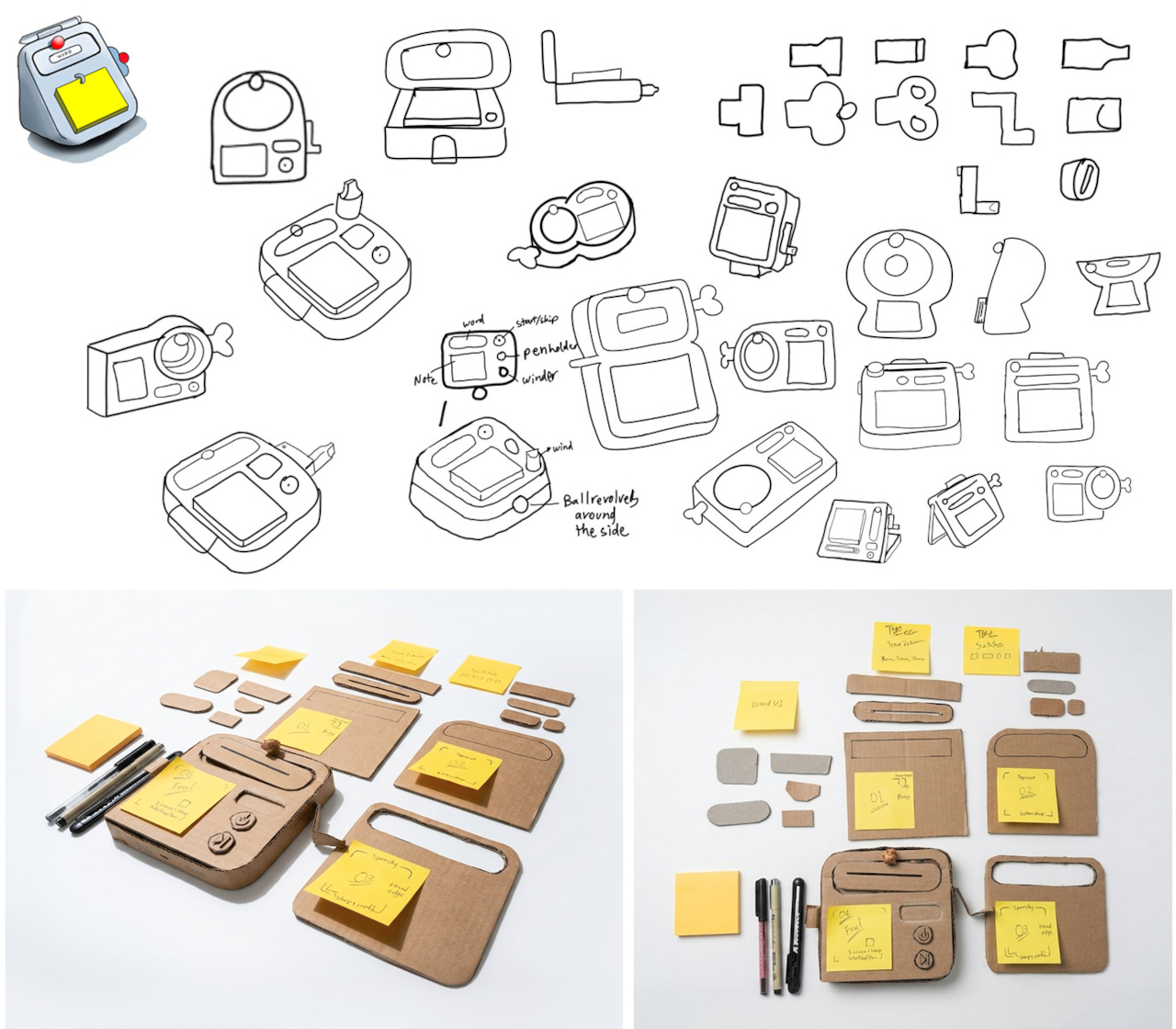
Beyond managing time, the concept tackles another notorious barrier in creative work: the intimidating nature of a completely blank sheet. When a designer is pressured to produce multiple distinct directions before a tight deadline, staring at empty space can quickly induce mental paralysis. To combat this psychological obstacle, Ideo incorporates a compact e-ink display situated near the note pad. This display periodically presents a completely random word—such as "tiger" or "apple"—functioning as a cognitive nudge designed to push the user’s thoughts into unexpected, non-linear territories.
If a particular prompt fails to spark inspiration, a physical button located on the housing allows the user to immediately cycle through to an alternative word. Crucially, this mechanism deliberately avoids the automated, predictive nature of modern artificial intelligence. It does not attempt to take over the creative process, generate finished artwork, or dictate design decisions. Instead, it serves as a mechanical catalyst, offering a simple, randomized prompt designed to keep the pen moving and prevent creative stagnation. Having such a prompt in close proximity is particularly valuable when an initial sketch begins to feel derivative or overly reminiscent of previous projects.
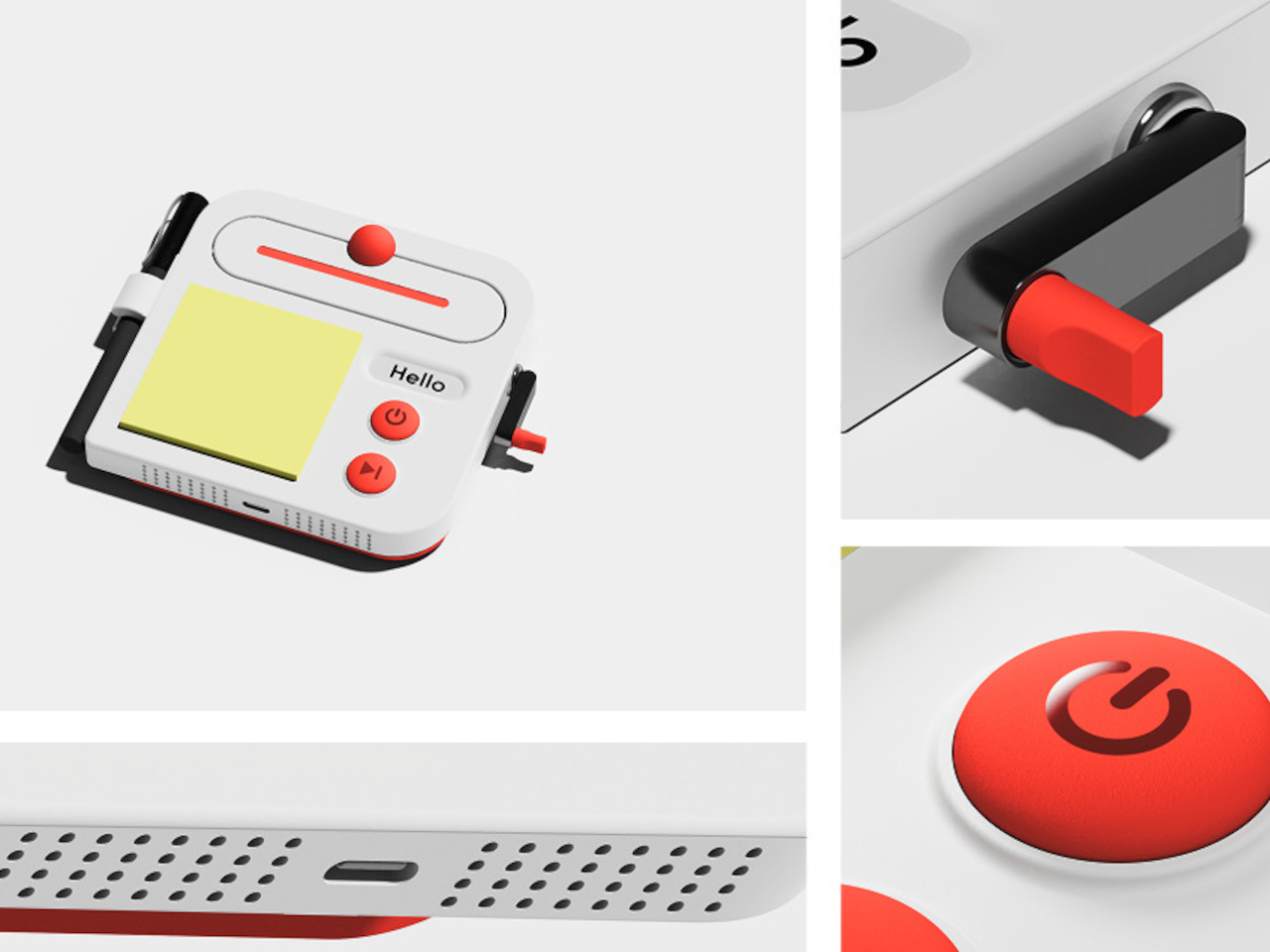
Aesthetically, the device leans heavily into a playful visual language that deliberately distances itself from the intimidating complexity of professional digital drawing tablets or cold office hardware. The design features a striking contrast between a quiet, matte white housing and vibrant red mechanical controls, with the bright yellow sticky notes occupying nearly half of the front real estate. The broad rotary knob, the tactile switches, and the overall rounded proportions evoke the friendly familiarity of a well-crafted child’s toy. According to the design philosophy behind the project, this lighthearted idiom is the ideal vehicle for unhindered, stress-free ideation, lowering the psychological barrier to entry for spontaneous sketching.
Ultimately, Ideo addresses a very specific, familiar micro-delay in the creative workflow: the awkward interval between conceiving an idea and securing the physical means to record it. While a traditional notepad and pen can handle the immediate recording step, the addition of the mechanical timer and the randomized e-word generator fundamentally transforms the object from a passive carrier of paper into an active companion for creative generation. Although Ideo remains strictly a conceptual design project rather than a manufactured consumer product, its thoughtful layout highlights a practical understanding of how creators think, move, and work under pressure in real-world environments.