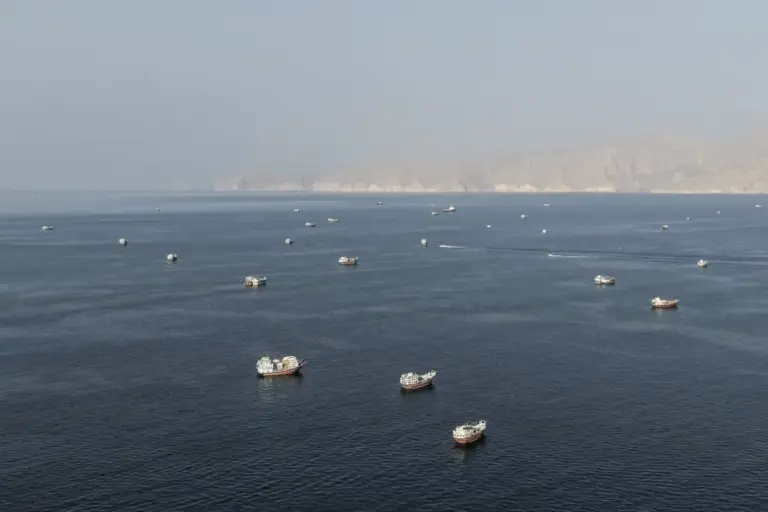
A vacation home overlooking the water inherently carries a promise of relaxation, but for architect and interior designer Mohamed Alqari, the sweeping views from a high-rise apartment at the prestigious Four Seasons Private Residences at Bahrain Bay were merely a blank canvas.
When Alqari first stepped into the 1,937-square-foot property, the interior already boasted a contemporary shell crafted by renowned global architecture firm Gensler. Defined by clean architectural lines and pristine, high-end finishes, the space was undeniably luxurious, yet it lacked the lived-in warmth and soulful character required for a true personal retreat. Alqari’s core mandate was to bridge that gap—shifting the atmosphere away from a sterile, brand-new apartment awaiting its inaugural guest and transforming it into a deeply inviting sanctuary that the owner would eagerly yearn to return to after time away.
Owned by an individual who utilizes the property primarily for vacations and occasional business visits to Manama, the residence demanded a sophisticated yet deeply personal touch. As the founder of Qreative Design, Alqari approached the project by drawing subtle, abstract inspiration from the surrounding sea and expansive skyline visible through the residence’s oversized windows. Rather than relying on heavy-handed coastal clichés or literal nautical motifs, the designer chose to interpret the essence of beachfront living through a sophisticated vocabulary of color, materiality, and organic form.
“The project interprets the colors and atmosphere of the sea, sunlight, sand, and horizon through materiality, artwork, and form,” Alqari explains, outlining a vision that honors the natural geography of Bahrain without sacrificing metropolitan elegance.

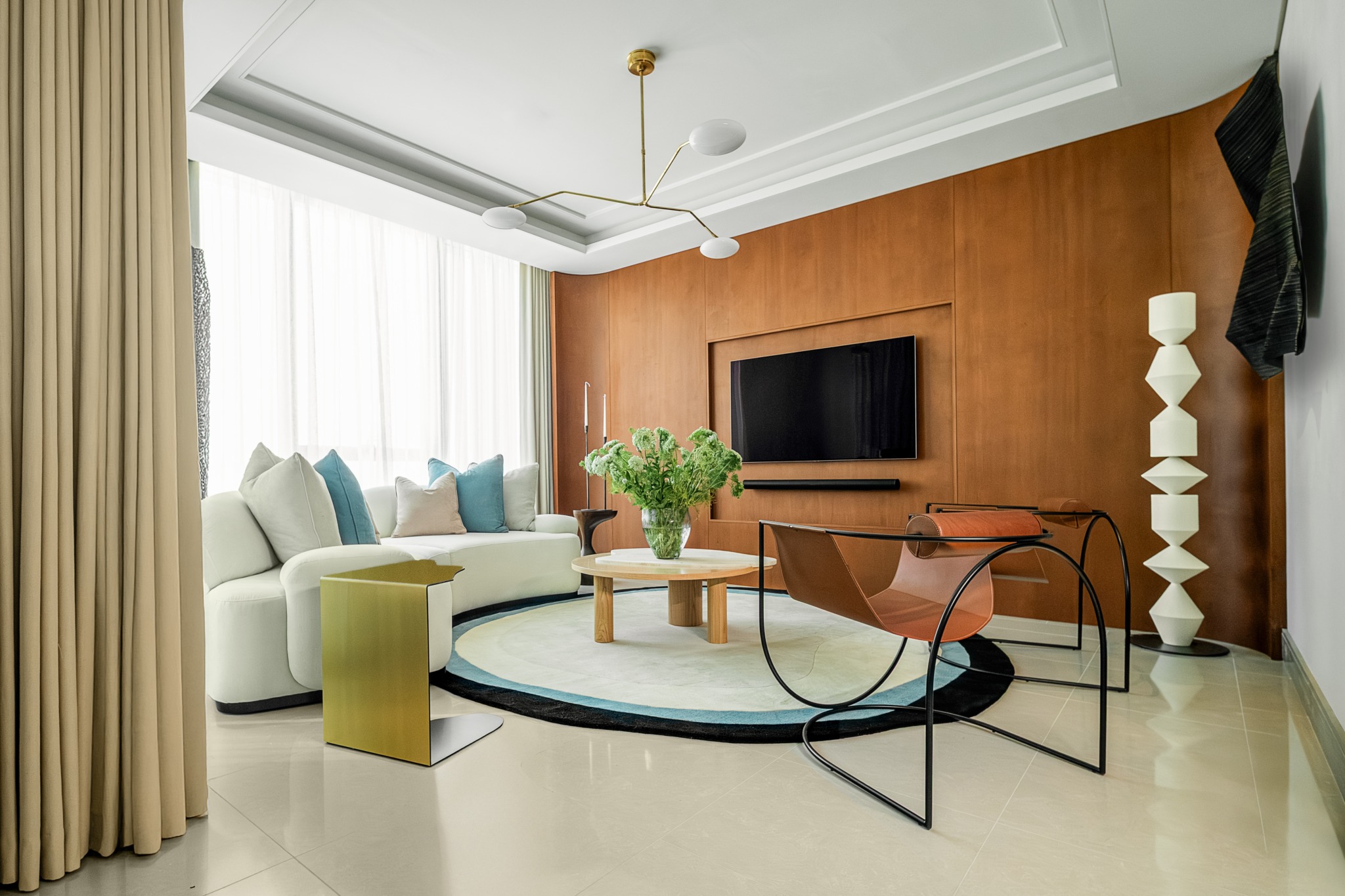
To counteract the rigid, linear geometry inherent in the building’s original architecture, Alqari introduced a pervasive motif of curves inspired by the rhythmic movement of ocean waves. This fluid design language manifests throughout the residence in unexpected ways, softening the interior architecture through rounded seating arrangements, sweeping circular mirrors, and organically shaped area rugs. Among the standout pieces is the Matera dining table, designed by Sebastiano Tosi for Mogg, which takes its distinctive sculptural form from water-smoothed pebbles, reinforcing the overarching theme of aquatic fluidity.
These organic shapes are carefully repeated throughout the apartment, creating visual rhythm without making every room feel overly coordinated or uniform. Instead, the curves lend the open-plan living and dining spaces a relaxed, welcoming cadence layered with moments of dramatic flair, understated glamour, and distinct artistic character.

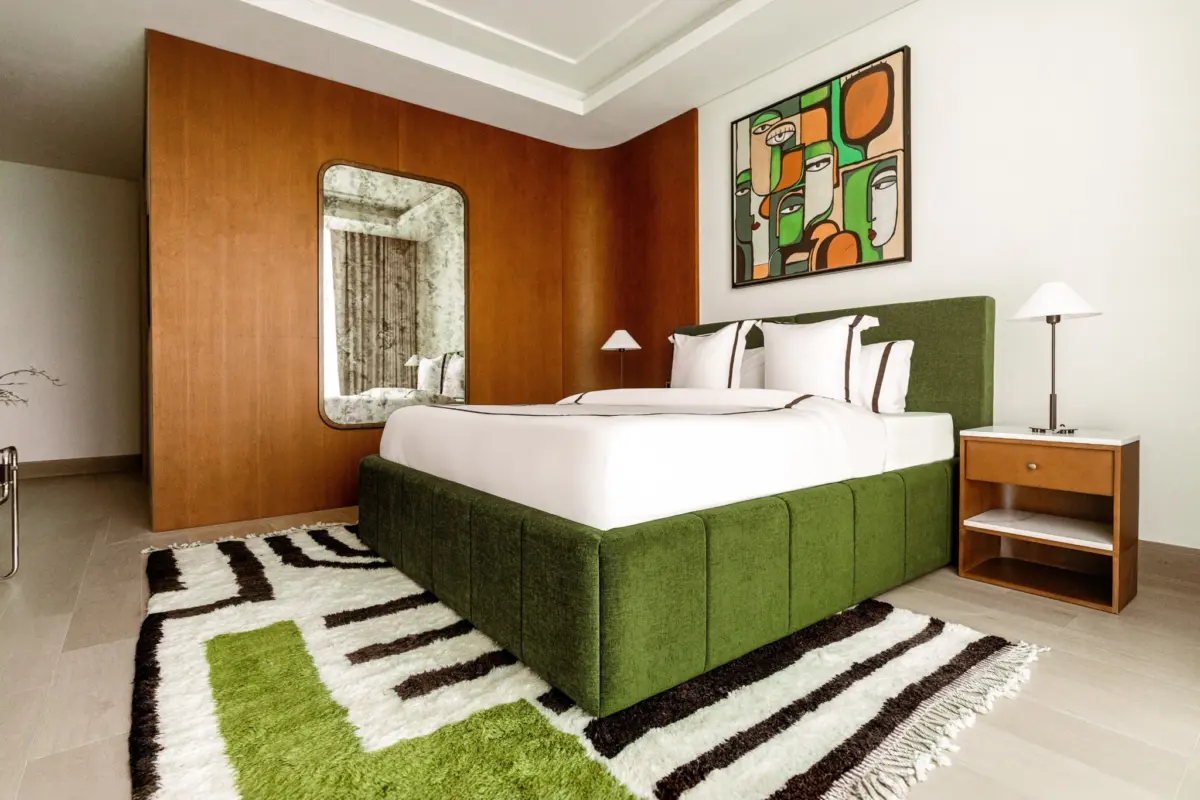
Materiality plays an equally pivotal role in establishing the apartment’s unique identity. A rich, tactile palette was deployed across every room to introduce warmth, visual depth, and a sense of quiet luxury. Rich walnut paneling and custom joinery provide a warm, textural backdrop that beautifully contrasts with the sleek modern furniture and curated artworks. Meanwhile, a foundation of creamy whites and sandy beiges keeps the interior luminous and airy, allowing targeted splashes of turquoise, deep ocean blue, forest green, and sunny yellow to emerge dynamically within individual pieces rather than overwhelming entire surfaces. This balanced color scheme successfully captures the shifting hues of a dynamic beachfront setting while ensuring the primary focus remains securely on the curated artwork and the breathtaking views outside.
Those artworks serve as the beating heart of the home’s character and narrative depth. Striking sculptures by prominent Bahraini artist Jamal Al Yousif introduce powerful textures and bold silhouettes into the main living area, where they converse effortlessly with Martin Berger’s evocative painting, Flow, suspended on the wall. The furniture selection reads like an international design passport, bringing together rare historical finds and contemporary commissions. Original 1970s Wassily chairs, meticulously sourced through 1stDibs, and a sculptural Lemni chair share space with bespoke furnishings crafted locally in Bahrain alongside pieces imported from Italy, France, India, Indonesia, the Netherlands, Portugal, and Morocco.

Further elevating the interior’s collectible-driven narrative is a striking sculptural floor lamp designed by James Haywood, which Alqari personally discovered during Paris Design Week. This rigorous, highly curated approach endows the residence with a quality that newly constructed spaces rarely possess upon delivery: a genuine sense of discovery and personal history.
Working within the constraints of a single-level layout, Alqari preserved an open-plan concept that seamlessly connects the living, dining, and kitchen areas to one another while keeping them oriented toward the dramatic waterfront vistas. Circulation spaces were intentionally designed to mirror a boutique art gallery, affording the furniture and sculptures ample breathing room as the owner moves through the home. Beyond the expansive main living spaces and an adjoining balcony, the residence accommodates a luxurious primary suite complete with a dedicated dressing room and en-suite bathroom, a comfortable guest bedroom, a nanny suite, and a discreet powder room.

Because the project required working within an established architectural shell, the transformation relied heavily on meticulous micro-decisions—from the precise grain of the walnut paneling to the deliberate scale and placement of each sculptural object. The entire endeavor, from initial design concepts to final execution, spanned approximately a year and a half, commencing while the high-rise building itself was still undergoing its final construction phases.
“For me, design should feel emotional and inviting rather than overly rigid or purely minimal,” Alqari reflects, summing up a design philosophy that prioritizes human comfort and emotional resonance over strict architectural formalism.

Within this thoughtfully curated Bahrain Bay retreat, the natural world gently asserts itself through a well-placed curve or a subtle note of azure blue. Yet, buoyed by its eclectic art collection and bespoke furnishings, the apartment remains unbound by strict geographical definitions—belonging equally to the serenity of the coast and the vibrant pulse of the city, while feeling definitively, wonderfully its own.