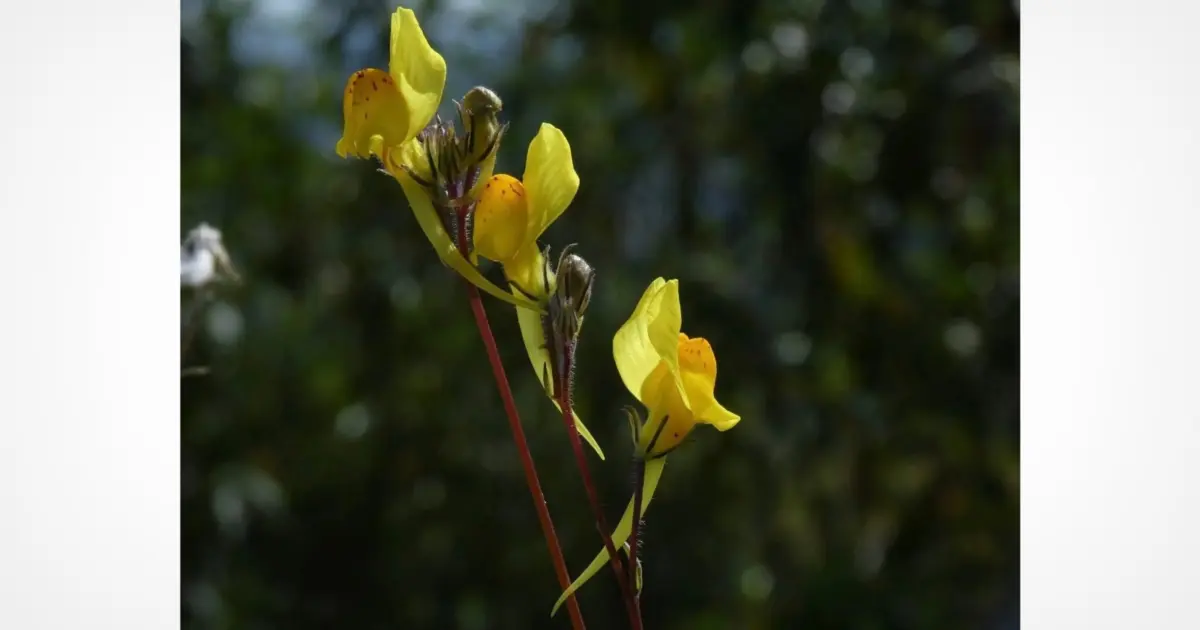
A casual vacation photograph shared on the internet has led to a remarkable scientific discovery in Portugal, highlighting the growing role of citizen science in modern botany. A previously unknown species of flowering plant was brought to light after an anonymous German tourist photographed it during a trip and uploaded the image to a global wildlife observation platform.
The discovery underscores how everyday photography can intersect with academic research, creating new pathways for uncovering biodiversity that might otherwise remain hidden in plain sight.
The story began in March 2023, when the tourist was traveling through Monchique, a picturesque town located in Portugal’s southern Algarve region. While exploring the area, she stopped to photograph a striking, vertical stalk of yellow, spurred flowers marked with distinctive reddish-brown spots on their petals. Enjoying her travels and wishing to catalog her journey, she later uploaded the digital photograph to iNaturalist, an online platform and social network where members of the public can record and share observations of plants, insects, and animals from around the world.
For months, the photograph sat quietly on the digital platform, misidentified initially as a different, already-known species. However, the image eventually crossed paths with João Farminhão, a prominent Portuguese botanist and researcher at the University of Coimbra’s Centre for Functional Ecology (CFE).
Reviewing observations on the platform, Farminhão was struck by the visual characteristics of the plant in the tourist’s photograph. Suspecting that the unusual specimen did not match any standard regional flora, he hypothesized that the plant might represent a previously unidentified species of toadflax.
Driven by professional curiosity and the potential significance of the digital clue, Farminhão organized a field expedition a year later, in March 2024. He traveled directly to Cerro do Castelo de Alferce, a rugged locality within the Monchique region where the tourist had captured the original image. Upon searching the area, he located a small, localized population of the mysterious plant growing wild.
Upon closer botanical examination and a thorough review of existing records, Farminhão confirmed his suspicions. According to reports from the Portuguese newspaper Público, the species had never previously been described in scientific literature or recorded in botanical databases.
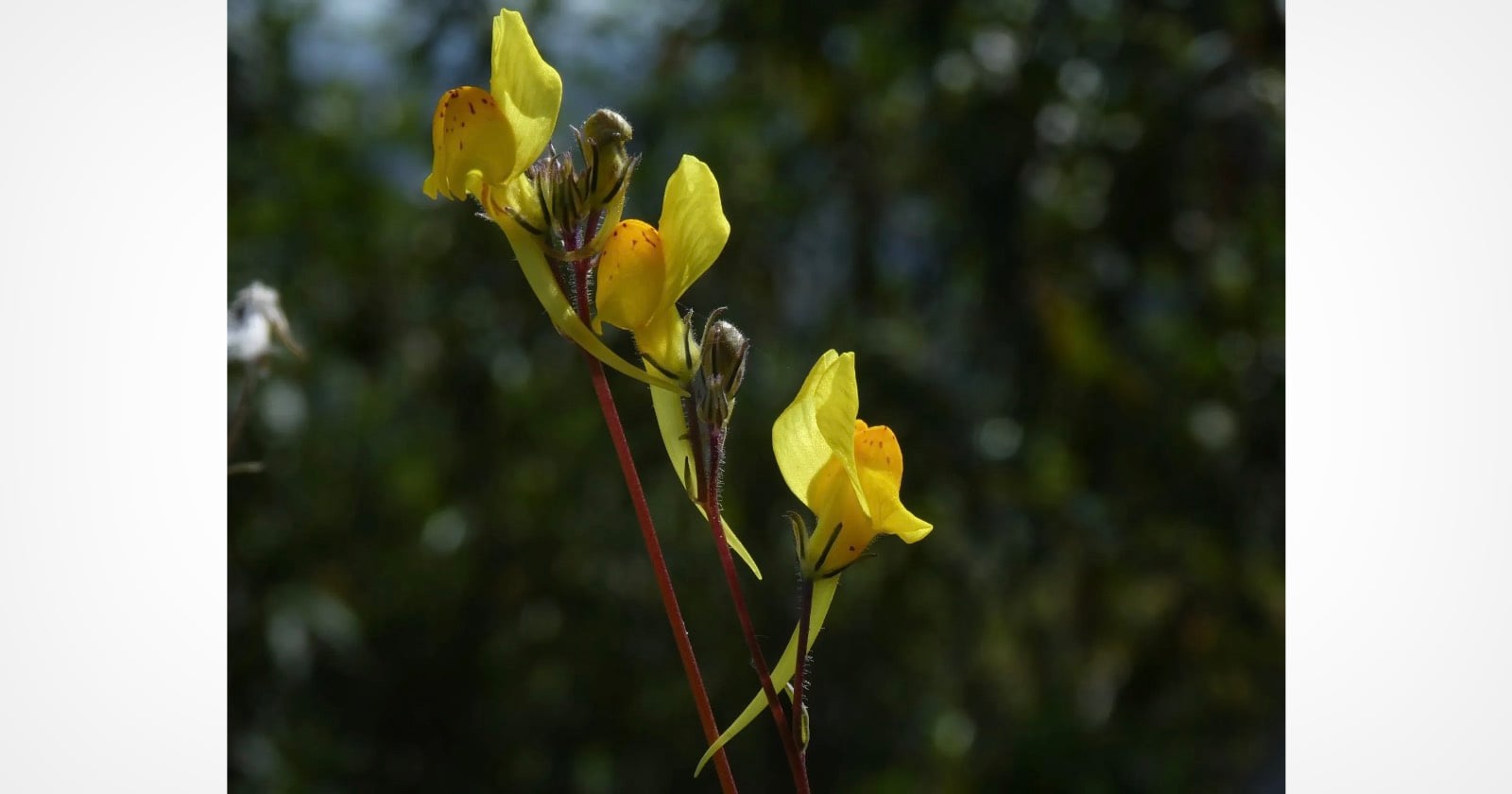
The newly discovered plant was officially named Alferce ansarina, or scientifically classified as Linaria alfercensis, paying tribute to the specific geographical area where it was found thriving. Beyond its location, the plant boasts unique physical traits that set it apart from its botanical relatives. Its flowers are immediately distinguished by their speckled yellow petals accompanied by two distinct dark stripes on their underside. Furthermore, the plants exhibit an erect growth habit, standing upright in a manner that differentiates them structurally from their closest taxonomic relatives within the toadflax family.
Following the field identification, Farminhão spearheaded a comprehensive scientific study on the species. He collaborated with a multidisciplinary team of researchers from academic institutions including the University of Lisbon, the University of Barcelona, and Madrid’s prestigious Royal Botanical Garden. Their formal description and analysis of the species were published in academic literature, officially cementing the plant’s place in modern botanical taxonomy.
However, the celebration of the new discovery is tempered by significant conservation concerns. Because the researchers were only able to locate a few dozen individual flowering plants growing in the wild, the scientific team has formally proposed that Linaria alfercensis be classified as an "Endangered" species.
The survival of this rare botanical find faces several pressing environmental pressures in the Monchique area. Among the primary threats identified by the researchers are nearby eucalyptus plantations, the rapid spread of invasive mimosa acacia, and the persistent, high risk of seasonal wildfires that frequently threaten the Algarve region’s ecosystems. In response to these vulnerabilities, local environmental officials have already introduced targeted conservation measures at the specific site where the plant’s fragile population is concentrated, aiming to protect the habitat from further degradation or accidental destruction.
This unexpected discovery in Portugal highlights a broader trend in wildlife and nature observation, where amateur photographers frequently capture significant scientific data without initially realizing the magnitude of their work.
Earlier this year, a similarly surprising wildlife discovery made international headlines when two nature photographers captured the first-ever photographic evidence of a Rusty Lark in nearly a century. The small bird, native to Africa’s arid Sahel region, had been feared extinct for 94 years before the photographers unexpectedly crossed paths with it, providing researchers with the first definitive visual record of the elusive species in almost a century.
In another remarkable instance of wildlife documentation reported by PetaPixel, a pair of photographers managed to capture the first-ever documented instance of humpback whales engaging in a sexual encounter. Even more unexpectedly, the photographic evidence revealed that the interaction took place between two male whales, offering marine biologists entirely new insights into cetacean behavior.
As digital platforms continue to connect amateur travelers and nature enthusiasts with professional researchers around the globe, these unexpected photographic discoveries demonstrate that the natural world still holds many secrets—some of which are waiting just off the beaten path, captured quietly through the lens of a passing tourist.