Scandinavian
design has long been celebrated across architecture and interior spaces for its light-filled environments, pale woods, clean lines, and an overarching sense of calm. Translating that distinct aesthetic to a cruise ship, however, presents a profound spatial challenge—particularly when viewed against the backdrop of oversized, ornate, and heavily gilded interiors typical of mass-market cruise liners.
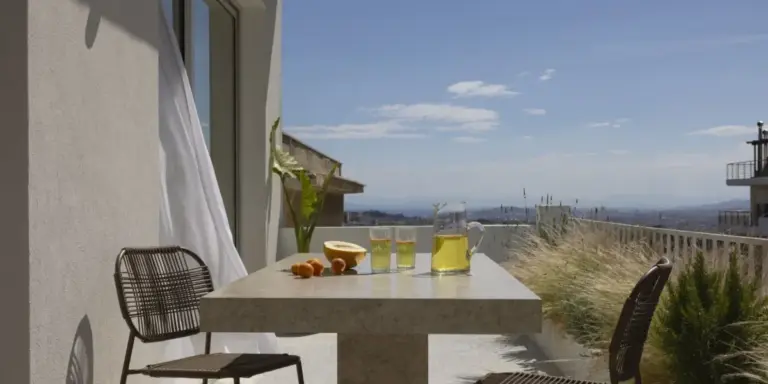
Viking has made Scandinavian modernism central to its fleet’s design identity, successfully creating onboard spaces that feel far less like conventional cruise ships and more like deeply considered residential interiors. Across the company’s river, ocean, and expedition vessels, this design language reflects a contemporary interpretation of Scandinavian aesthetics, sometimes referred to as “New Nordic.” This approach is characterized by natural textures, highly tactile materials, subtle color palettes, and sculptural, carefully proportioned furnishings that prioritize human comfort over ostentatious display.
“Although ‘new Nordic’ is not terminology we use formally, traditional Scandinavian principles have evolved and are being interpreted for how people live and travel today,” explains Richard Riveire, founding principal of Rottet Studio and the lead designer behind Viking’s river, ocean, and expedition ships. “There’s still a strong sense of restraint, but it’s balanced by a feeling of being lived in. These days, Scandinavian design is less about minimalism and more about creating spaces that feel welcoming, thoughtful, and enduring.”
Drawing on Nordic Principles
Rather than treating Scandinavian design as a static visual style or a rigid set of rules, Riveire and his creative team anchored the entire fleet’s interiors around five underlying principles: residential modernism, nature, craft, heritage, and exploration. This framework establishes a restrained architectural foundation across the vessels, while carefully selected fabrics, plush upholstery, warm rugs, and bespoke furniture introduce essential layers of warmth and texture.
“These tactile details make each space feel inviting and personal, while preserving the simplicity that is so central to Scandinavian design,” Riveire notes.

In public lounges, sunlight pours through expansive windows, illuminating pale wood surfaces, textured upholstery, and warm leather furnishings that immediately lend the cavernous maritime environment a cozy, residential feel. A deep blue built-in bookcase serves as a striking focal point, displaying a curated collection of books, antique maps, shells, coral, and various collected objects. This thoughtful display seamlessly connects the residential atmosphere of Viking’s interiors with the overarching theme of global exploration.
Tapping into Nordic Heritage
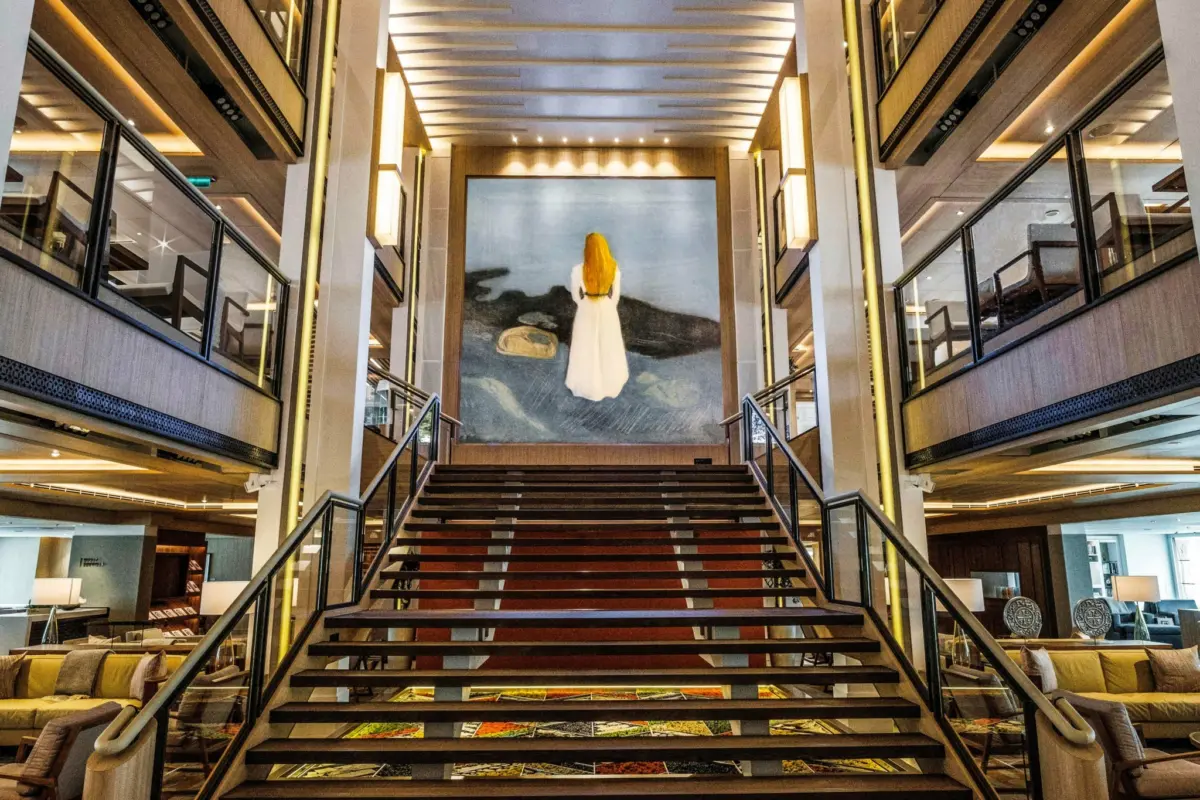
Throughout Viking’s fleet, deep-rooted Nordic heritage is visibly honored through a robust collection of regional artwork. Among these cultural touchstones are original pieces by celebrated Norwegian painter Edvard Munch, anchoring high-traffic circulation spaces like the atrium stairwell with striking cultural depth. Textiles and decorative objects extend these regional references even further, featuring sophisticated fabrics by Dutch designer Hella Jongerius alongside iconic tabletop accessories by legendary Finnish architect Alvar Aalto.
“That heritage connects the design to Norwegian culture and folklore, while exploration reminds us that this is a ship designed for people who are curious about exploring the world,” Riveire says. “So maps, globes, libraries, constellations, and other references to exploration play a meaningful role in our designs.”

In staterooms, traditional Norwegian Marius blankets introduce familiar geometric knitting patterns, referencing longstanding textile traditions that have warmed generations of travelers and locals alike. Meanwhile, navy and slate blue stripes add a measured dose of color to upholstered headboards, gracefully complementing the staterooms’ otherwise understated and soothing color palettes.
Mastering Materiality and Craft
Material choices play a pivotal role in granting Viking’s expansive public spaces a more intimate, residential character. Light woods, natural woven textiles, and organic stone bring warmth, texture, and considerable visual depth to both private staterooms and shared areas.
“Craftsmanship is fundamental because it gives a space a sense of humanity and authenticity,” Riveire emphasizes. “Our design calls for furniture, artwork, textiles, and decor that evoke handmade traditions or honor historic craftwork.”

These deliberate references to historic craft appear throughout the ship in subtle yet impactful details. Guests encounter woven leather lounge chairs in the main living areas, intricate wooden ceiling latticework overhead, and sculptural wood wall accents that pay homage to traditional carpentry.
Integrating Biophilic Design
The evocative Nordic landscape—where birch trees, native flora, and local wildlife symbolize seasonal renewal—heavily informs both the physical materials and the sensory details integrated throughout the ships. Subtle references to driftwood, lichen, and moss can be discovered woven into the design of staterooms and quiet lounges alike.
In public restrooms, guests are greeted by the gentle, ambient sound of birds softly chirping in the background. Fresh birch tree branches placed inside decorative planters and floor-to-ceiling forest wallpaper appear throughout common corridors and spa areas.

“It’s where the landscape and wildlife outside become part of the indoor experience,” Riveire explains.
In the ship’s spa, specialized amenities such as a snow grotto, a traditional cold plunge, and a thalassotherapy hydrotherapy pool draw directly on time-honored Nordic bathing traditions. Dramatic glass walls surround the spa’s hydrotherapy pool, pairing natural stone, sculptural driftwood, and pale wood loungers to create a serene retreat that brings Scandinavian simplicity indoors. Slate, stone, and glass reinforce the spa’s restrained, minimalist material palette, while water itself reinforces the vital connection to the outdoors.
Layering Subtle Color
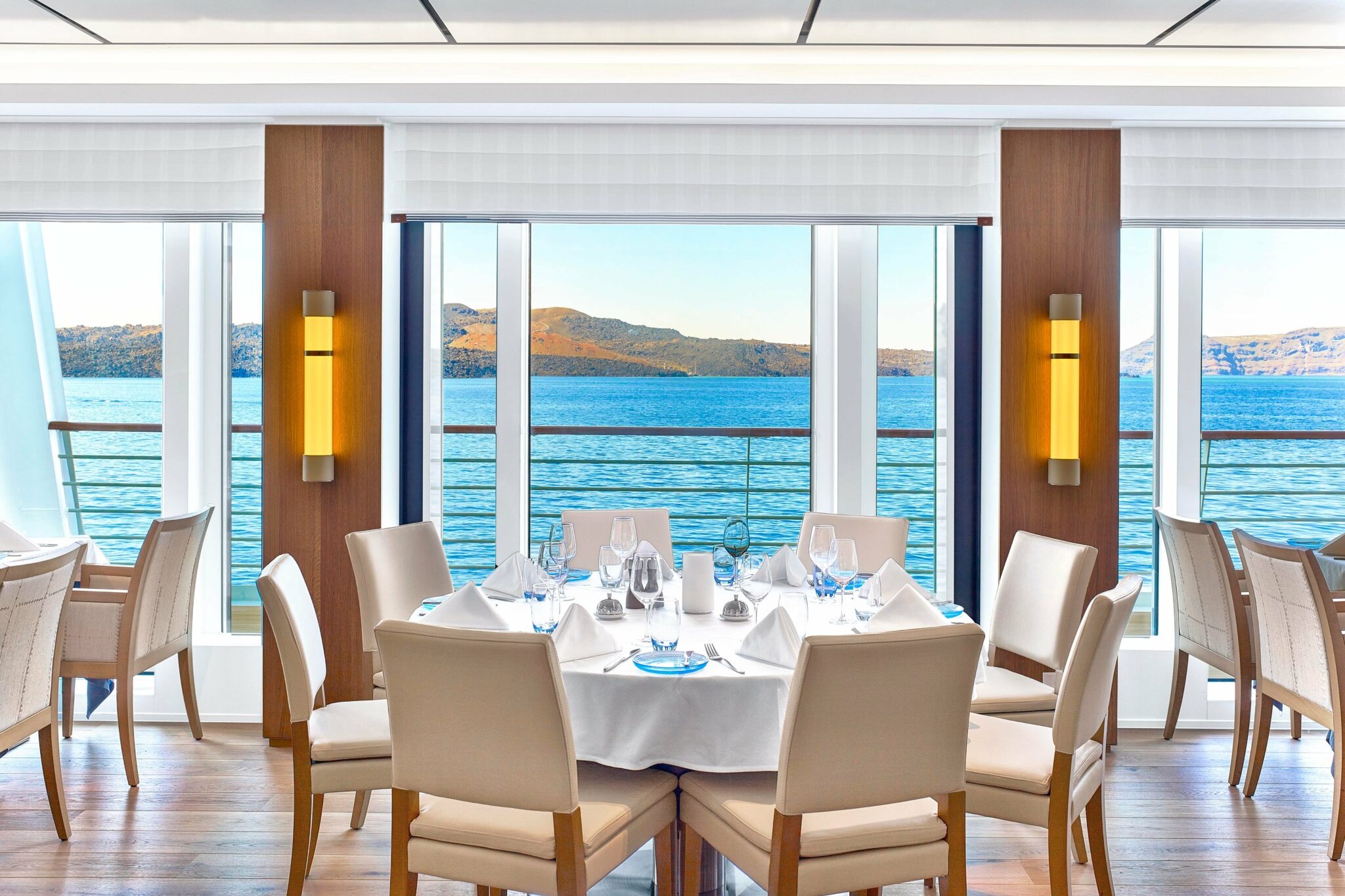
Rather than relying on stark whites or an entirely monochromatic neutral palette, the ship’s interiors deliberately layer warm creams, sandy tans, and other earthy tones directly inspired by nature. Translucent aqua glass side plates and water glasses introduce light-reflecting, delicate accents to restaurant table settings. Vibrant orange and rust accents found in throw pillows and custom carpets provide a tasteful contrast without disrupting the overall tranquil palette.

“These touches reflect a more expressive side of Scandinavian design,” Riveire says. “We want guests to experience color, but without introducing a lot of visual noise.”
Framing the Natural Landscape
Floor-to-ceiling windows do far more than simply admit daylight into the ship’s interior; their strategic placement turns the constantly passing landscape into the primary focal point of the rooms.
“A Norwegian fjord, European river, or Antarctic landscape becomes part of the room, an ever-changing piece of art within the interior,” Riveire notes.

Careful sightlines and meticulous spatial planning ensure that indoor rooms maintain an uninterrupted connection to their changing surroundings. On land, architects and designers can easily anticipate the position of the sun and how daylight will move through a stationary building. At sea, however, the sun is far more variable—not only in its direction, but also in its duration.
“During Arctic summers, for example, it may never set,” Riveire points out.
The interiors must therefore accommodate dramatically changing light conditions throughout the course of a voyage. Architectural openings, motorized curtains, and custom window shades adjust dynamically as conditions shift, perfectly balancing shifting daylight with indoor comfort and privacy.

“Spaces are connected to the world outside, while also creating more intimate moments indoors,” Riveire adds.
Concealing Technology and Softening Acoustics
Achieving a true residential atmosphere depends heavily on factors beyond visual aesthetics. Sound, temperature, and lighting fundamentally shape how comfortable a space feels to the human body. To preserve the interiors’ uncluttered, serene appearance, modern technology is integrated discreetly into custom wood joinery and architectural details, including underfloor heating in stateroom bathrooms and subtle, hidden lighting controls.
Acoustic design plays an equally vital role in cultivating a sense of calm at sea. Sound-absorbing textile wall panels, acoustic carpet underlays, and heavily upholstered surfaces help significantly reduce ambient noise in public areas.

“In the Scandinavian tradition, design serves human comfort without demanding attention,” Riveire says. “Technology and acoustics are integrated so subtly that you don’t notice how the space functions—only how calm it makes you feel.”
Designing Intimate Spaces at Scale
Successfully capturing a lived-in, residential warmth can prove exceptionally challenging on a vessel featuring expansive public areas like multi-level atriums, particularly when traditional Scandinavian design intrinsically favors intimate, approachable spaces.
“Creating a residential feeling within a ship requires careful attention to proportion,” Riveire concludes. “At Viking, we subscribe to a ‘cocoon’ principle—a house-within-a-house concept—where the interior provides a quiet and serene onboard environment, rather than constantly competing for attention.”

This core principle guides the thoughtful arrangement of open, social hubs alongside smaller, quiet seating nooks. Every furniture grouping has been meticulously considered for how guests actually move through, interact with, and utilize the space during their journey across the world’s waterways.