In a modern media landscape defined by rapid turnover and fleeting professional alliances, career longevity has become a distinct exception rather than the norm. Across a four-decade career, professional loyalty has been the defining compass of my working life. Having navigated only three places of work throughout this extensive period, my most recent and enduring chapter belongs to Monocle. A notification from LinkedIn this week served as a stark reminder of how time flies, confirming that I have just hit my 20th work anniversary with the business.
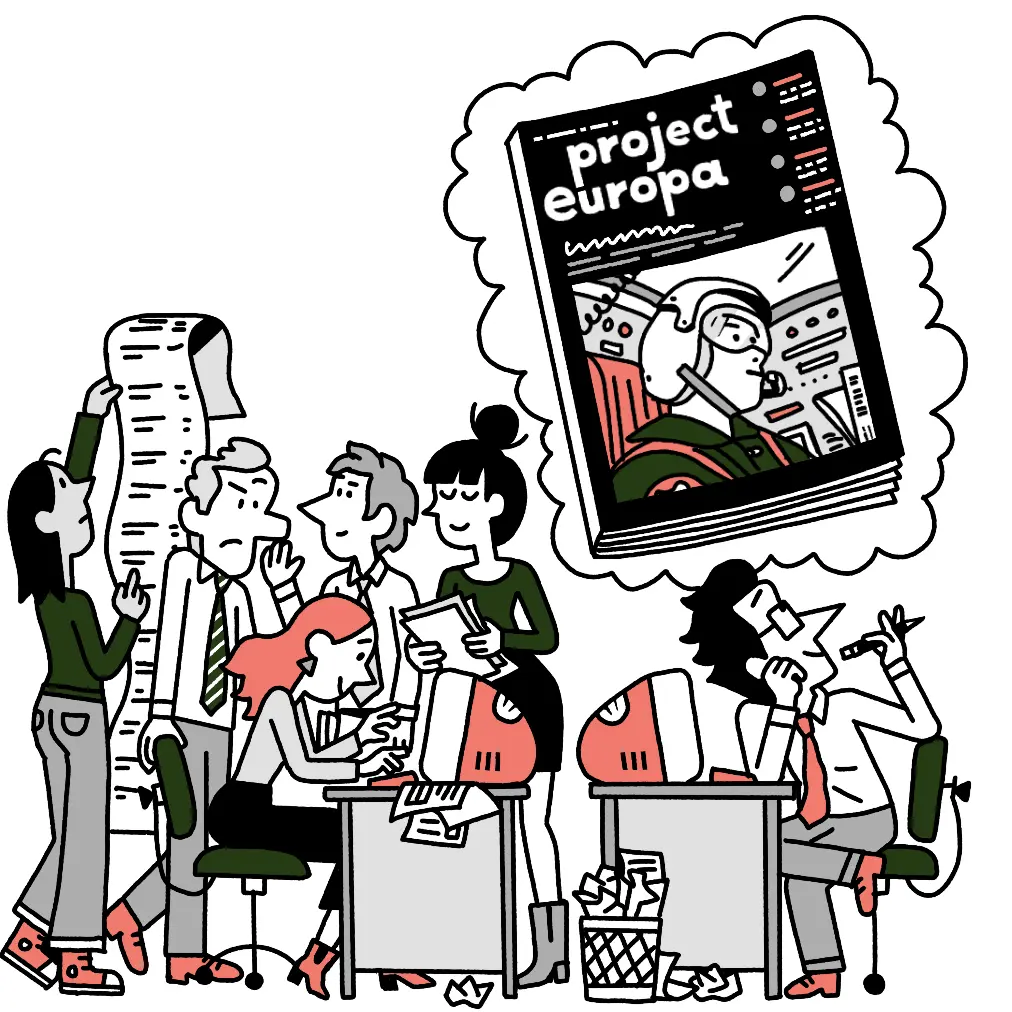
While a full walk down memory lane is being reserved for February 14th—the date we celebrate the 20th anniversary of the magazine’s very first issue hitting newsstands—it feels appropriate to glance back just slightly. Looking back to the origins of this venture brings to mind an evening spent having dinner with Tyler, during which I sought his advice regarding a couple of career opportunities that had recently been offered to me. Before making any hasty decisions, he suggested I come see him the following morning to look at a new magazine he was working on under the working title "Project Europa."
He wanted me to edit it. There was just one catch: if I agreed, I would need to stay put at the newspaper where I was currently employed while he continued raising the necessary start-up capital. The next morning, I visited him and was shown mocked-up covers alongside poster-sized sheets designed to give potential advertisers a glimpse of what was in store. From that very moment, the ambition was clear—I wanted to be part of this project.
Securing the funding took several months of patient waiting. Then, one day, the chief executive, Robyn Holt, called me up and, delivering the news in her unmistakable Australian voice, said, "Doll, the money is in the bank. Resign." I handed in my notice immediately. Looking back at what has unfolded since that phone call is a testament to an extraordinary journey.
Being fortunate enough to forge a lasting friendship with Tyler when we were both in our twenties—though he remains annoyingly younger than me—has been a true privilege, compounded by the rare opportunity to work on this publication for two decades. It raises a poignant question: how common will such enduring professional tenure be for the generations entering the workforce today?

That question of job security and professional evolution was thrown into sharper relief this week at the launch of a new report by Imperial Lifelong Learning, part of Imperial College London. Entitled "Everyone but me: What UK employees told us about AI and skills," the study explores the complex perceptions surrounding artificial intelligence in the workplace. Interestingly, the findings reveal that while most respondents believe they possess a solid grasp of AI know-how themselves, they suspect their co-workers do not. A panel of enthusiastic believers gathered for the launch, united in their conviction that AI holds vast potential to drive efficiencies and bolster workplace creativity.
Yet, listening to the discussion, an underlying tension became apparent. We appear to be entering an era where employees may never truly feel safe dropping their guard. Workers face a perpetual requirement to look over their shoulders, driven by the persistent fear of professional obsolescence. This dynamic forces us to confront a critical societal challenge: how do we ensure that lifelong learning does not simply morph into lifelong worry? Furthermore, as the corporate world increasingly embraces transient employment models and short-term contracts, one wonders whether individuals who prefer stability over a succession of numerous work partners will still be able to find companies that value them not for a quick transactional stint, but for something meaningful and long-lasting.
This tension between the relentless pace of modern technological disruption and the enduring value of human connection was brought home vividly last weekend. On a flawless autumn day—with trees ablaze in rich, red foliage and the sun casting mellow, reflected light off ancient architectural windows—we visited the Victoria and Albert Museum in London with friends visiting from Madrid. We drifted leisurely through expansive rooms filled with historical bronze sculptures, Bauhaus silver, and priceless ecclesiastical treasures. Because the V&A remains free to visit, the galleries were wonderfully vibrant, filled with people from every corner of the globe. Afterward, we headed to Soho for a casual lunch of noodles, followed later by a relaxed dinner at Café Clement. The city felt entirely at ease, joyous, and at its absolute best.
In an era where a growing number of global destinations are actively seeking to dissuade tourists—particularly those who are not wealthy—from clogging their streets, and where many European capitals find themselves retreating behind boarded-up shop windows, London continues to roll out the welcome mat. Tourists are not merely tolerated here; they are genuinely welcome, adding a vital energy to the metropolis. Living in a place that remains gloriously cosmopolitan continues to be a profound source of appreciation.
Reflecting on those enduring connections, it is worth noting that one of the friends who joined us from Madrid is someone I have known for nearly 40 years. It seems, upon reflection, that I might be rather more reliable than I ever gave myself credit for.