Ever since commercial graphical user interfaces were introduced through pioneering systems such as the Xerox Star and subsequently popularized by the original Apple Macintosh in the 1880s, interaction with software has depended on a foundational paradigm: point, click, scroll, and type. For decades, navigating the web has required users to master visual mechanisms—manually navigating multi-layered drop-down menus, tweaking range sliders, completing multi-step forms, dismissing cookie pop-ups, and managing dozens of browser tabs to cross-reference basic information. Human-computer interaction has long demanded that users spend significant energy managing the mechanics of software rather than achieving their actual goals.
That long-standing contract is undergoing a fundamental transformation. Propelled by advances in artificial intelligence and large language models, a new approach known as Intent-Driven Design is taking root across modern web development. Rather than requiring users to learn intricate interface layouts or navigate multi-stage conversion funnels, intent-driven platforms capture high-level human objectives expressed in natural language or derived from context, executing the underlying tasks autonomously in the background.
This shift builds directly upon foundational human-computer interaction (HCI) research, echoing Don Norman’s principles of human-centered design and Golden Krishna’s seminal premise that "the best interface is no interface." For user experience (UX) professionals, this transition marks a pivotal turning point, forcing a re-evaluation of their core responsibilities away from crafting visible components like buttons and layouts toward guiding transparent, intent-based AI workflows.

The Death of the Ten-Click Process
To appreciate the scope of this evolution, it is useful to examine the operational friction that digital interfaces have normalized over the past thirty years. Under the traditional point-and-click user interface framework, the computer operates as a passive repository of structured data. The human user serves as the manual orchestrator, charged with inputting specific parameters, interpreting intermediate search outputs, cross-referencing information across multiple views, and executing every micro-step needed to reach a desired outcome.
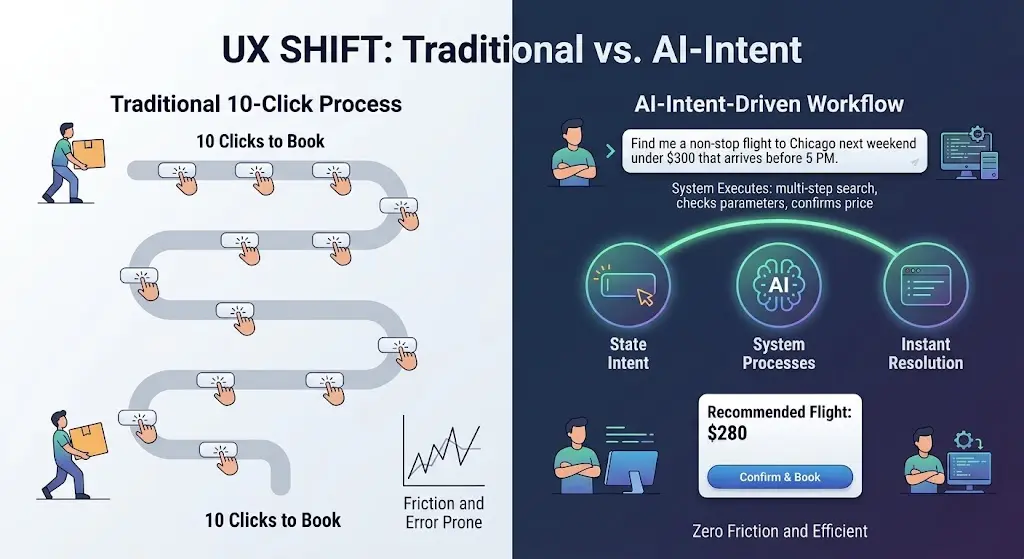
Consider the standard workflow involved in purchasing an airline ticket online. A typical booking session requires the user to load a travel portal, select trip types via radio buttons, input departure and arrival cities into auto-complete fields, specify travel dates through calendar pickers, apply filters for price caps and non-stop flights, compare dozens of results across separate browser tabs, select specific outbound and return segments, decline add-ons, and manually input passenger and payment details. This complex sequence represents a hyper-interactive, click-heavy interaction loop designed around system requirements rather than human thought patterns.
Intent-driven design completely reverses this operational dynamic. Instead of compelling the user to navigate the technical steps of how a search is executed, an intent-centered system begins with a single query regarding what the user wishes to achieve. When a traveler inputs a goal—such as requesting a non-stop flight to Chicago next weekend under $300 that arrives before 5 PM—the underlying AI interprets the core request, queries databases behind the scenes, compares constraints, and delivers a consolidated, actionable recommendation. The multi-step journey condenses into a single intent expression, bypassing the traditional visual UI funnel.
Web Platforms Moving from Interfaces to Intent
This movement is not merely a theoretical exercise confined to academic research; it is actively reshaping mainstream digital applications across search, web development, and productivity.
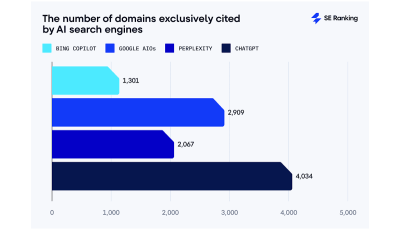
In search and information retrieval, platforms like Perplexity AI illustrate how intent-driven systems bypass traditional search engine results pages. Standard web search tools, historically represented by directories like Google, operate by matching keywords and outputting lists of links. Users are left to perform the labor of opening multiple browser tabs, skimming long articles, dodging display ads, and manually assembling scattered information into a cohesive answer. Perplexity AI, by contrast, responds directly to user queries by digesting information across multiple web sources and presenting a synthesized, contextual answer complete with citations, effectively eliminating the need for manual web surfing.
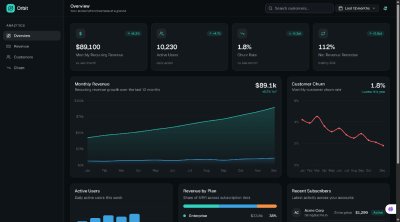
In digital creation and software engineering, tools such as Vercel v0 demonstrate how visual editing is being transformed. For years, web design required manual manipulation within graphical software like Figma or drag-and-drop website builders. Designers and developers spent countless hours manually placing layout grids, entering hex codes, setting CSS margins, and configuring responsiveness. Vercel v0 allows users to state their design goals in natural language—such as requesting an analytics dashboard with specific data displays—and dynamically generates functional, production-ready interface components without requiring manual pixel dragging or code construction.

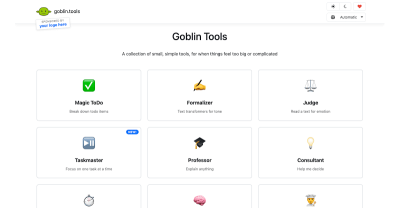
Similarly, in personal task management, specialized applications like Goblin.tools highlight how intent-driven design can lower cognitive overhead. Traditional task management software demands that users manually create lists, format Kanban boards, set granular deadlines, and organize sub-tasks. Goblin.tools offers a single-page platform tailored to assist users—particularly neurodivergent individuals or those experiencing executive dysfunction—by taking a high-level goal, such as preparing for a job interview or organizing a space, and automatically decomposing it into structured, actionable steps without requiring account registration or complex configuration.
The Core Pillars of Intent-Driven Web Design
As web software shifts away from persistent navigation bars, sidebars, and static input forms, designers are establishing new structural principles to maintain usability, coherence, and user agency. Current implementations rely on three primary architectural pillars: high-level intent capture, generative user interfaces, and autonomous agent execution.
The first pillar centers on shifting user input from micro-actions to high-level goals. Rather than forcing users to manipulate discrete UI elements like dropdowns or checkboxes, intent-driven platforms evaluate high-level natural language inputs and environmental context. Drawing from established industry standards such as Apple’s Human Interface Guidelines on contextual and ambient design, modern software interprets ambient metadata—including device state, location, user preferences, and historical usage patterns—to anticipate needs and reduce explicit user input.
The second pillar involves Generative UI, replacing static web layouts with dynamically rendered components. In traditional web design, every visitor views identical static structures regardless of their specific task or immediate objective. Grounded in research by the Nielsen Norman Group regarding AI as a new UX paradigm, computing interaction is shifting from command-based instruction to outcome specification. When a user requests a complex calculation or data comparison, the system dynamically generates a temporary, highly tailored user interface component—such as an interactive financial calculator or comparative matrix—that exists only for the duration of the task and recedes once the goal is accomplished.
The third pillar relies on autonomous execution by background AI agents paired with instant reversibility. Traditional interfaces heavily rely on modal dialogs and confirmation warnings designed to prevent operational errors. Intent-driven systems reframe user safety by adapting Jakob Nielsen’s classic usability heuristics regarding user control and error recovery. Because autonomous agents perform complex sequences on behalf of the user, product designs prioritize effortless undo mechanisms, explicit revision controls, and clear audit logs over disruptive confirmation dialogs, allowing users to safely guide and correct agent behaviors after the fact.
Ethical Pitfalls, Systematic Risks, and the Evolving Role of UX
While eliminating interface friction offers significant efficiency gains, removing visible manual controls presents notable ethical, technical, and psychological challenges. When software acts on inferred intent rather than explicit button clicks, product designers must address critical risks related to user agency, transparency, and system error.
A major concern is what HCI researchers describe as the illusion of control. When software autonomously executes decisions on a user’s behalf without explicit verification, it risks feeling invasive or patronizing. Frameworks developed by the Stanford Human-Computer Interaction Group and the Center for Humane Technology emphasize that automated systems must preserve clear operational boundaries to avoid user disempowerment or manipulative defaults. To maintain trust, designers must carefully calibrate automation—delegating routine background tasks while explicitly requiring human confirmation for high-stakes actions, such as financial transactions, public data publishing, or critical privacy updates.
Another prominent challenge is the "black box" nature of AI interpretation. In traditional graphical interfaces, system errors are usually straightforward to diagnose; a user can identify if an incorrect filter was selected or an erroneous date was entered. In an intent-driven interface, identifying why an agent produced an unexpected output can be difficult. To counter this, guidelines from Google’s PAIR (People + AI Research) initiative advocate for continuous, transparent feedback loops. Intent-driven applications must clearly state how they have interpreted a user’s prompt and expose the intermediate reasoning steps taken, allowing users to detect misinterpretations immediately and adjust their input accordingly.
For user experience professionals, these changes necessitate a fundamental redefinition of the design discipline. Rather than focusing primarily on visual styling, component libraries, and fixed interaction flows, designers are increasingly tasked with mapping dynamic intent flows, establishing ambient feedback mechanisms, and setting ethical guardrails for non-deterministic AI outputs.
This evolution also challenges traditional industry benchmarks for measuring software success. For decades, digital products have been evaluated using engagement-driven metrics such as time spent on page, click-through rates, and total page views per session. Guided by the principles of Golden Krishna’s "The Best Interface Is No Interface" and the Center for Humane Technology’s Time Well Spent movement, the measure of effective web design is shifting. Success is no longer defined by how effectively an interface captures visual attention or drives interaction volume, but by how efficiently software fulfills a user’s intent and quietly steps out of the way.