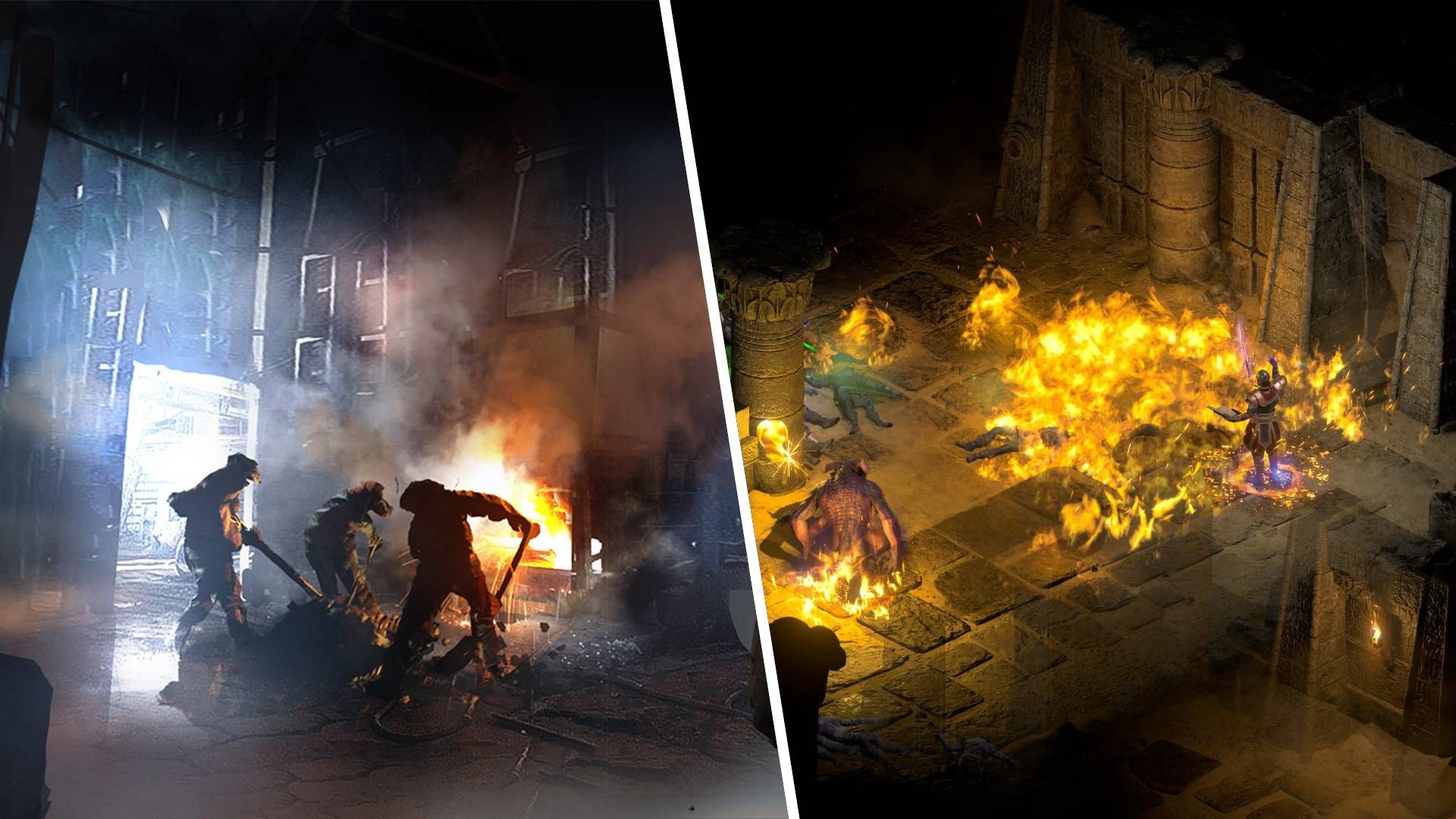
Every time a player casts a devastating meteor spell in Diablo 2 or unleashes a swirling cloud of daggers across the battlefield in Baldur’s Gate 3, they are participating in a long and winding historical continuum. This sequence of cause and effect stretches backward through the decades and centuries, reaching an era long before anyone ever thought about taking a "warlock dip" outside of the shadow of the Salem witch trials. At that time, centuries ago, the conceptual building blocks of modern fantasy had entirely different meanings and practical applications in human society.
Understanding how modern gaming arrived at the satisfying tactical moment of setting fire to a cluster of goblins simultaneously requires tracing a curious path. This path winds away from the dying days of the agrarian period, moves steadily through the mechanization of the modern world, and winds up inside the digital logic of contemporary role-playing games. By charting these contours of cause and effect, observers of cultural history can look back at the grand mosaic of human innovation and recognize how technological shifts in the physical world eventually translated into the mechanics of virtual play.
The Industrial Revolution and Area-of-Effect Spells in RPGs
Rise of Industry
Between 1760 and 1840, profound technological advances fundamentally transformed daily life for much of humanity. The refinement and widespread adoption of the steam engine, coupled with the viability of larger blast furnaces made possible by substituting coke for traditional charcoal, altered the socio-economic fabric of the Western world. Alongside various other social and economic shifts, this period known as the Industrial Revolution systematically replaced skilled craftsmen with machine tools and established the factory system as the dominant mode of production.
Within the grand scope of historical development, this era marked a definitive turning point away from localized, manual craftsmanship toward mass output and mechanized dominance. For those who study the long-term impact of these structural changes, the era laid the groundwork for modern industrial society, eventually reshaping landscapes and human relationships with the natural environment in ways that would inspire artists and creators for generations.
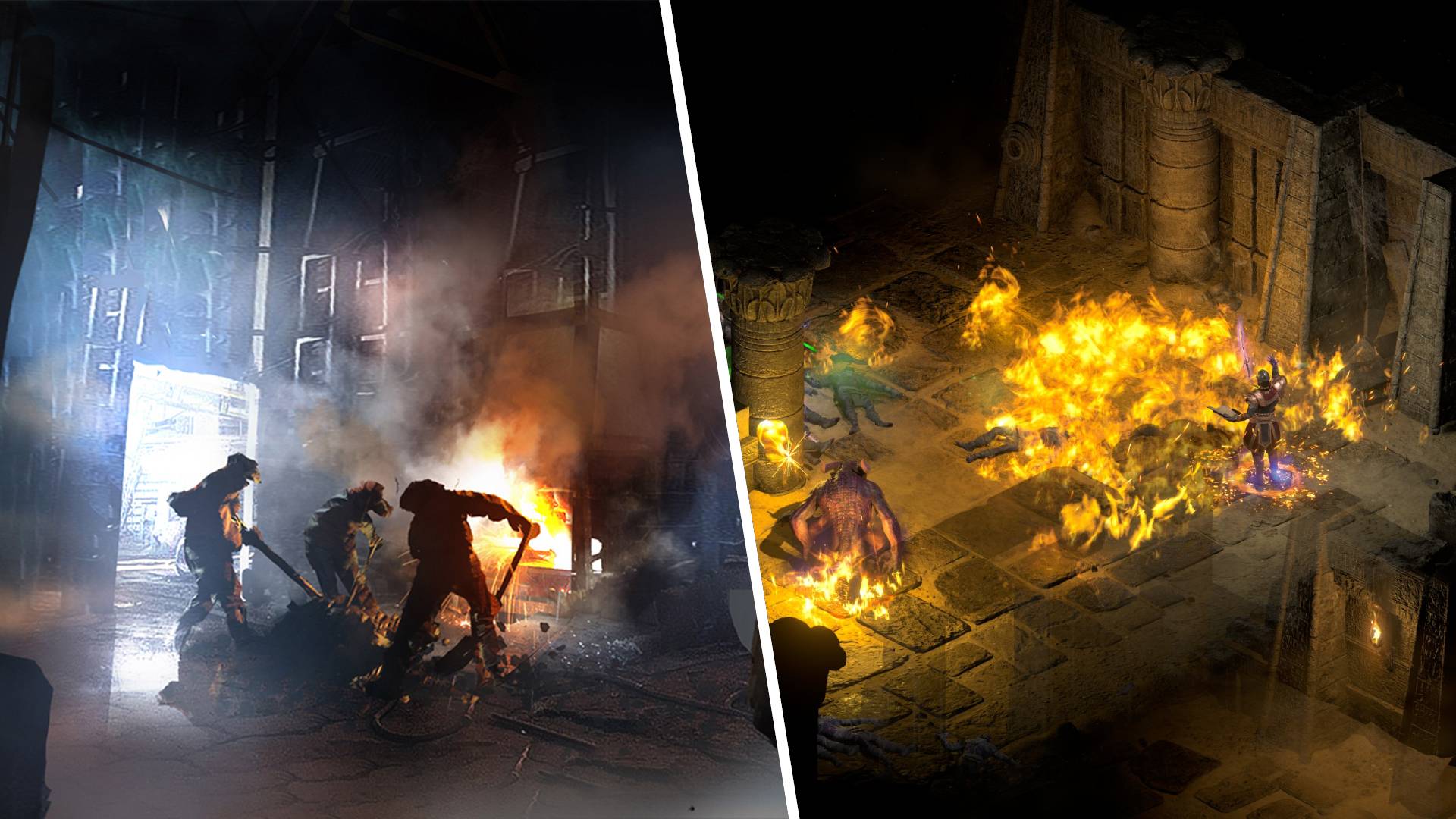
The Black Country
In 1896, the family of a young J. R. R. Tolkien moved from the urban bustle of Birmingham to rural Worcestershire. This relocation exposed the four-year-old Tolkien to a deep love for the English countryside that would profoundly inform his future literary works. Familiar locations in this new environment left lasting impressions; his aunt’s farm, Bag End, provided the name for the ancestral home of the Baggins family, while local landmarks such as Moseley Bog in the Shire Country Park inspired the literary depiction of the Old Forest.
Tolkien would later reflect on this environment to journalists, describing it as a kind of lost paradise. Unfortunately, it was an area that survived industrialization only temporarily. In the forward to the second edition of The Lord of the Rings, he detailed the rapid decay of his childhood sanctuary: the region was being shabbily dismantled before he even reached the age of ten, during a time when motorcars were exceedingly rare and workers were still laying down suburban railways. He lamented the loss of once-thriving rural mills and natural pools that had seemed monumental to him in his youth.

The soot-darkened countryside of the formerly green Midlands remains known to this day as the Black Country. In her novel How to Build a Girl, author Caitlin Moran illustrates this historical transformation through a working-class Midlands father explaining the regional landscape to his daughter. He describes how the valley once glowed with the fires of foundries, forges, ironworks, and potteries, producing fifty-foot sheets of sparks that never went out. To those who witnessed the transformation firsthand, the burning, industrial landscape looked remarkably like hell—or, more specifically, Mordor. As it turns out, Tolkien was drawing directly from his childhood surroundings, chronicling how the Industrial Revolution transformed the green hills of the Midlands from a peaceful Hobbiton into a mechanized Mordor. In Tolkien’s invented language Sindarin, Mordor translates directly to "the Black Land."
The Devilry of Saruman
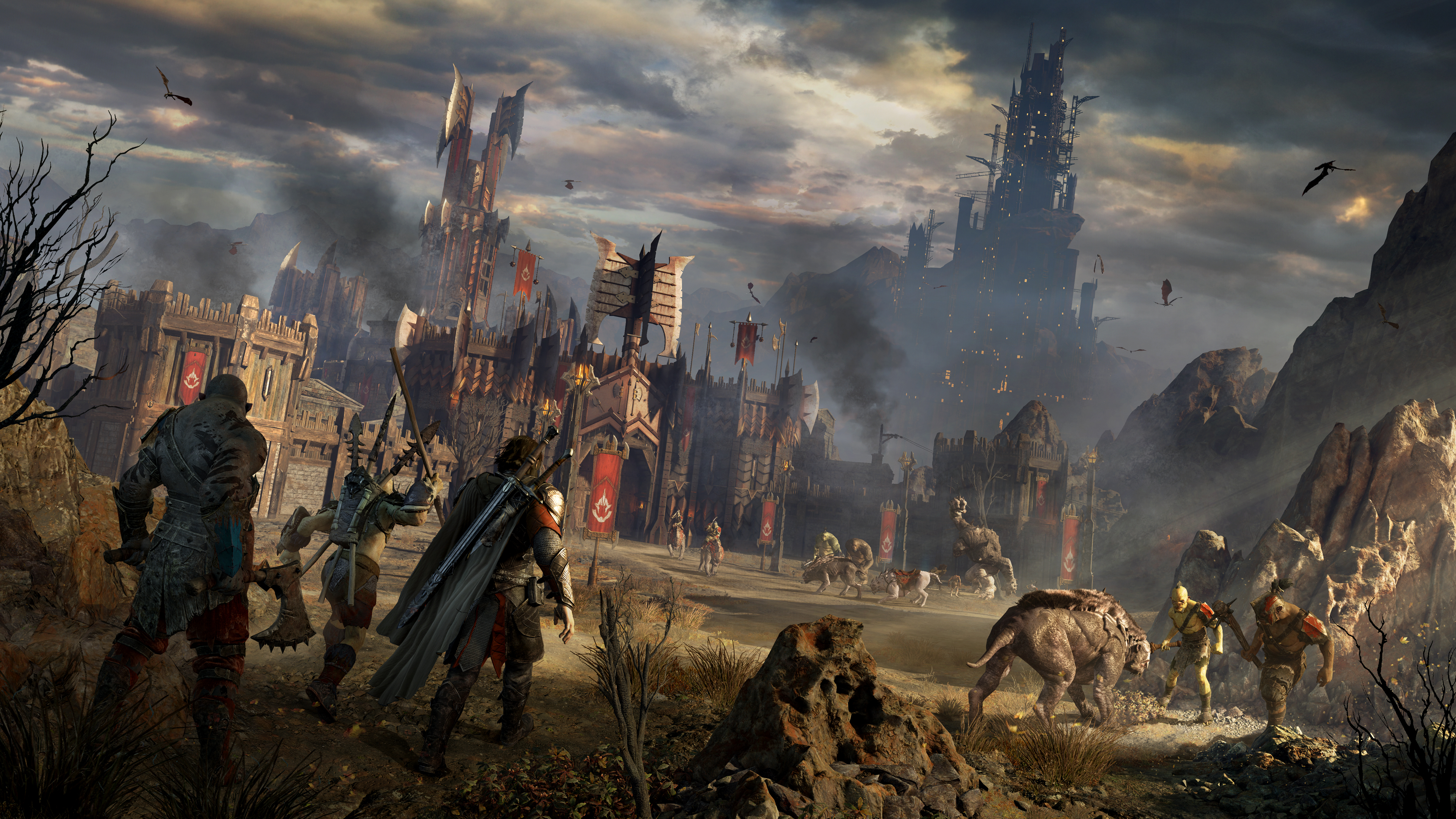
When The Lord of the Rings was published in 1954, Tolkien’s fictional wizards served as physical manifestations of his deep-seated anxieties regarding industrialization. Saruman, who ultimately turns to evil, constructs smoke-billowing factories around the formidable tower of Orthanc and later inflicts similar industrial blight upon the peaceful shire of Hobbiton. Saruman relies heavily on magical fire to create volatile explosives capable of breaching stone fortifications, an innovation highlighted during the dramatic Battle of the Hornburg when Aragorn observes that his enemies have harnessed the destructive fire of Orthanc.
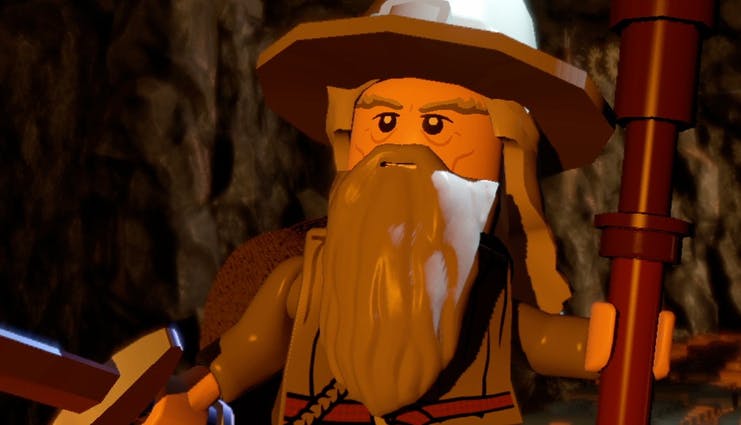
In stark contrast, Gandalf employs his considerable magic to produce harmless, beautiful fireworks for the amusement of others. While Gandalf is certainly capable of far greater displays—reminding the Balrog during their confrontation that he is a servant of the Secret Fire and the wielder of the flame of Anor—he consistently prefers subtlety and restraint over wanton destruction. Although he uses burning pine cones to frighten away wolves in The Hobbit and summons magical flames when the Fellowship is ambushed on the road to Moria, both instances bring him cause for reflection and regret.
Fire of Wrath
Despite Gandalf’s general restraint, his sparing and dramatic use of magical fire ultimately cemented it as a defining characteristic in the imagination of early wargamers. In 1970, Leonard Patt developed the Rules for Middle Earth for the New England Wargamers Association. Published in their zine The Courier, these rules would go on to influence game designers across the entertainment industry for decades to come.
Patt modeled Gandalf’s magical fire within the wargame by treating it essentially like artillery. His description of the "fire ball" stands as the earliest known depiction of a magical spell incorporating an area-of-effect rule, while also marking the historical introduction of the saving throw concept to tabletop gaming. Patt’s rules specified that wizards possessing magic powers could cast a fireball once every other turn, utilizing a specific distance and a burst circle to determine casualties. Any figures caught beneath the blast radius were instantly eliminated, with the sole exception of heroes and anti-heroes, who could potentially survive through a successful dice roll.
Backdraft
The publication of Dungeons & Dragons by TSR in 1974 brought these concepts to a wider audience. Developed by Gary Gygax and Dave Arneson, the foundational rules of D&D evolved directly from the fantasy supplement for the Chainmail wargame, which had been created by Gygax and Jeff Perren, building upon Patt’s earlier Rules for Middle Earth.

In original Dungeons & Dragons, the iconic fireball spell featured a specific burst radius that translated to twenty feet in standard play. Crucially, the rules stated that the blast would conform to the physical shape of the surrounding space. This meant that casting the spell into a confined dungeon room would result in a dangerous blowback effect, a punishing rule that famously led to the untimely demise of countless fifth-level magic users who failed to account for spatial geometry.
Screen Burn
By 1975, university student Daniel Lawrence adapted the framework of D&D into a digital format on a PDP-10 mainframe computer. Initially titled DND and later renamed Telengard for commercial distribution, this project emerged as one of the very first computer role-playing games. While it featured a fireball spell, it did not incorporate an area-of-effect mechanic, as combat encounters in DND and Telengard were strictly structured as one-on-one duels.

Throughout the 1980s, early computer games experimented with various methods to simulate area-of-effect mechanics. The Wizardry series introduced spells capable of targeting a specific portion or the entirety of an enemy group, while Ultima 3 featured a spell that allowed players to cast multiple individual fireballs simultaneously, each directed at a separate adversary. By 1985, Ultima 4 introduced a tremor spell capable of affecting every single enemy visible on the screen. Subsequent releases continued to refine these tactical options, with Wizard’s Crown in 1986 introducing a fireball that impacted enemies occupying adjacent squares around a primary target, and Ultima 5 adding cone-shaped spells in 1988.
That same year, SSI—the developer behind Wizard’s Crown—secured the official licensing rights to produce D&D video games and released Pool of Radiance. As the first role-playing game in the company’s famous Gold Box series, it faithfully implemented the rules of Advanced Dungeons & Dragons 1st Edition. This included a true, uncompromised area-of-effect fireball spell capable of incinerating the player’s own party members if deployed carelessly—proving, in practice, the precise danger Tolkien had warned about decades prior.