The landscape of artificial intelligence tools is expanding rapidly, yet most mainstream assistants still operate on a reactive framework: users type a query, and the system delivers an answer or executes a narrowly directed task. A new web application called Hark Pro is looking to disrupt this familiar paradigm. Equipped with a chatbot interface alongside advanced agentic capabilities, Hark Pro checks all the boxes for a contemporary mass-market AI release. However, unlike the tools already deployed by major technology companies and frontier AI laboratories, Hark Pro is fundamentally rethinking the core premise of the digital assistant. While everyday chatbots introduced over recent months focus primarily on fielding queries and following explicit instructions, Hark Pro utilizes its artificial intelligence to deeply understand the ongoing tasks and daily needs of each user, proactively identifying and executing ways to help.
Hark, the startup behind the development of Hark Pro, describes its creation as an "operating system for your life." Currently available through a limited-use free version or via paid subscriptions starting at $20 a month for expanded usage, Hark Pro functions essentially as a computer using a computer to organize complex information, surface answers, and manage a vast array of tasks. By securing authorized access to a user’s email, calendar, and other essential online accounts, the application is capable of handling common administrative duties such as ordering lunch, paying monthly bills, and coordinating trip details.
Beyond these routine actions, the system is engineered to perform more proactive interventions. It can independently identify scheduling conflicts hidden within a user’s calendar and dynamically arrange alternative times, navigate insurance provider networks to book an appointment with a new dentist, or flag that a car rented for an upcoming trip has mistakenly been reserved at the wrong airport—before stepping in with an offer to resolve the mistake.
The ambition behind Hark is driven by its founder, Brett Adcock, whose entrepreneurial background includes launching the electric vertical takeoff and landing startup Archer Aviation and the humanoid robotics enterprise Figure. Since the debut of Hark in late 2025, the company has experienced a massive influx of momentum, securing $700 million in Series A funding. This financial backing has fueled an aggressive hiring spree, drawing top-tier engineering, artificial intelligence, and design talent from industry giants such as Apple and Tesla.
In a keynote video released alongside the official launch of Hark Pro, Adcock framed the application as a personal intelligence tool and the inaugural release of what he envisions as a dramatic reimagining of the personal computer for the age of artificial intelligence. Looking toward the future, Adcock expressed his ultimate objective for the technology. Eventually, he wants Hark to handle all the functions he normally performs on a computer in a fully end-to-end manner, eliminating the need to use a traditional computer altogether—at least not a computer as society currently understands it.
A Customizable Interface
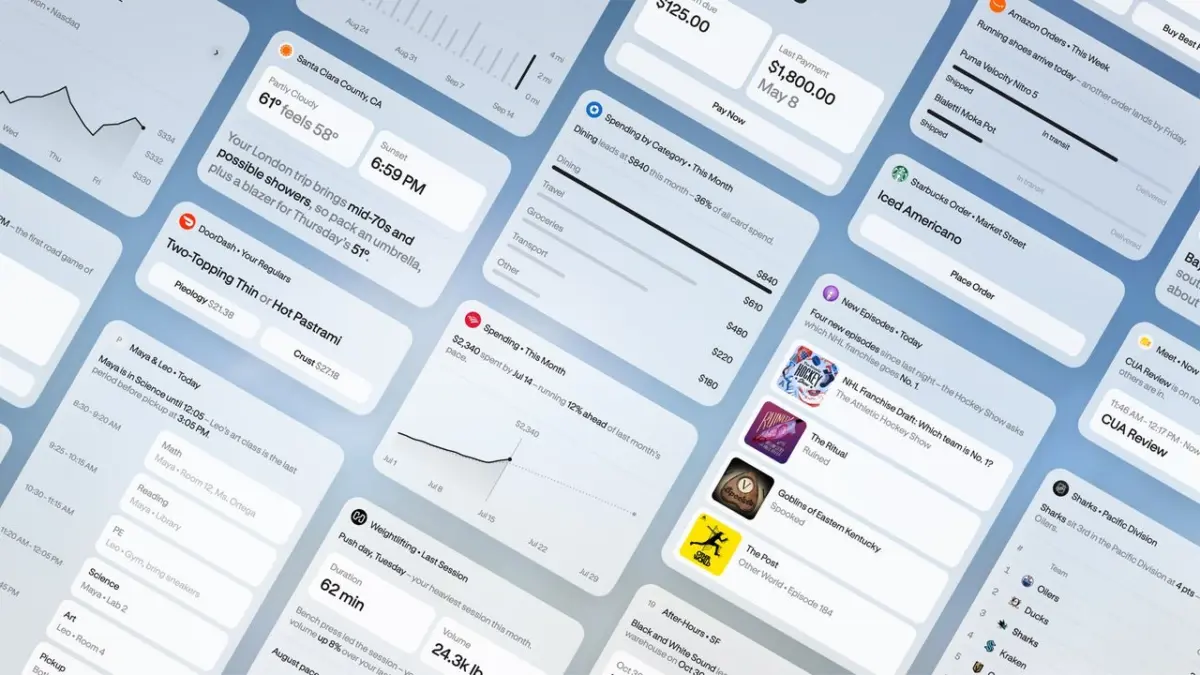
When testing the beta version of Hark Pro ahead of its public rollout, the platform initially appears to follow the widely established chatbot formula, featuring a standard text query box alongside a running chronological log of past interactions and system responses. But rather than relying solely on a simple, conversational ask-and-answer interface, Hark Pro manifests within its web application—as well as dedicated versions for iOS and Android—as something closer to a centralized control panel. The interface incorporates a sidebar populated by individual widgets that house custom-designed applications, data trackers, and persistent reminders, all of which can be connected seamlessly to external services utilized by the user.
Abidur Chowdhury, the head of design at Hark and the former design lead for Apple’s iPhone Air, refers to this central space as a homepage. The layout is purposefully engineered to offer easy customization while dynamically prioritizing the primary tasks or pressing problems that require attention on any given day. Action items are strategically positioned at the top of this homepage, accompanied by automatically rendered action buttons that enable users to pay a bill, confirm an appointment, or approve an expense report with a single interaction. Chowdhury emphasized that the design team at Hark has deliberately worked to craft an interface that bypasses the clunkier, less intuitive elements frequently found across other contemporary artificial intelligence platforms, aiming instead for an experience that feels fluid, integrated, and genuinely indispensable to daily routines.