The farm-to-table concept comes instinctively to the French. More than half of the nation’s territory is given over to agriculture, amounting to 17.4 per cent of the European Union’s total farm land. Speeding eastward from the capital on an RER train, passengers gaze out at uninterrupted fields of wheat, barley, and corn, bearing witness to a landscape deeply rooted in agrarian tradition.
Yet, despite this vast agricultural output, the reality of modern food distribution often means that local populations are disconnected from the soil that feeds them. Enter Presles-en-Brie, a quiet commune situated roughly 40 kilometres southeast of Paris. Here, a canteen and grocery shop enterprise known as Mûre is quietly revolutionising the way urban dwellers think about their daily meals by cultivating about 1.5 hectares of south-facing land in small, carefully managed plots.
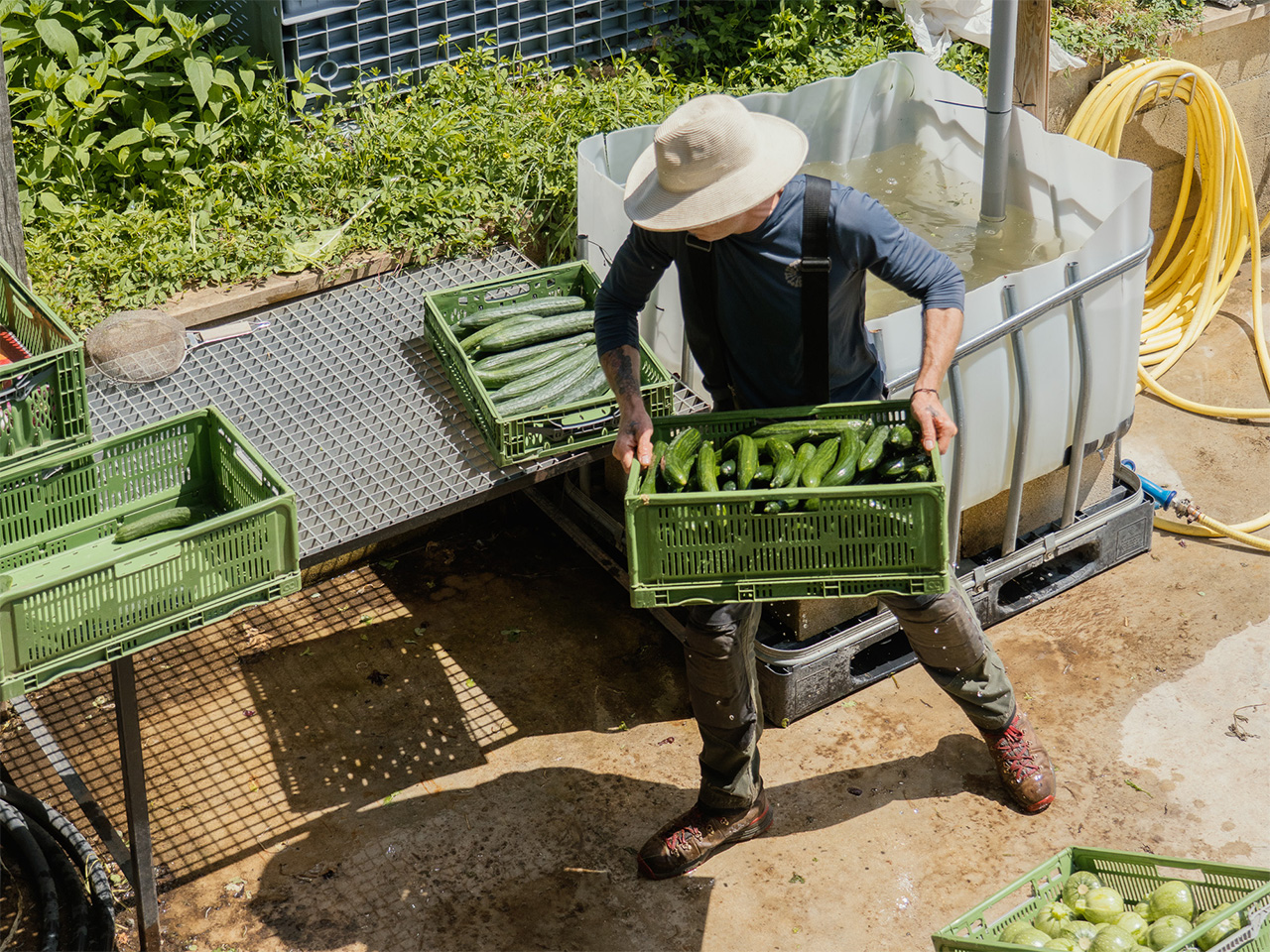
Unlike most commercial farms, which tend to focus on a primary crop to maximise efficiency and scale, Mûre’s agricultural model embraces diversity. The farm produces an astonishing 150 varieties of fruit and vegetables. This traditional style of farming is historically known as maraîchage—a French term for market gardening. Practitioners of this labour-intensive method traditionally sell their crops directly to local markets and restaurants, bypassing massive industrial supply chains and establishing a direct line of communication between the grower and the consumer.
What sets Mûre apart even further in the modern agricultural landscape is its near-total lack of mechanisation. Aside from a single machine dedicated to removing old roots, everything on the farm is done entirely by hand. This deliberate choice yields profound benefits for the land. It eliminates the need for the wide corridors of compacted soil that conventional farms must reserve for heavy tractors to drive on, allowing that valuable space to be used for growing crops instead. Furthermore, when specific crops fail due to weather or pests, new varieties can be swiftly and easily substituted into the plots.
As demand for locally grown produce has risen and farming has become increasingly sensitive to the unpredictable vicissitudes of extreme weather, maraîchage has proven the enduring efficacy of old-fashioned farming methods. It offers a resilient, flexible alternative to industrial monoculture, demonstrating that smaller, more attentive farming operations can weather environmental challenges through sheer diversity and human care.
Rather than selling its diverse harvest to external businesses, Mûre keeps things strictly in the family to maintain complete control over quality and freshness. The daily operation follows a meticulously timed rhythm. At 05:00, electric vehicles transport the farm’s freshly harvested produce directly to the company’s grocery shop located in Paris’s residential 11th arrondissement, as well as to its five restaurant canteens dotted across the city. By 07:00, the enterprise’s chefs are already hard at work using those morning ingredients to prepare wholesome dishes for the bustling lunchtime rush. Around 12:00, city workers flock to their nearest Mûre outpost to feast on the resulting meals. By the next morning, this demanding cycle simply begins again.
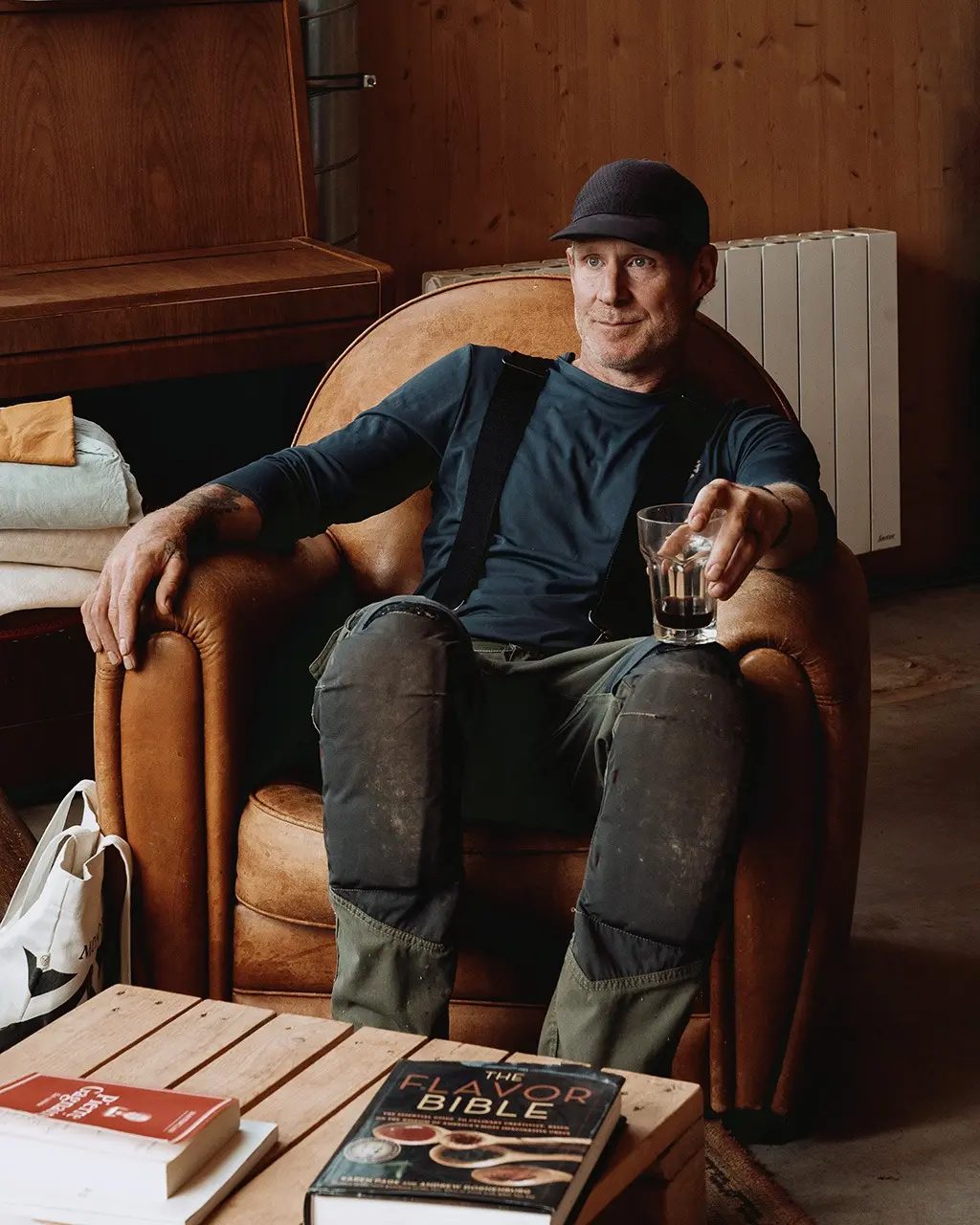
On paper, Arnaud Dalibot does not seem like the type of person who would have masterminded such a grueling, hands-on operation. For years, his professional life existed in a very different corporate sphere. In 2014, Dalibot made the bold decision to swap his high-flying career as a finance executive at Moët Hennessy for the demanding realities of planting, recipe testing, and the exceptionally difficult task of building a farm from the ground up.
Reflecting on the climate of Paris at the time he launched his venture, Dalibot recalls the prevailing culinary trends. "At the time, it was à la mode to open a burger restaurant in Paris," he says. "But there was also growing demand for organic vegetables, beyond those prepared by fine-dining institutions such as Paris’s three-Michelin-starred L’Arpège."
The foundational idea for Mûre—a French word meaning "ripe"—actually took root while Dalibot was working in New York City, where the urban-growing trend was in full bloom and community-focused agriculture was gaining momentum. "I liked the idea of connecting agriculture with nourishing cooking," he explains. Upon returning to France, he became acutely aware of a striking paradox within the nation’s agricultural economy: roughly 85 per cent of France’s agricultural produce was being exported abroad rather than feeding the domestic population. "Paris has 10 million inhabitants and I wanted them to benefit from what grows on French soil," he adds. "I’m interested in feeding Parisians."
The day-to-day reality of running the operation can be remarkably grueling. "Running a restaurant when you’re also the grower and supplier means starting from scratch every day," Dalibot notes, describing it as a relentless, round-the-clock commitment. "It’s a 24-7 job."
His weekly schedule is a testament to this total immersion. Dalibot typically spends three days a week overseeing the farm’s agricultural operations in Presles-en-Brie, while the remaining days are spent zipping between his Parisian grocery shop and various canteens on a bicycle. In addition to these logistical feats, he personally develops the seasonal menus. At weekends, his duties extend to collecting fresh eggs from the farm’s 250 resident chickens—pausing affectionately to point out a mischievous hen named Linda as she enthusiastically tramples on a patch of Swiss chard—and tending to the farm’s resident donkeys, Timy and Toumou. In every sense, the vital link between the farm and the table is Dalibot himself.
Back in Paris at Mûre’s canteen on Rue des Italiens, a steady stream of employees from neighboring offices arrives during the lunch hour, brandishing their restaurant tickets. Dalibot deliberately structured his pricing around these tax-efficient meal vouchers, which are provided by employers and typically valued between seven and 14 euros. At Mûre, a hot, freshly prepared meal costs 10.50 euros, keeping the food accessible to working-class city residents despite the high operating costs. "We have slim margins," he admits, but accessibility remains a core priority for the brand.
The daily menu reflects both comfort and culinary craft. On any given day, offerings might include roasted vegetable lasagne, an aubergine and confit tomato quiche, or a courgette pizza topped with Grana Padano. Yet Dalibot remains pragmatic about the psychological motivations of his clientele. "Parisians are epicureans," he observes. "Their first concern is the taste. Price is their second preoccupation. Whether a dish is produced sustainably tends to be at the bottom of their list."
To bridge this awareness gap, bold and instructive branding has become a fundamental pillar of Dalibot’s efforts to educate the public. Mûre’s guiding motto—La cuisine des gens qui sèment, which translates to "The cuisine of those who sow"—is prominently plastered across chalkboards in every outpost. While Dalibot concedes that some hungry consumers might breeze past the message without fully absorbing its deeper philosophical implications, he remains unbothered. "That doesn’t matter to me," he says with a characteristic shrug. "I know that we’re doing the right thing."
Could France become self-sufficient?
As France remains one of Europe’s most plentiful agricultural producers, the concept of national food sovereignty is an entirely realistic possibility for the country on paper. Yet, while the nation boasts remarkable agricultural resilience—particularly when it comes to staple sectors like dairy, grains, and wine—its broader industrial food systems remain heavily reliant on imported fossil fuels, coal, and oil to power heavy machinery, manufacture artificial fertilisers, and manage long-distance transportation.
In the face of these systemic vulnerabilities, independent initiatives like Mûre offer a compelling glimpse into an alternative future. By embracing a closed-loop model that strips away unnecessary intermediaries and takes food production back to its essential basics, operations of this scale demonstrate that localized, sustainable, and deeply connected food systems are not just a romantic ideal, but a viable blueprint for modern urban nourishment.