When Teenage Engineering co-founder and head of design Jesper Kouthoofd recently stated in an interview that the Swedish electronics manufacturer is effectively finished making traditional synthesizers, it sent a wave of speculation across the creative technology community. Comparing the announcement to a major snack brand declaring it is done using potatoes, industry watchers and loyal fans immediately began pondering what could possibly come next for a company renowned for its eccentric, highly stylized, and undeniably premium electronic music gear.
The Stockholm-based studio has long occupied a unique niche at the intersection of consumer electronics, industrial design, and high-end audio hardware. From the iconic OP-1 synthesizer that revolutionized portable music production to the ultra-compact TX-6 mixer and the luxury-priced TP-7 field recorder, Teenage Engineering has built a cult following based on minimalist Scandinavian aesthetics, tactile controls, and playful user interfaces. If the company is genuinely walking away from the synthesizer market, the burning question remains: where does a design house with such a distinct creative DNA go next?
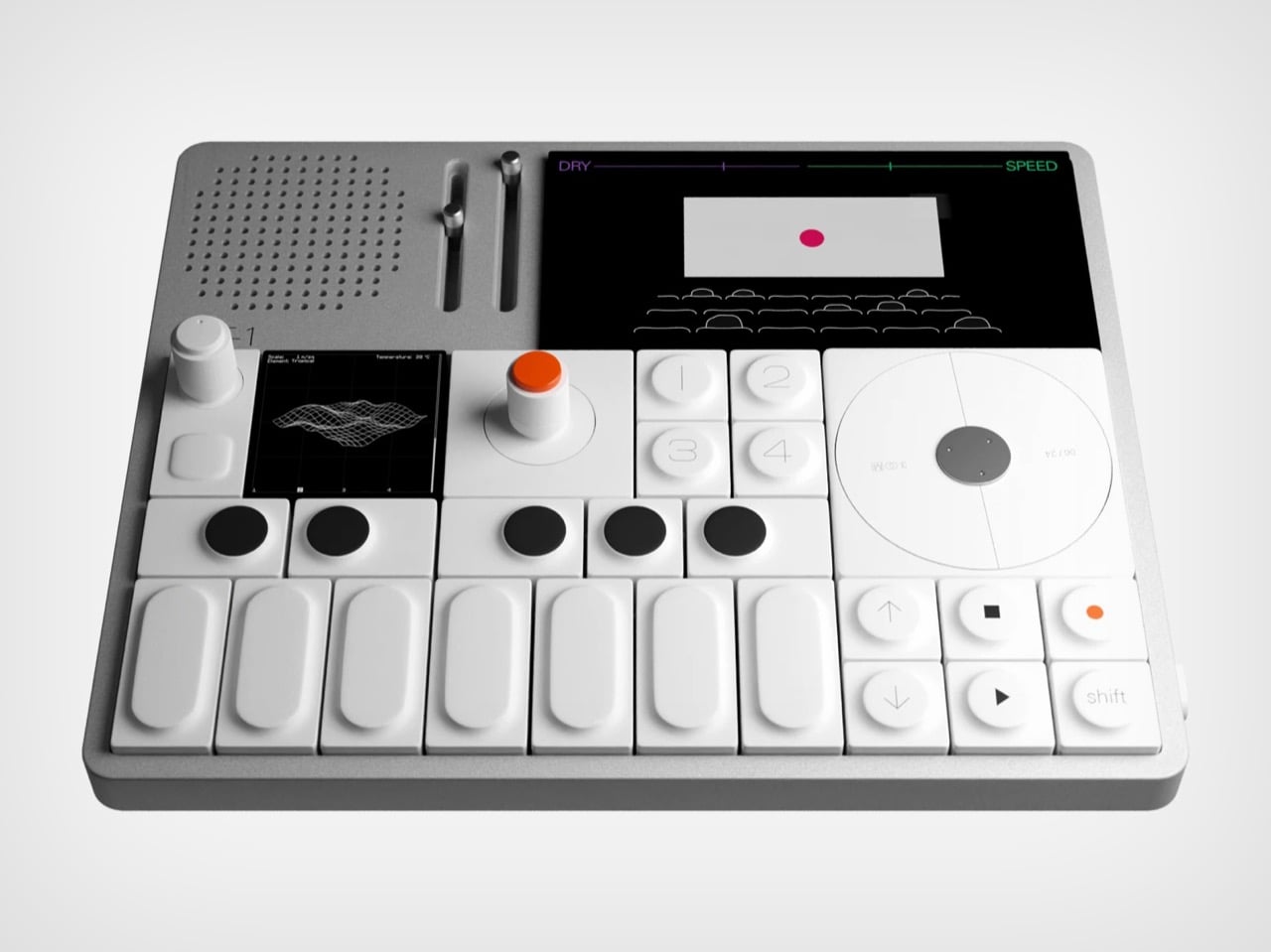
Designer Quentin Stamenov may have just provided the most compelling answer yet, and it involves a surprising pivot from music composition to the world of cinematic sound design. Stamenov has imagined a fan-made Teenage Engineering concept specifically engineered for professionals who craft soundscapes for movies. Dubbed the ACT-1, the conceptual hardware puts comprehensive controls for surround-sound mixing, film editing, and acoustic environment design onto a single, highly tactile slab of hardware that looks as though it rolled straight off the production line in Stockholm. The level of detail in the render is so convincing that it easily masquerades as a legitimate, leaked product page, sparking conversations across design forums and film production circles alike.
Dolby Atmos, Shrunk Down to a Pink Dot
To understand the ambition behind the ACT-1, one must first look at the complexity of modern cinematic audio. Big-budget movie sound production relies heavily on Dolby Atmos, a technology that fundamentally changed how audio is mixed and experienced in theaters. Unlike traditional channel-based mixing, Atmos treats individual sounds as mobile objects with precise three-dimensional coordinates in space rather than routing feeds directly to predetermined speaker channels. A standard cinema Atmos mix can seamlessly handle up to 128 simultaneous audio tracks, while the processor in each individual theater dynamically decides in real time which speakers need to fire to reproduce the sound accurately.
Conventionally, film sound mixers manage this immense spatial complexity through complex software plugins inside digital audio workstations like Pro Tools or via massive, expensive mixing consoles that often cost more than a luxury automobile. Stamenov’s ACT-1 concept aims to radically distill this workflow. The interface features a top-down view of a miniature cinema auditorium on its primary screen, where a small magenta dot represents an audio element that the user can freely drag and position between rows of virtual seats. Complementing this visual layout are two physical faders positioned neatly beside a perforated speaker grille, which appear custom-tailored to control parameters like dry-signal levels and movement speed.
The concept also pays homage to the rich history of film editing technology. The ACT-1 includes an editing table mode that borrows its name from the legendary Steenbeck flatbed editing tables. Manufactured in Hamburg since the 1950s, Steenbeck machines ran picture and sound simultaneously across motorized mechanical flat plates, serving as the industry standard for film editing until non-linear digital systems took over in the 1990s. The ACT-1 nods to this heritage by incorporating dual reel icons, chapter and scene markers, a running timecode display, and color-coded linear tracks for individual audio layers.
Furthermore, the concept introduces a fascinating topology mode designed to handle acoustic landscapes. This mode presents a wireframe terrain scaled at roughly 16 feet per grid square, complete with a desert environment setting and a digital temperature readout. While it sounds like a futuristic design flourish, there is a tangible physical basis for incorporating temperature into an acoustic simulation: sound actually travels faster through warmer air, meaning ambient temperature can subtly alter acoustic behavior in a given space. Whether a physical hardware controller would actively model this complex physics behavior in real time remains a matter of speculation, but the inclusion highlights the deep level of thought Stamenov put into the fictional device’s capabilities.
OP-1 Body, TP-7 Soul, and One Very Orange Knob
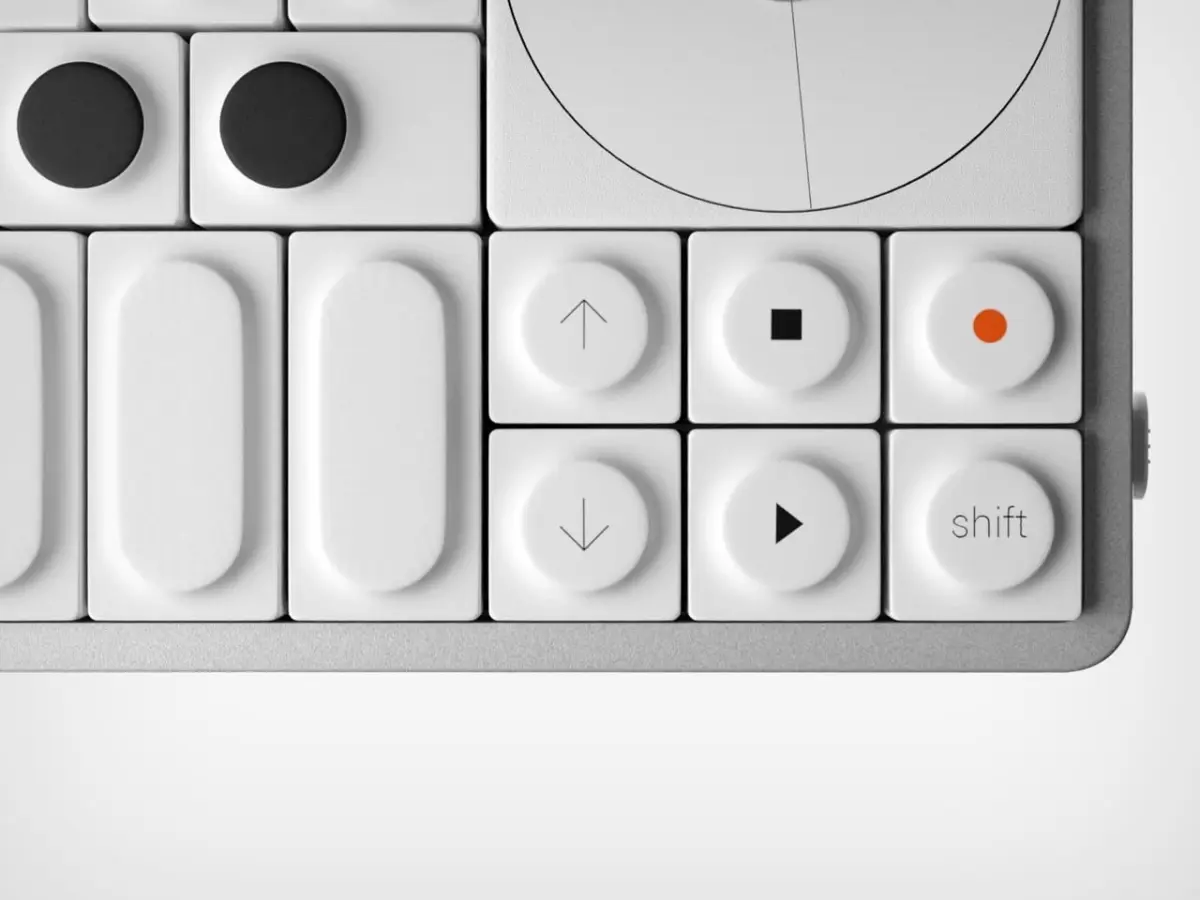
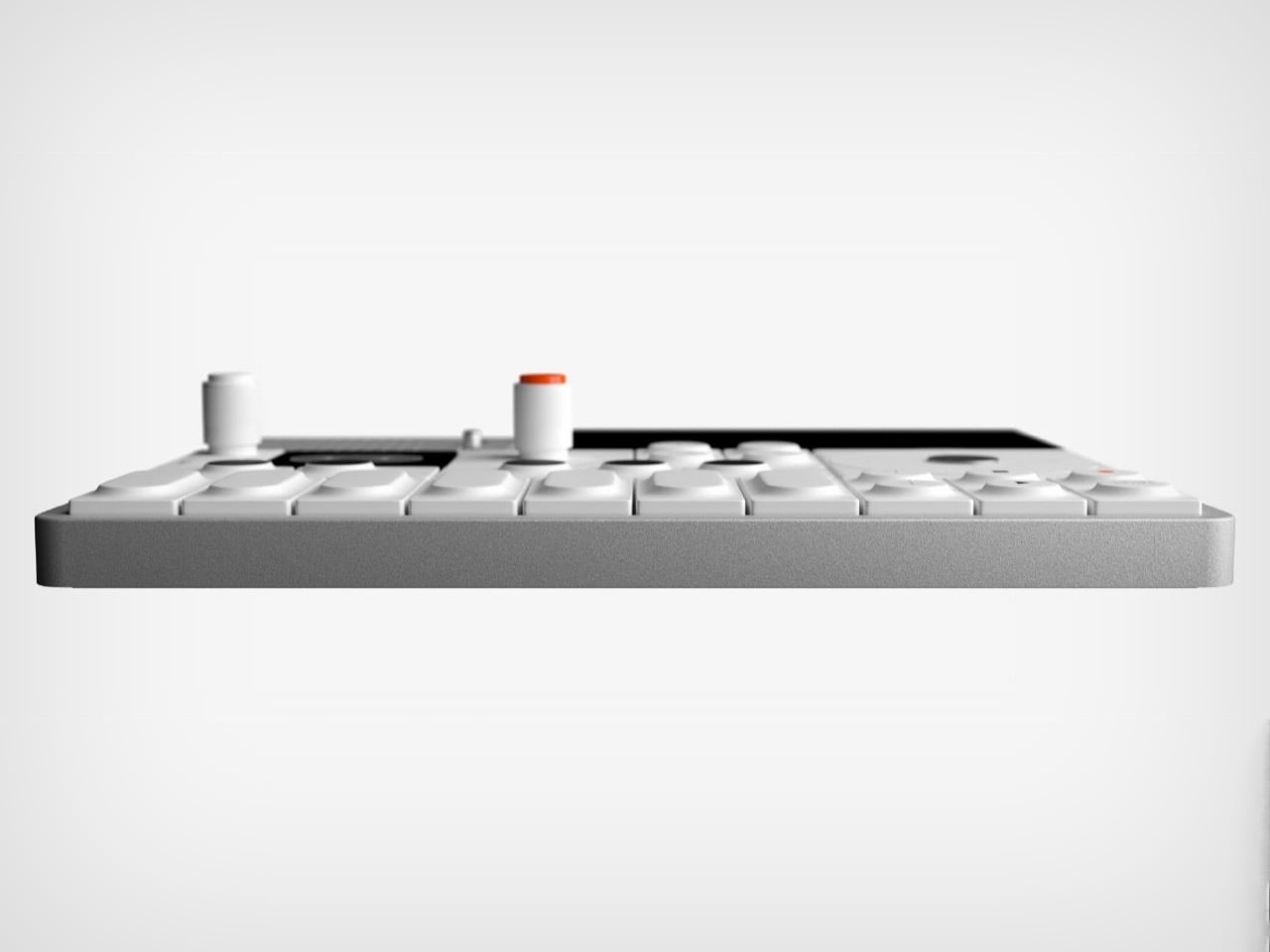
Physically, the ACT-1 draws heavy inspiration from Teenage Engineering’s existing hardware ecosystem, most notably the OP-1 Field. It features a sleek, light aluminum tray housing crisp white keys dropped neatly into the chassis. A perforated speaker grille dominates the top-left quadrant, bordered by a precise arrangement of two faders and two knobs. True to Teenage Engineering’s distinct design language, only a single knob is capped in a vibrant, signature orange color, adhering to the company’s long-standing philosophy of letting one focal control command visual attention.
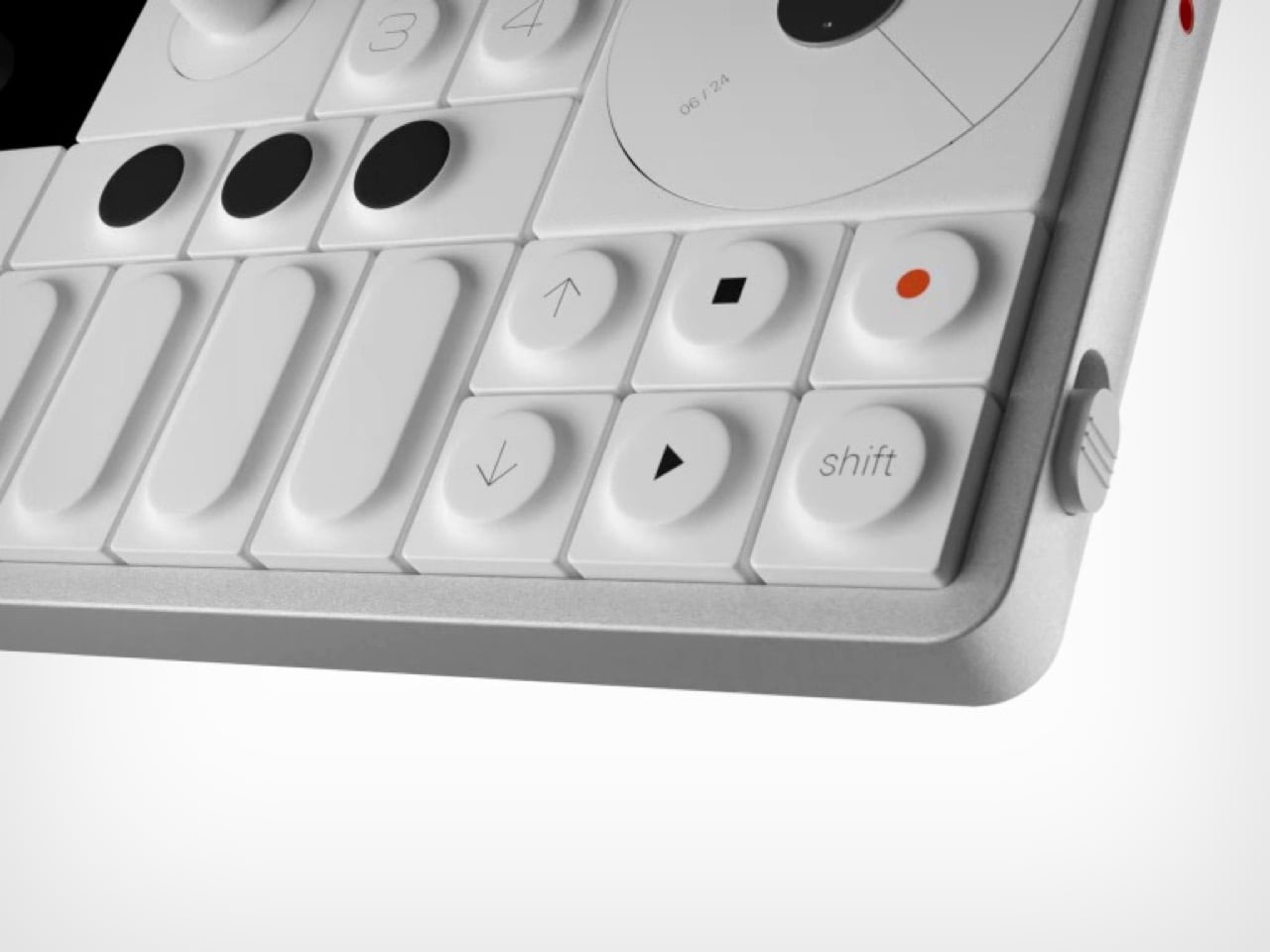
Long, pill-shaped keys run across the lower half of the device, punctuated in key areas by small black dome buttons. The crown jewel of the physical interface sits prominently in the bottom-right corner: a large circular platter that simultaneously recalls the historical mechanical plates of a Steenbeck editing deck and the motorized spinning reel found on Teenage Engineering’s $1,499 TP-7 field recorder. Even the transport controls utilize the company’s signature lowercase typography, labeling the shift key in a minimalist sans-serif font that completes the illusion of an authentic hardware release.
While the ACT-1 is entirely a fan creation, Teenage Engineering is no stranger to the world of cinema hardware. In 2024, the company notably designed the custom hardware console behind Eno, Gary Hustwit’s groundbreaking generative documentary about legendary musician and producer Brian Eno. That unique system dynamically assembled a fresh cut of the film at every live screening while its creators adjusted the audio mix specifically tailored to the acoustics of each individual theater.
Stamenov brilliantly staged the ACT-1 within a pristine launch studio environment that feels right at home in that universe—a minimalist white room lined with rounded acoustic wall panels, four matching studio monitors, and a large projection screen. Currently, a portable field-recording rig from Teenage Engineering’s actual catalog consists of devices like the TP-7 recorder, the $1,999 OP-1 Field, and the ultra-compact TX-6 mixer, none of which are natively designed to handle advanced Dolby Atmos workflows. However, if Jesper Kouthoofd and his team are genuinely pivoting away from synthesizers, building a high-end, highly portable tool for the professionals who make blockbuster movies sound colossal might just be the logical next evolution for the Swedish design icon.