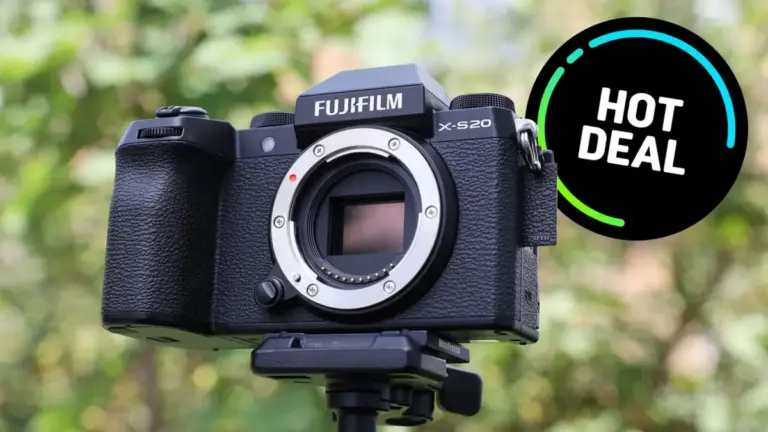
More than two years after the Fujifilm X100VI launched to viral fame, the retro-styled compact camera remains exceptionally difficult to find in stock without facing a months-long waitlist at major photography retailers. While that persistent supply shortage shows no signs of easing, photographers seeking a viable alternative now have a compelling reason to consider Fujifilm’s mirrorless ecosystem. The Fujifilm X-E5, paired with a 23mm pancake lens, has received its first-ever price reduction in the United States, bringing its cost down to the exact same level as its viral compact counterpart.
The Fujifilm X-E5 bundled with a 23mm f/2.8 pancake kit lens is now available at a $100 discount, dropping the package price to $1,799.95. This adjustment aligns the mirrorless camera with the baseline pricing of the viral X100VI compact camera. While a $100 price cut may not represent the deepest discount available ahead of seasonal shopping periods like Black Friday camera deals, it marks a significant milestone. According to historical retail price trackers, this is the first recorded instance of the X-E5 kit receiving a price reduction since the camera officially launched in the summer of 2025.
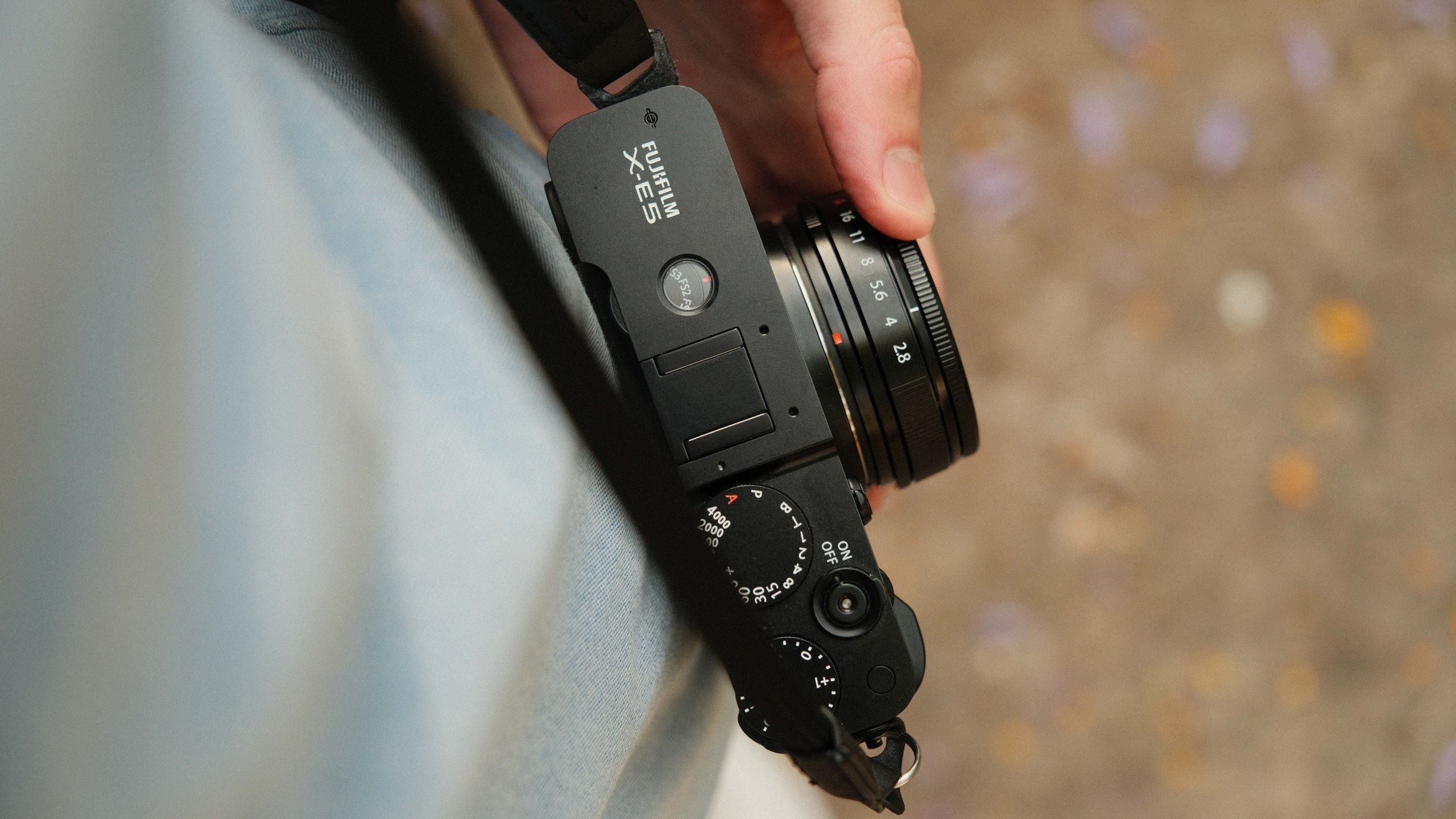
For photographers who already own compatible glass within the ecosystem or who prefer to curate a custom kit beyond the bundled 23mm f/2.8 pancake lens, the body-only version of the Fujifilm X-E5 has also been discounted by $100, bringing its price down to $1,599. Within the community of Fujifilm shooters, official discounts on new camera bodies and kits have historically been far less common than they were before the meteoric rise of the X100 series. As brand popularity continues to surge worldwide, promotional price drops on contemporary Fujifilm gear have become increasingly rare, making this initial markdown noteworthy for prospective buyers weighing their options.
When evaluating the underlying hardware, the Fujifilm X-E5 is capable of capturing photographs and videos that are nearly identical in fidelity to those produced by the X100VI. Both cameras share the same core sensor and image processor combination, meaning there is no inherent image quality advantage that tips the scales heavily toward one model over the other based purely on internal processing power. Furthermore, the X-E5 actually holds a practical advantage in optical stabilization, offering superior performance in challenging lighting conditions compared to its fixed-lens sibling.
However, visual output is influenced heavily by optics, which introduces a subtle distinction between the two devices. The viral X100VI comes equipped with a non-interchangeable, fixed 23mm f/2 lens, which boasts a slightly wider maximum aperture. In comparison, the X-E5 arrives in its standard kit configuration with a 23mm f/2.8 pancake lens. Because of this, the stock kit lens on the mirrorless body is not quite as bright as the integrated glass permanently attached to the X100VI, requiring marginal adjustments in exposure parameters or ISO settings in low-light scenarios.
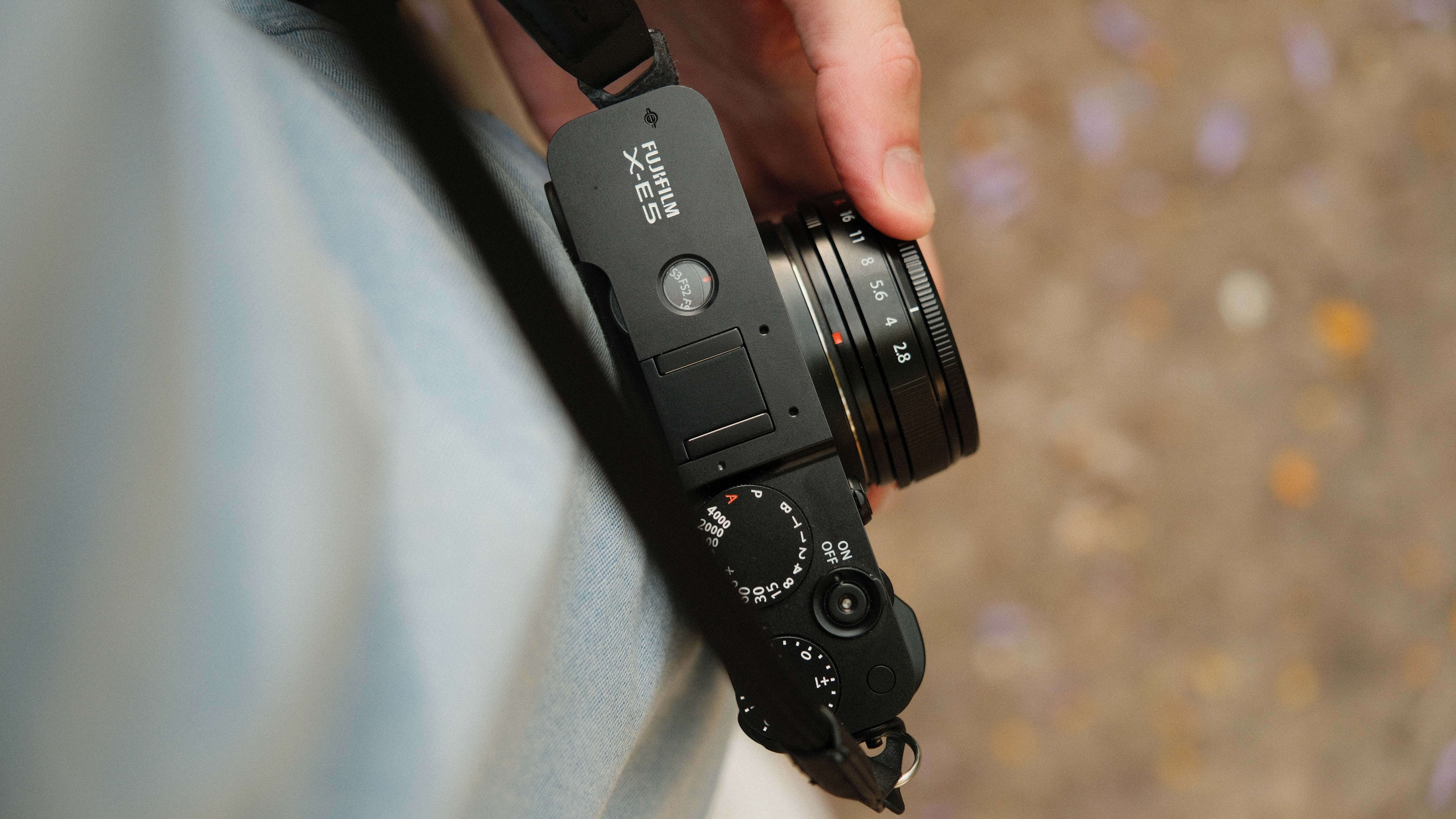
Despite that minor optical difference in the stock configuration, the overarching design philosophy of the X-E5 offers significantly greater versatility. While the X100VI is permanently married to its single focal length, the X-E5 is a true mirrorless system camera capable of mounting dozens of different X-Mount lenses. Photographers can easily swap out the pancake lens for a portrait-oriented 56mm f/1.2 for dramatic background separation, or opt for an ultra-wide perspective using an 8mm f/
3.5 lens. This interchangeability makes the X-E5 the indisputably more flexible tool for shooters who want to adapt their kit to different photographic genres.
When it comes to physical footprint, the X100VI retains the title of being the most compact and lightweight option once the lenses are factored into the equation. Even so, the X-E5 paired with the 23mm kit lens feels remarkably similar in daily use to handling a slightly oversized compact camera. While it may not comfortably slide into a standard trouser pocket without creating a noticeable bulge, the X100VI is priced so high and remains so scarce that many owners hesitate to slip it into a pocket unprotected anyway, preferring to use a dedicated sleeve or small pouch.

A closer examination of the hardware reveals several other notable divergences between the two models. The X100VI features a distinctive hybrid viewfinder that gives photographers the unique ability to toggle seamlessly between an optical viewfinder and an electronic viewfinder. The X-E5, by contrast, relies exclusively on an electronic viewfinder. From a control layout perspective, the X-E5 incorporates a dedicated Film Simulation dial on its top plate to quickly access Fujifilm’s celebrated color profiles, though it omits the physical dedicated ISO dial found on some of the brand’s other heritage-styled bodies.
For dedicated Fujifilm mirrorless shooters, one of the most prominent sticking points when comparing the two devices centers on environmental protection. The X-E5 is not inherently weather-sealed against dust and moisture out of the box. While the X100VI is similarly unsealed in its stock form, it can achieve a degree of weather resistance when fitted with an optional add-on protective filter and a corresponding filter ring adapter.
Ordinarily, at standard manufacturer list prices, the X-E5 mirrorless camera emerges as the more expensive investment of the two if a buyer specifically needs the 23mm kit lens included. However, this new $100 price adjustment positions the mirrorless alternative directly in line with the viral compact camera’s retail price point. For consumers frustrated by the reality that the X100VI continues to carry a multi-month fulfillment backlog at major retailers like Adorama, the Fujifilm X-E5 presents a readily available alternative that can be purchased and shipped immediately without joining an extended waitlist.