As retail landscapes evolve, a brand-new battlefield is rapidly emerging. Increasingly, it is an artificial intelligence assistant—rather than a traditional search engine or a dedicated mobile app—that decides which products to recommend to a shopper long before they ever visit a physical storefront or a brand’s e-commerce website. In this shifting environment, maintaining strong customer relationships has never been more critical. Brand loyalty is becoming more valuable, not less, as automated platforms look for trusted destinations to fulfill consumer demand.
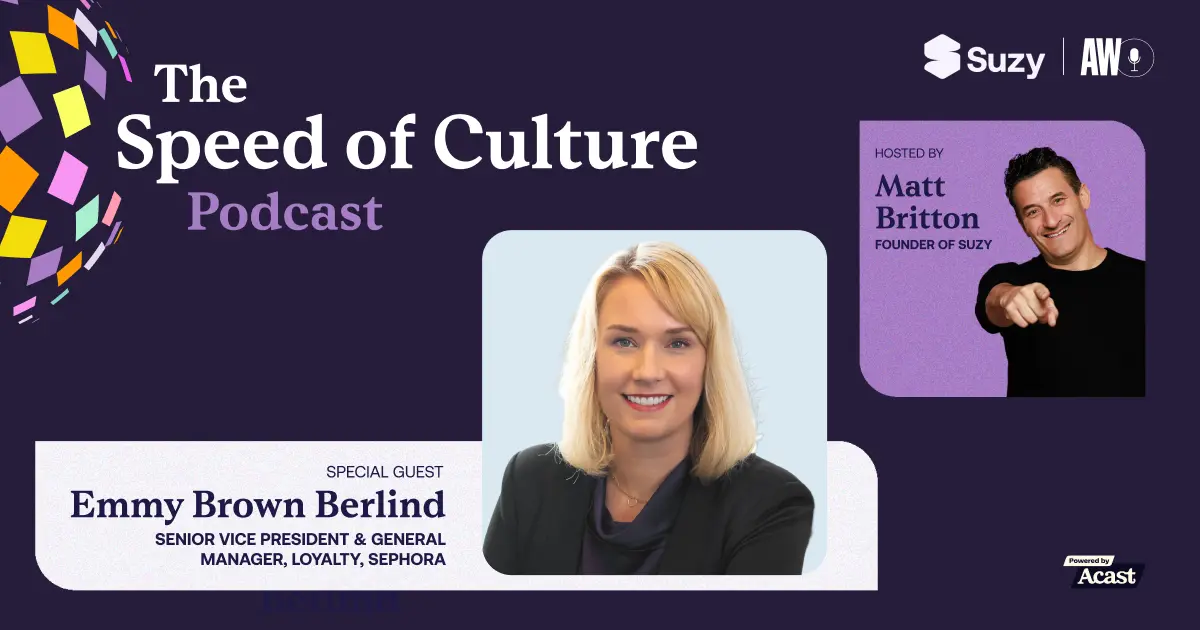
To explore how legacy programs are adapting to this seismic shift, Emmy Brown Berlind, Senior Vice President and General Manager of Loyalty at Sephora, recently joined host Matt Britton for an in-depth conversation. Together, they examined how the nearly 20-year-old Beauty Insider loyalty program is transforming to meet the demands of modern consumers. Their discussion provided a rare look behind the scenes at how a major global beauty retailer approaches personalization, balances technological innovation with human interaction, and prepares for an increasingly automated future of commerce.
Berlind brings deep institutional knowledge to her role, having spent more than a decade at Sephora across various leadership functions, including innovation, content, commerce, and loyalty. This extensive tenure has given her a uniquely comprehensive view of how the brand successfully connects its physical stores, digital experiences, rewards systems, creator partnerships, and emerging AI-powered tools. Before her long tenure at Sephora, Berlind gained foundational marketing and brand experience working at prominent companies such as Clorox and Yes To, backgrounds that she credits with helping her understand how brands operate at different stages and scales. Today, she leads the Beauty Insider program, which serves more than 46 million active members.
When Experience is at Stake, Stores Still Win
Despite the relentless march of digital convenience and e-commerce growth, Sephora’s physical stores remain entirely central to the brand’s overall strategy. Berlind points out that the value of a physical store extends far beyond simple product access or transactional convenience. Modern consumers visit Sephora stores for a holistic experience that is difficult to replicate through a browser or a smartphone screen.
This physical advantage is driven by highly trained beauty advisors who offer expert, personalized guidance, as well as discovery-oriented store layouts designed to encourage tactile exploration. Furthermore, physical stores offer tangible sample rewards that allow loyalty members to try something new before committing to a full-size purchase. The broader lesson for retailers and marketers alike is that digital convenience does not automatically replace physical retail when the store creates genuine expertise, hands-on exploration, and added value that online channels struggle to reproduce.
Loyalty Has to Feel Personal, Not Transactional
As the Beauty Insider program approaches its momentous 20-year anniversary, Berlind emphasizes that Sephora has continually evolved the framework around the concept of choice. Over the years, standard offerings like the traditional birthday gift have expanded significantly. Instead of a single, predetermined item, members can now choose from multiple options, including bonus loyalty points, because clients deeply value having the autonomy to select what matters most to them.
This operational philosophy reflects the broader strategic goal of the program: loyalty should fundamentally make customers feel genuinely recognized rather than simply rewarded for transactional spending. By moving away from a one-size-fits-all model, Sephora ensures that its most dedicated shoppers feel seen as individuals, fostering a deeper emotional connection to the brand that goes far beyond traditional points-accumulation schemes.
Personalization Can Turn Rewards Into Discovery
Personalization within the loyalty framework also serves as a powerful engine for brand discovery. Through initiatives like Beauty Insider Challenges, Sephora utilizes limited-time tasks paired with point rewards to encourage members to step outside their comfort zones and try something new.
Importantly, these tasks are personalized intelligently based on a member’s historical purchase data. For example, the system might prompt a loyal shopper who has historically only purchased skincare and makeup to explore the hair care category, offering tailored incentives to bridge the gap. Since the format officially launched in 2023, more than 30 percent of participating clients have engaged with a challenge, proving that targeted incentives can successfully drive cross-category exploration.
AI Shouldn’t Feel Creepy
With more than 90 percent of Sephora’s total sales coming directly from Beauty Insider members, the brand commands a remarkably rich and valuable first-party data set. However, Berlind maintains a strict and straightforward standard for deploying that data: artificial intelligence should only be applied where it creates genuine, practical value for the client.
Instead of deploying technology simply for the sake of innovation, Sephora utilizes practical AI tools like the Beauty Skin Scan to drastically improve shade-matching accuracy and skincare recommendations. Meanwhile, other features, such as the AI Beauty Chat, are maintained as strictly optional experiences. The underlying philosophy dictates that technology must earn its place in the customer journey by making the overall experience significantly easier and more helpful, rather than by aggressively showing off what the system knows about the user.
Follow the Shopper Into the Agentic Era
As consumer behavior continues to fragment across digital ecosystems, Sephora recognizes that it cannot rely on every beauty shopping journey beginning directly on Sephora.com. Berlind notes that the brand’s overarching goal is to be present wherever people are actively shopping for beauty, which increasingly includes emerging AI-powered environments and conversational commerce platforms.
To stay ahead of this curve, Sephora has established a presence inside ChatGPT with a dedicated app, alongside a strategic Google Agentic Checkout partnership. These integrations allow consumers to seamlessly discover, evaluate, and purchase products without ever having to leave those third-party platforms. Ultimately, this forward-looking strategy is less about strictly protecting a single owned destination and much more about protecting long-term brand relevance wherever consumer behavior evolves next.
Client-Friendly Decisions Are Not Always the Easy Ones
Navigating the complexities of a massive global loyalty program often requires making difficult institutional choices. Berlind’s core leadership philosophy frequently circles back to a guiding question she encountered early in her career at Sephora: “Is this client-friendly?”
While answering that question affirmatively can often introduce significant operational complexity, Berlind argues that fighting for it is essential. Managing diverse birthday gifts, nuanced rewards, and seamless loyalty experiences requires intense cross-functional coordination across multiple corporate departments. However, advocating for what clients genuinely want remains a non-negotiable part of the job, even when an internally simpler alternative might be much easier to execute.