Rooftop lounges have long defined the architectural and social skyline of Miami, serving as coveted open-air escapes floating far above the lively bustle of the city streets. Adding a fresh layer of international sophistication to this coastal landscape is the arrival of Mimi Kakushi, a celebrated Japanese restaurant making its highly anticipated United States debut. For this landmark opening on the fourth floor of the iconic Delano Miami hotel, London-based interior architecture and design firm Pirajean Lees has masterfully blended the radiant vibrancy of Miami, the sophisticated glamour of 1920s Osaka, and the unmistakable cinematic allure of old Hollywood.
Clémence Pirajean and James Lees, the creative minds behind the design firm who also helmed the restaurant’s acclaimed Dubai location, anchored their concept for the Miami interior in a rich, narrative-driven framework. They drew their primary artistic inspiration from the legendary Japanese silent film actor Sessue Hayakawa. Within this imaginative construct, the indoor-outdoor restaurant is envisioned as a physical manifestation of an imagined life for the actor—portrayed as a worldly, sophisticated traveler whose physical surroundings effortlessly reflect the multifaceted layers of his charismatic personality.
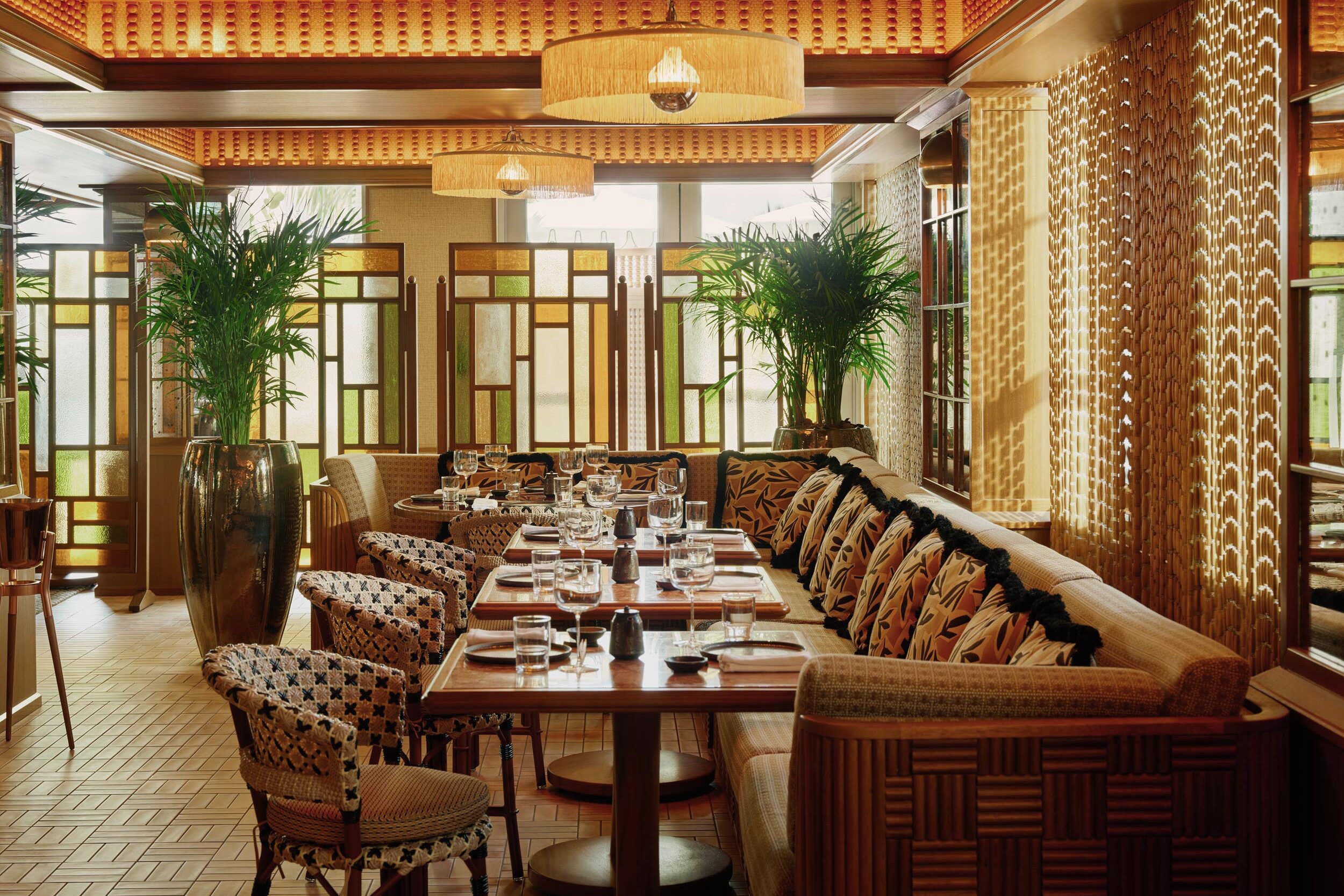
This fictional yet deeply evocative narrative takes tangible shape throughout the space through a meticulous mix of period-inspired details, rich textures, and open-air elements that seamlessly connect the restaurant to its breezy coastal environment. Situated on the fourth floor of the Delano Miami, the venue features a versatile terrace carefully configured to accommodate a wide spectrum of dining experiences. Whether patrons are seeking a casual, sun-drenched gathering or a more intimate, secluded meal under the stars, the expansive terrace offers tailored zones. Access to this exclusive outdoor setting is thoughtfully reserved for hotel guests and members of the prestigious Delano Members Club, ensuring an atmosphere of privacy and refinement.
At the heart of the indoor dining experience lies an open sushi counter that places food preparation directly at the center of the culinary journey. Guests seated around this lively hub are granted an unobstructed view of head chef Henry Park’s skilled culinary team at work, transforming the act of dining into an engaging theatrical performance. Complementing the dynamic atmosphere, a dedicated DJ station establishes a carefully curated rhythm that evolves naturally throughout both the daytime service and the evening transition.

Perhaps one of the most whimsical yet sophisticated departures from convention can be found at the restaurant’s bar. Rather than presenting patrons with a standard paper drink menu listing signature cocktails, the establishment takes an interactive, nostalgic approach. Guests are handed a vintage View-Master device, allowing them to literally click through tangible reels of stereoscopic images that showcase a curated selection of drinks highlighting botanicals and flavor profiles deeply associated with East Asian culinary traditions.
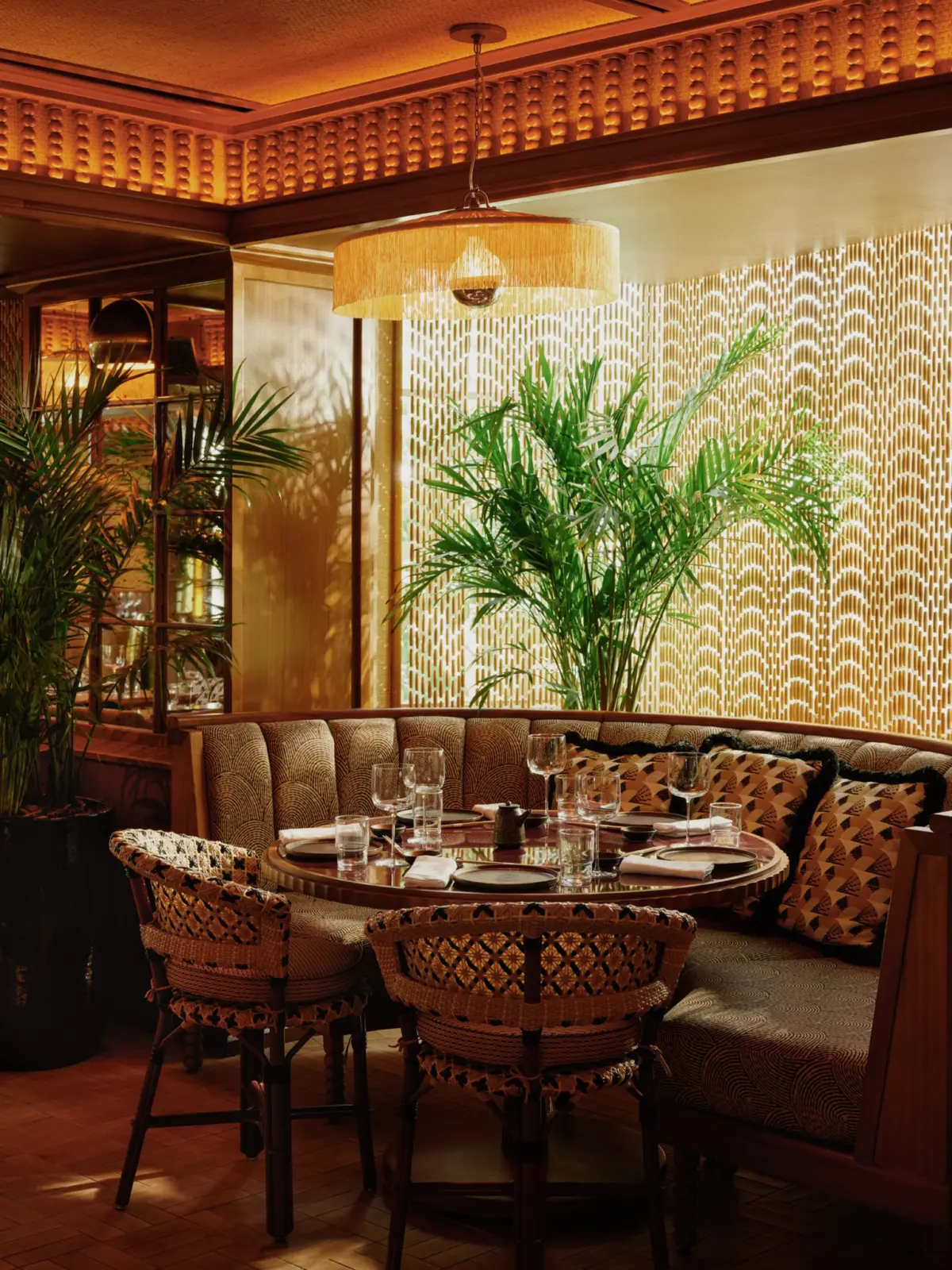
To balance the expansive nature of the rooftop location, lush greenery and strategically positioned screens are employed throughout the terrace to delicately divide the space into smaller, more intimate seating pockets. These botanical barriers provide a distinct sense of enclosure and privacy while carefully preserving sweeping, uninterrupted views of the ocean. Inside and out, a flexible array of custom counter seating and plush, upholstered banquettes accommodate diverse dining preferences. Diners can effortlessly transition from enjoying leisurely, full-course meals to sharing plates of delicate sashimi and crisp tempura among friends.

The material palette of the venue is designed to interact dynamically with the shifting South Florida daylight. Sunlight filters gently through timber bead curtains and vibrant stained glass panels, casting a series of shifting, hypnotic patterns across a warm, inviting color palette dominated by rich browns and creamy neutrals. Tactile elements, such as fringed throw pillows, add a layer of cozy softness, while hand-painted landscapes and bespoke custom furniture introduce subtle, authentic references to traditional Japanese craftsmanship.
Together, this symphony of layered materials, shifting natural daylight, ambient music, and an immersive open-air setting creates a fluid atmosphere that continuously transforms from day to night. The final result is a restaurant that leans heavily into the theatricality of its cinematic inspiration while remaining firmly and harmoniously anchored to the vibrant energy of Miami Beach.