In the field of archaeology, discoveries typically prompt more questions than answers. For artist and researcher Max Lehman, who studies Pre-Columbian art history, what we do not know—and may never know—about ancient peoples and civilizations is precisely what makes the discipline so compelling. The ancient Mayans, for example, bedecked their elaborate temples with intricate images carved into heavy rock slabs, while the famous Aztec sun stone, or calendar stone, stands as a remarkable testament to the sophistication of Mexica sculpture. These remnants of past human achievement survive across the centuries, yet they often reach us stripped of their original context, leaving modern scholars to piece together meaning from fragments and silence.
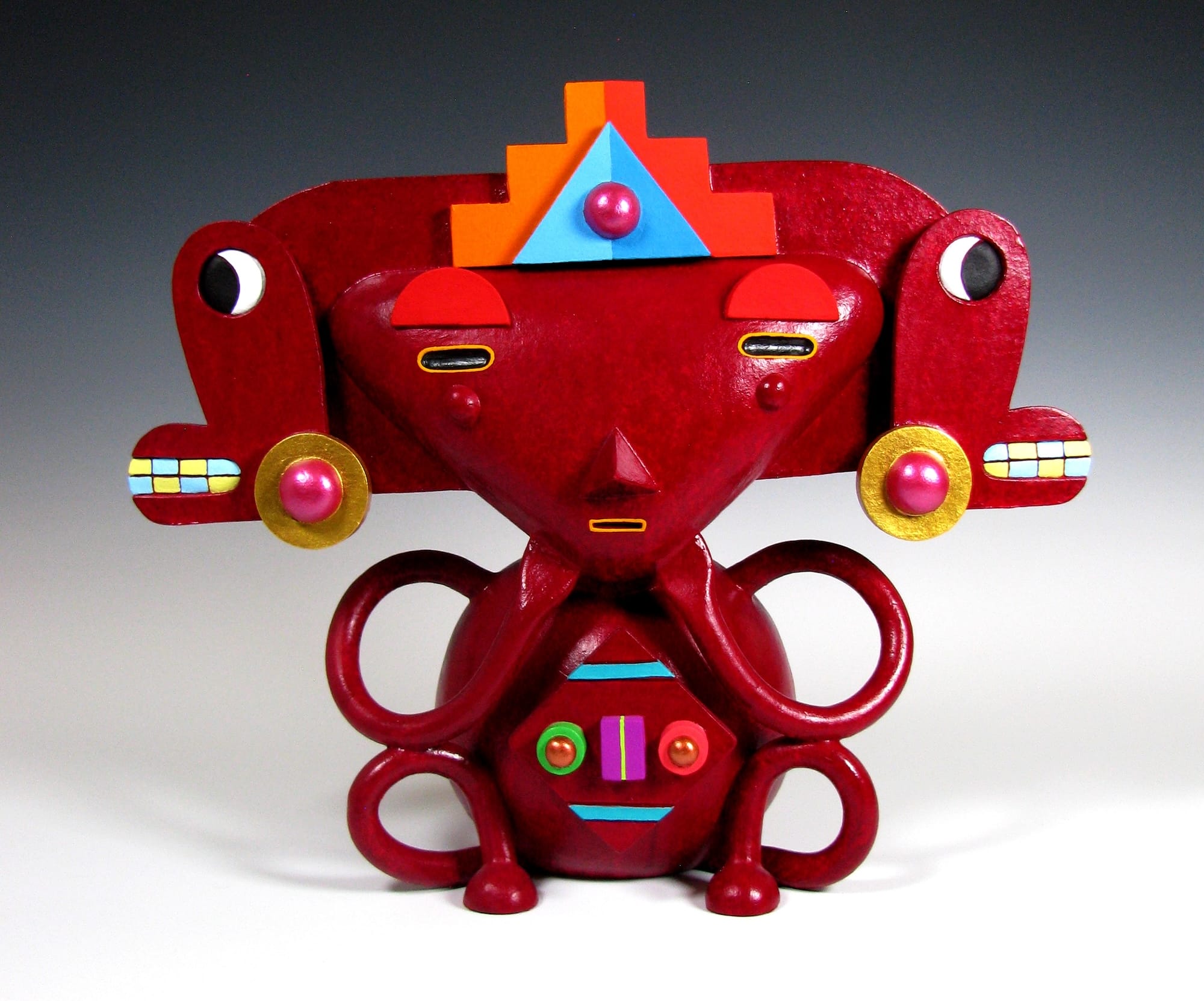
Lehman’s artistic practice occupies a unique conceptual space, keeping one foot firmly planted in the advanced civilizations of the past while reaching out toward a distant future. This future exists long after today’s rapid developments in robotic systems and machine learning technologies have run their course. His current exhibition, Ancestral Androids, currently on view at Hecho a Mano, delves into this speculative "future past." Inspired by elements of science fiction, the body of work merges modern technological motifs with prehistoric visual culture in unexpected, idiosyncratic ways.
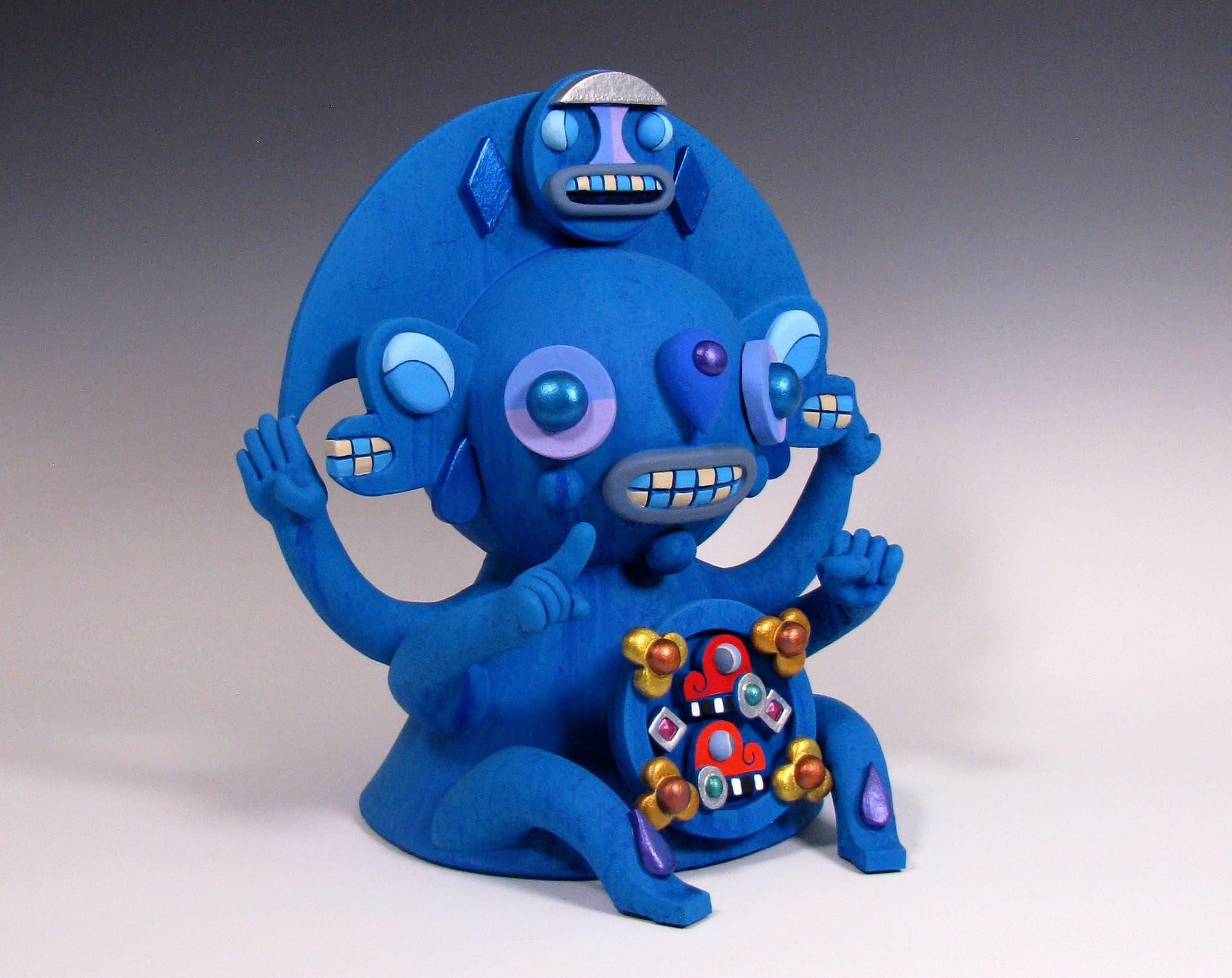
Based in New Mexico, Lehman creates ceramic sculptures that he deliberately imagines being excavated by archaeologists many years down the line, in an era when their exact origins, construction methods, and utilitarian or spiritual functions have been entirely lost to time. In an artist statement accompanying the exhibition, Lehman reflects on this deliberate ambiguity. "I resist providing complete explanations because archaeology rarely offers certainty," he says. "We reconstruct civilizations from fragments, projecting ourselves into the spaces left empty by time."
This playful yet profound approach to material history also nudges at the nature of information itself. Humanity currently finds itself embedded in an era of data accumulation and archiving—both digital and physical—at a scale that is entirely unprecedented in human history. This digital deluge begs a fundamental question: over the next thousand years or more, what information will actually remain? Furthermore, how will artificial intelligence influence the stories that get told, and what will future societies ultimately consider to be historical fact versus constructed myth? These emerging technologies are already demonstrably reshaping human cognitive patterns and our relationship with truth.
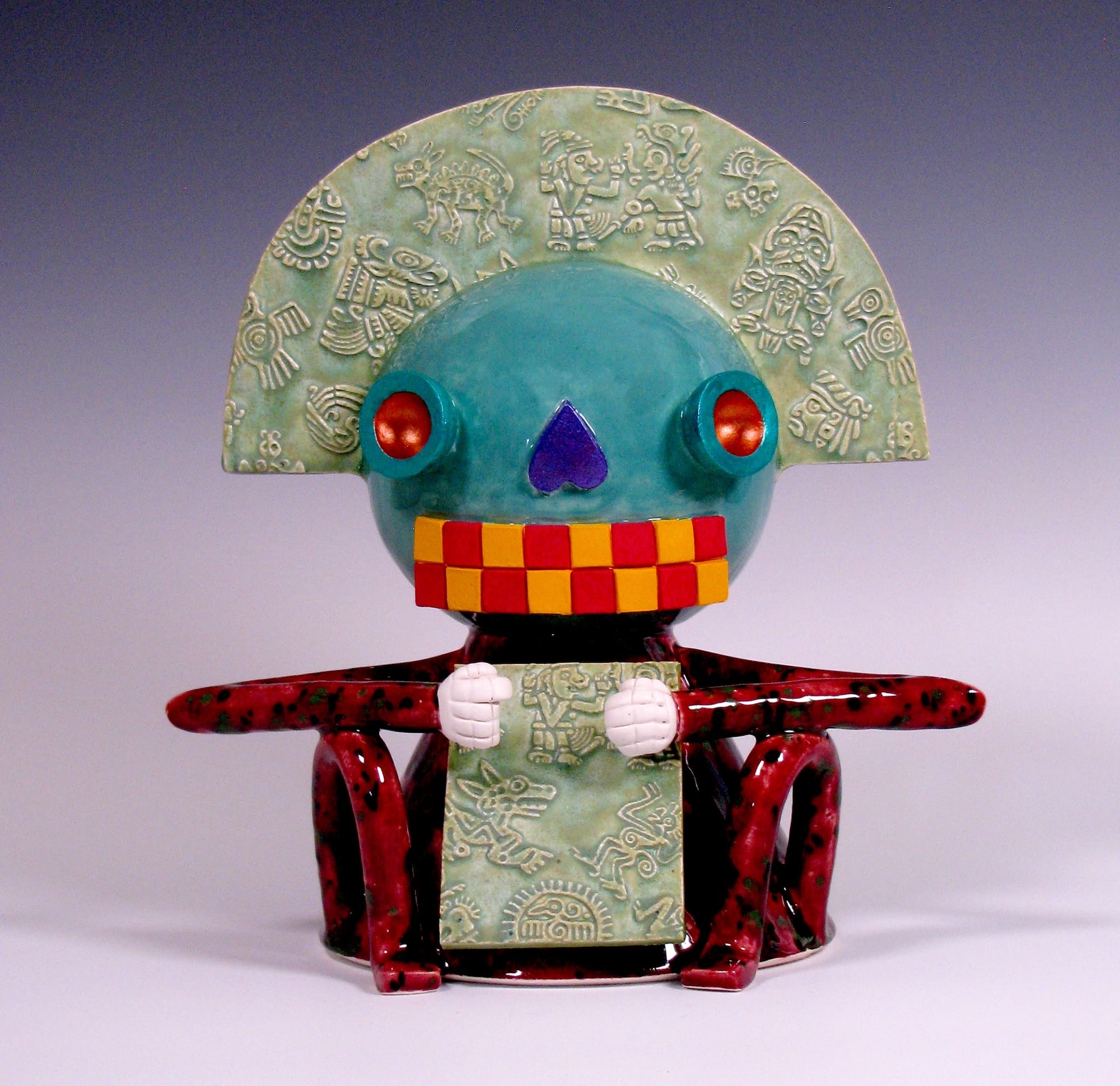
Naturally, these rapid technological shifts spark complex conversations within the contemporary creative community. "Artists understandably worry about AI appropriating their ideas," Lehman observes. Yet, he views his own practice as a direct counterweight to digital homogenization. "My own work, however, remains deeply rooted in the physical act of making—there is still no machine that can throw a ceramic vessel with the intuition, hesitation, and accumulated experience of human hands. Clay continues to preserve evidence of the maker in ways that cannot be simulated."
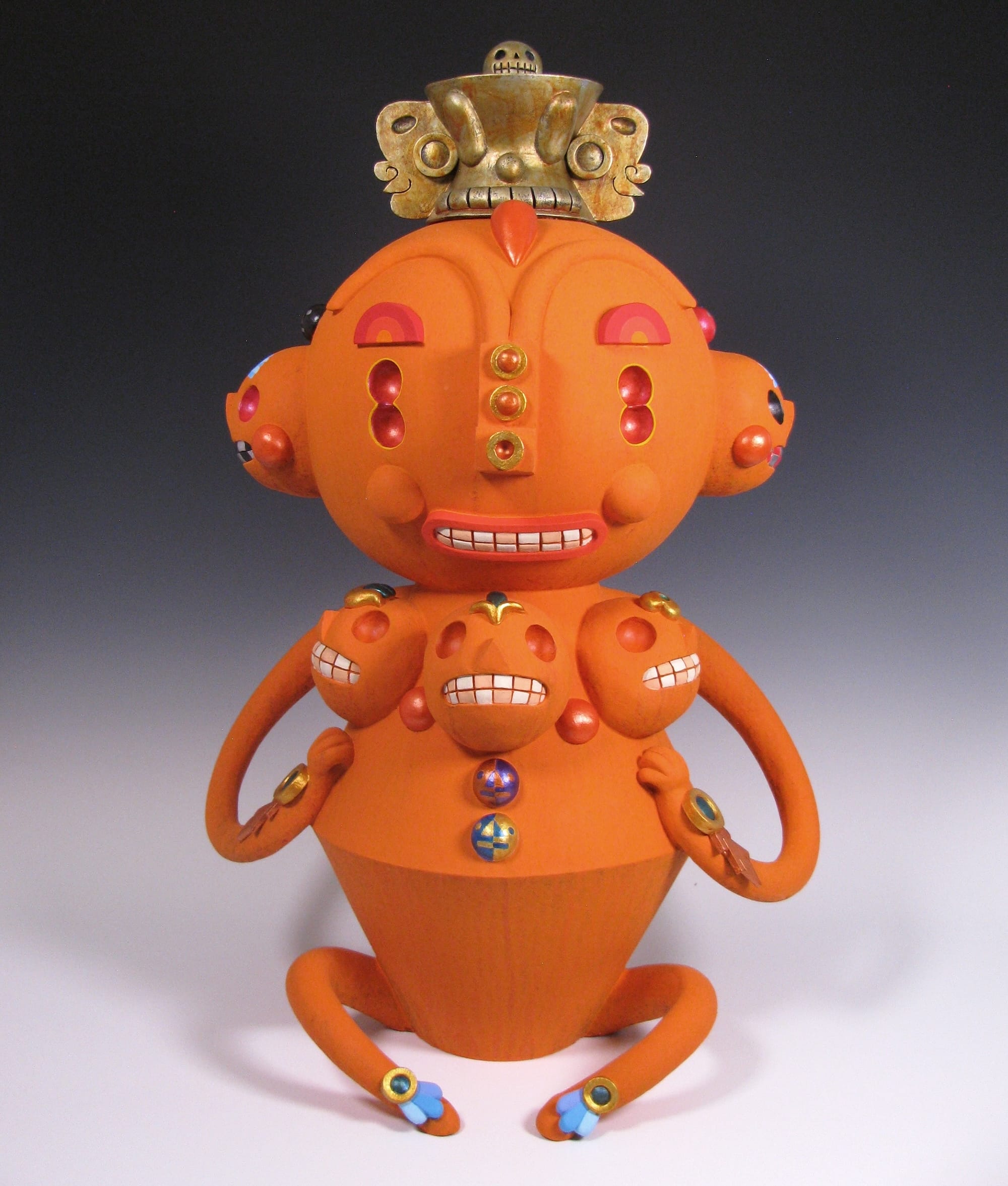
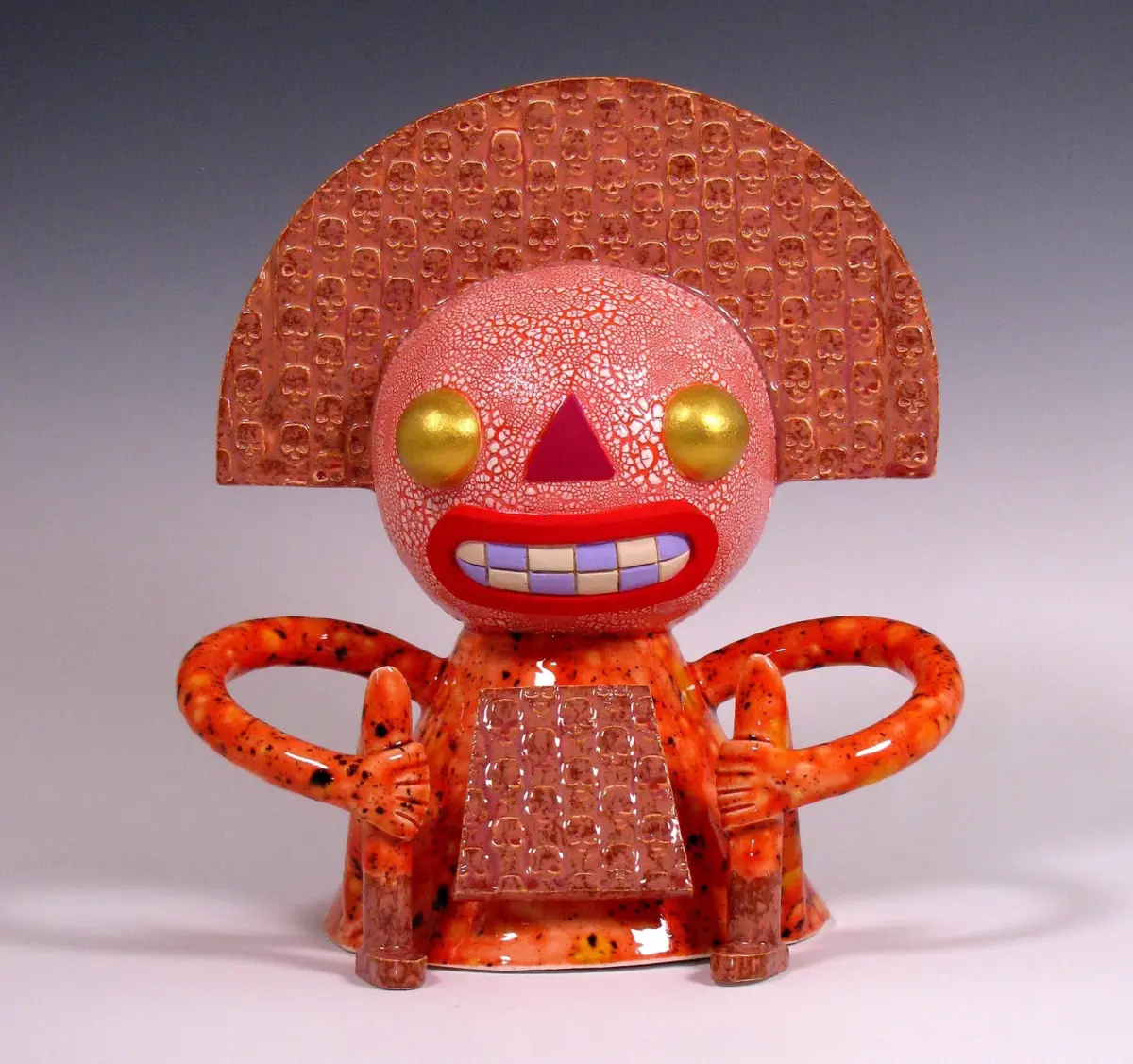
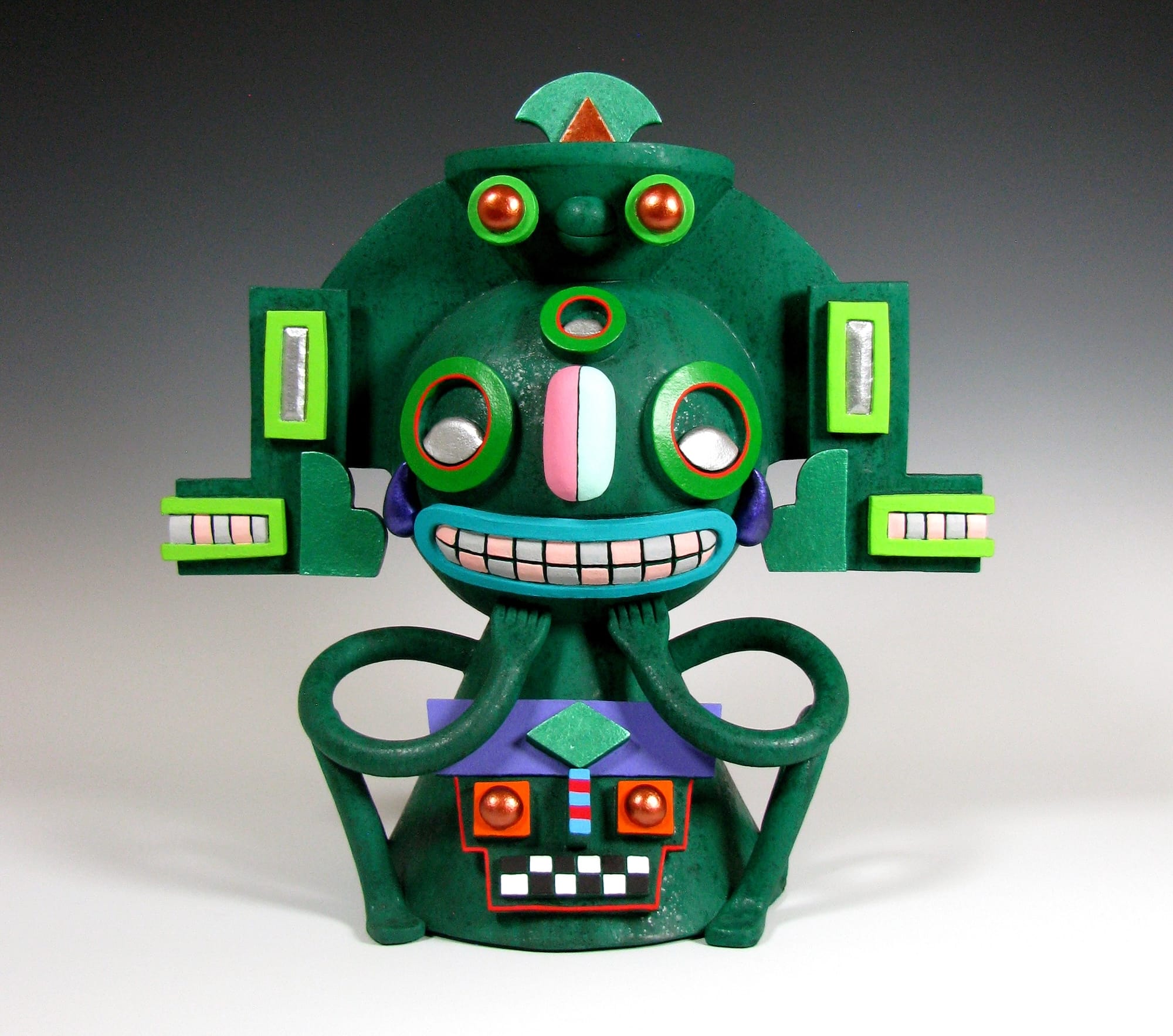
The sculptures populating Ancestral Androids embody this tactile, hand-wrought philosophy while addressing speculative themes through vivid, colorful characters. Pieces bearing titles like The Mother of Machines, Sapphire Sage, Petro who is Predicting the Unpredictable, The Malachite Mage, Mayan Max and His Pre-Colo iPad, The Duchess of Digital Data, The Hope for Environmental Renewal, Fiery Phineas and His Tablet of Doom, and Cecil Sunspot directly nod to sacred figures of antiquity that carried enigmatic, multi-layered associations.
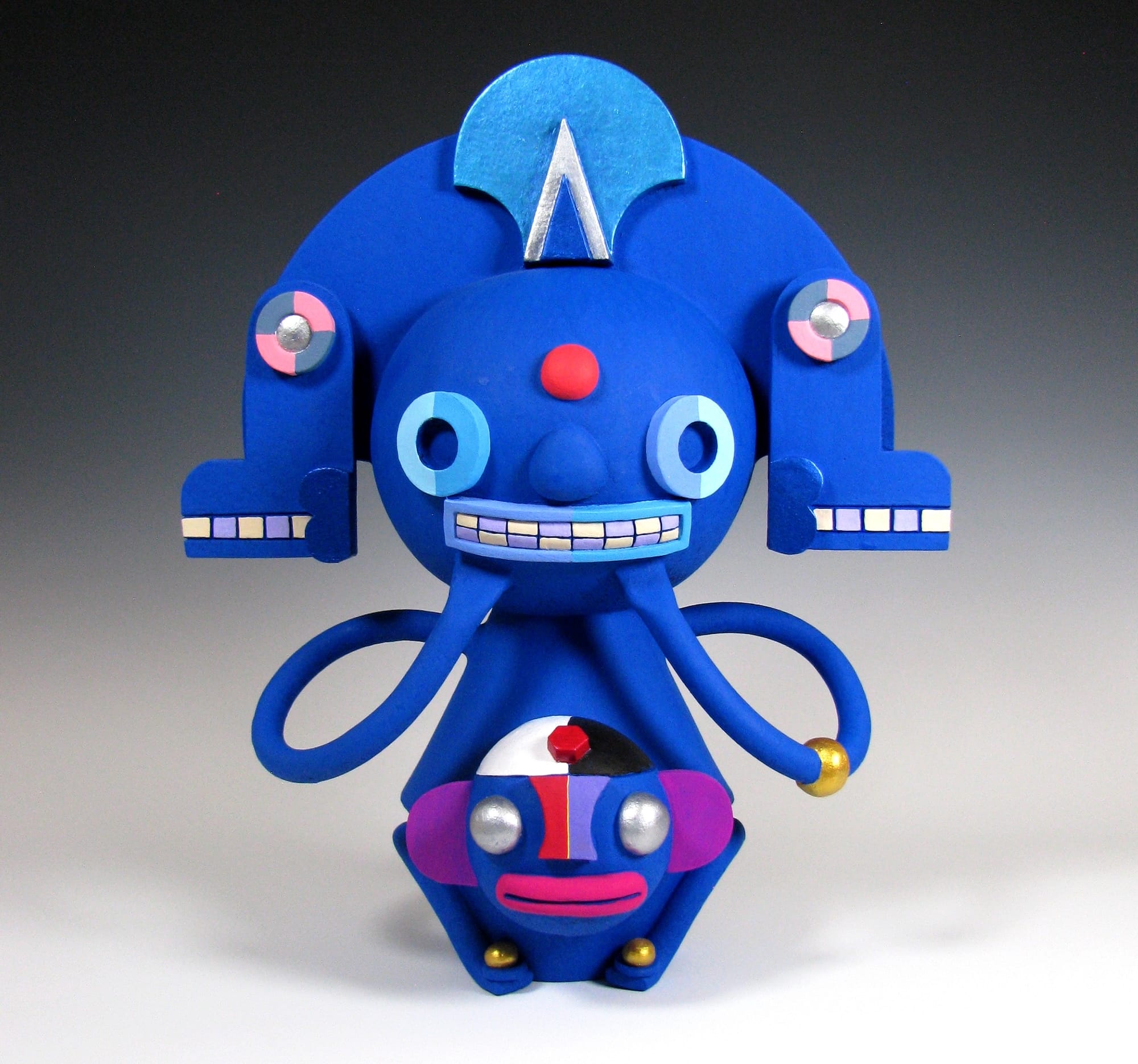
Visually, these ceramic forms are cartoonish and occasionally clownish, rendered in glazes, acrylics, and metallic paints that give them a slightly unsettling expression. It is almost as if the characters are deliberately devoid of any real, organic feeling—hovering unsettlingly between the cold efficiency of a robot and the impassive gaze of a carved stone monument. In many of the pieces, additional faces materialize unexpectedly on bellies or foreheads, suggesting themes of collectivity, shared consciousness, and networked existence.
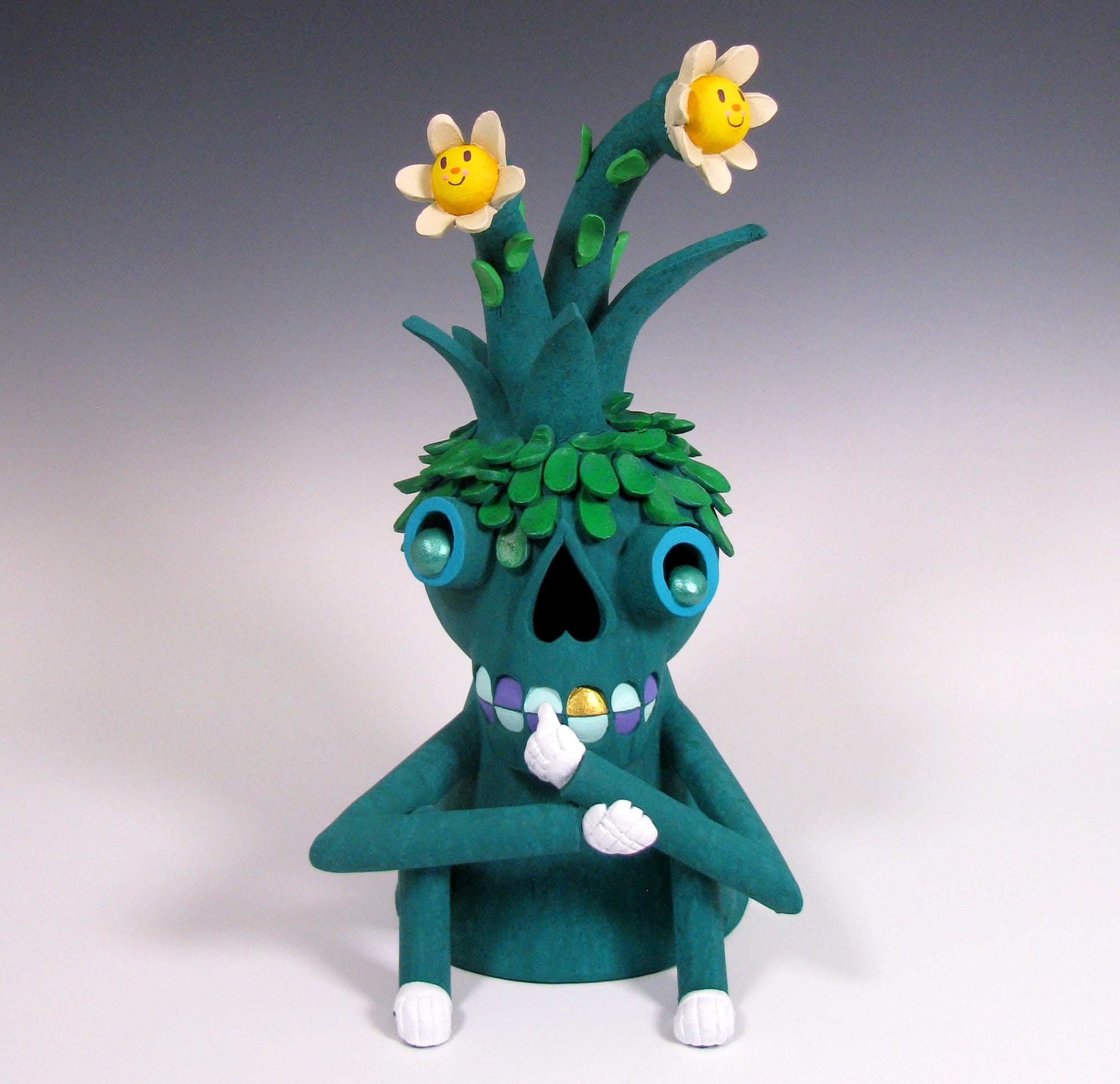
"The sculptures ask us to consider what happens when artificial beings become old enough to have ancestors, old enough to leave ruins, and old enough for their own history to become myth," the artist explains. By marrying the aesthetic gravity of Pre-Columbian iconography with the speculative anxieties of the digital age, Lehman crafts a mirror for contemporary society. His works serve as both ancient relics from a world that never quite was and archaeological artifacts from a future that has yet to unfold.
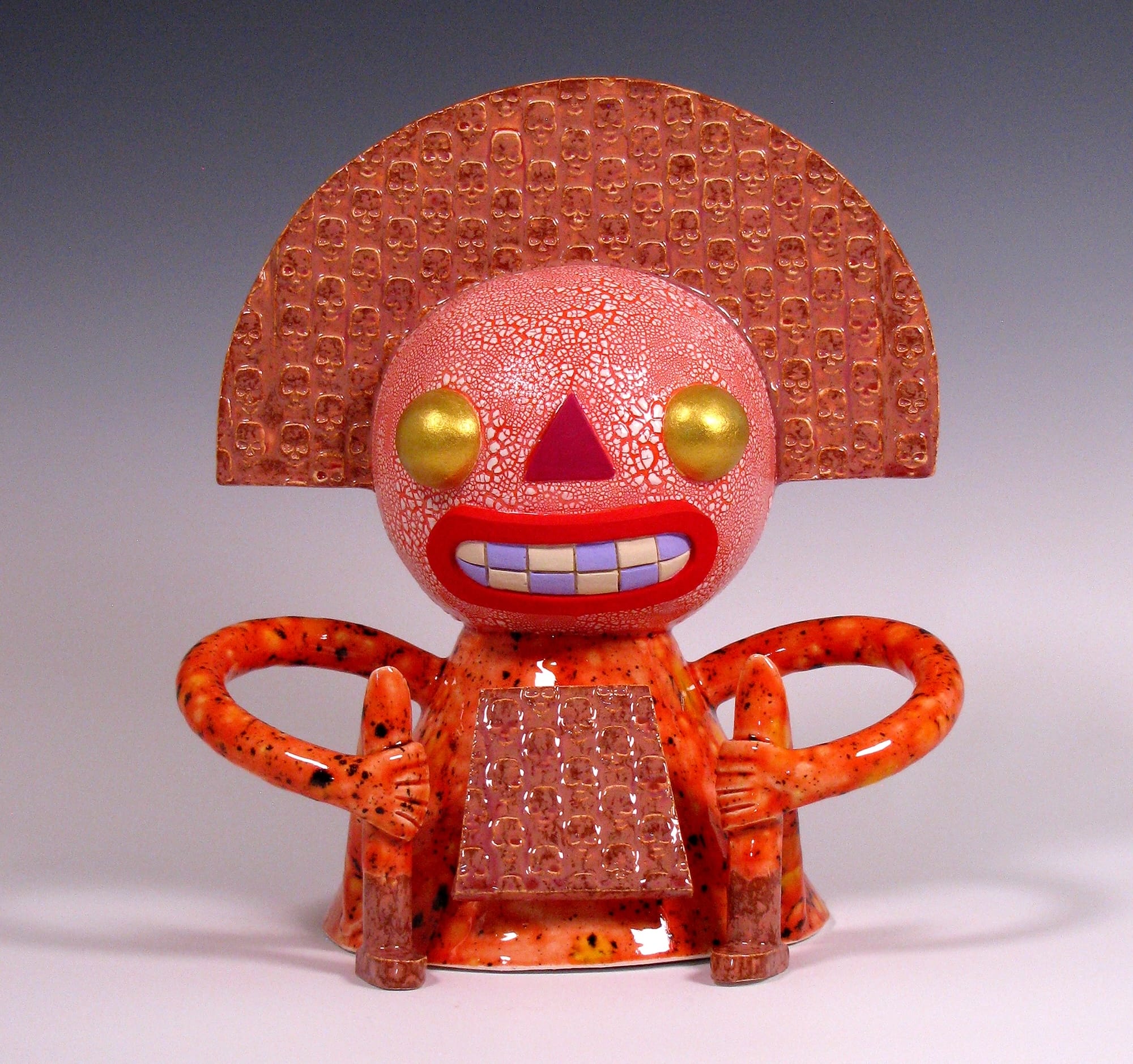
Ancestral Androids remains on display through November 1 in Santa Fe.