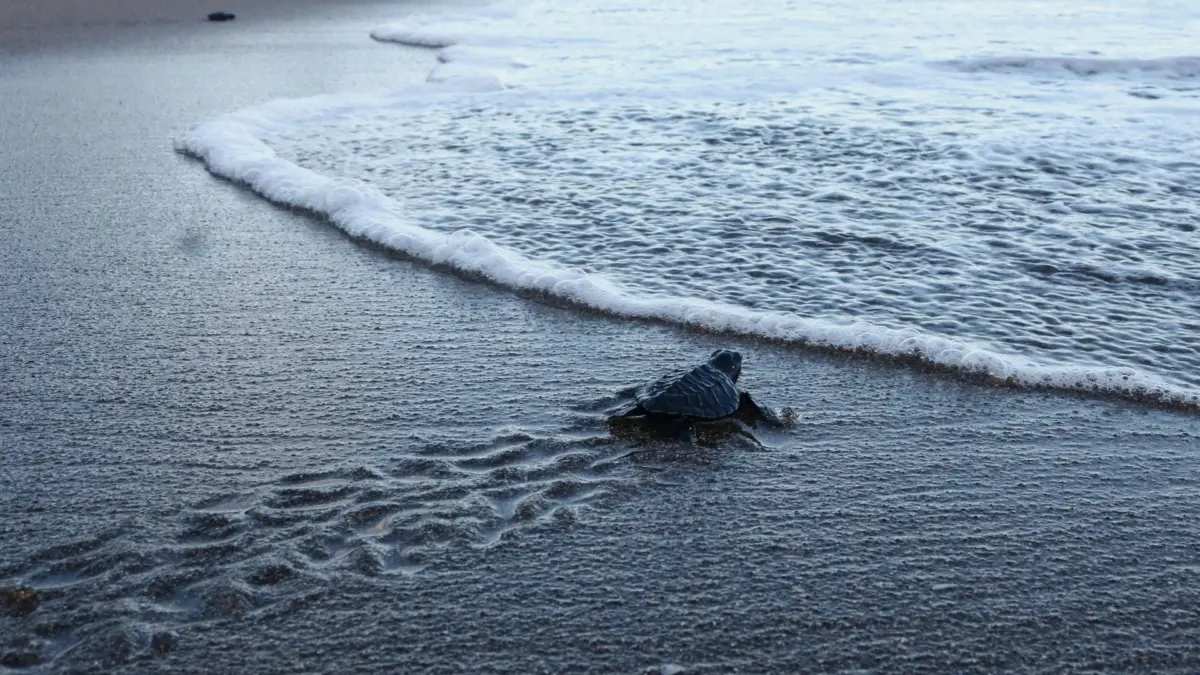
When beachgoers along the coastline of Orange County, California, spotted an unusual shape moving across the sand this September, their immediate reaction was to summon a lifeguard for assistance, fearing an injured marine animal had washed ashore. Instead of encountering a stranded or distressed creature in need of rescue, local authorities and wildlife experts uncovered a milestone event: the first-ever documented case of a sea turtle successfully nesting on the United States West Coast. Photographic evidence and subsequent scientific analysis soon revealed an even more surprising twist—this was not a solitary occurrence, but rather proof that multiple mother turtles are nesting significantly farther north than their established historical ranges.
The remarkable series of events began on September 16, when an olive ridley sea turtle was observed coming ashore near Saal Beach in Orange County, diligently digging a nest in the sand and depositing her eggs. The National Oceanic and Atmospheric Administration (NOAA) Fisheries West Coast division quickly took notice of the phenomenon, officially describing the observation as the "first-ever recorded natural nesting for any sea turtle species on the US West Coast."
For marine biologists and conservationists, the sighting was as unprecedented as it was unexpected. Olive ridley sea turtles are well-known inhabitants of warmer tropical and subtropical waters, primarily favoring regions such as Costa Rica and Mexico for their reproductive activities. In those traditional southern habitats, the species is famous for a synchronized reproductive behavior known as an arribada, a Spanish term meaning "arrival." During these massive events, thousands of female olive ridley turtles simultaneously crawl onto the same beaches to lay their eggs en masse, creating a natural spectacle observed in only a handful of locations worldwide.
The appearance of a solitary nesting turtle in Southern California shattered expectations, but the anomaly did not stop there. Just a few days after the initial discovery at Saal Beach, a second olive ridley sea turtle was spotted hauling herself onto the sand a few miles away near the iconic Huntington Beach Pier, where she too began constructing a nest.
Initially, local authorities and wildlife officials questioned whether the turtle spotted at the second location might be the same individual that visited Saal Beach a few days prior. Olive ridleys are known to exhibit cyclical nesting behaviors, with individual females frequently laying multiple clutches of eggs over the course of a single reproductive season. Because sea turtles can travel considerable distances between nesting attempts, experts could not immediately rule out the possibility that a single enterprising turtle was responsible for both coastal events.
To resolve the question, researchers turned to photographic evidence captured by beachgoers, news photographers, and lifeguards who monitored the animals. Dr. Cali Turner Tomaszewicz, a research biologist, undertook a detailed analysis of the photographs taken at both locations. By closely examining the unique shapes, patterns, and scute arrangements on the shells of the two turtles, Dr. Tomaszewicz was able to definitively confirm that the nests originated from two entirely different mother turtles.
The confirmation that two separate olive ridley turtles chose Southern California shores for nesting within days of each other has prompted intense discussion within the scientific community. Researchers are currently working to determine whether this extraordinary double occurrence is merely a rare, isolated anomaly or an early indicator of a broader behavioral shift. Specifically, scientists are examining whether changing environmental conditions might be encouraging olive ridley populations to expand their traditional nesting grounds northward into regions where they have never previously reproduced.
Among the primary theories circulating among marine scientists is the potential influence of warmer ocean temperatures, which can be triggered by climate patterns such as El Niño. As ocean temperatures shift, the distribution of marine species often changes in response, leading animals to explore new habitats that were previously too cold for critical life cycle events like egg incubation. Sea turtle embryonic development is highly sensitive to ambient sand temperatures, which not only dictate incubation periods but also influence the sex ratios of the hatchlings.
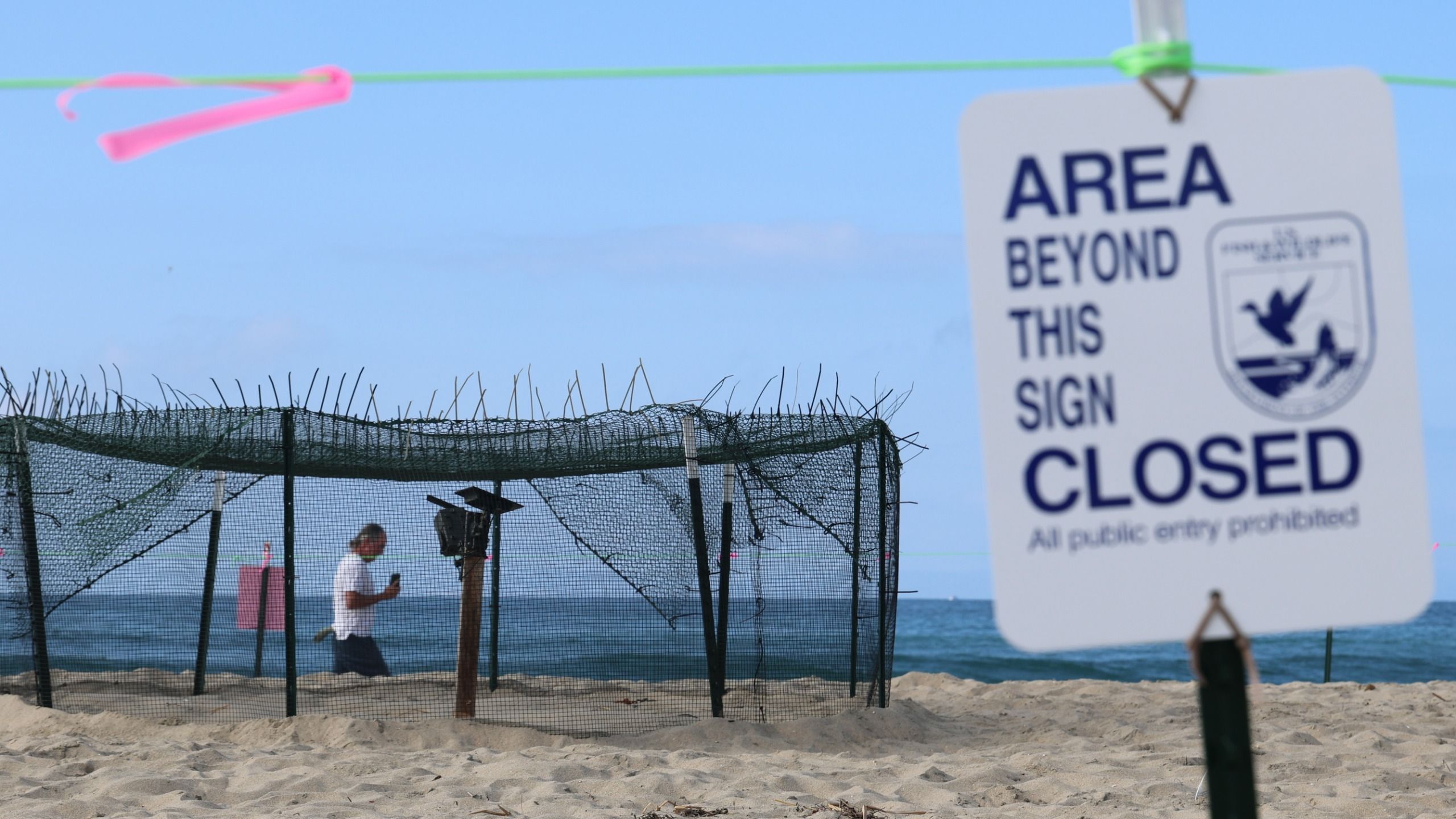
Following the discoveries, local and federal authorities moved swiftly to secure the safety of the precious cargo buried beneath the Southern California sand. The two specific nesting areas have been cordoned off and closed to the public to prevent accidental disturbance by beachgoers, domestic animals, or vehicles. A coalition of government agencies and environmental organizations has established joint monitoring protocols to keep a watchful eye on the sites throughout the crucial incubation period.

Lifeguards who were present during the initial encounters have transitioned from emergency responders to frontline stewards of the nests. Among them is Andrew Mackie, a local lifeguard who personally observed one of the turtles laying its eggs while on routine patrol. Mackie and his colleagues continue to monitor the protected perimeter, ensuring that the historic nests remain undisturbed as they develop.
The olive ridley sea turtle (Lepidochelys olivacea) is recognized as one of the smallest species of sea turtles in the world, typically characterized by an olive-colored, heart-shaped shell. Despite their relatively diminutive size compared to giants like the leatherback or loggerhead, olive ridleys are among the more abundant sea turtle species globally. An adult female typically produces one to three nests each year, with each clutch containing an average of approximately 100 eggs.
As the incubation period progresses, federal wildlife officials are emphasizing the importance of public cooperation. NOAA has urged anyone along the West Coast who spots a sea turtle or evidence of nesting activity to immediately report the sighting through official channels rather than approaching the animals. Furthermore, the agency has reminded residents and visitors to strictly respect the closures around the Orange County nesting sites to give these pioneering hatchlings the best possible chance at survival when they eventually emerge to make their way to the ocean.