Built across the 1960s and 1970s during a post-war era of ambitious urban planning, the Aylesbury Estate in South East London stood for decades as one of Europe’s most sprawling public housing complexes. At the zenith of its occupancy, the massive brutalist development boasted a thriving population of some 11,000 residents, serving as a vertical village and a vital anchor for working-class life in the capital. Yet, much like numerous other large-scale social housing projects initiated during that period, the estate faced severe systemic challenges over the years. Struggling under the weight of persistent structural decay, economic deprivation, crime, and vandalism, the complex developed a deeply troubled reputation that frequently made headlines for all the wrong reasons.
By 2005, local municipal authorities arrived at a critical crossroads regarding the future of the sprawling development. Rather than committing the substantial financial resources required to comprehensively rehabilitate, modernize, and maintain the existing structures, officials opted for a more drastic trajectory. They enacted a controversial long-term strategy to completely demolish the estate in successive phases, clearing the way for a wholesale private-public regeneration project designed to replace the concrete towers with entirely new neighborhoods.
For artist Harriet Mena Hill, who has lived and worked in South East London for nearly four decades, the towering brutalist estate was always a familiar backdrop to her daily existence. However, her deep, artistic engagement with the site did not truly crystallize until 2018. At that time, Hill was officially commissioned to lead a summer creative arts program for the young residents who were still calling the complex home while the early rumblings of displacement and redevelopment began to stir. Working closely with the youth, she found herself absorbing the rich texture of daily life within the concrete labyrinth, sparking an ongoing creative exploration that would span several years and manifest in deeply contrasting mediums.
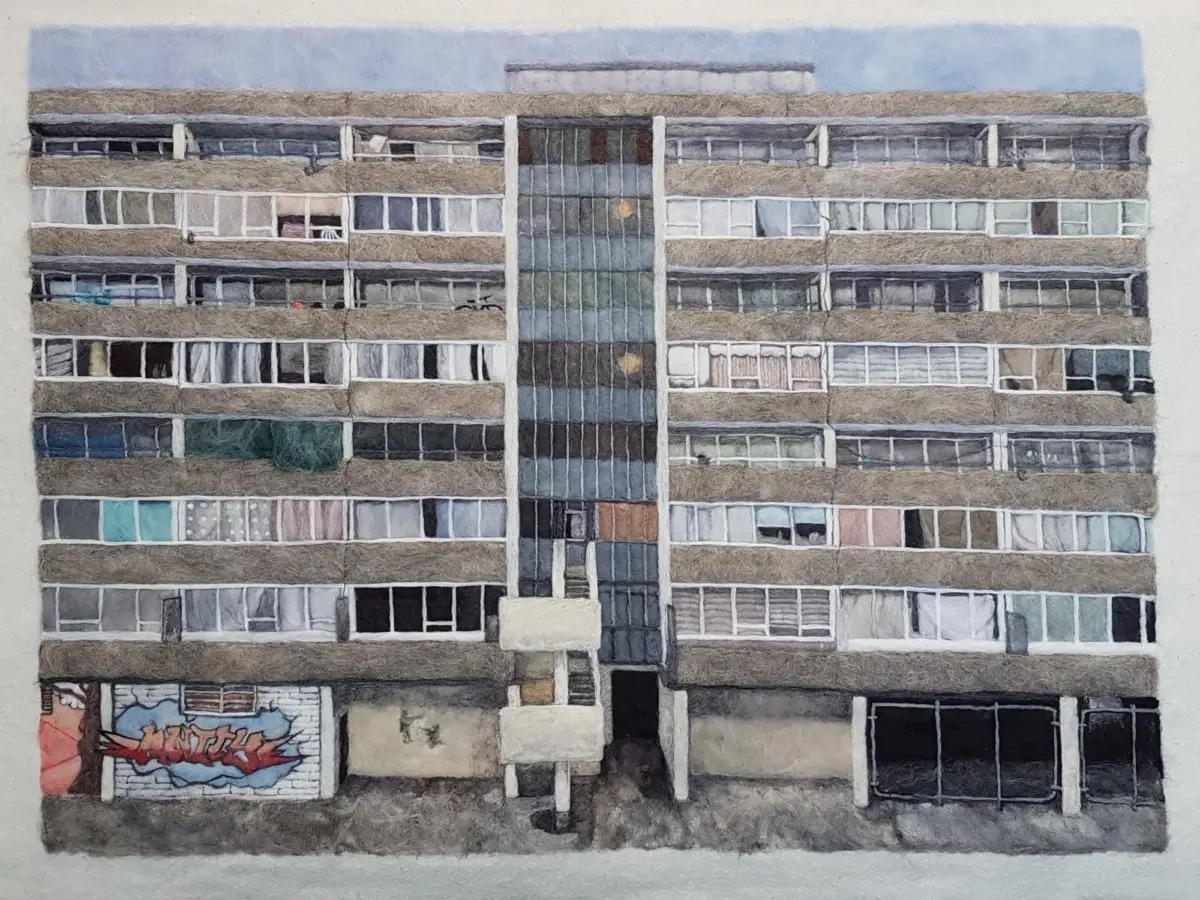
Initially, this engagement manifested in her striking textile series titled Soft Concrete. Working with wool and felt, Hill began creating large-scale portraits of the estate’s architecture that intentionally challenged the cold, unforgiving nature of the physical environment. By meticulously blending dyed wool roving, she managed to delineate crisp architectural lines, shape the drooping curves of bowed electrical wires, and even painstakingly mimic the colorful graffiti tags spray-painted across outdoor courtyard walls and structural pillars.
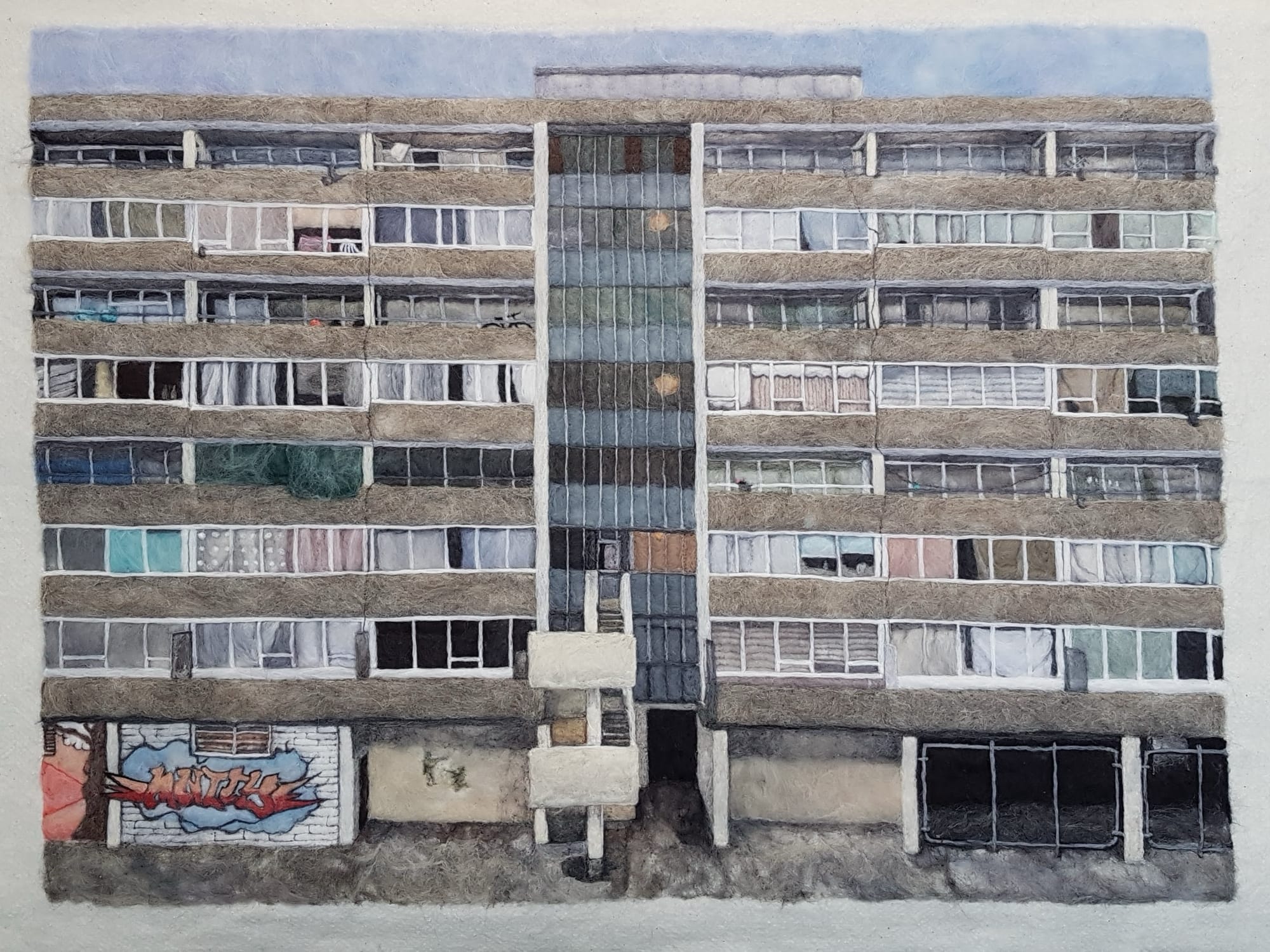
These textile pieces cast a largely gray environment defined by harsh stone, brutalist angles, and industrial steel into remarkably soft, tactile fiber. Discussing the conceptual weight of the body of work, Hill explains that the series served as a deliberate repositioning of how the housing estate is perceived by the outside world. Historically, she notes, the complex had been overwhelmingly portrayed by mainstream media outlets as a zone defined exclusively by violence, intimidation, and an absence of hope.
In sharp contrast to those reductive tropes, Soft Concrete presents the estate as a vibrant arena of everyday living, resilience, and profound community bonds. From a distance, the trompe l’oeil portraits can easily be mistaken for sharp photographs or hyper-realistic architectural paintings. Yet, upon closer inspection by the viewer, the material dramatically reveals itself to be soft wool, hand-blended for subtle color mixing that captures the minute, active details of domestic life unfolding behind those concrete walls.
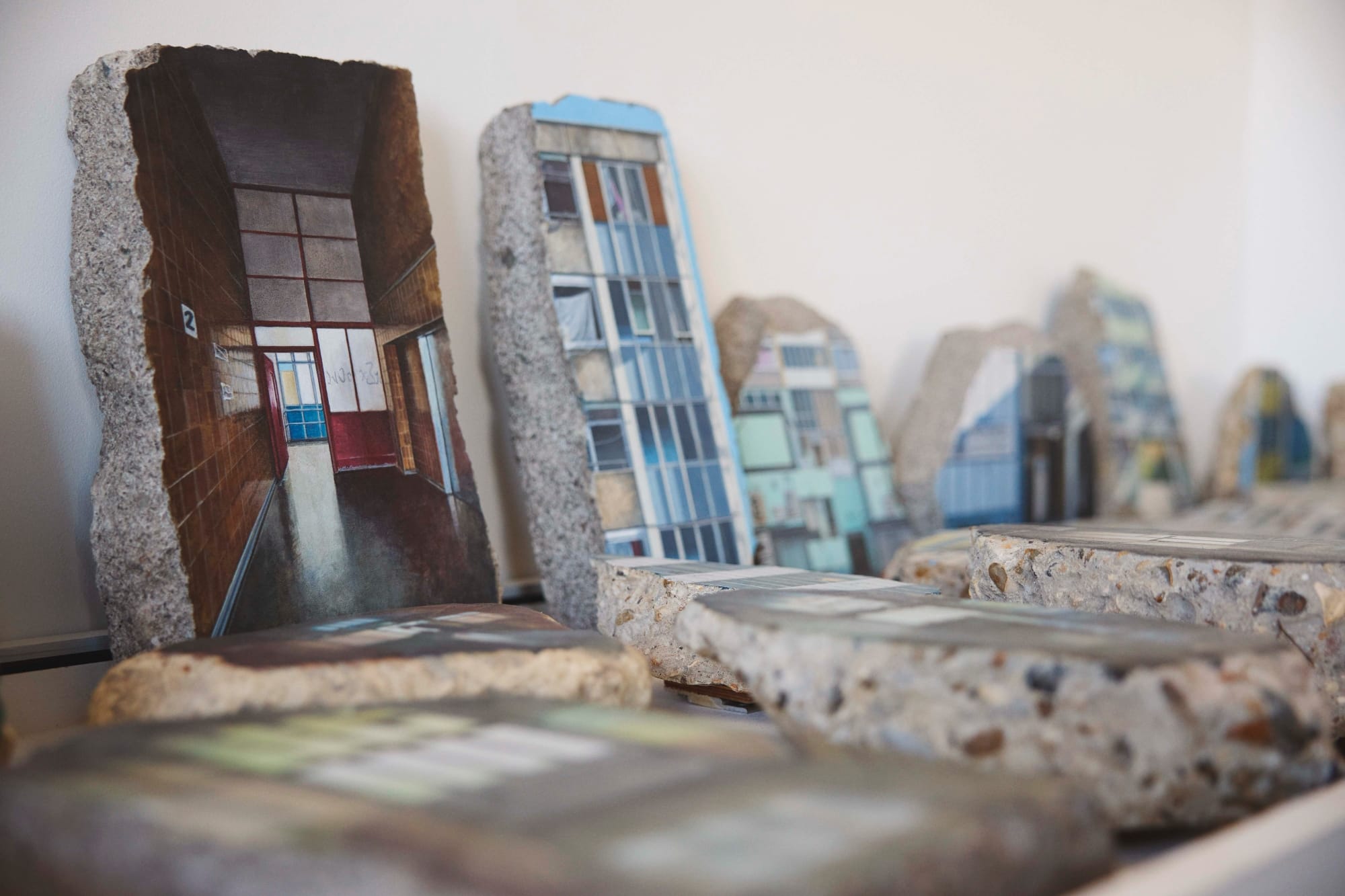
Hill’s overarching artistic practice is deeply invested in exploring the ways that communities and the everyday physical objects they interact with can become vessels for shared human memories. Consequently, when the large-scale demolition of the estate formally accelerated in 2020, she felt a compelling urge to physically engage with the changing landscape. She began visiting the active construction sites to collect genuine fragments of broken concrete left behind by the wrecking balls.
The initiative was forged as a direct response to the unique and isolating situation experienced by many residents during the height of the COVID-19 pandemic. Tenants were legally required to stay at home under strict lockdown rules, yet they were forced to endure the deafening noise, dust, and psychological weight as the demolition of adjoining blocks—the homes of their former friends and neighbors—continued relentlessly right outside their windows, largely exempted from wider restrictions.
Long before the bulldozers finally arrived, numerous tenants had actively organized and advocated for comprehensive architectural renovations rather than total demolition, desperately hoping to preserve the tight-knit community and the homes they had spent decades building. In an interview with the BBC in 2023, long-time resident Aysen Dennis lamented the emotional toll of being forced to leave the estate after calling it home for 30 years. Although local administrative council officials successfully arranged alternative accommodation for her in central London, she found that physical upgrades could not replace emotional roots. The council provided everything she had asked for—an apartment on a high floor, abundant natural light, and a direct view of a nearby park—yet, as Dennis poignantly remarked, it simply was not her home.
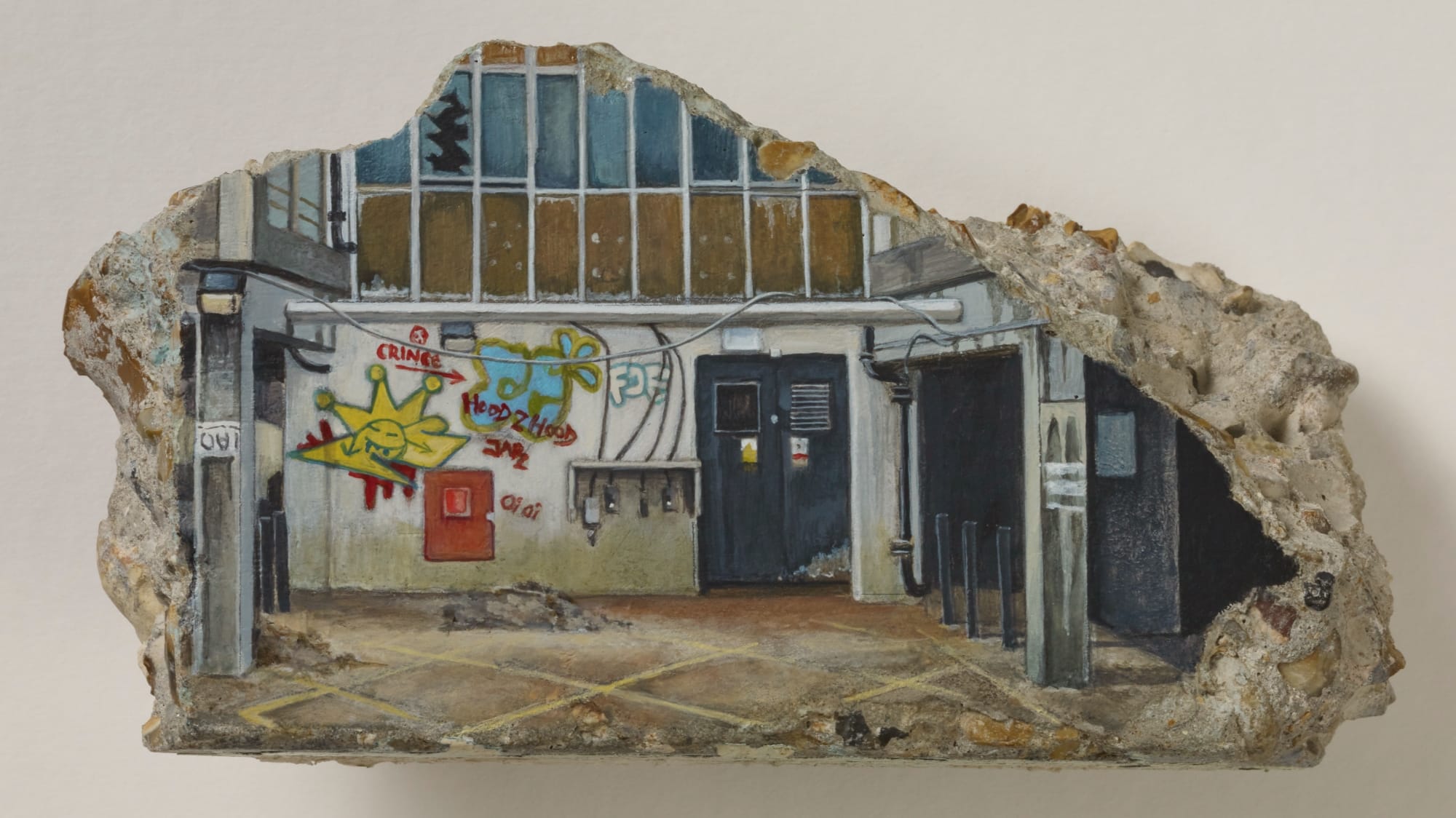
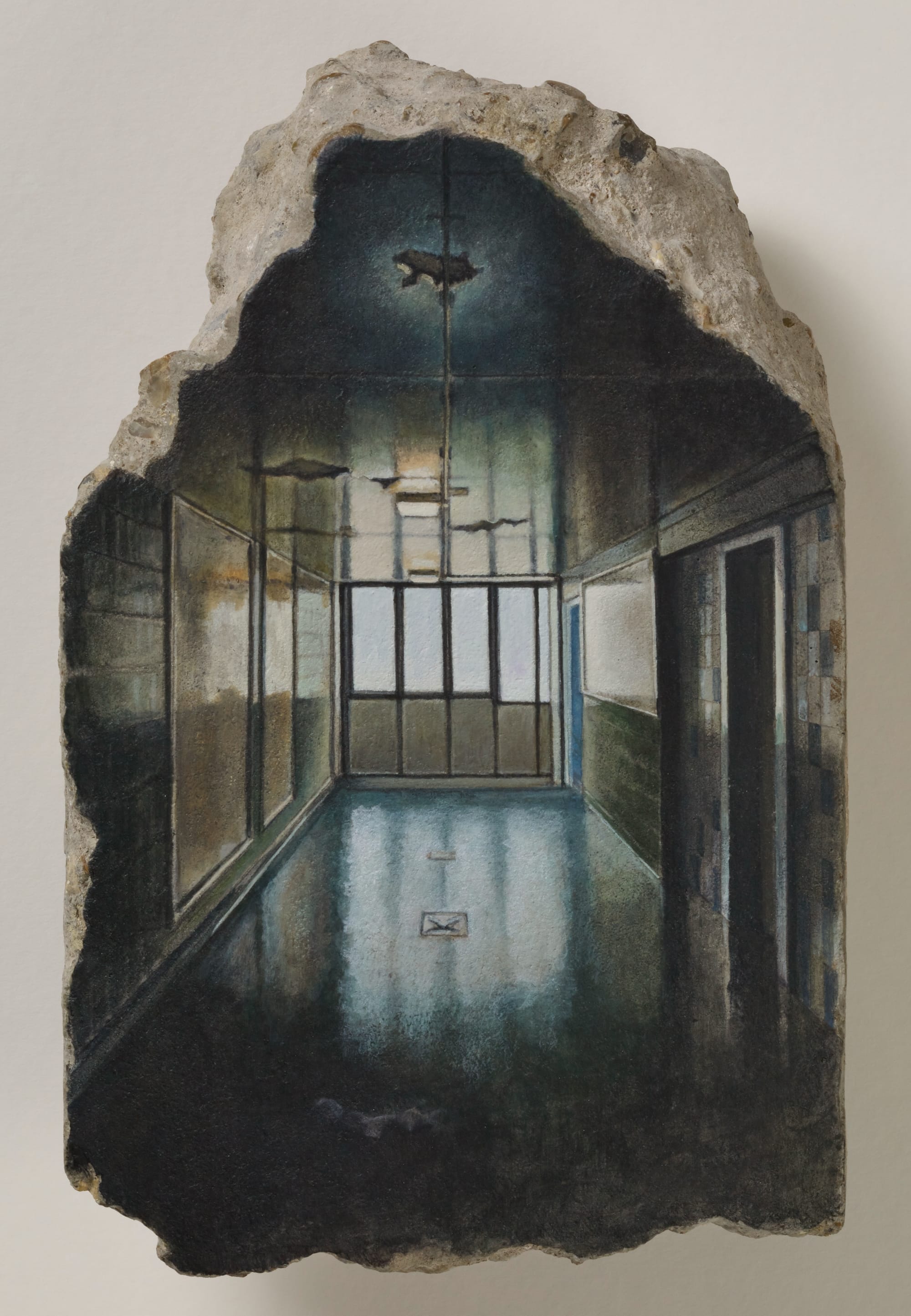
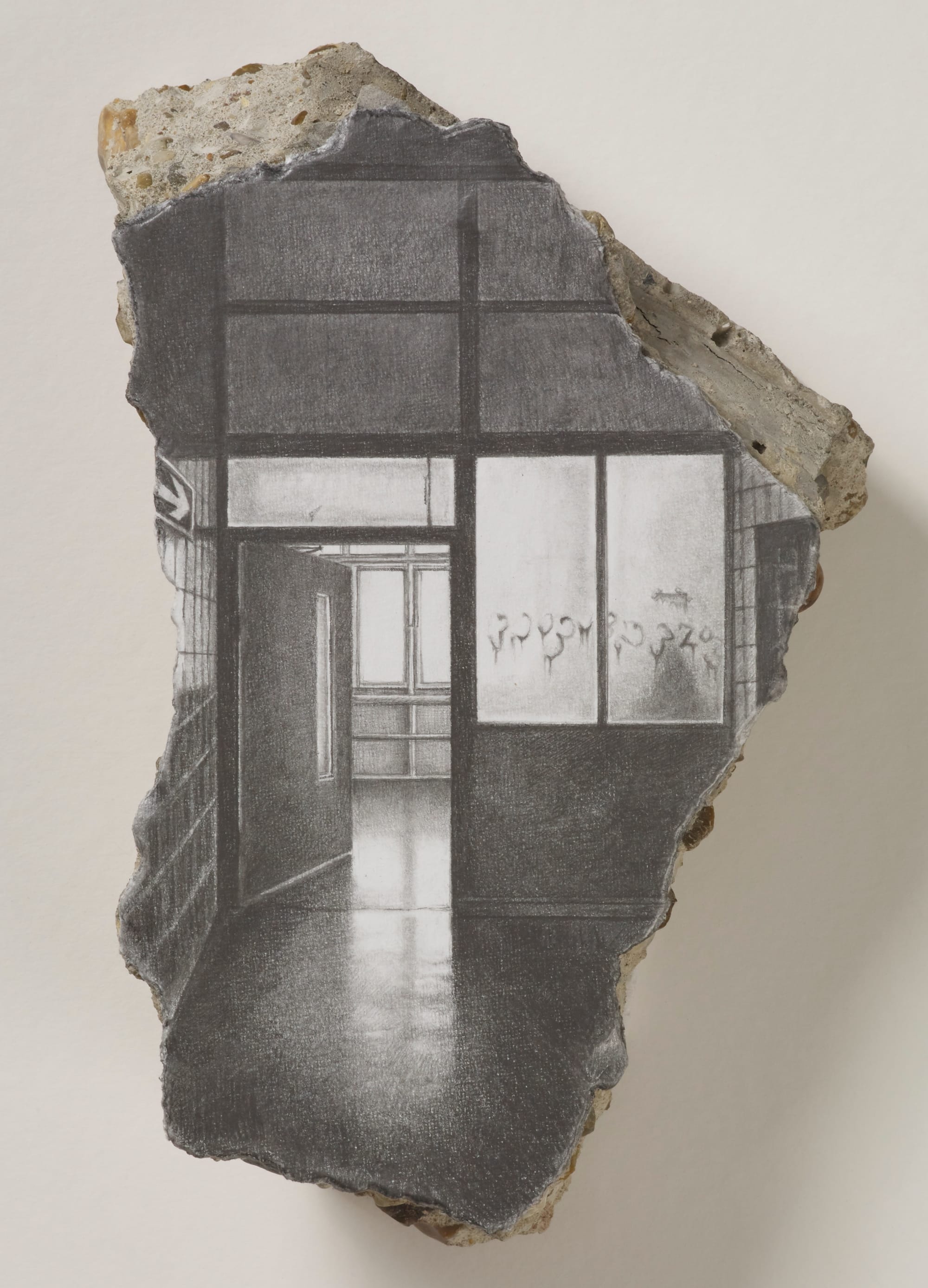
Working within this landscape of loss, Hill began transforming the discarded industrial remnants she collected into a poignant series titled The Aylesbury Fragments. Intimate in scale, her painted interventions on concrete glimpse quiet hallways, empty doorways, and pockets of windows that are similarly sliced from their larger architectural contexts. The jagged, fractured edges of the raw concrete naturally frame these delicate domestic spaces, creating an evocative tension between the durable, destructive nature of urban renewal and the fragile human stories held within.
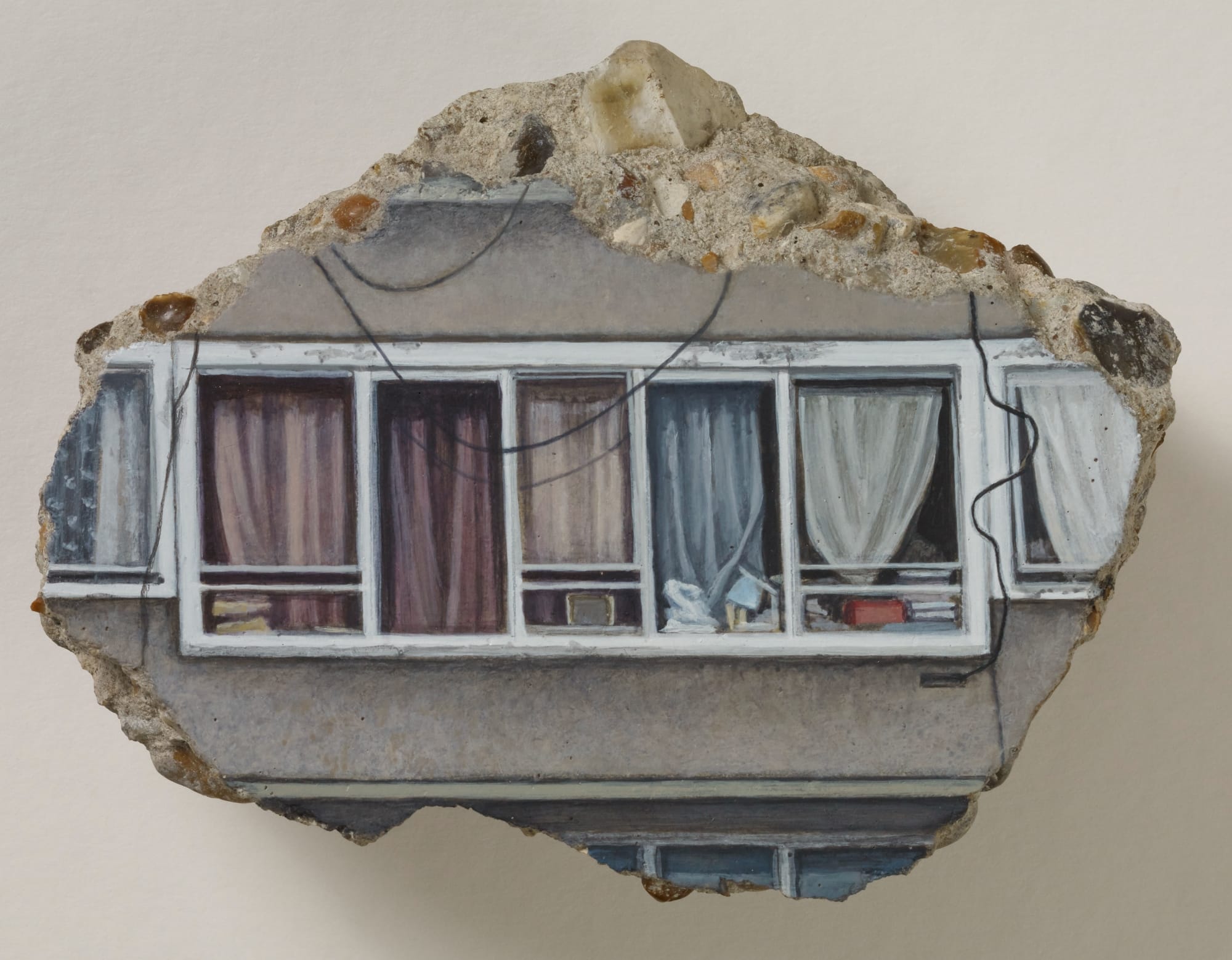
These scenes capture the run-down, transitional infrastructure of the buildings that were left standing during the protracted, phased reconstruction process. Although the regeneration initiative officially began back in 2013, progress has been remarkably slow, and the overall project remains less than half complete. Amidst this prolonged urban limbo, Hill has quietly completed more than 150 individual paintings on concrete fragments to date. As demolition continues to reshape South East London, she regularly adds to her ever-evolving collection of industrial remnants.
Reflecting on her methodical process, the artist notes that she often lives with the unpainted concrete pieces for months, and sometimes even years, simply getting to know their unique shapes, cracks, and weights before she ever touches them with a brush. She emphasizes that as long as there are buildings still standing under construction or facing the wrecking ball, she will continue painting these small, enduring tributes to the community that was once housed within their walls.
Building on the momentum of her ongoing documentation and artistic activism, Hill has a series of upcoming exhibitions slated for galleries across London and the broader United Kingdom throughout 2027, where these intimate fragments of a vanished community will find a wider public audience.